
Reviewed · WORKSHOPS
Nairobi: Woodcut Printmaking Workshop, A Creative Experience
Make art, not just memories. This small-group Nairobi workshop gives you a hands-on introduction to woodcut printmaking with Kenyan artist Ndunde Bulimo, in a local studio connected to the city’s independent art community. You carve, ink, and print your own design, then take home a one-of-a-kind souvenir.
I like the personal instruction and the chance to support a woman-owned studio. I also like that complete beginners can join without bringing supplies or artistic experience. The main consideration is timing: your finished prints need three days to dry before collection, so this works best if you have enough time in Nairobi.
In This Review
- Key points to know before booking
- Why woodcut printing works so well in Nairobi
- Arriving at Studio 13
- Meeting Ndunde Bulimo, your printmaking teacher
- Designing your wooden block
- Carving the block, slowly and carefully
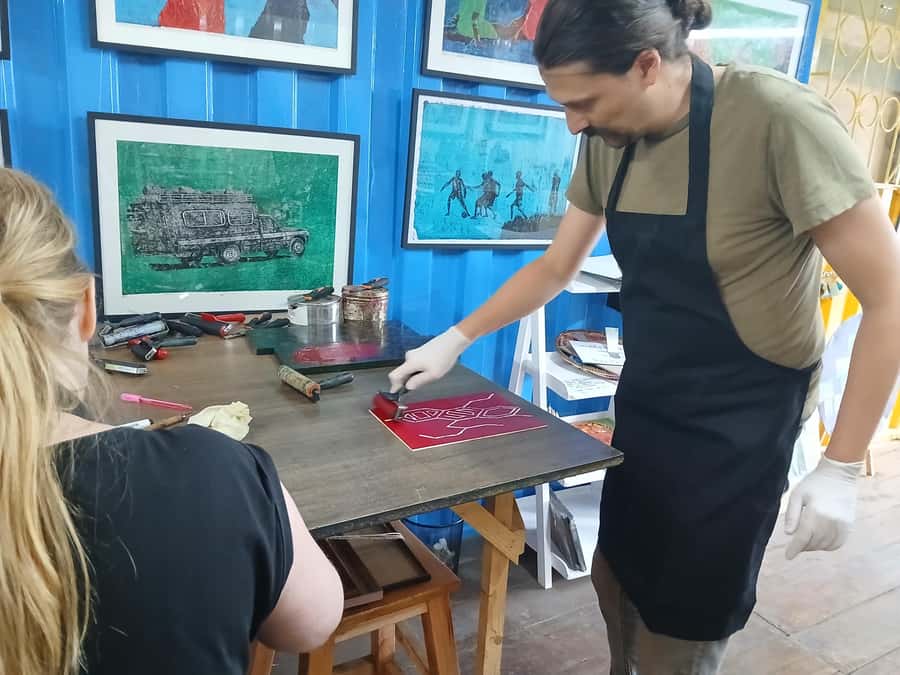
- Inking and printing your design
- What the $27 price includes
- Supporting Nairobi’s independent art community
- How to plan the rest of your day
- Who should book this workshop
- Should you book the Nairobi woodcut workshop?
- FAQ
- How much does the Nairobi woodcut printmaking workshop cost?
- How long does the workshop last?
- Where is the meeting point?
- Who teaches the workshop?
- Is the workshop suitable for beginners?
- What do I take home?
- Are transportation, food, and drinks included?
Key points to know before booking
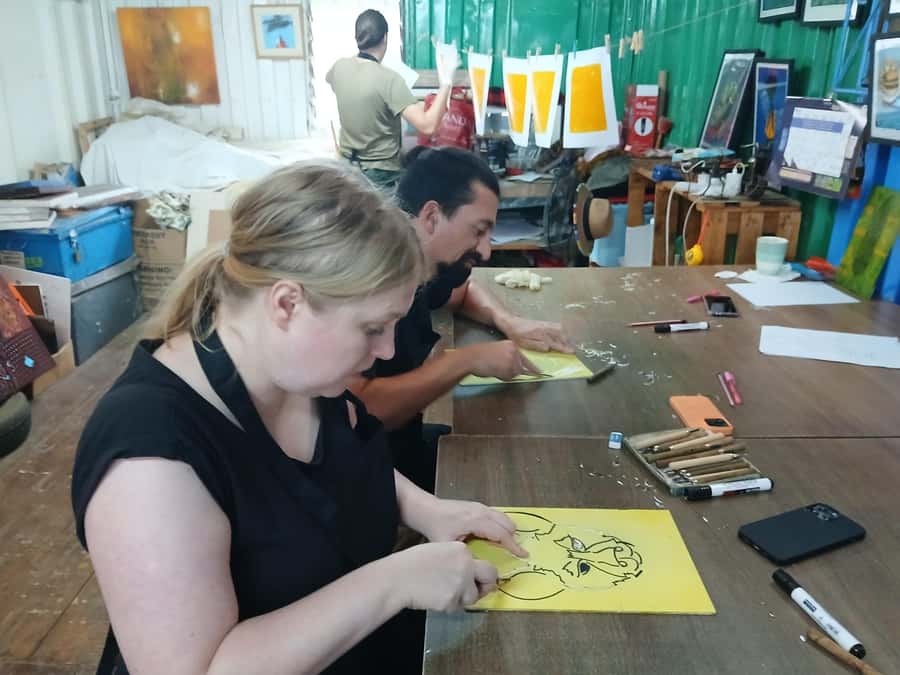
- You create the artwork yourself: Carve a design into a wooden block, apply ink, and make a hand-printed piece to take home.
- Ndunde Bulimo teaches in English: Her step-by-step guidance suits first-time printmakers as well as experienced artists.
- The group is limited to six people: This keeps the workshop personal and leaves room for help with carving and printing.
- Your print is collected after three days: Plan for a return visit, or confirm the collection arrangement before booking.
- Studio 13 is the meeting point: Look for the metallic, rustic-looking gate and go to Studio 13.
- Uber and Bolt are practical options: The studio is easy to reach by ride-hailing services, with bars and restaurants nearby.
Why woodcut printing works so well in Nairobi
Nairobi has plenty of standard sightseeing options, but a creative workshop gives you a different way to connect with the city. Instead of simply looking at Kenyan art, you spend a few hours learning one of the techniques used to make it.
Woodcut printing is a relief-printing method. You carve away parts of a wooden block, leaving the raised sections to receive ink. When paper is pressed onto the block, the remaining design appears as a print. The process is simple in concept, but the result has a handmade quality that digital images cannot copy.
I like this kind of activity because it slows the day down. You need to think about the design, handle the carving tools with care, and accept that the final image may not look exactly as planned. That small element of surprise is part of the pleasure.
The workshop also gives you a direct connection to Nairobi’s independent art scene. The studio is part of a local artists’ collective, so you are not working in an anonymous classroom built only for tourists. You are spending time in a creative space run by a Kenyan artist and supporting a woman-owned business.
A few more options to weigh up in Nairobi
- Nairobi National Park Half-Day Tour; Free Wi-Fi connection
★ 5.0 · 878 reviews - Nairobi: National Park & Optional Elephants & Giraffe Center
★ 4.8 · 874 reviews - NAI NAMI: Nairobi Storytelling Tour with Street Children
★ 5.0 · 792 reviews
Arriving at Studio 13
The meeting point has a metallic gate with a rustic appearance. Once you arrive, go to Studio 13. This detail matters because creative compounds and artist collectives may not look like traditional galleries from the street.
For transport, Uber and Bolt are useful choices. A couple who attended the workshop found the studio easy to reach by both services, and bars and restaurants are located nearby. That makes it possible to plan the activity as part of a larger afternoon or evening in the area.
Transportation is not included, so you arrange and pay for your own ride. I would allow a little extra time for the journey and use the exact meeting instructions when setting your destination. If you are unsure after reaching the gate, contact the host rather than wandering around the compound.
The studio does not provide food or drinks as part of the workshop. You may find nearby places to eat afterward, but the activity itself is focused on printmaking. Wear comfortable clothes that you do not mind getting ink on.
Meeting Ndunde Bulimo, your printmaking teacher
Ndunde Bulimo is both the host and the person guiding the workshop. She is a Kenyan printmaker and visual artist, and her role is central to the experience.
You do not need previous experience. Ndunde takes beginners through the process step by step, from choosing and shaping a design to carving the block and printing it. That matters because woodcut work can look intimidating at first. The finished images may seem simple, but carving requires you to understand which parts of the block will remain visible and which parts will disappear.
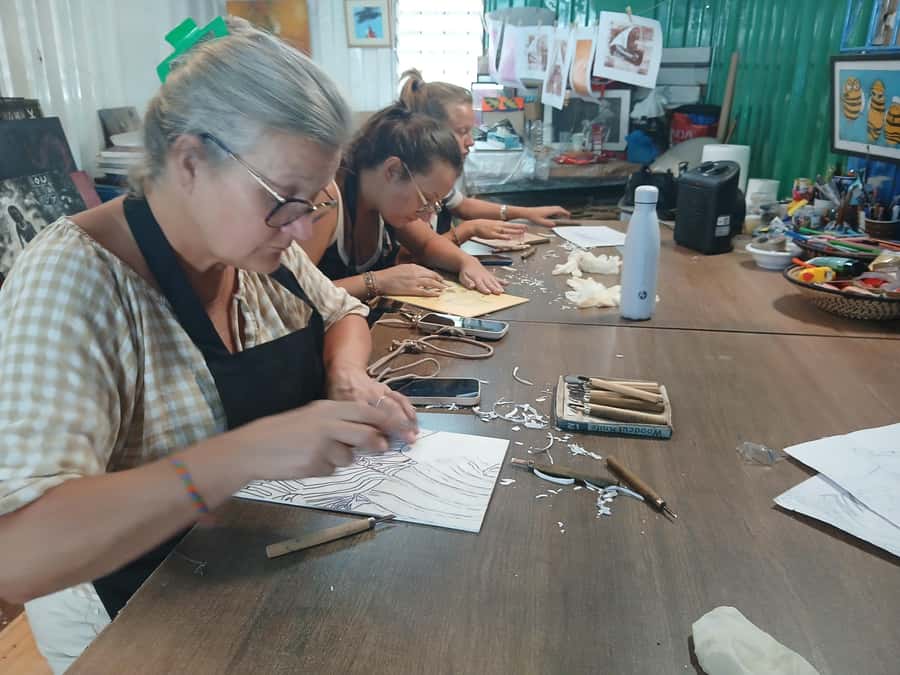
A small group of up to six people helps here. You are not lost in a large class, and you should have room to ask for help when a line is too fine, a section is difficult to carve, or the ink does not spread as expected.
I especially like the balance between instruction and personal choice. Ndunde guides the technical process, but your final image remains your own. You are not just copying a sample and taking home a workshop exercise. You create a design that reflects your own ideas.
The teaching language is English, so you can follow explanations and ask questions in English.
Designing your wooden block
The first creative decision is the design. You may already have an image in mind, or you may need time to think. The workshop is beginner-friendly, so you do not need to arrive with a polished artistic plan.
At this stage, remember that a woodcut is not the same as drawing on paper. The carved block produces a reversed image, and the areas you leave raised will receive ink. Strong shapes and clear lines tend to work better than tiny details, especially for a first attempt.
This is one reason personalized guidance matters. A local printmaker can help you turn a rough idea into something that will work as a relief print. You may need to simplify a drawing or adjust the arrangement before carving begins.
I would not put pressure on yourself to create a perfect piece. The point is to learn the process and make something with your own hands. Small irregularities give the print its character.
A completely different kind of day:
- Nairobi National Park Half-Day Game Drive
★ 4.5 · 738 reviews - Nairobi: Historic and Modern Highlights Walking Tour
★ 4.8 · 703 reviews - Safari Tour; Nairobi National Park
★ 4.5 · 594 reviews - 3 Days Masai Mara Group Joining
★ 5.0 · 486 reviews
Carving the block, slowly and carefully
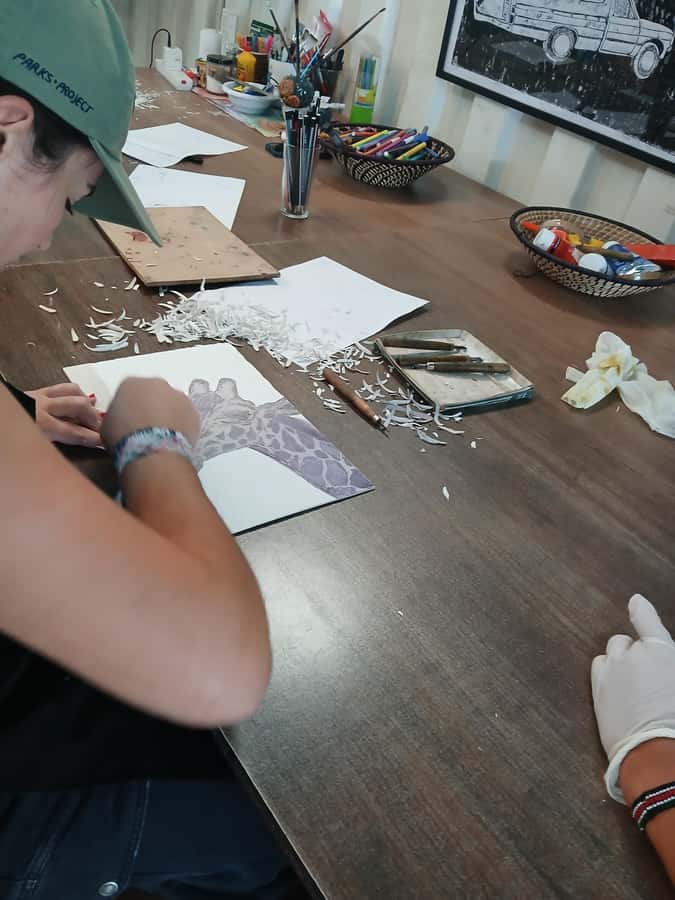
Once the design is ready, you carve the wooden block. This is the most hands-on part of the activity and likely the stage that requires the most patience.
You remove the sections that should remain blank on the paper. The raised wood becomes the inked surface. Each cut changes the final image, so the work rewards a steady pace rather than rushing to finish.
Comfortable clothing is important because ink may get on your clothes. The supplied materials cover what you need for the workshop, but you should arrive dressed for practical creative work rather than a formal outing.
The activity is not suitable for children under 12. That age limit makes sense because carving involves tools and close attention. Weapons and sharp objects are not allowed at the studio, but the carving tools needed for the class are provided as part of the workshop materials.
For many people, this is the most relaxing part of the session. You focus on the block in front of you, make one cut at a time, and let the rest of the day wait. It is creative work, but it also has a quiet, almost meditative rhythm.
Inking and printing your design
After carving, you apply ink to the raised surface of the block. This is where your design begins to look like a finished print.
The inking stage can be less predictable than you expect. Too much ink may soften the lines, while too little may leave parts of the image faint. The hands-on nature of the session lets you see how small changes affect the result.
Then you press the paper onto the inked block and make your print. The moment you lift the paper is the payoff. You see the image that was hidden inside the block, including the handmade marks created during carving.
You receive your hand-printed artwork to take home, but the finished prints need three days to dry before collection. This is the most important planning detail in the entire workshop. If you are leaving Nairobi the next morning, this may not be a practical souvenir unless you arrange a different collection method directly with the studio.
If you have several days in Nairobi, the delay is easy to manage. Schedule the workshop early in your stay and return after three days. You then get a more durable print instead of carrying fresh ink through the rest of your trip.
What the $27 price includes
At $27 per person, the workshop offers solid value if you want an activity rather than a quick photo stop. Your fee includes all materials, instruction from a local printmaker, and the hand-printed artwork you create.
The price also covers something less obvious: access to a small independent art studio and several hours of personal guidance. A finished souvenir bought in a shop may be easier, but it will not carry the same connection to the place or the process.
The group limit of six strengthens the value. You are paying for an intimate class rather than a crowded demonstration. For a first-time printmaker, direct help can make the difference between enjoying the process and feeling stuck.
The price does not include transport, food, or drinks. There is also no studio entry ticket included, so check the booking terms carefully if a separate studio admission charge applies to your date.
I would compare this experience with the cost of other half-day activities in Nairobi, but the better question is what kind of memory you want. If you want a guided creative session and a personal object to take home, $27 is reasonable. If you prefer a passive sightseeing tour, the workshop may not be the best use of your time.
Supporting Nairobi’s independent art community
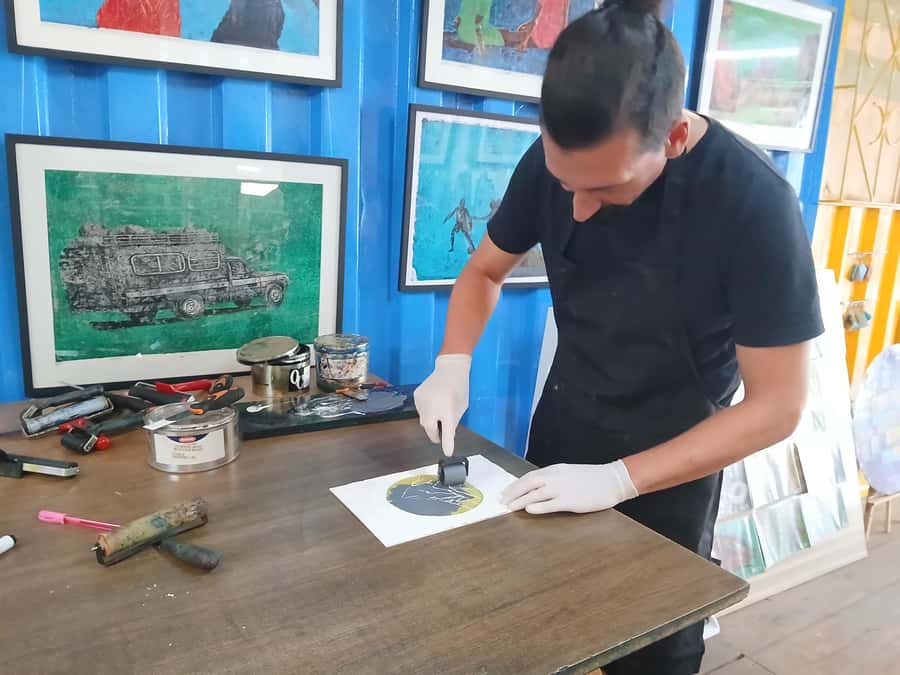
The workshop supports a woman-owned studio and contributes to Nairobi’s independent art community. That gives the activity a wider value than simply learning a craft.
You are paying an artist directly for her time, skills, and creative space. You also get a view of Nairobi that is difficult to find in a standard city tour. The city is not only a place to visit famous sights. It is also a working home for artists, designers, makers, and small creative businesses.
I appreciate that the cultural exchange here is practical. You do not just hear a short explanation about Kenyan art and move on. You spend time in the studio, learn a process, and leave with an object connected to that setting.
The workshop is not presented as a large gallery tour or a full survey of Kenyan art. Its strength is narrower and more personal. You meet one artist, learn one printmaking method, and get a small window into a local creative collective.
How to plan the rest of your day
The workshop lasts a few hours within a one-day booking period. Starting times vary, so check availability for the date you want.
Since food and drinks are not provided, plan a meal before or after. Nearby bars and restaurants make an after-workshop stop possible, but the activity itself does not include a food tasting or social meal.
You can also use the workshop as a break from a packed sightseeing schedule. Carving demands attention, so I would avoid placing it between several rushed appointments. Give yourself enough time to arrive, work at a comfortable pace, and leave without immediately racing to the next attraction.
Book early in your Nairobi stay if you want to collect the print after three days. This one detail can shape the whole plan. A print made on the final day of your trip may be lovely, but it will not be ready for immediate collection.
The activity has free cancellation up to 24 hours before the start time, and you can reserve now while paying later. Those terms help if your Nairobi plans are still changing.
Who should book this workshop
I would recommend it to adults and young people aged 12 or older who enjoy making things with their hands. You do not need to call yourself an artist. In fact, beginners may get the most from the step-by-step format.
It also suits experienced artists who want to try a local studio setting and a relief-printing method. The session is small enough for individual questions, so you can approach it as either a first lesson or a chance to work with a new medium.
Couples may find it especially appealing. You can each make a separate print, share the process, and leave with souvenirs that reflect your own choices rather than buying matching objects from a shop.
I would be more cautious if you have limited time in Nairobi, do not want to return for collection, or dislike the possibility of getting ink on your clothes. This is an active workshop, not a polished performance where you simply watch an artist work.
Should you book the Nairobi woodcut workshop?
Book it if you want a personal Nairobi memory, not just another item on a sightseeing checklist. Ndunde Bulimo’s patient, step-by-step teaching makes the workshop approachable, and the small group keeps the session friendly and focused.
The strongest reasons to go are the hands-on process, the local artist connection, and the chance to support a woman-owned studio. Plan carefully around the three-day drying period, arrange your own transport, and wear clothes that can survive a little ink.
If those details fit your schedule, this $27 workshop is a thoughtful and fairly priced way to spend part of a Nairobi day. You leave with a print you made yourself, which is far more meaningful than a souvenir chosen in a hurry.
FAQ
How much does the Nairobi woodcut printmaking workshop cost?
The workshop costs $27 per person.
How long does the workshop last?
The activity is listed as a one-day experience, with the hands-on session taking place over a few hours.
Where is the meeting point?
The meeting point has a metallic, rustic-looking gate. Go to Studio 13.
Who teaches the workshop?
The workshop is taught in English by Ndunde Bulimo, a Kenyan printmaker and visual artist.
Is the workshop suitable for beginners?
Yes. The session is suitable for beginners and experienced artists, with personalized guidance throughout the design, carving, and printing process.
What do I take home?
You create and receive your own hand-printed woodcut artwork. The finished prints are collected after three days so they can dry.
Are transportation, food, and drinks included?
No. Transportation to and from the studio, food, and drinks are not included.
Just added in Nairobi
- Wildlife Capital: Half-Day Safari at Nairobi National Park★ 5.0 · 2 reviews
- 3 days maasai mara migration safari★ 4.5 · 7 reviews
- 4 Days Tour Landcruiser in Masai Mara and Lake Nakuru★ 5.0 · 10 reviews
- 4 Days Safari to Lake Nakuru N/P and Maasai Mara N/R★ 5.0 · 18 reviews
- Maasai Mara Day Trip★ 5.0 · 15 reviews
- Day Tour to Nairobi national park, Elephants, and Giraffe Center★ 3.5 · 8 reviews
- 6 Days Kenya Budget Group Safari★ 5.0 · 2 reviews
- 3 Days Masai Mara Wildebeest migration Budget safari★ 5.0 · 2 reviews
Workshops, compared.

Traditional Kenyan Cooking Class & Local Market Tour
Read our review →
Authentic Kenyan Cooking Class & Market Tour in Nairobi
Read our review →
Private Traditional Kenyan Cooking Class with Lunch in Nairobi
Read our review →
Market Tour and Traditional Kenyan Cooking Class in Nairobi
Read our review →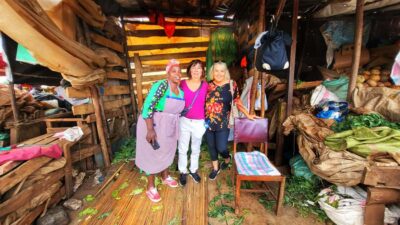
Local Market Tour and Traditional Meal Cooking Class
Read our review →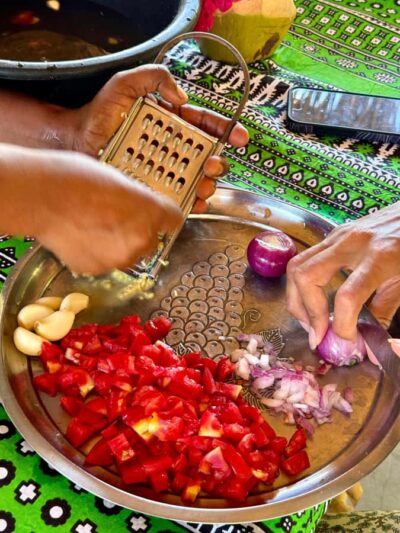
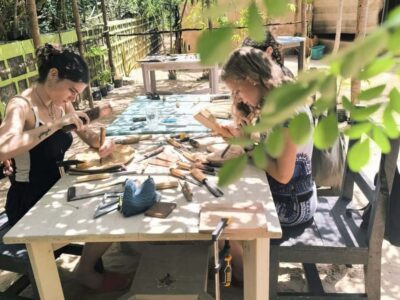
Beginner Swahili Woodcarving Classes with Woman Woodcarver
Read our review →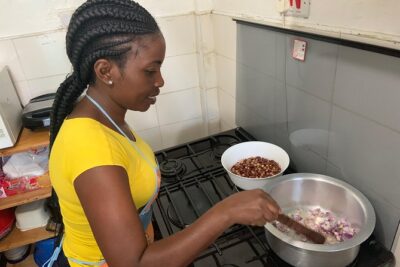
Private Kenyan Cooking Class in Nairobi with a Local
Read our review →Browse the lists this tour appears in