
Reviewed · TOURS
NAI NAMI: Nairobi Storytelling Tour with Street Children
See Nairobi through lived experience. This small-group walking tour brings you into downtown with guides who once lived on the streets and now work with Nai Nami, an organization that gives disadvantaged young people jobs, income, and a future. I like the personal scale, with no more than eight people, and I like that the $45 price includes a local lunch and soft drinks. The main consideration is that this is not a light sightseeing stroll. Stories of poverty, cold nights, survival, and life in the slums can be difficult to hear.
The route covers familiar city landmarks, but the guides give them a human meaning. Guides such as Typhoon, Priest, King, Quick, Tsunami, Moses, and Daniel have led this walk at different times, so your guide may vary. You should also expect a crowded downtown setting, careful attention to your belongings, and strict rules about photography.
In This Review
- What makes this Nairobi walk different
- Meeting at the Hilton in Nairobi CBD
- Starting at the National Archives
- Memorial Park and the big statue
- Crossing the railway station
- Karikor market and the former home base
- Jeevanjee Gardens on the return route
- Lunch gives the afternoon a gentler ending
- What your $45 pays for
- Safety, comfort, and respectful conduct
- Who will get the most from Nai Nami
- Booking details worth remembering
- Should you book this Nairobi tour?
- FAQ
- Where does the Nai Nami tour start?
- Where does the tour end?
- How long does the tour last?
- How much does the tour cost?
- What is included in the price?
- Is hotel pickup included?
- What should I bring?
- Can I take photographs during the tour?
What makes this Nairobi walk different

- Former street children lead the route: Your guide explains Nairobi from personal experience, including places where he once slept, worked, or survived.
- Small groups keep the conversation personal: The maximum group size is eight, useful when you want to ask direct questions.
- Downtown landmarks gain a human story: The National Archives, Memorial Park, railway station, Karikor market, and Jeevanjee Gardens all connect to the guides’ lives.
- Lunch is part of the value: A local meal and soft drinks are included, giving you a simple taste of Kenyan food after the walk.
- Safety is handled actively: Guides keep the group together and help you move through crowded city streets, though you still need to protect your belongings.
- The tour supports paid work: Your booking helps Nai Nami provide income and a future for young people from disadvantaged communities.
Meeting at the Hilton in Nairobi CBD

The tour begins in front of the Bata Shop at the Hilton Hotel, on Bata Watalii Lane in Nairobi’s central business district. This is close to the KICC tower and near public transportation, so the meeting point is fairly practical if you are already staying or sightseeing in the city centre.
The activity lasts about two and a half hours and returns to the same meeting point. There is no hotel pickup or drop-off, so you need to arrange your own way to the Hilton and back afterward.
Arrive ready to walk through busy streets rather than expecting a quiet park route. Good shoes are required, and the operator specifically advises against sandals and high heels. I would choose comfortable closed shoes with a secure fit, since you will be moving through crowded areas and crossing city streets.
You need to carry either your original passport or a copy of the main page and the page showing your visa stamp. Keep the document secure but accessible. The instructions also ask you to leave flashy jewelry and other valuables behind.
A few more options to weigh up in Nairobi
- Nairobi National Park Half-Day Tour; Free Wi-Fi connection
★ 5.0 · 878 reviews - Nairobi: National Park & Optional Elephants & Giraffe Center
★ 4.8 · 874 reviews - Nairobi National Park Half-Day Game Drive
★ 4.5 · 738 reviews
Starting at the National Archives
Once the group sets off, the National Archives becomes the first major point of connection between Nairobi’s public face and the guides’ private past. This is where the guides say their street stories begin, making the stop more than a quick photo opportunity.
Here, the walk shifts from ordinary city sightseeing to personal storytelling. You may hear about how the guides came to live on the streets, how they found places to sleep, and what daily survival required. The value comes from being able to ask questions directly instead of receiving a broad explanation about poverty from a distance.
The small group helps at this point. With eight people or fewer, you have a better chance to hear the guide clearly and ask about details that matter to you. Some accounts describe guides using humor and warmth alongside painful memories, which keeps the walk from becoming a one-note account of hardship.
Memorial Park and the big statue
The route continues toward Memorial Park, a place associated with a tragic event in Nairobi. The stop adds civic context to the walk, but the guides connect it to their own memories and their understanding of the city.
You will also have an opportunity to photograph the large statue. That is one of the few specific photo moments mentioned for the walk, and it comes with an important warning: taking pictures in town is generally not allowed during the tour.
The photography rule deserves attention. You may bring and use your phone, but you should not bring a camera. Ask before photographing people, shops, buildings, or street scenes, and follow your guide’s instructions. This is not just a technical rule. It helps you avoid drawing attention in crowded areas and shows respect for people whose daily lives are not a backdrop.
Crossing the railway station

The railway station is one of the more powerful stops because it links a familiar piece of city infrastructure to the guides’ memories of cold nights on the streets. You hear about how they found shelter and managed basic needs when they had nowhere else to go.
I would expect this part to be serious and personal. The tour does not reduce street life to a quick inspirational story. The point is to understand the routines and dangers behind the label of street child, including the practical problem of finding somewhere to sleep.
Several guides may be present during parts of the walk, depending on the group and the day. Names that appear in accounts include Typhoon, Tsunami, Priest, King, Quick, and Moses. The exact combination can change, so book this for the storytelling approach rather than for one particular guide.
A completely different kind of day:
- Nairobi: Historic and Modern Highlights Walking Tour
★ 4.8 · 703 reviews - Safari Tour; Nairobi National Park
★ 4.5 · 594 reviews - 3 Days Masai Mara Group Joining
★ 5.0 · 486 reviews - Elephant Orphanage and Giraffe Center Tour with Options
★ 4.5 · 457 reviews
Karikor market and the former home base

The Karikor area, with its large market, was once a home base for the guides when they lived on the streets. That detail changes how you see the market. Instead of passing through only as a commercial district, you begin to notice it as a place tied to work, shelter, friendships, and survival.
Markets can be crowded and distracting, so this is where practical awareness matters most. Keep your phone and wallet secure, avoid flashy items, and stay close to the group. One account describes the guides as widely known around the city, with people greeting them along the way, but that should not make you careless.
The market stop also shows why a local guide matters. A standard city walk may point out what a building sells or when it was built. Nai Nami’s guides explain how people use the area and how the streets function for someone living without a stable home.
Jeevanjee Gardens on the return route

On the way back, the group passes Jeevanjee Gardens. After the heavier sections of the walk, this stop helps bring the route back toward central Nairobi and the starting point.
The gardens give the tour a change of pace, but the focus remains on the guides’ lives and the city around you. You are not simply collecting landmarks. You are seeing how public spaces, streets, markets, transport areas, and commercial districts fit together in the daily life of Nairobi.
The walk ends back at the Hilton meeting point. Since the stated duration is about two hours and thirty minutes, leave room in your schedule rather than arranging a tight transfer immediately afterward.
Lunch gives the afternoon a gentler ending

A local lunch and soft drinks are included in the $45 price. The meal is not an extra restaurant booking or an optional add-on. It gives the group time to sit down after the walk and try Kenyan food as part of the program.
The exact dishes are not specified, so do not book this expecting a particular menu. The food is best viewed as a useful part of the tour’s overall value and a chance to share a meal after hearing the guides’ stories.
Lunch also helps the tour feel less like a staged presentation. You have time to continue talking with the guides in a calmer setting, ask questions you did not think of on the street, and reflect on what you have heard.
What your $45 pays for

At $45 per person, this is not the cheapest way to see Nairobi’s centre. You are paying for a personal guide, a small group, a local lunch, soft drinks, and a social project designed to create paid work for disadvantaged young people.
That last point matters. Nai Nami means Nairobi with me, and its aim is to give young people from slums employment, income, and a future. The tour uses storytelling as the service, rather than treating the guides as charity objects. Your payment supports a work model in which the guides earn money by sharing their skills and experiences.
The price makes the most sense if you want context and conversation, not just landmarks. If you only want photographs of central Nairobi, you can find cheaper ways to walk around. If you want to understand how parts of the city looked and functioned to people who once lived on its streets, the added cost is easier to justify.
The lunch and drinks also reduce extra spending during the half-day. You still need to pay for your own transport to the Hilton, and hotel pickup is not included.
Safety, comfort, and respectful conduct
Safety is one of the strongest practical themes in the feedback about this tour. People describe feeling looked after by the guides, and several guides may help keep the group together and guide you across busy areas.
That does not mean you should treat downtown Nairobi as risk-free. The tour takes place in crowded parts of the city, so use the same care you would in any large urban centre. Carry only what you need, protect your pockets, leave valuable jewelry at your accommodation, and follow the guide’s advice.
The passport requirement is easy to overlook. Bring the original passport or copies of the identification page and visa-stamp page. Do not assume a digital image will meet the stated requirement.
The camera restriction may disappoint anyone hoping to document the walk. You can use your phone, but photography in town is limited. Listen when the guide says not to take a picture, especially around people, official locations, markets, or sensitive sites.
The minimum age is 14, and most people can take part. Still, the emotional subject matter deserves thought before booking for a young teenager. A child who is curious about social issues may find it meaningful, while another may find the stories upsetting.
Who will get the most from Nai Nami
I would choose this tour if you want to meet Nairobi through people rather than monuments. It suits visitors who ask questions, listen carefully, and are comfortable with a direct discussion of poverty and street life.
It is also a good fit if you want a small group. The maximum of eight people makes it easier to hear the guides and build a personal connection. Guides such as Typhoon and King are praised for combining personal stories with humor, care, and a strong sense of the city.
You may want another kind of tour if you prefer a polished sightseeing route, extensive photography, or a lighter introduction to Nairobi. The walk can be emotionally demanding, and the city streets are crowded. It is also not designed for people who want a private hotel-to-hotel activity, since you must reach the Hilton yourself and return there at the end.
The route is described as a walking tour around downtown, though one account also describes taking a bus toward the slums. Treat the central walk as the core of the activity and ask the operator about the exact route if transport beyond downtown is important to you.
Booking details worth remembering
The activity is commonly booked about 28 days in advance, so I would reserve ahead if your Nairobi dates are fixed. Confirmation is provided when you book, and the ticket is mobile.
Free cancellation applies when you cancel at least 24 hours before the local start time. Cancellations or changes made within 24 hours are not accepted for a refund.
Because the tour ends where it starts, plan your next activity around the Hilton rather than assuming you will finish near your hotel. The central location makes it convenient for continuing around Nairobi, but you remain responsible for your own transport.
Should you book this Nairobi tour?
Book Nai Nami if you want an honest, personal introduction to Nairobi and are prepared to listen to difficult stories. The strongest reasons are the former street children who guide the route, the small group, the active attention to safety, and the fact that lunch and drinks are included in a project that creates paid work.
Skip it if you want a relaxed photo walk or if the subject of homelessness and childhood hardship feels too heavy for your trip. For the right person, this is not simply a way to see downtown. It is a chance to understand how several ordinary city places shaped extraordinary lives.
FAQ
Where does the Nai Nami tour start?
The tour starts in front of the Bata Shop at the Hilton Hotel on Bata Watalii Lane in Nairobi’s central business district.
Where does the tour end?
The activity ends back at the meeting point near the Hilton Hotel.
How long does the tour last?
The tour lasts approximately two hours and thirty minutes.
How much does the tour cost?
The listed price is $45 per person.
What is included in the price?
The price includes a personal guide, local lunch, and soft drinks.
Is hotel pickup included?
No. Hotel pickup and drop-off are not included, so you must make your own way to and from the Hilton meeting point.
What should I bring?
Bring good walking shoes and either your original passport or copies of the main passport page and the page showing your visa stamp.
Can I take photographs during the tour?
You should not bring a camera, since photography in town is not allowed. A phone is permitted, but follow the guide’s instructions about when and where you may take pictures.
Just added in Nairobi
- Wildlife Capital: Half-Day Safari at Nairobi National Park★ 5.0 · 2 reviews
- 3 days maasai mara migration safari★ 4.5 · 7 reviews
- 4 Days Tour Landcruiser in Masai Mara and Lake Nakuru★ 5.0 · 10 reviews
- 4 Days Safari to Lake Nakuru N/P and Maasai Mara N/R★ 5.0 · 18 reviews
- Day Tour to Nairobi national park, Elephants, and Giraffe Center★ 3.5 · 8 reviews
- 6 Days Kenya Budget Group Safari★ 5.0 · 2 reviews
- Maasai Mara Day Trip★ 5.0 · 15 reviews
- 3 Days Masai Mara Wildebeest migration Budget safari★ 5.0 · 2 reviews
Tours, compared.

Nairobi National Park Half-Day Tour; Free Wi-Fi connection
Read our review →


Elephant Orphanage and Giraffe Center Tour with Options
Read our review →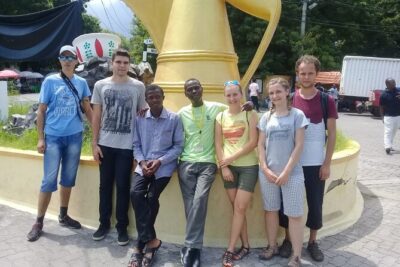
Walking Tour Through Old Town Mombasa and Fort Jesus
Read our review →
Day Tour to Amboseli National Park & Maasai Village
Read our review →
Tour: Giraffe Center and Nairobi National Park
Read our review →