

Reviewed · KIBERA COMMUNITY TOURS
Memorable Daily KIBERA Slums/Toi Market Tour with Locals (2 hours)
Kibera changes how you see Nairobi. This two-hour walking tour takes you into East Africa’s largest informal settlement with a local youth guide, offering a close look at daily life, work, schools, and community projects. I like the local leadership and the chance to hear about Kibera from people with real ties to it. I also like that the tour supports youth employment and rural girl-child education through DALA’s charity work.
The main drawback is that this is not a polished sightseeing trip. Paths may be muddy, conditions are difficult, and the experience can feel uncomfortable by design. A past booking problem also led one customer to wait for more than an hour before the tour was canceled, though DALA explained that the incident happened during a Nairobi lockdown and issued a full refund. Clear confirmation before setting out is wise.
In This Review
- Key points to know before you go
- Why this Kibera tour is different from ordinary Nairobi sightseeing
- Meeting at Olympic Primary School
- Walking through Kibera with Bramwel or Frederick
- What you learn about work and daily life
- NGO projects, education, housing, and health
- The ethical side of visiting a slum
- Toi Market and what the listing does not make clear
- Price, timing, and practical comfort
- Who should book this Kibera experience?
- Should you book the Kibera Slums and Toi Market tour?
- FAQ
- How long does the Kibera tour last?
- How much does the tour cost?
- Where does the tour start?
- Where does the tour end?
- Are transfers included?
- Is Toi Market definitely included?
- Who leads the tour?
- What does the tour visit?
- Is lunch included?
- Can I cancel for a refund?
Key points to know before you go

- Local guides lead the way: Guides such as Bramwel and Frederick have personal links to Kibera and can explain the community beyond surface impressions.
- Olympic Primary School anchors the visit: The tour ends at one of Kenya’s largest public primary schools, a place tied to education and upward mobility in Kibera.
- The informal economy comes into focus: You learn how residents earn, trade, build, and support one another in a crowded urban settlement.
- Community projects are part of the story: The route includes discussion of NGO work involving housing, education, and health.
- Bring sturdy shoes: Muddy or wet paths are possible, so sandals and delicate footwear are poor choices.
- The ethical question matters: Kibera is home, not a human zoo. Ask before taking photographs and let your guide set the tone.
Why this Kibera tour is different from ordinary Nairobi sightseeing
Nairobi is often presented through wildlife parks, colonial-era buildings, and modern shopping districts. Kibera gives you another view of the city, one shaped by density, limited services, resourcefulness, and strong neighborhood ties.
The settlement is described as covering about 2.5 square kilometers and housing an estimated one million people from across East Africa. Those figures are estimates, and conditions change, but they give you a sense of the pressure on space and infrastructure. The tour is less about checking off sights and more about understanding how a large community functions.
That distinction matters. You are not simply looking at poverty from a vehicle window. You walk with a person who knows the streets and can explain what you are seeing. DALA founder Erick lived in Kibera for a time and still has relatives there, while guides such as Bramwel have grown up in the area or remain closely connected to it.
The best guides make the place feel human without pretending its problems are small. They can point out homes, schools, businesses, and projects while explaining how residents manage everyday challenges. You should expect a serious visit, but not a joyless one. The warmth of personal introductions and the friendliness described by customers are a major part of the experience.
More Kibera community tours:
- Nairobi: Explore Kibera Slum with Local Guides
★ 4.9 · 365 reviews - Kevins Kibera Slum Tours
★ 5.0 · 213 reviews - Nairobi: Kibera Slum storytelling tour with a Local
★ 5.0 · 185 reviews
Meeting at Olympic Primary School
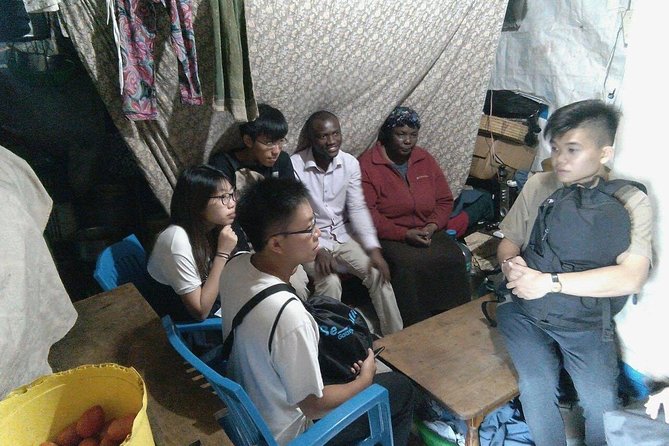
The tour begins and ends at Olympic Primary School, listed at MQQH+3FJ in Nairobi. Round-trip transfers from the designated meeting point are provided, so you are not left to find your own way through Kibera at the start or end of the walk.
Olympic Primary School is more than a pickup point. It is also the final stop and one of the tour’s most meaningful locations. The school is described as Kenya’s largest public primary school and was once known for strong academic results. Its story is tied to families using education to find a path out of poverty.
That gives the visit a useful counterpoint. Kibera is not presented only as a place of hardship. Education, local leadership, and long-term effort are part of the picture too. You may leave with a clearer idea of why schools and youth programs matter so much in the community.
The meeting arrangement is simple, but I would still confirm the time and pickup details in advance. One serious complaint involved a missed meeting and delayed communication. The operator attributed it to pandemic restrictions, but the practical lesson remains: do not assume that a booking alone replaces a final confirmation.
Walking through Kibera with Bramwel or Frederick
The guide can make or break this experience. Names that appear repeatedly in the tour details include Bramwel, also written as Bremwal, and Frederick. Both are praised for being friendly, informative, and careful about comfort and safety.
Bramwel is described as someone who grew up in Kibera, later moved out of the most crowded area, stayed nearby, and played for a Kibera football team. Those connections help explain why he can greet people by name and introduce you to ordinary residents rather than simply point at buildings.
One especially personal possibility is entering a local home with the owner’s permission. This can help you understand the scale and arrangement of domestic life in Kibera far better than a passing glance from outside. It also requires respect. You are entering someone’s private space, so listen first, ask before photographing, and do not treat the visit as a photo opportunity.
Frederick is praised for answering questions and presenting the realities of Kibera directly. His approach is described as friendly and personal, with attention to local projects and the people affected by them. Guides may adapt the conversation to your interests, but the exact route and introductions can vary.
A group of up to 50 people is allowed, which is worth considering. A small party may have an easier time hearing the guide and asking questions. A larger group could feel less personal and may be more noticeable in narrow streets. If group size matters to you, ask DALA about the expected number on your date.
What you learn about work and daily life

The tour focuses on the informal economy, the network of small ways people earn money outside formal employment. In a place with high youth unemployment, this subject is not a side note. It is central to understanding how households survive and how residents create opportunity with limited resources.
You may see or hear about local businesses, home-based work, small shops, and services. The supplied details do not promise a fixed list of businesses or demonstrations, so keep expectations flexible. The value comes from the guide’s explanation of what different structures and activities mean to local people.
You also get a sense of how tightly packed the settlement is. With a large population in a small area, homes, paths, schools, trading spaces, and community facilities sit close together. That closeness can be striking, but the tour should not reduce people to statistics or scenery.
The tone described by past customers is often warm and direct. You may meet residents who smile, chat, or share part of their story. That does not mean life in Kibera is easy. It means hardship and dignity exist together, which is one of the most important lessons the tour can offer.
More markets in Nairobi:
- Traditional Kenyan Cooking Class & Local Market Tour
★ 5.0 · 129 reviews - Half-Day Nairobi National Park and Maasai Market with Pick up
★ 5.0 · 16 reviews - Authentic Kenyan Cooking Class & Market Tour in Nairobi
★ 5.0 · 12 reviews - Nairobi: Hop on Hop off and Maasai market Collections Visit
★ 3.5 · 10 reviews
NGO projects, education, housing, and health

A major part of the walk concerns projects aimed at improving housing, education, and health for Kibera’s residents. This gives you a way to think beyond immediate impressions and ask what practical change looks like on the ground.
Some projects may be successful, while others may struggle with funding, management, or corruption. One detailed account specifically described a mixture of successful and unsuccessful NGO efforts. That is useful context because charitable work is not automatically effective simply because its goals sound good.
DALA also says that part of its proceeds supports MAKLWETA, a charity founded to help rural girls continue their education. The company presents the tour as a way to employ local young people in a country where youth unemployment is above 50 percent, according to its own information.
You should treat this as a meaningful benefit, but not as a reason to ignore the quality of the tour itself. A responsible visitor can value local employment and community support while still asking how the money is used. If that issue matters to you, ask DALA directly about the current projects and the share of proceeds involved.
The ethical side of visiting a slum

Kibera tours raise a fair question: is it right to visit a poor community as a sight? The answer depends heavily on how the visit is run and how you behave.
This experience is built around local guides, personal connections, community projects, and conversation rather than a quick drive-by view. That is a better starting point than an outsider-led tour that treats residents as scenery. Still, your conduct matters just as much as the company’s intentions.
Put your camera away unless you have permission. A person’s home, workplace, or family moment is not automatically available because you are carrying a phone. Follow your guide’s advice about where to walk, what to photograph, and when to pause.
Use ordinary courtesy. Do not hand out sweets, money, or gifts to children unless your guide gives you a responsible way to help. Ask questions about systems and experiences, not just about the most shocking conditions. You will get more from the visit, and you will show more respect.
The tour may feel humbling, but avoid turning that feeling into a performance. Kibera is home to about a million people, not a backdrop for proving that you have seen hardship. The strongest experience is quiet, attentive, and willing to listen.
Toi Market and what the listing does not make clear
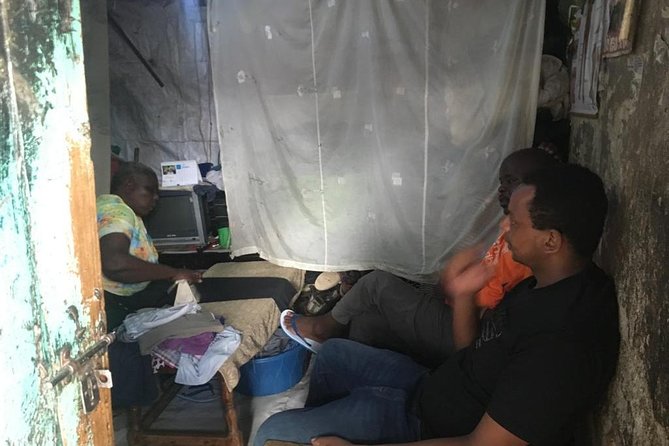
The experience title includes Toi Market, but the supplied route details do not clearly specify a market stop. The described visit centers on Kibera, community projects, local homes or connections when appropriate, and Olympic Primary School.
If Toi Market is important to your plans, confirm whether it is included on your selected departure. Do not assume the title guarantees a separate market visit. This is a small but important point for anyone planning a tight Nairobi schedule.
The same advice applies to the duration. The main description calls it a two-hour tour, while the total experience is shown as roughly two to three hours and the schedule includes a second one-hour section about DALA’s purpose. Plan for up to three hours rather than arranging an immediate appointment afterward.
Price, timing, and practical comfort

At $25 per person, this is reasonably priced for a guided Nairobi experience that includes fees, local guiding, and transfers from the designated meeting point. You are paying less for grand attractions and more for access, interpretation, and the chance to support local employment.
The value is strongest if you want context and human contact. It is weaker if you expect a conventional attraction with display boards, formal facilities, or a tightly scripted route. The tour’s quality rests heavily on the guide and the communication around your booking.
The average booking lead time is 11 days, though one customer arranged the tour on the same day after communicating with Frederick. I would not count on last-minute availability, especially if you have limited time in Nairobi.
Wear clothes and shoes suited to walking through wet or muddy areas. One customer specifically advised sturdy shoes that can get dirty. Keep valuables secure, carry only what you need, and follow the guide’s instructions about movement and photography.
Lunch and drinks are not included. Local restaurants can be visited at your request, but you should treat that as an optional extra rather than part of the standard tour.
The tour is near public transportation, service animals are allowed, and the operator says most people can participate. It is still a walking visit through difficult urban conditions, so anyone with mobility concerns should ask DALA for current route details before booking.
Who should book this Kibera experience?
I would recommend it to you if you want to understand Nairobi beyond the usual safari circuit. It suits people who listen well, ask thoughtful questions, and accept that the route may be uncomfortable or unpredictable.
It is especially useful for visitors interested in youth employment, education, community development, and the informal economy. Parents, students, photographers who are willing to follow strict consent rules, and socially minded visitors may find plenty to think about.
I would hesitate to recommend it if you want a light entertainment stop or a place to take dramatic photographs. The tour deals with poverty and crowded living conditions, and it can leave you unsettled. That is not a flaw, but you should know what you are choosing.
The 97 percent recommendation rate and 4.8 rating from 29 ratings suggest strong satisfaction overall. The one serious complaint about a missed tour should not be ignored, especially because time is precious on a Nairobi visit. Confirm the meeting plan, keep the operator’s contact details, and allow a little flexibility.
Should you book the Kibera Slums and Toi Market tour?
Book it if you want a locally guided, thoughtful look at one of Nairobi’s most misunderstood communities. The strongest reasons are the guides’ personal links, the focus on schools and development work, and the chance to support local youth employment.
Before paying, confirm the start time, pickup arrangement, expected group size, total duration, and whether Toi Market is actually included. Cancel at least 24 hours before the start for a full refund. Inside 24 hours, the payment is not refundable.
This is not a comfortable tour in the usual sense. It is valuable because it asks you to pay attention. Go with sturdy shoes, a respectful attitude, and a willingness to put the camera away.
FAQ
How long does the Kibera tour last?
The core walking tour lasts about two hours. The total experience is listed as approximately two to three hours, so allow up to three hours.
How much does the tour cost?
The listed price is $25 per person.
Where does the tour start?
The tour starts at Olympic Primary School, MQQH+3FJ, Nairobi, Kenya.
Where does the tour end?
The tour ends at Olympic Primary School, the same location where it starts.
Are transfers included?
Round-trip transfers from the designated meeting point are provided.
Is Toi Market definitely included?
The title refers to Toi Market, but the supplied route details do not clearly confirm a separate market stop. Confirm this with DALA before booking.
Who leads the tour?
A local youth guide leads the walking tour. Guides named in the supplied information include Bramwel, also spelled Bremwal, and Frederick.
What does the tour visit?
The experience covers Kibera, local community life, informal work, NGO projects involving housing, education, and health, and Olympic Primary School.
Is lunch included?
No. Lunch and drinks are not included, but local restaurants can be visited at your request.
Can I cancel for a refund?
Yes. Cancel at least 24 hours before the local start time for a full refund. Cancellations or changes made less than 24 hours before the start are not refunded or accepted.
More Shopping Tours in Nairobi
- Nairobi souvenir Shopping and Historical Half day Tour
★ 5.0 · 61 reviews - Nairobi Cultural Shopping Experience
★ 5.0 · 21 reviews - Nairobi Guided Cultural Shopping Experience Day Tour
★ 4.0 · 12 reviews - Nairobi cultural souvenir shopping tour with a local
★ 5.0 · 12 reviews
Just added in Nairobi
- Wildlife Capital: Half-Day Safari at Nairobi National Park★ 5.0 · 2 reviews
- 3 days maasai mara migration safari★ 4.5 · 7 reviews
- 4 Days Tour Landcruiser in Masai Mara and Lake Nakuru★ 5.0 · 10 reviews
- 4 Days Safari to Lake Nakuru N/P and Maasai Mara N/R★ 5.0 · 18 reviews
- Day Tour to Nairobi national park, Elephants, and Giraffe Center★ 3.5 · 8 reviews
- 6 Days Kenya Budget Group Safari★ 5.0 · 2 reviews
- Maasai Mara Day Trip★ 5.0 · 15 reviews
- 3 Days Masai Mara Wildebeest migration Budget safari★ 5.0 · 2 reviews
Kibera Community Tours, compared.





Kibera Slum Tour with Local Social Entrepreneurs
Read our review →


Browse the lists this tour appears in