

Reviewed · KIBERA COMMUNITY TOURS
Nairobi: Kibera Slum storytelling tour with a Local
Start with curiosity, not pity. This three-hour Kibera walk gives you a rare look at Nairobi through the eyes of people who grew up there, with stops at Toi Market, a community school, a local home, and the Hope and Shine Kibera Centre. I especially like the local guides, including Elijah, Peter, Lucas, and Effie, who explain the area through personal experience. I also like that the tour supports a school project, with the team stating that 20 percent of ticket proceeds goes toward local education. The main consideration is simple: this is a serious walking tour through narrow, unmarked streets, and it may feel uncomfortable or emotionally heavy at times.
Meet at Greenhouse Mall in Kilimani, then walk into Kibera with your guide. You will see more than hardship. You will see shops, homes, artists, market stalls, schools, community projects, and people getting on with daily life. Respectful conduct matters here, so bring an open mind, ask before taking close-up pictures, and dress for walking rather than for a polished city outing.
In This Review
- Key points to know before booking
- Why this Kibera walk is different
- Starting at Greenhouse Mall in Kilimani
- Walking Kibera’s narrow streets and alleys
- Toi Market: shopping with a purpose
- Hope and Shine Kibera Centre and local initiatives
- Entering a local home
- Safety, timing, and the feel of the visit
- What the $20 price really gives you
- Who should book this experience
- Should you book the Kibera storytelling tour?
- FAQ
- Where does the Kibera tour begin?
- How long does the tour last?
- Is this a private tour?
- What language is the live tour in?
- Does the tour visit a school?
- Can I visit a local home?
- Can I shop during the tour?
- What happens if the weather is poor?
Key points to know before booking
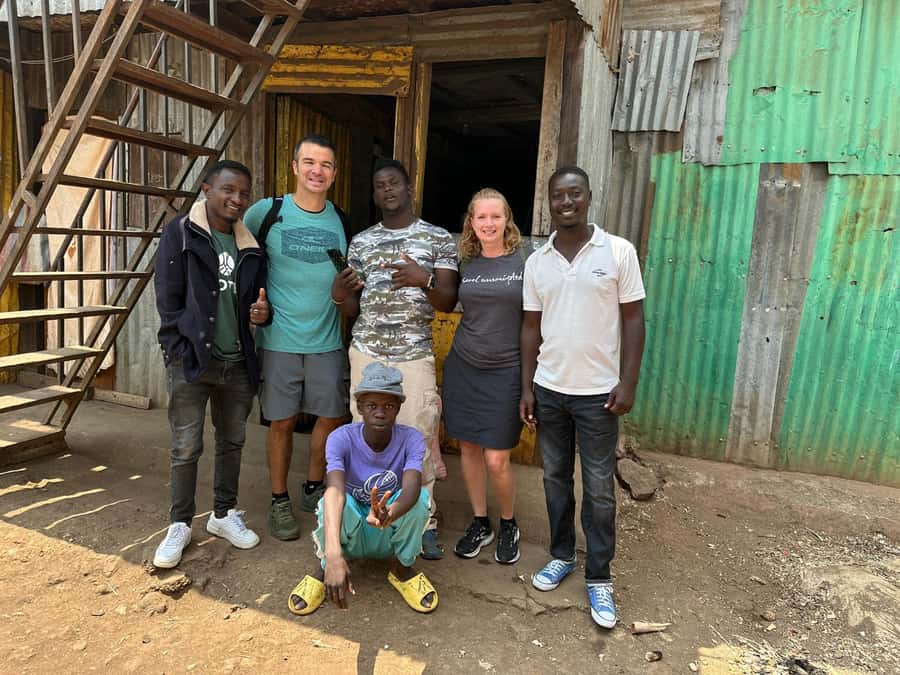
- Local guides tell personal stories: Elijah, Peter, Lucas, and Effie have been praised for explaining Kibera from lived experience.
- The school visit gives the tour a practical purpose: Ticket income helps support a local school project, according to the tour team.
- Toi Market adds color and movement: You can browse local goods and buy beads, jewelry, artwork, and other handmade items.
- You enter a real home: This is a personal and direct look at household life, so humility and permission are essential.
- Expect three hours on foot: Streets and alleys are narrow, uneven, and often unmarked.
- The private format keeps the visit personal: Only your group takes part, with safety support throughout.
Why this Kibera walk is different

A guided visit to an informal settlement can easily become a one-sided look at poverty. This tour works better when you treat it as a community visit led by local people, not as a spectacle.
Your guide helps explain how residents manage daily life, support one another, and create local solutions. The phrase City of Hope makes more sense as the walk progresses. It refers less to easy living and more to the determination to build schools, businesses, art projects, and support networks under difficult conditions.
I like the way the tour puts faces and stories ahead of statistics. Elijah has shared stories from his own life in Kibera, while Peter has shown visitors his home and school project. Effie has been praised for her warmth and thoughtful explanations. These details make the experience personal without pretending that life in Kibera is easy.
You should still approach the visit carefully. You are entering someone else’s neighborhood and, in some cases, someone’s home. Ask before photographing people, especially children. If you want to buy something, choose a local product rather than handing out money or treats at random.
More Kibera community tours:
- Nairobi: Explore Kibera Slum with Local Guides
★ 4.9 · 365 reviews - Kevins Kibera Slum Tours
★ 5.0 · 213 reviews - Kibera Slum Tour with Lucas
★ 5.0 · 119 reviews
Starting at Greenhouse Mall in Kilimani
The meeting point is the entrance of Greenhouse Mall. If you arrive early, you can wait on a bench near the fountain on the ground floor.
This is a useful starting point because it gives you a clear public place to meet your guide before entering the settlement. The tour provider arranges the visit from there and brings you into Kibera on foot.
The booking information lists a three-hour duration, though some visits have lasted closer to three and a half hours. Allow a little flexibility, especially if your group asks many questions or spends extra time at the school, market, or community projects.
The tour is private, so only your group participates. That matters here. A small group makes it easier to listen, ask questions, and avoid turning the walk into a noisy procession through residential streets.
Walking Kibera’s narrow streets and alleys

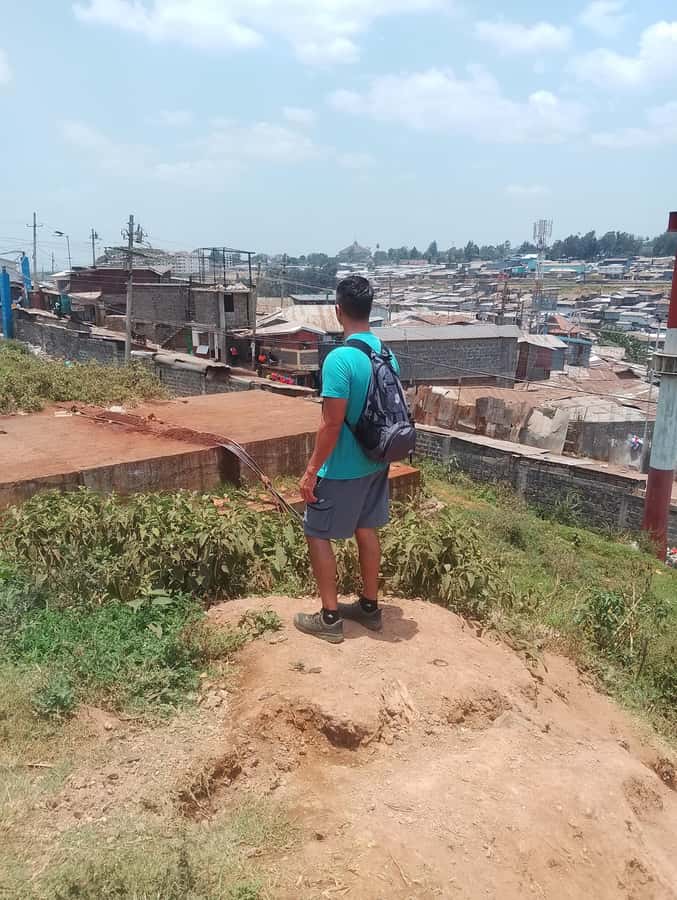
The main part of the tour is a guided walk through Kibera’s maze of unmarked streets and narrow alleys. You will not be following a neat sightseeing route with signs and formal viewing platforms. Your guide leads you through an active residential area where people live, work, shop, attend school, and meet neighbors.
This is where local knowledge makes a major difference. Guides who grew up in Kibera can explain the places you pass and help you understand the community beyond first impressions. They can also guide you through streets that would be difficult to navigate alone.
The walk may include practical parts of everyday life, such as public toilets, washing facilities, a garbage collection point, a river, residential buildings, and the railway area. These are not glamorous stops, but they explain the infrastructure challenges residents face.
You may see people making useful things from recycled materials. One group creates art and jewelry, while another works with recycled materials to produce crafts. Other initiatives focus on women affected by HIV, empowerment, and local support.
The best approach is to listen. The point is not to collect shocking photographs. It is to understand how people adapt, organize, and make a living.
Wear comfortable shoes that you do not mind getting dusty or dirty. One review specifically advises against wearing expensive shoes or fine clothing. That is good practical advice. The route is a walking route, and you should be prepared for crowded passages and rougher conditions than you would find in central Nairobi.
Toi Market: shopping with a purpose

Toi Market is described as the largest market in Kibera. It adds a lively commercial side to the visit and helps show that Kibera is not only a residential area. It is also a place where people trade, create, repair, and earn money.
Your guide can help explain what you are seeing, which is useful in a market where many stalls may look unfamiliar. The exact shopping experience will depend on the day and the activity at the market, but you can expect a busy local trading area rather than a formal craft center.
Several visitors have bought beads, jewelry, clothing, and artwork from local groups. One women’s organization makes handcrafted jewelry and clothing, while young people create jewelry from recycled materials. Buying directly from these groups can be a more meaningful souvenir than purchasing a generic item elsewhere in Nairobi.
Bring some Kenyan shillings if you want to shop. The tour price covers the activity, but purchases are extra. You should never feel pressured to buy, though a small purchase can support the makers you meet.
Photography requires care here. The market offers plenty of color and activity, but people are not scenery. Ask before photographing sellers, makers, or anyone you meet closely.
A few more options to weigh up in Nairobi
- Nairobi National Park Half-Day Tour; Free Wi-Fi connection
★ 5.0 · 878 reviews - Nairobi: National Park & Optional Elephants & Giraffe Center
★ 4.8 · 874 reviews - NAI NAMI: Nairobi Storytelling Tour with Street Children
★ 5.0 · 792 reviews - Nairobi National Park Half-Day Game Drive
★ 4.5 · 738 reviews
Hope and Shine Kibera Centre and local initiatives
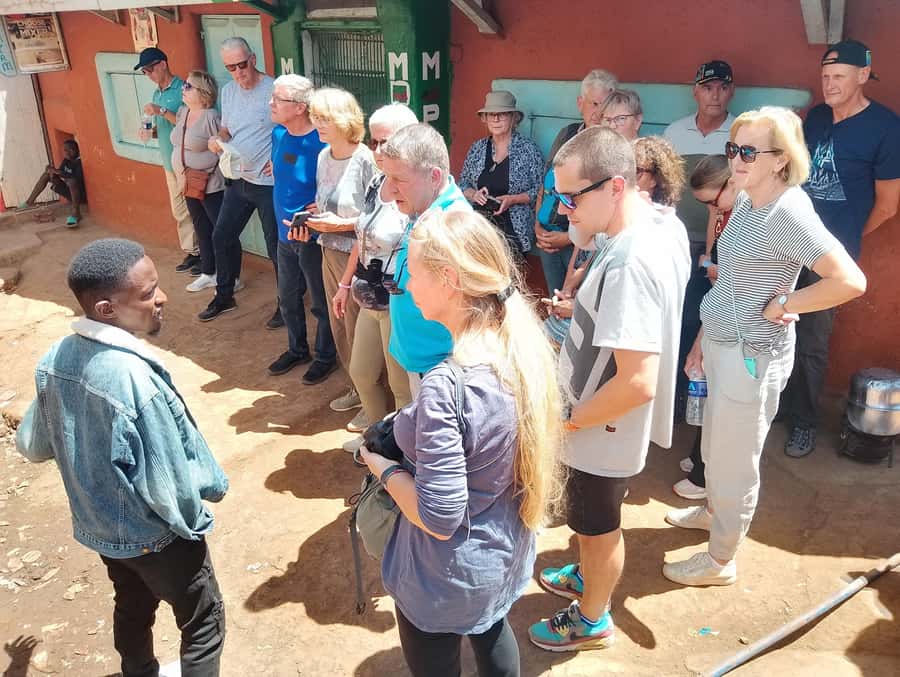
The Hope and Shine Kibera Centre is a community center that provides education and support. It helps show how local organizations respond to needs that cannot be solved by a short visit or a single donation.
The tour may also introduce you to other community groups, artists, and local projects. These stops give the walk a more balanced shape. You see difficult conditions, but you also see people building services and income opportunities for their neighbors.
The school visit is one of the strongest parts of the experience. The school provides education for children in Kibera, and the project connected with the tour helps pay for its development and teacher salaries. The tour team says 20 percent of ticket proceeds goes to the school.
You may meet children at the school and see classes or school facilities, depending on the timing of your visit. The children have been described as welcoming, curious, and happy to meet visitors. That can be touching, but it is important to avoid treating children as entertainment.
If you bring anything, check with the organizer first. Some visitors brought biscuits or sweets, but handing out gifts can create confusion or unequal attention among children. A better form of support is often buying local crafts or allowing the tour’s school contribution to do its intended work.
Entering a local home

The home visit offers the most direct look at domestic life in Kibera. You may visit your guide’s home or the home of a family connected with the tour. Some visits have included meeting a guide’s mother, which adds a warm personal touch to the experience.
This stop can be meaningful because it shifts the focus from public streets to private life. You get a sense of how a home is organized and how residents manage space and daily routines.
It is also the point where good manners matter most. Wait for an invitation before entering. Ask before taking pictures. Do not touch belongings unless invited, and do not ask questions in a way that makes someone defend their living conditions.
I would treat this part as a privilege, not a right. The experience becomes stronger when you listen to the host rather than trying to turn the visit into a photograph.
Safety, timing, and the feel of the visit

Safety is the main question many people have before booking. The tour includes safety throughout, and the strongest pattern in the feedback is that visitors felt safe with guides such as Elijah, Peter, Lucas, and Effie.
Some tours took place in the afternoon and ended after dark. People still described feeling safe, but I would consider the timing when choosing a start time. Daylight gives you a clearer view of the streets and may make photography easier. An afternoon departure can also mean more activity as workers return and children come home from school.
Your guide is central to the experience. Lucas handles organization and communication, while guides such as Elijah, Peter, and Effie lead the walk. Several people appreciated help arranging an Uber or a matatu ride at the end, but transport beyond the stated route is not presented as a standard inclusion.
The route ends at Equity Bank Kibera, although the itinerary also describes returning to Greenhouse Mall. Confirm the final drop-off details with the organizer before you go, especially if you need to meet a driver or continue to another Nairobi attraction.
The tour requires reasonably good weather. If poor weather causes cancellation, you can choose another date or receive a full refund.
What the $20 price really gives you
The listed price is $20 per group up to one person. Because group pricing can vary, check the booking details for your party before paying.
At that price, the value is strong if you want a guided introduction to Kibera with a local connection. You are paying for three hours of guiding, organization, safety support, a school visit, and access to places you should not attempt to find alone.
The school contribution also affects the value. The tour team says part of the income supports local education, and many visitors specifically appreciated seeing the school and understanding where some of the money goes.
Still, do not book this only because it is inexpensive. The real value is the quality of the conversation and the care with which you approach the visit. If you want a polished sightseeing tour, this will feel rough around the edges. If you want direct contact with local people and a better understanding of another side of Nairobi, it offers a lot for the money.
The private format makes the price even more appealing for a couple, family, or small group, though you should confirm the exact rate for more than one person.
Who should book this experience

I would recommend the tour to you if you:
- Want to understand Nairobi beyond its formal attractions
- Prefer local guides and personal stories
- Can walk for three hours through narrow, uneven streets
- Are comfortable discussing poverty, housing, education, and community action
- Want your spending to support a stated local school project
- Can behave respectfully in homes, schools, markets, and residential areas
This is not a good fit if you have serious back or heart problems. It is also not suitable if you dislike walking, crowded passages, uncertain surfaces, or emotionally difficult subjects.
Families may find the school visit especially moving, but parents should prepare children beforehand. Explain that this is a real community, not a theme park, and that photos and questions require care.
The tour is conducted in English. An audio guide is listed in French, Spanish, German, and Chinese, while the live guide language is English. Smoking is not allowed.
Should you book the Kibera storytelling tour?
I would book it if you want a respectful, locally led look at Nairobi and are ready to listen more than photograph. The strongest reasons are the guides’ personal ties to Kibera, the visit to a working community school, the chance to see local enterprise, and the clear effort to return part of the income to the area.
Choose your timing with care, wear practical clothes, carry small cash for local purchases, and ask permission before taking pictures. Do not expect the visit to be easy or tidy. Expect it to be direct, human, and thought-provoking.
For a short stay in Nairobi, this tour can add context that you will not get from hotels, museums, or a standard city drive. If that is the kind of experience you want, the Kibera walk is worth considering.
FAQ
Where does the Kibera tour begin?
The meeting point is at the entrance of Greenhouse Mall in Kilimani. If you arrive early, you can wait on a bench near the fountain on the ground floor.
How long does the tour last?
The stated duration is three hours. Some visits have taken around three and a half hours, so allow some extra time if possible.
Is this a private tour?
Yes. It is a private group activity, meaning only your group participates.
What language is the live tour in?
The live guide speaks English. An audio guide is listed in French, Spanish, German, and Chinese.
Does the tour visit a school?
Yes. A visit to a Kibera school is included. The school provides education for local children, and the tour team says part of the ticket income supports its development.
Can I visit a local home?
Yes. The experience includes a visit to a local home, where you can learn more about domestic life in Kibera. Ask permission before entering or taking pictures.
Can I shop during the tour?
Yes. The route includes Toi Market, and you may also encounter local groups selling beads, jewelry, clothing, artwork, and recycled-material crafts. Purchases are not included in the tour price.
What happens if the weather is poor?
The activity requires good weather. If it is canceled because of poor weather, you will be offered another date or a full refund.
Just added in Nairobi
- Wildlife Capital: Half-Day Safari at Nairobi National Park★ 5.0 · 2 reviews
- 3 days maasai mara migration safari★ 4.5 · 7 reviews
- 4 Days Tour Landcruiser in Masai Mara and Lake Nakuru★ 5.0 · 10 reviews
- 4 Days Safari to Lake Nakuru N/P and Maasai Mara N/R★ 5.0 · 18 reviews
- Day Tour to Nairobi national park, Elephants, and Giraffe Center★ 3.5 · 8 reviews
- 6 Days Kenya Budget Group Safari★ 5.0 · 2 reviews
- Maasai Mara Day Trip★ 5.0 · 15 reviews
- 3 Days Masai Mara Wildebeest migration Budget safari★ 5.0 · 2 reviews
Kibera Community Tours, compared.




Kibera Slum Tour with Local Social Entrepreneurs
Read our review →



Browse the lists this tour appears in