

Reviewed · KIBERA COMMUNITY TOURS
Nairobi: Kibera Slum Tour with Local Social Entrepreneurs
Kibera asks you to look closer. This three-hour walk brings you into one of Nairobi’s most misunderstood neighborhoods, with local guides who grew up there and can explain daily life from personal experience. I like the local access, especially visits to a family home, school, and children’s center, and I also like that 30 percent of the tour revenue supports a children’s home and school. The main consideration is emotional: meeting vulnerable children and seeing difficult living conditions can feel confronting, so this is not a light sightseeing stop.
The tour costs $40 per person and includes a guide, bottled water, and all the listed visits. I would book it if you want to understand Nairobi beyond the usual safari circuit, but I would arrive with humility, patience, and a willingness to listen rather than simply take photographs.
In This Review
- What Makes This Kibera Walk Different
- Start at Greenhouse Mall, Not in the Slum
- Toi Market: Kibera’s Everyday Economy
- Meeting Children at a Local Home
- Uweza Art Gallery and Kibera’s Creative Side
- The Kibera Viewpoint Near the Railway Line
- Inside a 4-by-4-Meter Local Home
- Fairview Academy and the Work of Education
- Victorious Bone Craft: Recycling With a Paycheck
- What the Street Walk Teaches You
- Is $40 Good Value?
- Who Should Book This Experience?
- Should You Book the Kibera Tour?
- FAQ
- How long does the Kibera tour last?
- Where does the tour start?
- What places are included?
- Does the tour support the local community?
- What languages are available?
- Is the tour suitable for young children?
What Makes This Kibera Walk Different
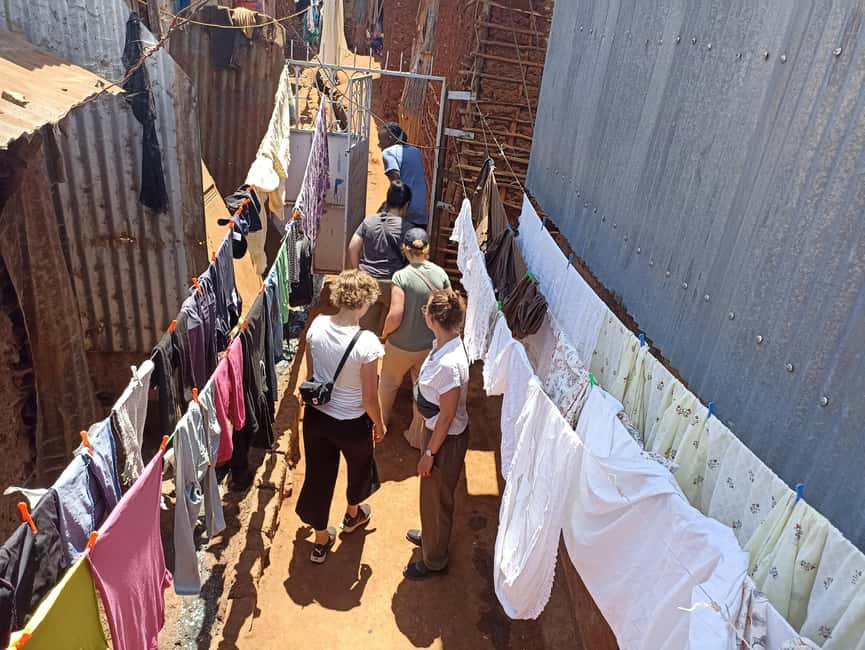
- Your guide may be Luke, who grew up in Kibera: He shares first-hand stories about housing, water, electricity, waste, health, education, and unemployment.
- Thirty percent supports local children: Part of your payment helps a children’s home and school buy food, stationery, and other school supplies.
- The route shows work as well as hardship: Toi Market, Uweza Art Gallery, and Victorious Bone Craft reveal how residents trade, create, recycle, and earn a living.
- You enter a real family home: The visit explains how a roughly 4-by-4-meter house is arranged and gives you a chance to meet a local family.
- The tour is flexible: Scheduling can be arranged with the guide, and communication takes place through WhatsApp.
- You see Kibera from several angles: The route includes street-level walking, an aerial viewpoint, community projects, and ordinary neighborhood businesses.
Start at Greenhouse Mall, Not in the Slum

The meeting point is the entrance to Greenhouse Mall, off Ngong Road near Adams Arcade. You are asked to contact the guide by WhatsApp, and the mall gives you a clear place to get your bearings before walking into the neighborhood.
That starting point is useful. You can buy water or snacks before setting out, and you will not be trying to locate a guide in a maze of side streets. Some people also use the mall to withdraw local cash, though you do not need to buy anything during the tour.
The activity is planned for a maximum of three hours. That sounds short, but the route covers many stops, so the pace can feel full. If you want long conversations at every location, three hours will pass quickly. The guide can adjust the schedule, and several people have appreciated being able to spend more time at a particular stop.
English and Swahili are available. Luke is the name most closely associated with this experience, though other guides, including Samuel, Victor, Clement, and Robert, have also led tours. If having a specific guide matters to you, ask when you book.
More Kibera community tours:
- Nairobi: Explore Kibera Slum with Local Guides
★ 4.9 · 365 reviews - Kevins Kibera Slum Tours
★ 5.0 · 213 reviews - Nairobi: Kibera Slum storytelling tour with a Local
★ 5.0 · 185 reviews
Toi Market: Kibera’s Everyday Economy
Toi Market is the first major stop. It is described as Nairobi’s second-largest open-air market and is known for second-hand clothing sold to local residents, especially people from Kibera.
The market helps you see Kibera as a working community rather than a place defined only by poverty. Clothing arrives from Europe, the United Kingdom, the United States, China, and elsewhere, then enters a local economy through sorting, selling, and buying. Your guide can explain how the market fits into everyday life.
You may want to keep your belongings secure in any crowded market and stay close to the guide. If you see something you want to purchase, that cost is not included in the $40 tour price. Buying from local makers later in the walk can also be a more direct way to support community businesses.
Meeting Children at a Local Home

The children’s home is one of the most affecting parts of the route. It supports needy and vulnerable children with food, shelter, and education. Some children are orphans, while others have been rescued from street life.
This visit can be meaningful, but it deserves care. You are not entering a museum or watching a performance. You are meeting children whose lives include real hardship, so your manner matters. Listen to the staff and guide, keep the interaction respectful, and ask before taking photographs.
A specific connection mentioned during the tour is Mama Paschalia, who cares for about 18 orphans. Visitors have brought practical items such as maize flour, fruit, biscuits, and stationery. If you wish to bring something, ask Luke in advance what is most useful. Do not assume that sweets or random gifts are the best choice.
The tour’s community contribution gives this stop added weight. Thirty percent of the revenue goes toward supporting a children’s home and a local school, including stationery and other school items. That does not erase the ethical questions around visiting a vulnerable community, but it gives your payment a clear social purpose.
Uweza Art Gallery and Kibera’s Creative Side

Uweza Art Gallery provides a sharp change of mood. The center gives children and local artists a place to develop and show their work.
The art is not simply a decorative pause between heavier stops. It shows how people use painting and other forms of creative work to express identity, hope, struggle, and daily life. Luke explains the meaning behind the pieces, which makes the visit more useful than walking through without context.
You may find artwork available for purchase, but buying is optional. One strong feature of this tour is the reported lack of pressure to spend money. You can look, ask questions, and decide for yourself.
A few more options to weigh up in Nairobi
- Nairobi National Park Half-Day Tour; Free Wi-Fi connection
★ 5.0 · 878 reviews - Nairobi: National Park & Optional Elephants & Giraffe Center
★ 4.8 · 874 reviews - NAI NAMI: Nairobi Storytelling Tour with Street Children
★ 5.0 · 792 reviews - Nairobi National Park Half-Day Game Drive
★ 4.5 · 738 reviews
The Kibera Viewpoint Near the Railway Line
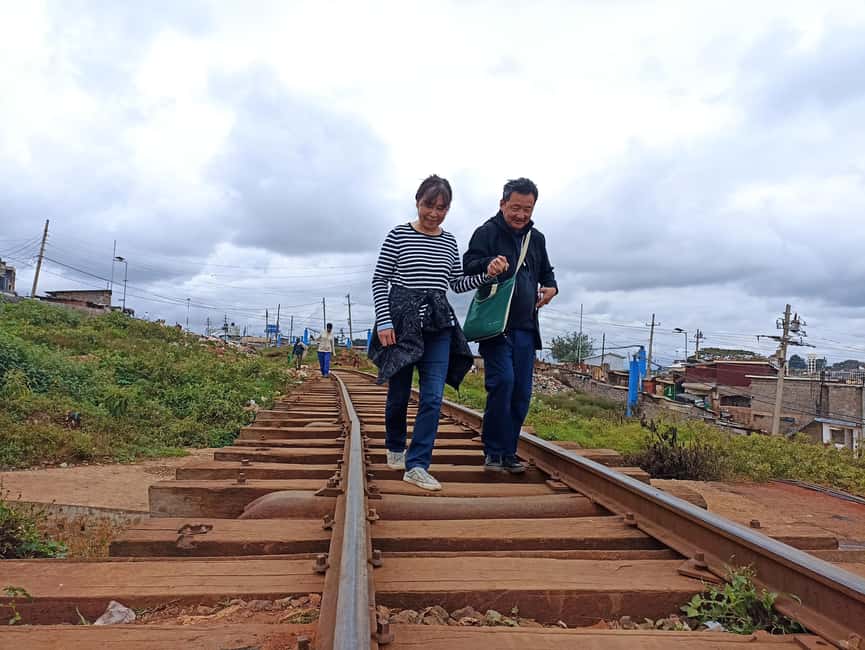
Near Kibera Town Centre, the route reaches an elevated point close to the old Kenya to Uganda railway line. From here, you get an aerial view across part of Kibera.
This viewpoint helps you understand the scale and density of the neighborhood. Kibera is described as home to more than 300,000 people within about three square kilometers, close to seven kilometers from Nairobi’s city center. Numbers can feel abstract on a page. Seeing the tightly packed area from above makes the geography easier to grasp.
The stop also gives you a breather from the narrow streets. Your guide can explain how the area developed and how Kibera fits into Nairobi’s history. Keep in mind that this is a view of one section, not the whole settlement. It should not be treated as a complete picture of every part of Kibera.
Inside a 4-by-4-Meter Local Home

The household visit is among the most personal stops. You may see how a roughly 4-by-4-meter home is arranged and meet the family who lives there.
For you, the value is practical. Rather than hearing general claims about housing, you can ask how space is used and how an ordinary household manages daily routines. Several tours have included a visit to Luke’s parents, which can add a personal connection to the walk.
This is also where you need to be most aware of boundaries. A family is opening a private space to you, so keep questions polite and avoid treating the visit as a display. The best approach is to let the guide set the tone and to remember that a small home is still someone’s home.
Fairview Academy and the Work of Education

At Fairview Academy, you see children studying despite limited resources and difficult conditions. The school stop shows a part of Kibera that is easy to miss when attention stays on housing and sanitation.
Education is also where the tour’s social contribution becomes concrete. The experience helps provide stationery and other school materials, and your payment supports that work through the stated 30 percent contribution.
You should expect a local school visit, not a polished international campus. Conditions may be modest, and the point is to understand the determination required to keep children learning. Ask questions through the guide rather than interrupting classes or putting children on display.
Victorious Bone Craft: Recycling With a Paycheck
Victorious Bone Craft is a local workshop that turns cow bones, cow horns, used brass padlocks, and camel bone into ornaments.
This stop connects environmental care with employment. Materials that might otherwise become waste are turned into saleable crafts, while the workshop creates jobs. It is a good reminder that recycling here is not only a feel-good idea. It can also be a practical way to earn money.
The workshop is a natural place to buy something, but you are not required to do so. If you do purchase an ornament, you are supporting local artisans directly. Prices and available products are not specified, so bring some flexibility if shopping interests you.
The itinerary can change slightly. One person chose to spend more time talking with volunteers and playing football with children instead of visiting the workshop. That kind of adjustment is possible because the tour is arranged with a local guide rather than run as a rigid, timed bus excursion.
What the Street Walk Teaches You
Between the official stops, the walking itself carries much of the experience. You pass through narrow streets, speak with local residents, and see shops, homes, schools, workshops, and community projects close together.
Luke’s personal connection is the main advantage. He grew up in Kibera, knows many people in the area, and explains the neighborhood through lived experience. He also holds a degree and works as a social entrepreneur, so you get both personal stories and broader discussion of local problems.
The tour addresses water, waste, electricity, health, unemployment, and housing. It also shows people earning money, helping neighbors, making art, caring for children, and building small businesses. That balance matters. Kibera should not be reduced to hardship, but it would also be misleading to pretend the challenges are minor.
Many people have felt safe with Luke and his fellow guides, including solo women and families with children. That is encouraging, but no walking tour can promise that every moment will feel the same for every person. Stay with the guide, follow local advice, and tell him if you need a rest or feel uncomfortable.
Is $40 Good Value?
At $40 per person, this is not the cheapest way to spend three hours in Nairobi. The value comes from the access and the community connection, not from transport or luxury.
Your price includes the guide fee, bottled water, Toi Market, the children’s home, a local house, Uweza Art Gallery, the recycling workshop, Fairview Academy, and the viewpoint. You arrange your own transport to Greenhouse Mall and onward travel afterward, and personal purchases are extra.
I consider the price fair if you care about a locally led experience and want to support community projects. The 30 percent contribution is important, but you should still view it as a paid tour, not a charitable donation. If your main goal is a quick photo stop, you can find cheaper activities. If you want context, conversation, and several direct connections with local initiatives, the fee makes more sense.
The tour may finish at Olympic Estate, where you can order an Uber or Bolt, though the meeting details also say the activity ends back at the starting point. I would confirm the final drop-off location before booking, especially if you have a flight, another tour, or a fixed dinner reservation.
Who Should Book This Experience?
I would recommend it to you if you want to understand Nairobi’s social and economic life, not just its wildlife attractions. It suits adults, students of development studies, photographers who know how to act respectfully, and anyone interested in local enterprise and community work.
It is also suitable for solo women based on the strong safety feedback, but use your own judgment and communicate clearly with the guide. Families can take part, though the activity is not suitable for children under seven or babies under one year. The stated upper age limit is 95.
You should think twice if you dislike walking, feel uncomfortable entering private homes, or want a polished attraction with no emotionally difficult moments. This tour asks you to engage with real people and real problems. That is its strength, but it is also the reason to approach it with care.
You can reserve now and pay later, and cancellation is allowed up to 24 hours before the tour for a full refund. The flexible scheduling is useful if your Nairobi plans are still shifting.
Should You Book the Kibera Tour?
Book it if you want a personal, locally guided look at Kibera and are prepared to treat the community with respect. Luke’s strongest qualities are his local ties, clear communication through WhatsApp, and ability to connect the big issues with ordinary homes, schools, artists, and workers.
I especially value the mix of stops. You are not shown only hardship, and you are not given a glossy story either. You see a market, a children’s home, a family house, a school, an art center, a recycling workshop, and a view across the neighborhood. That range gives you a fuller understanding of daily life.
Before you go, confirm your guide, final meeting point, and preferred stops. Bring water, wear comfortable shoes, and ask before photographing people. If you can do that, this $40 tour offers one of Nairobi’s more direct and worthwhile introductions to community life.
FAQ
How long does the Kibera tour last?
The tour is scheduled for a maximum of three hours.
Where does the tour start?
You meet at the entrance of Greenhouse Mall, off Ngong Road near Adams Arcade. You are asked to contact the guide through WhatsApp.
What places are included?
The route includes Toi Market, a local children’s home, Uweza Art Gallery, a Kibera viewpoint, a local house, Fairview Academy, and Victorious Bone Craft recycling workshop.
Does the tour support the local community?
Yes. Thirty percent of the tour revenue helps support a children’s home and a local school with stationery and other school supplies.
What languages are available?
The tour is available in English and Swahili.
Is the tour suitable for young children?
It is not suitable for children under seven years old or babies under one year. The stated upper age limit is 95.
Just added in Nairobi
- Wildlife Capital: Half-Day Safari at Nairobi National Park★ 5.0 · 2 reviews
- 4 Days Safari to Lake Nakuru N/P and Maasai Mara N/R★ 5.0 · 18 reviews
- 3 days maasai mara migration safari★ 4.5 · 7 reviews
- 4 Days Tour Landcruiser in Masai Mara and Lake Nakuru★ 5.0 · 10 reviews
- Day Tour to Nairobi national park, Elephants, and Giraffe Center★ 3.5 · 8 reviews
- 6 Days Kenya Budget Group Safari★ 5.0 · 2 reviews
- Maasai Mara Day Trip★ 5.0 · 15 reviews
- 3 Days Masai Mara Wildebeest migration Budget safari★ 5.0 · 2 reviews
Kibera Community Tours, compared.








Browse the lists this tour appears in