

Reviewed · KIBERA COMMUNITY TOURS
Ismael’s Kibera Slum Tour
Kibera is best understood with a local guide. This private Nairobi tour gives you three to four hours with Ismael, a born-and-raised Kibera resident and accredited guide, as he explains daily life, community projects, and the resourcefulness found here. I like the free hotel pickup and drop-off within Nairobi, and I like that Ismael personally leads the tour rather than handing you to an unknown guide.
I also appreciate the human scale: you may visit a bone-art workshop, see real homes, and meet people connected with a children’s rescue center. The main consideration is that this is a sensitive experience, not a light sightseeing stop. Home visits and photographs require respect, and the exact plan for the extra Nairobi-area hour should be confirmed before you book.
In This Review
- The details that shape this Kibera visit
- Why a local guide matters in Kibera
- The bone-art workshop and local enterprise
- Seeing Kibera homes with care
- The children’s home and rescue center
- The Nairobi-area hour needs clarification
- What the private format means for you
- Is $65 a fair price?
- How to prepare for a respectful visit
- Who will get the most from this tour?
- Should you book Ismael’s Kibera Slum Tour?
- FAQ
- Where does Ismael’s Kibera tour take place?
- How long does the experience last?
- Is hotel pickup included?
- Is this a private tour?
- Who leads the tour?
- What will I see in Kibera?
- How much does the tour cost?
- Can I cancel for a full refund?
The details that shape this Kibera visit

- Ismael leads the tour himself: He is the company owner, an accredited guide, and was born and raised in Kibera.
- The bone workshop is a memorable stop: Local artisans use domestic animal bones to make jewelry, bottle openers, wristbands, rings, necklaces, and crafts.
- Home visits add difficult but useful context: You can see how houses in the settlement are arranged and learn about everyday living conditions.
- The tour is private: Only your group participates, so the pace and discussion can be adapted to your interests.
- Pickup and drop-off are included within Nairobi: That makes the $65 price easier to assess, especially for first-time visitors.
- The core visit lasts about three hours: An additional Nairobi-region stop may bring the overall outing closer to four hours, but you should clarify what is included.
Why a local guide matters in Kibera
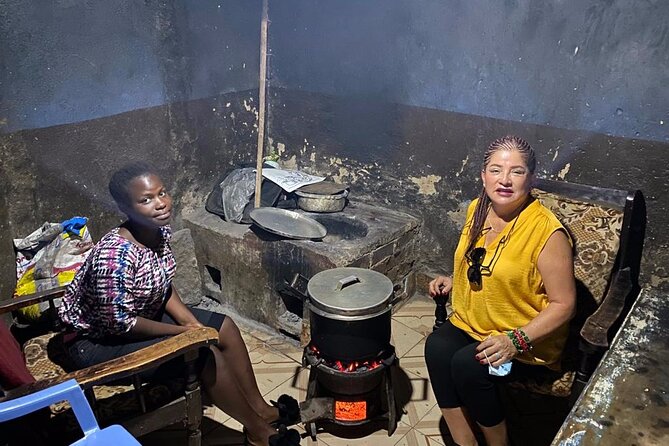
Kibera is not a place where I would advise walking in alone with a camera and a vague map. The settlement is large, busy, and made up of many communities and working areas. A local guide gives you more than directions. He can explain what you are seeing and help you enter the area in a more respectful way.
Ismael’s connection is central to the experience. He does not present Kibera as a set of dramatic photo opportunities. His role is to explain real life from personal experience, including the difficulties residents face and the ways people earn money, create goods, support children, and build small enterprises.
That background can change the tone of the visit. Without it, a narrow path, small home, or workshop can seem like a spectacle. With context, you begin to see the people, skills, and decisions behind each place. I would still keep your questions polite and avoid treating poverty as entertainment.
The private format helps here. You are not attached to a large bus group moving through quickly. You can ask Ismael to explain a point, pause at a workshop, or spend more time discussing a community project. It also means you should be willing to listen. This is not a staged show built around constant activity.
More Kibera community tours:
- Nairobi: Explore Kibera Slum with Local Guides
★ 4.9 · 365 reviews - Kevins Kibera Slum Tours
★ 5.0 · 213 reviews - Nairobi: Kibera Slum storytelling tour with a Local
★ 5.0 · 185 reviews
The bone-art workshop and local enterprise
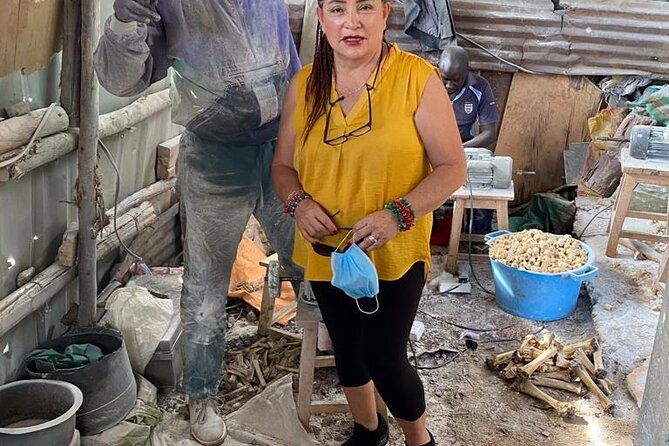
The African bone workshop is one of the most distinctive parts of the visit. A group of Kibera residents uses bones from domestic animals to create useful and decorative items, including bottle openers, wristbands, finger rings, necklaces, woodwork, and brass crafts.
This stop gives you a clear look at local enterprise. The work is practical, creative, and tied to materials that might otherwise be discarded. I like that the visit shifts attention from hardship to skill and initiative without pretending that hardship does not exist.
You may have the chance to see how the products are made or speak with people involved in the workshop. The supplied details do not promise a formal demonstration, so I would treat this as a working community project rather than a guaranteed craft class. If you are interested in buying something, ask about prices and how the money supports the makers.
The workshop also offers a natural point for questions. You can ask how the project operates, who makes the goods, and how the products reach buyers. Keep in mind that Ismael’s description lists several types of craft, but the exact items available on your visit may vary.
Seeing Kibera homes with care
A home visit can be the most powerful part of the tour, and also the part that calls for the most care. Ismael says you will see how slum houses look in real life. That means you may gain a more direct understanding of housing conditions than you would from a passing walk along a main road.
I would not approach this as a chance to collect shocking pictures. Ask before entering, ask before taking photographs, and follow the lead of the household. Even if a visit is arranged through the guide, the residents still deserve control over their private space.
The value here is context. You can ask about the practical side of daily life and compare what you see with the polished version of Nairobi found in hotels and formal attractions. The experience may feel uncomfortable, but discomfort can be useful if it leads to better understanding rather than pity.
The details provided do not promise a set number of homes or a guaranteed length of each visit. Your group may see one household or more, depending on the day and the people available. I would allow the experience to unfold rather than expecting a fixed performance.
The children’s home and rescue center

Another planned stop is a children’s home and rescue center. It supports rescued street children and orphaned children, including some who lost their parents during Kenya’s 2007 to 2008 post-election violence.
This part adds important social context, but it can also be emotionally heavy. The center is not simply another attraction to check off. You may hear difficult stories about family loss, homelessness, and the work required to protect children.
I would go with a listening mindset. Do not expect children to entertain you or pose for photographs. The information provided does not state whether donations, visits with children, or specific activities are included, so ask Ismael what kind of interaction is appropriate before you arrive.
The stop helps explain why community organizations matter in Kibera. It also shows that a tour can connect you with more than physical conditions. You learn about people trying to respond to serious problems through care, shelter, and support.
A few more options to weigh up in Nairobi
- Nairobi National Park Half-Day Tour; Free Wi-Fi connection
★ 5.0 · 878 reviews - Nairobi: National Park & Optional Elephants & Giraffe Center
★ 4.8 · 874 reviews - NAI NAMI: Nairobi Storytelling Tour with Street Children
★ 5.0 · 792 reviews - Nairobi National Park Half-Day Game Drive
★ 4.5 · 738 reviews
The Nairobi-area hour needs clarification

The main Kibera portion is listed at about three hours. A second section refers to Nairobi and allows about one hour, with mentions of places such as a Maasai cultural village, a market, national parks, and Mamba Village.
This wording is broad. It does not clearly confirm that all those places are part of the $65 tour. I would contact Ismael before booking if you want the additional hour, especially if you have a particular site in mind. Ask whether it is included, optional, or simply part of the company’s wider Nairobi tour offering.
That uncertainty is the main planning weakness. The Kibera portion is easy to understand: pickup, community walk, workshop, home visits, and the children’s center. The Nairobi-region reference is less precise, so do not build a tight evening schedule around it until the stops are confirmed.
The listed operating hours run from midnight to midnight, Monday through Sunday, but that does not mean every hour is equally suitable for a community visit. Confirm your preferred start time directly. The experience requires good weather, and poor conditions can lead to a new date or a full refund.
What the private format means for you
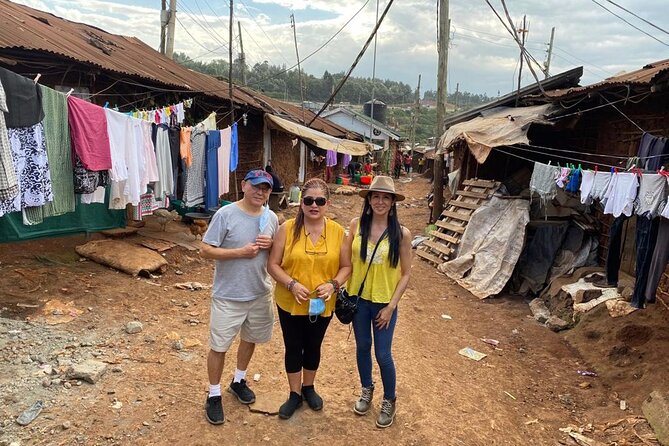
This is a private tour, so only your own group participates. That matters more here than it would on a standard city bus outing. You can ask personal questions, move at a comfortable pace, and spend more time at the places that interest you.
A private group also gives you more responsibility. Your behavior affects the people you meet, and there is no large crowd to hide behind. I would keep your clothing and conduct modest, avoid intrusive questions, and treat every home or workshop as a real working place.
The private format is especially useful for couples, families with older children, photographers who understand the need for consent, and visitors who want social context rather than a quick drive-by. It may be less suitable if you want a polished attraction with clear displays, scheduled performances, and a predictable script.
Most people can participate, and the tour is near public transportation. Still, the information does not provide details about walking surfaces, stairs, or specific mobility arrangements. If you have mobility concerns, ask Ismael directly before booking.
Is $65 a fair price?

At $65 per person, the value depends on what you want from Nairobi. You are paying for a private experience, a local guide with a personal connection to Kibera, and free pickup and drop-off within Nairobi. For a solo visitor or small group, that combination can make the price reasonable.
The guide is the strongest part of the value. You are not simply paying to enter a neighborhood. You are paying for access with context, transport support, and a guide who can explain the community in a personal way.
The price may feel less attractive if you only want a brief look at Kibera or are mainly interested in Nairobi’s major formal attractions. It also becomes harder to judge if the additional Nairobi-region hour is unclear. Ask exactly what your fee covers before you finalize plans.
The experience has received a 5 out of 5 rating from 42 ratings, with 100 percent recommending it. One especially warm account describes Ismael as a great host and highlights time spent with his wife in their home. That detail suggests the tour can feel personal and welcoming, but it also reinforces the need to respect the privacy of the family and community members involved.
The tour is often booked about 54 days ahead. That pattern suggests you should plan early if your Nairobi dates are fixed, though availability can change. Free cancellation is available up to 24 hours before the start time. Cancellations or changes made within 24 hours are not refunded, and poor weather is handled through a new date or a full refund.
How to prepare for a respectful visit
I would prepare for this tour differently from a museum visit. Start by deciding what you hope to learn. You might want to understand local work, housing, youth support, or the effect of community projects. A few thoughtful questions will produce a better conversation than a long list of quick facts.
Ask Ismael about photography at the start. The supplied tour details do not set out a photo policy, so do not assume that you may photograph people, homes, children, or workshops. When in doubt, put the camera away.
You should also bring patience. The tour lasts roughly three to four hours, and the timing may shift as you talk with residents or move between stops. Pickup and drop-off within Nairobi reduce transport worries, but you should still confirm the meeting time and your hotel location.
The tour is described as suitable for most people, yet no specific accessibility information is provided. If you need a particular pace or assistance, explain that while booking. A private tour gives you a better chance of adjusting the experience, but only if you communicate your needs early.
Who will get the most from this tour?
I would recommend it to you if you want to understand Nairobi through local voices and are prepared for a serious, sometimes uncomfortable visit. It suits people who value direct conversation, community enterprise, and social context more than polished sightseeing.
It is also a good choice if you are traveling alone or with a small private group and want hotel transport included. Ismael’s personal connection can make the experience more focused than a generic neighborhood tour.
Families should think about the age and maturity of their children. The visit to the rescue center and the discussion of post-election violence may be difficult for younger children. The tour details do not provide a minimum age, so ask before booking.
I would choose another activity if you want a carefree morning, a highly structured itinerary, or a guaranteed list of Nairobi attractions. The Kibera experience asks you to listen, remain flexible, and behave thoughtfully in a residential community.
Should you book Ismael’s Kibera Slum Tour?
Book it if you want a personal, locally led introduction to Kibera. Ismael’s background, the private format, free Nairobi pickup, bone-art workshop, home visits, and children’s rescue center give the experience real substance.
Before paying, confirm the starting time, the exact Nairobi-region add-on, what can be photographed, and how the home and rescue-center visits are handled. If you approach the tour with respect rather than curiosity alone, $65 can buy much more than a short walk. It can give you a clearer understanding of the people, work, and community support systems that shape Kibera.
FAQ
Where does Ismael’s Kibera tour take place?
The tour takes place in Kibera, Nairobi, Kenya, with an additional section referring to other Nairobi-region sites.
How long does the experience last?
The experience lasts approximately three to four hours. The Kibera portion is listed at about three hours, and the Nairobi-region section is listed at about one hour.
Is hotel pickup included?
Yes. Free pickup and drop-off are offered within Nairobi.
Is this a private tour?
Yes. Only your group participates in the activity.
Who leads the tour?
Ismael personally leads the tour. He is the owner and an accredited guide who was born and raised in Kibera.
What will I see in Kibera?
The tour includes an African bone workshop, possible home visits, and a children’s home and rescue center. The workshop produces items such as jewelry, bottle openers, wristbands, rings, necklaces, wood crafts, and brass crafts.
How much does the tour cost?
The listed price is $65 per person.
Can I cancel for a full refund?
Yes, if you cancel at least 24 hours before the experience starts. Cancellations or changes made less than 24 hours before the start time are not accepted for a refund. If poor weather causes the tour to be canceled, you will be offered another date or a full refund.
Just added in Nairobi
- Wildlife Capital: Half-Day Safari at Nairobi National Park★ 5.0 · 2 reviews
- 3 days maasai mara migration safari★ 4.5 · 7 reviews
- 4 Days Tour Landcruiser in Masai Mara and Lake Nakuru★ 5.0 · 10 reviews
- 4 Days Safari to Lake Nakuru N/P and Maasai Mara N/R★ 5.0 · 18 reviews
- Day Tour to Nairobi national park, Elephants, and Giraffe Center★ 3.5 · 8 reviews
- 6 Days Kenya Budget Group Safari★ 5.0 · 2 reviews
- Maasai Mara Day Trip★ 5.0 · 15 reviews
- 3 Days Masai Mara Wildebeest migration Budget safari★ 5.0 · 2 reviews
Kibera Community Tours, compared.





Kibera Slum Tour with Local Social Entrepreneurs
Read our review →


Browse the lists this tour appears in