

Reviewed · KIBERA COMMUNITY TOURS
Visit kibera Slum the chocolate city
Kibera changes how you see Nairobi. This guided walk offers direct contact with community life, local initiatives, and the people working to improve daily conditions in Kenya’s largest informal settlement. I like that the visit is built around conversation and community projects, not just quick photographs.
I also like the 150-minute length. You have enough time to walk, listen, and take in the setting without giving up an entire day. The main consideration is that the $25 price does not include an entrance fee or pickup, so you need to arrange your own way to Equity Ayani and confirm the extra cost before booking.
The tour is led by Royal Safaris and can be conducted in English, Chinese, Esperanto, German, Italian, Spanish, or French. Daniel, one of the guides, earned particular praise for his work, while another booking described the guide as kind and highly professional. That points to the human side of this outing: a good guide matters greatly when you are visiting a community that should be treated with care.
In This Review
- Key Points Before You Book
- Starting at Equity Ayani in Nairobi
- Entering Kibera With Context
- Meeting Residents and Community Leaders
- Visiting Empowerment Projects and Social Enterprises
- Art, Music, and Enterprise Along the Way
- Walking the Route and Taking in the Views
- Responsible Tourism in Kibera
- Is the $25 Price Good Value?
- Who Will Enjoy This Walk Most?
- Language, Guides, and Booking Tips
- Should You Book the Kibera Chocolate City Tour?
- FAQ
- Where does the Kibera tour start and finish?
- How long does the tour last?
- What is included in the price?
- Are pickup and entrance fees included?
- Which languages are available?
- Can I cancel the booking for a refund?
Key Points Before You Book
- The walk begins and ends at Equity Ayani, so you arrange your own transport to the meeting point.
- The 2.5-hour route includes Kibera sightseeing, walking, and views along the way, with no listed vehicle transfer during the visit.
- Local residents, community leaders, organizations, and social enterprises form the heart of the program.
- You learn about education, skills training, and community development, rather than seeing Kibera only as a place of hardship.
- The $25 cost covers a tour guide, but entrance fees and pickup are extra.
- Daniel is a guide name worth requesting, if the booking company can confirm availability.
Starting at Equity Ayani in Nairobi

Your visit starts at Equity Ayani and returns there after the walk. That simple arrangement keeps the meeting point clear, but it also means you need to plan your own transport. Pickup is not included, so check your route before setting out and allow enough time to arrive.
The tour lasts 150 minutes. That is a useful middle ground. A much shorter walk could leave you with little context, while a full-day visit might feel too demanding for an introduction to Kibera. Here, the schedule gives you a focused morning or afternoon activity.
The precise start time depends on availability. Since the tour is a walk rather than a standard sightseeing bus outing, comfortable clothing and shoes make sense. The supplied information does not specify walking distance, terrain, group size, or restroom access, so ask Royal Safaris about those points if they affect your plans.
More Kibera community tours:
- Nairobi: Explore Kibera Slum with Local Guides
★ 4.9 · 365 reviews - Kevins Kibera Slum Tours
★ 5.0 · 213 reviews - Nairobi: Kibera Slum storytelling tour with a Local
★ 5.0 · 185 reviews
Entering Kibera With Context

The first valuable part of this tour is the explanation of Kibera’s place in Nairobi. You are not simply shown streets and homes. The guide is expected to discuss how the settlement developed and how it fits into wider issues of urbanization and social pressure in Kenya.
That context matters. Without it, a short visit can reduce a complex community to a visual impression. With it, you can begin to understand why people live here, how communities organize themselves, and why local projects focus so strongly on education, work skills, and social support.
I would pay close attention to the guide’s framing at this point. A responsible visit should help you see residents as neighbors, workers, parents, artists, organizers, and business owners, not as scenery. The tour specifically emphasizes respect and ethical conduct, which is important in any visit to a marginalized community.
The name Chocolate City gives the experience a memorable identity, but the real value is not in the nickname. It is in the chance to hear local perspectives and understand the place beyond a label.
Meeting Residents and Community Leaders
Community engagement is central to the walk. You may interact with local residents and community leaders who explain their experiences, hopes, initiatives, and difficulties. This can be the most meaningful part of the visit because it gives a human voice to subjects that are often discussed only through statistics.
The quality of these conversations depends on the guide and the people involved on the day. Daniel’s excellent feedback is encouraging here. A friendly, professional guide can make it easier for you to ask questions respectfully and understand what you are seeing without turning the visit into a spectacle.
You should let the guide set the tone. Ask questions about community projects, daily life, local businesses, and education rather than pressing people for personal hardship stories. Follow instructions about photography. The supplied details do not promise that every resident or project will be available at every departure, so treat the schedule as a guided introduction rather than a guaranteed series of private meetings.
This is also where the tour can feel different from ordinary Nairobi sightseeing. You are not being shown a polished attraction with a fixed display. You are walking through a living community, and the people you meet are part of the story.
Visiting Empowerment Projects and Social Enterprises
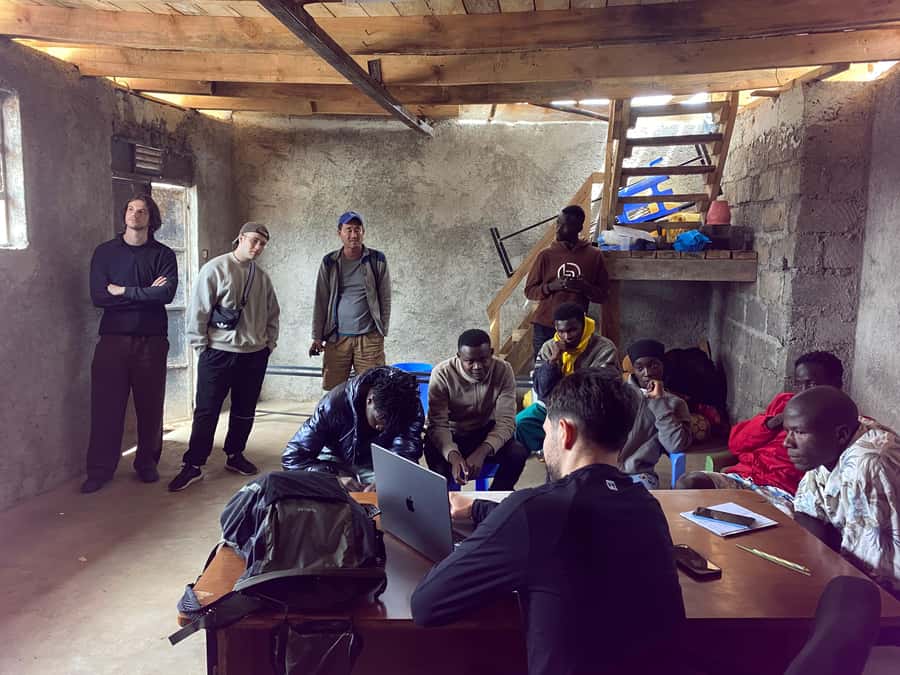
The tour includes visits to local organizations and social enterprises that work to support Kibera residents. Their work may involve education, skills training, or community development. These stops help you see practical responses to local needs.
I find this focus more useful than a visit based only on observation. It shows how residents and local groups are taking action. You may gain a clearer idea of what empowerment means in practice: teaching skills, creating opportunities, supporting young people, or building stronger community services.
The information does not name the organizations or guarantee a particular project at every departure. For that reason, you should not book expecting one specific school, workshop, or enterprise unless Royal Safaris confirms it in advance.
Still, the program’s general focus gives the visit purpose. Your money and attention are connected to local initiatives rather than only to sightseeing. The exact benefit depends on how the tour fee is distributed, however, and the supplied details do not state what percentage goes to community groups. If that point matters to you, ask before booking.
A few more options to weigh up in Nairobi
- Nairobi National Park Half-Day Tour; Free Wi-Fi connection
★ 5.0 · 878 reviews - Nairobi: National Park & Optional Elephants & Giraffe Center
★ 4.8 · 874 reviews - NAI NAMI: Nairobi Storytelling Tour with Street Children
★ 5.0 · 792 reviews - Nairobi National Park Half-Day Game Drive
★ 4.5 · 738 reviews
Art, Music, and Enterprise Along the Way
Kibera’s cultural life is another major theme. The walk introduces you to art, music, and the entrepreneurial energy of the settlement. These elements add balance to the historical and social discussion.
You might find that a mural, performance, small enterprise, or creative project says as much about the community as a formal explanation. Art can express identity and concern. Music can bring people together. Small businesses show the work and initiative that keep daily life moving.
I like that these subjects are included because they prevent the tour from becoming a lesson only about poverty. Kibera has challenges, but it also has talent, humor, ambition, and creativity. A fair visit should leave room for all of those things.
Do keep your expectations practical. The information does not promise a live performance, a shopping stop, or a specific artwork. Cultural encounters are likely to depend on the route and what is happening during your visit.
Walking the Route and Taking in the Views
The 2.5-hour route combines sightseeing and walking, with scenic views along the way. Since no detailed route map is provided, you should expect a general guided walk through Kibera rather than a fixed list of named landmarks.
That uncertainty is not necessarily a weakness. A neighborhood walk can reveal more than a series of isolated stops, especially when the guide explains how the streets, projects, and community spaces connect. You will have time to notice the setting at a human pace instead of seeing it through a vehicle window.
At the same time, this is not the right choice if you want a highly polished attraction with a precise timetable at every stop. Conditions can affect a community walk, and the available information does not specify walking surfaces, shade, seating, or facilities. Ask Royal Safaris for current practical details if you have mobility concerns or need a clearly measured route.
The meeting point and return point are both Equity Ayani, which makes the day easier to organize once the walk is finished. You are not left at a different part of Nairobi.
Responsible Tourism in Kibera
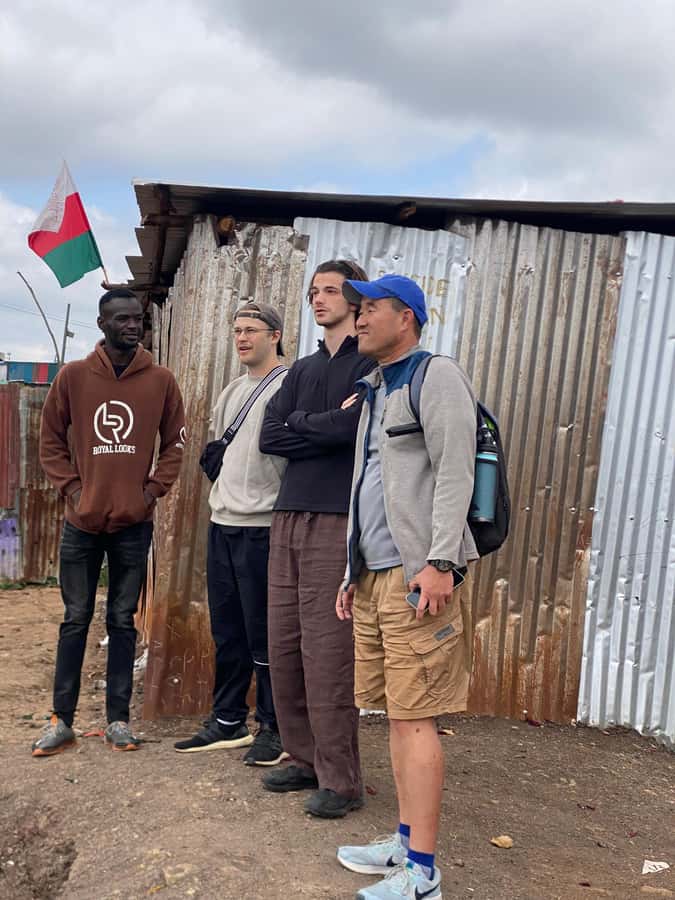
The tour openly addresses responsible tourism, and this should be more than a phrase in the introduction. Visiting a low-income community carries obligations. You should listen first, avoid intrusive photographs, respect private spaces, and follow the guide’s instructions.
A good visitor also understands the difference between curiosity and entitlement. You are there to learn, not to collect dramatic images or treat residents as part of an attraction. The tour’s emphasis on local leaders and empowerment projects offers a better framework because it directs attention toward people’s work and ideas.
I would ask the guide before taking any close-up photograph. If you want to support a local initiative, ask which forms of help are appropriate. Buying from a community enterprise, when included and suitable, may be more useful than handing out items independently, but the tour information does not specify shopping opportunities or donation arrangements.
This approach improves your experience as well. You are more likely to have open conversations when people see that you are respectful and attentive.
Is the $25 Price Good Value?

At $25 per person, the tour is reasonably priced for a 150-minute guided visit, especially if the guide provides strong local context and introduces you to community projects. You are paying for access, interpretation, and a structured way to visit a place that would be difficult to understand through a quick independent walk.
The value rests heavily on the guide. Daniel received especially strong praise, and another booking highlighted the guide’s kindness and professionalism. Those qualities matter more here than a long list of attractions. A good guide helps you understand what you see and protects the tone of the visit.
The price is not all-inclusive. Entrance fees are not included, and pickup is also excluded. The information does not state the amount of the entrance fee, so calculate the final cost before you commit. You also need to pay for your own transport to and from Equity Ayani.
The booking terms offer useful flexibility. You can reserve now and pay later, and cancellation is free up to 24 hours before the activity for a full refund. The tour also advertises skip-the-ticket-line access, although the specific ticket process is not explained.
Who Will Enjoy This Walk Most?

I would recommend the tour to you if you want a socially focused Nairobi activity and prefer meeting people and hearing local perspectives over ticking off major monuments. It suits curious visitors who are comfortable walking and who understand that the experience may change according to community schedules.
It is especially useful for first-time visitors who want context about urban life in Kenya. The history, social issues, projects, art, and enterprise give you several ways to think about Kibera.
You may want a different activity if you dislike walking, need a guaranteed list of named stops, or expect private access to every organization mentioned. The visit is also not ideal for anyone seeking poverty-themed photography. Its strongest purpose is learning and respectful exchange.
Families and younger visitors may find the subject matter educational, but the supplied information does not give an age recommendation. Ask Royal Safaris if you are booking for children.
Language, Guides, and Booking Tips
The live guide can speak English, Chinese, Esperanto, German, Italian, Spanish, or French. Select your preferred language when booking, then confirm that it will be available for your chosen departure.
If you would like Daniel as your guide, request him directly, but do not assume he will be assigned. His name is associated with particularly positive feedback, yet guide availability can change.
Before you pay, confirm four points: the meeting instructions at Equity Ayani, the amount of the entrance fee, the pickup arrangement, and the organization or project visits planned for your date. These questions will give you a clearer picture of the final cost and the day’s focus.
Should You Book the Kibera Chocolate City Tour?
Book this tour if you want a short, guided introduction to Kibera that places community voices and local projects ahead of standard sightseeing. The reasonable price, flexible cancellation, multilingual guiding, and 150-minute schedule make it easy to fit into a Nairobi visit.
I would book with realistic expectations. You are not buying a polished attraction or a fixed performance. You are joining a community walk where the guide, local contacts, and conditions shape the experience.
For the best visit, arrive prepared to listen, ask respectful questions, and treat photography with care. If Royal Safaris confirms the extra entrance cost and your preferred language, this tour offers a thoughtful way to learn about Nairobi’s urban life while supporting a locally guided activity.
FAQ
Where does the Kibera tour start and finish?
The tour starts at Equity Ayani and returns to Equity Ayani after the walk.
How long does the tour last?
The activity lasts 150 minutes, or 2.5 hours.
What is included in the price?
A tour guide is included. The listed price is $25 per person.
Are pickup and entrance fees included?
No. Pickup and the entrance fee are not included in the price.
Which languages are available?
The live guide may provide the tour in English, Chinese, Esperanto, German, Italian, Spanish, or French.
Can I cancel the booking for a refund?
Yes. You can cancel up to 24 hours in advance for a full refund. You can also reserve now and pay later.
Just added in Nairobi
- Visiting the Kibera the biggest slum in Africa★ 3.9 · 2 reviews
- Visit to David Sheldrick Elephant Orphanage★ 5.0 · 1 review
- Wildlife Capital: Half-Day Safari at Nairobi National Park★ 5.0 · 2 reviews
- 3 days maasai mara migration safari★ 4.5 · 7 reviews
- 4 Days Tour Landcruiser in Masai Mara and Lake Nakuru★ 5.0 · 10 reviews
- 4 Days Safari to Lake Nakuru N/P and Maasai Mara N/R★ 5.0 · 18 reviews
- Day Tour to Nairobi national park, Elephants, and Giraffe Center★ 3.5 · 8 reviews
- 6 Days Kenya Budget Group Safari★ 5.0 · 2 reviews
Kibera Community Tours, compared.





Kibera Slum Tour with Local Social Entrepreneurs
Read our review →


Browse the lists this tour appears in