

Reviewed · KIBERA COMMUNITY TOURS
Nairobi:SEE EMPOWERMENT WALKING TOUR OF KIBERA WITH A LOCAL
Kibera is best understood one conversation at a time. This three-hour walking tour with local guide Moses looks past the usual slum-tour snapshot and introduces you to people building businesses, skills, sanitation, and hope in one of Nairobi’s best-known communities. You visit five stops, walk through several parts of Kibera, meet small-business owners, and finish with coffee and fresh baking.
I like the local ownership and the clear social purpose. Thirty percent of tour revenue supports community projects such as water tanks and washrooms, so the fee does more than pay for a guide and transport. I also like the personal route: Moses begins at his own home and explains how he grew up in Kibera before starting the tour company. The main consideration is that this is a raw, direct look at daily life, not a polished sightseeing outing. You need comfortable shoes, an open mind, and respect for privacy.
In This Review
- Five reasons this Kibera tour is different
- Starting at Prestige Plaza and meeting Moses
- Walking through Kibera’s villages and railway corridor
- Water tanks, washrooms, and the purpose of the tour fee
- Power Women’s Craft Center and Rosemary’s workshop
- Waste Hub Centre: turning discarded materials into income
- Master’s Touch Bakery and Nancy’s business story
- The matatu ride back to Ngong Road
- What to bring and how to behave
- Safety, comfort, and the emotional side
- Who should book this experience?
- Should you book the Kibera Empowerment Walking Tour?
- FAQ
- How long does the Kibera Empowerment Walking Tour last?
- Where does the tour start?
- Where does the tour finish?
- What language is the tour offered in?
- What is included in the $40 price?
- Is food included?
- Can I buy local products during the tour?
- Can I take photographs?
- Does part of the tour revenue support Kibera projects?
- What should I bring?
- Is the tour suitable for everyone?
- Can I cancel the booking?
Five reasons this Kibera tour is different

- Moses starts with his own story: You begin at his home, hearing how he grew up in Kibera and built a mission-driven tour company.
- Thirty percent supports local projects: Tour income helps fund community water tanks and washrooms near residential areas.
- You meet five change makers: The route includes women’s crafts, recycled products, tailoring, baking, and other small enterprises.
- The railway route gives local context: You walk beside the Kenya to Uganda railway line, established between 1901 and 1902, and see Kibera from a higher viewpoint.
- The ending is simple and welcoming: Coffee or tea with fresh baked goods at Master’s Touch Bakery gives the tour a relaxed finish.
- You return by matatu: The public bus ride back to Prestige Plaza adds a real piece of everyday Nairobi transport.
Starting at Prestige Plaza and meeting Moses
The meeting point is the parking lot of Nakumatt Prestige, now associated with Avanti Prestige, beside the giant Coca-Cola bottle outside Prestige Plaza on Ngong Road. That landmark matters because a large shopping mall can have several entrances, and the bottle gives you a clear place to wait.
The tour lasts about three hours, with roughly two and a half to three hours spent walking through Kibera. The experience is conducted in English. A bus or matatu transfer is included at the end, taking you from Kibera back to the starting point on public transport commonly used in Nairobi.
The first stop is Moses’s house. This is more than a standard introduction. He tells you about growing up in Kibera and the path that led him to create a company with a community mission. Beginning inside his own home gives the tour a personal frame before you start walking through the wider area.
I appreciate this opening because it places the guide in the story instead of treating Kibera as a backdrop. You are not simply shown poor housing and busy paths, then sent away with a few photographs. You hear from someone whose life is connected to the place and whose work is tied to its future.
One practical point: the route is described as raw and intimate. That means you should expect a direct look at ordinary life, including poverty and difficult living conditions. The tour is not designed to make those realities comfortable or decorative.
More Walking Tours in Nairobi
- Nairobi: Historic and Modern Highlights Walking Tour
★ 4.8 · 703 reviews - Nairobi Historical Walking City Tour
★ 5.0 · 258 reviews - Nairobi Downtown Walking Tour
★ 4.7 · 208 reviews
Walking through Kibera’s villages and railway corridor
After Moses’s introduction, you walk through different villages or districts within Kibera. The exact walking pattern can vary, but the focus is on seeing how people live and work, not on rushing from one photo stop to another.
The railway route is a notable part of the walk. You follow the road and rail corridor connected with the Kenya to Uganda railway, established between 1901 and 1902. Along the way, you meet local people and gain an aerial view of parts of Kibera.
That viewpoint can help you understand the scale and layout of the community. Still, the value is not just visual. Walking through the area with a local guide gives you a chance to connect broad subjects such as housing, water, sanitation, and employment with the people affected by them.
You should ask before taking photographs. This is essential. Homes, families, workspaces, and children are not public attractions, and permission should come first every time. Carrying a phone or camera does not mean you have a right to use it.
The walk also requires sensible preparation. Wear shoes you can comfortably use for several hours, and bring about one litre of water. Hydration matters, especially when the route includes a lot of walking. Carrying small cash is useful if you want to buy locally made products.
Water tanks, washrooms, and the purpose of the tour fee
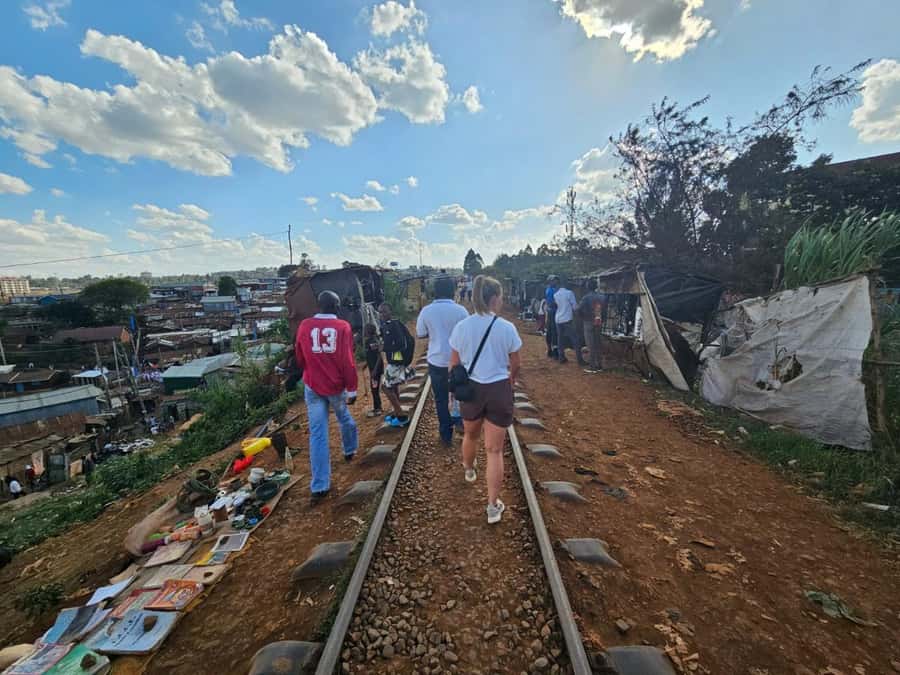
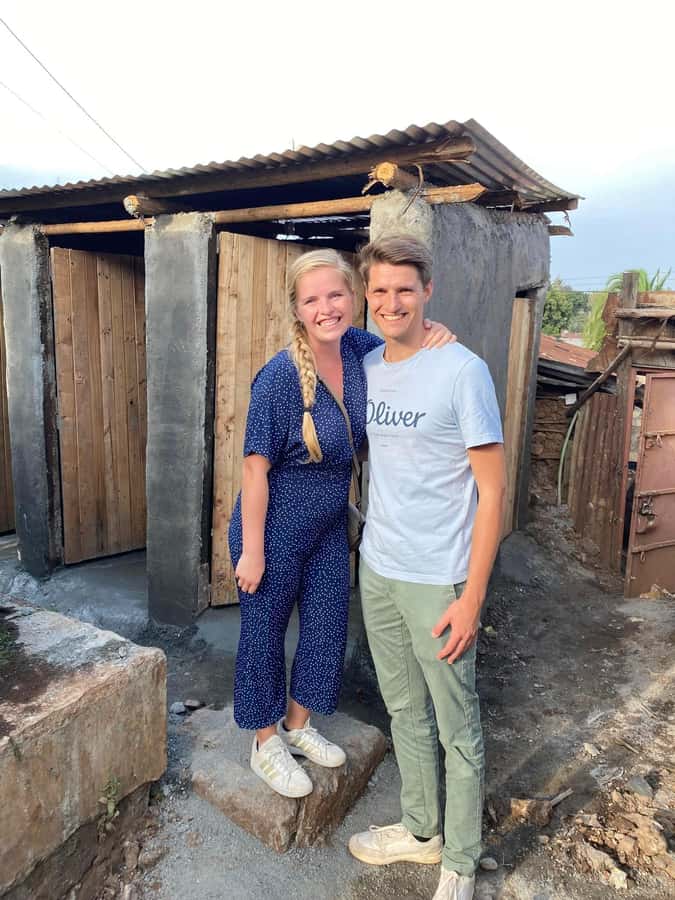
One of the most meaningful parts of the walk is seeing community projects supported by tour income and donations. Thirty percent of the revenue goes toward initiatives such as installing water tanks and constructing washrooms near homes.
These projects may sound modest compared with a large development program, but that is exactly why they matter on a local tour. A water tank or toilet near residential homes can affect daily routines, hygiene, convenience, and the general appeal of an area to people who live there or may move there.
The tour does not present a simple story in which tourism solves Kibera’s problems. It connects your visit to specific work already being done by local people. That distinction matters. You are paying for a guided experience, but part of the money also supports practical improvements.
At $40 per person, the price is not the cheapest way to spend three hours in Nairobi. Yet the value includes a local guide, five visits, a walking route, the return matatu ride, and coffee or tea with baked goods. The community contribution adds another reason to consider the cost, especially if you prefer your sightseeing money to support local projects.
I would not book this tour only because you want to feel charitable. Book it because you want to listen, learn, and meet people doing work in their own community. The social contribution is important, but respectful attention is just as important.
Power Women’s Craft Center and Rosemary’s workshop

At the Power Women’s Craft Center, you meet Rosemary, who established a workshop for women living with HIV. The group makes crafts together, using employment to challenge the stigma often connected with HIV.
This stop brings a difficult social issue into a practical setting. Instead of discussing stigma in abstract terms, you see a workshop where women earn through their skills and support one another. The work gives the visit a clear purpose beyond selling souvenirs.
The center also supports disadvantaged girls and women who have had to leave school because of school fees, early pregnancy, or dropping out. They can learn tailoring skills that may help them support themselves.
You may have the chance to buy locally made products, and you can also ask if hands-on participation is available at the craft centers. Purchasing something directly supports the people producing it and gives you a more useful souvenir than a mass-produced item.
Keep your expectations sensible. The main point is meeting Rosemary and understanding the work, not finding a large retail shop with a huge selection. The range and availability of products can vary.
More Kibera community tours:
- Nairobi: Explore Kibera Slum with Local Guides
★ 4.9 · 365 reviews - Kevins Kibera Slum Tours
★ 5.0 · 213 reviews - Nairobi: Kibera Slum storytelling tour with a Local
★ 5.0 · 185 reviews - Kibera Slum Tour with Lucas
★ 5.0 · 119 reviews
Waste Hub Centre: turning discarded materials into income
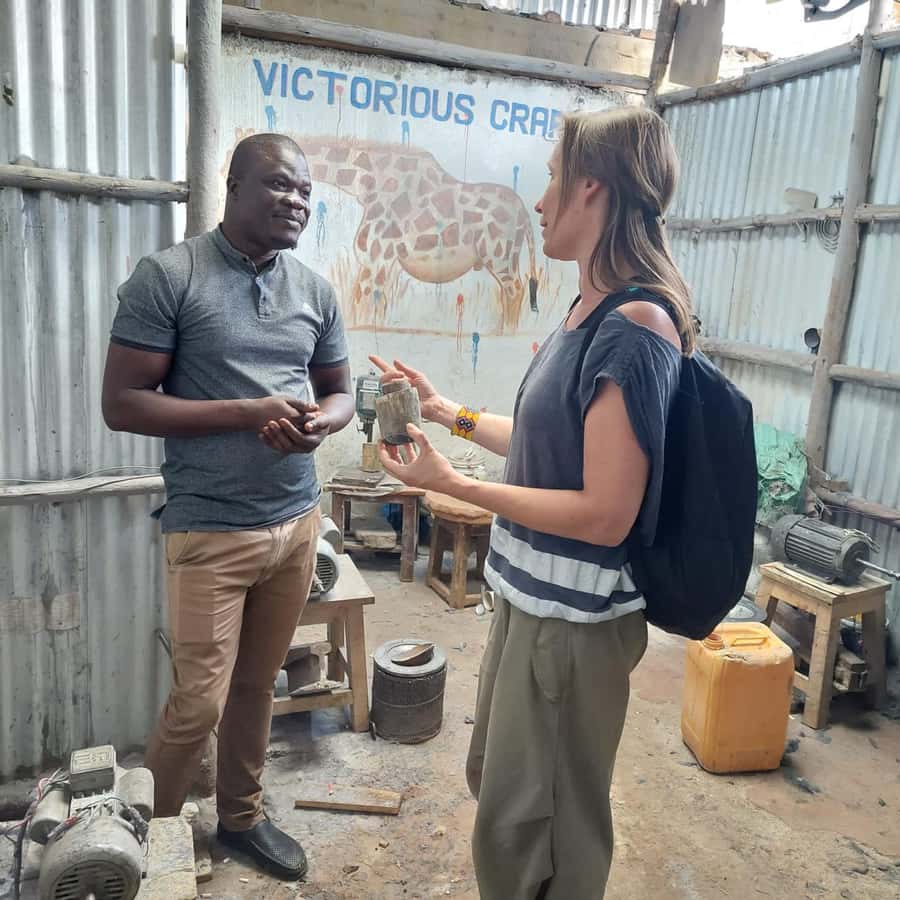
The Waste Hub Centre introduces another practical response to poverty. This Kibera-based group makes African crafts from discarded materials such as dead padlocks, timber, brass, and animal bones.
The bone work is especially unusual. Bones are sourced from slaughterhouses and turned into finished products such as bottle openers and lockers. The ash left from the bones can be used as organic fertilizer for farmers outside Kibera, or as chicken feed for local people who keep chickens.
This is a useful stop for anyone interested in recycling, small-scale manufacturing, or social enterprise. Waste is treated as a source of materials and income rather than simply a problem to remove. The group also creates jobs for local men and women and offers microloan or credit facilities to people in the community.
You can purchase locally made products here, and the information provided says you may be able to take part in making products by hand. Ask about the process rather than assuming every activity will be available on the day.
I like this stop because it links environmental work with employment. Recycling is not presented only as a clean-up exercise. It becomes a way to build products, teach skills, create credit, and generate income.
Master’s Touch Bakery and Nancy’s business story
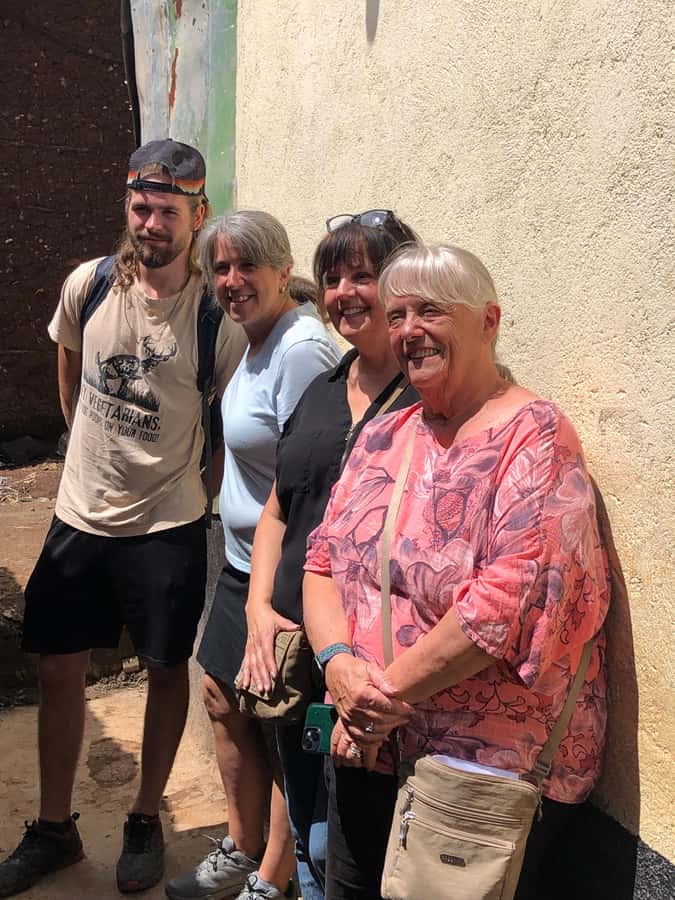
The final stop is Master’s Touch Bakery, where you meet Nancy for coffee or tea and fresh baked goods. After several hours of walking and serious conversation, this is a welcome change of pace.
Nancy shares her story of starting a business as a single mother and explains some of the obstacles women face when starting businesses in Kenya. The bakery gives the tour a personal finish, since you end with food made by another local entrepreneur rather than at a generic restaurant.
The coffee and baking are included in the tour price. Do not expect this stop to turn the outing into a food tour. Its value is the combination of a small refreshment, a business visit, and Nancy’s account of building a livelihood.
I find this ending smart. It leaves you with a story of enterprise and daily work, not only with memories of hardship. It also reinforces the tour’s main idea: Kibera is a community of people facing real challenges while creating useful businesses and local solutions.
The matatu ride back to Ngong Road

Once the walking portion is complete, the guide provides a matatu ride from Kibera back to the starting point. Matatus are part of Nairobi’s everyday public transport system, so this is more than a transfer between tourist stops.
The ride is described as a cultural adventure, but you should view it as practical public transport rather than a sightseeing vehicle. It gives you a short look at how many people move around Nairobi and returns you to Prestige Plaza without requiring you to arrange another ride.
Because the total experience is only three hours, the return transport helps keep the schedule compact. If you have a fixed appointment afterward, allow extra time anyway. The supplied details do not promise an exact start time or traffic conditions.
What to bring and how to behave
A little preparation will make the experience more comfortable and respectful.
- Wear comfortable walking shoes.
- Bring about one litre of water.
- Carry some cash for crafts and other locally made products.
- Ask for permission before taking photographs.
- Come with an open mind.
- If you wish, bring rice, corn, sugar, flour, soap, sanitary pads, books, shoes, or clothes to share with vulnerable families.
The donation items are optional. Do not treat them as an admission requirement. If you bring something, give it through the guide or an appropriate local contact rather than handing items randomly to children.
You can also bring sweets for children, but I would think carefully about that choice. The strongest contribution may be buying from local makers or supporting the community projects connected with the tour.
The route is not suitable for babies under one year, people over 95, or people with altitude sickness. The available information does not describe wheelchair access, so ask the provider directly if mobility is a concern.
Safety, comfort, and the emotional side
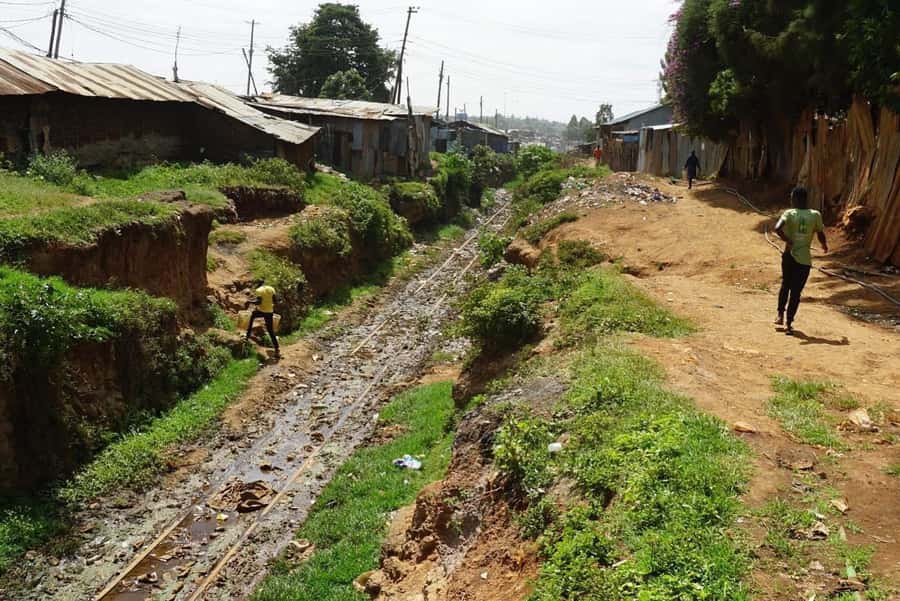
A direct visit to Kibera can feel intense. The route takes you through people’s neighborhoods and working spaces, so you may feel uncomfortable at times. That does not mean the tour is poorly designed. It means the subject is serious and the setting is a real residential community.
One solo woman, Tobia from the Netherlands, felt safe throughout her visit, even though she was the only client on the day. That is useful reassurance, but it does not remove the need for normal urban awareness. Stay with the guide, follow local instructions, and keep your belongings secure.
The small-group feel can be a strength. You have more room to ask questions and listen at each stop. At the same time, an especially small booking may mean the experience feels more like a personal walk than a group excursion.
Do not expect polished paths, formal exhibits, or a neat line between tourist areas and homes. The rough edges are part of the experience, but they also demand good manners.
Who should book this experience?
I would choose this tour if you want to understand Nairobi through local business, community work, and personal stories. It suits you if you are comfortable walking for several hours and prefer meeting people to checking off monuments.
It is especially suitable for visitors interested in social enterprise, women’s employment, recycling, HIV stigma, small businesses, and community-led improvements. Parents with older children may find the themes useful, though the direct setting may not suit every child.
I would think twice if you want a relaxed sightseeing ride, a conventional museum visit, or a photography-focused outing. This is also not the right choice if you are uncomfortable visiting a residential community or discussing poverty without turning it into a spectacle.
At $40, I see fair value if you use the time well. Five stops, a local guide, a return matatu ride, refreshments, and the 30 percent community contribution make it more than a basic walk. The real return is the access to people and projects you would be unlikely to meet on your own.
Should you book the Kibera Empowerment Walking Tour?
Book it if you want a candid, locally led experience and are willing to listen more than photograph. Moses’s personal introduction, Rosemary’s work with women living with HIV, the Waste Hub’s use of discarded materials, and Nancy’s bakery story give the tour a strong human focus.
Skip it if you need a polished route or have limited tolerance for difficult social realities. For the right visitor, this is one of Nairobi’s more purposeful three-hour experiences, with community benefit built into the price and enough personal contact to make the visit memorable.
FAQ
How long does the Kibera Empowerment Walking Tour last?
The tour lasts three hours. The walking portion is described as about two and a half to three hours.
Where does the tour start?
It starts in the parking lot of Nakumatt Prestige, now associated with Avanti Prestige, beside the giant Coca-Cola bottle outside Prestige Plaza on Ngong Road.
Where does the tour finish?
The experience returns to Prestige Plaza Shopping Mall after a matatu ride from Kibera.
What language is the tour offered in?
The live guided tour is offered in English.
What is included in the $40 price?
The price includes the walking tour, visits to five stops, meetings with five small-business owners or community change makers, the return bus or matatu ride, and coffee or tea with fresh baked goods at Master’s Touch Bakery.
Is food included?
Yes. Coffee or tea and fresh baked goods at Master’s Touch Bakery are included.
Can I buy local products during the tour?
Yes. You can carry extra cash to purchase locally made products from craft centers and other organizations.
Can I take photographs?
You must ask for permission before taking photographs.
Does part of the tour revenue support Kibera projects?
Yes. Thirty percent of the tour revenue supports local initiatives, including the construction of washrooms and installation of community water tanks.
What should I bring?
Bring comfortable shoes, about one litre of water, and some cash if you want to buy local products. You may also bring items such as rice, corn, sugar, flour, soap, sanitary pads, books, shoes, or clothes to share with disadvantaged families.
Is the tour suitable for everyone?
It is not suitable for people with altitude sickness, babies under one year, or people over 95 years old. The route involves substantial walking, and you should ask the provider about access needs not covered in the tour details.
Can I cancel the booking?
You can cancel up to 24 hours in advance for a full refund. Reserve-now-and-pay-later booking is also available.
Just added in Nairobi
- Wildlife Capital: Half-Day Safari at Nairobi National Park★ 5.0 · 2 reviews
- 3 days maasai mara migration safari★ 4.5 · 7 reviews
- 4 Days Tour Landcruiser in Masai Mara and Lake Nakuru★ 5.0 · 10 reviews
- 4 Days Safari to Lake Nakuru N/P and Maasai Mara N/R★ 5.0 · 18 reviews
- Day Tour to Nairobi national park, Elephants, and Giraffe Center★ 3.5 · 8 reviews
- 6 Days Kenya Budget Group Safari★ 5.0 · 2 reviews
- Maasai Mara Day Trip★ 5.0 · 15 reviews
- 3 Days Masai Mara Wildebeest migration Budget safari★ 5.0 · 2 reviews
Kibera Community Tours, compared.





Kibera Slum Tour with Local Social Entrepreneurs
Read our review →


Browse the lists this tour appears in