

Reviewed · WALKING TOURS
Nairobi Downtown Walking Tour
Nairobi reveals itself on foot. This 150-minute walk links markets, memorial buildings, government landmarks, and everyday downtown life with a local guide who explains what you are seeing rather than simply naming it. I especially like the chance to visit McMillan Memorial Library and the two very different markets, Maasai Market and City Market. I also like that hotel or apartment pickup is included, which removes one early hassle.
The main tradeoff is that the tour ends in central Nairobi, with no hotel drop-off included. You should also budget another $4 per person for entry to the KICC rooftop, and this is not a good choice if you use a wheelchair or have a hearing impairment. Still, at $27 per person, it offers a useful first look at Nairobi’s city center for the price of a casual meal and a taxi ride.
In This Review
- Key points at a glance
- What this Nairobi walk is really about
- Starting on Simba Street and Kimathi Street
- Nation Media Group and McMillan Memorial Library
- Jamia Mosque and Nairobi’s religious character
- Maasai Market: shopping with room for conversation
- Smoking Zone, street culture, and matatus
- The Cathedral, Parliament, and Kenya’s civic center
- KICC rooftop: the extra-cost highlight
- City Market: a useful contrast with Maasai Market
- Price, pace, and practical value
- Who will get the most from this tour?
- Should you book the Nairobi Downtown Walking Tour?
- FAQ
- How long does the Nairobi Downtown Walking Tour last?
- How much does the tour cost?
- Is hotel pickup included?
- Is hotel drop-off included?
- Which languages are available?
- What should I bring?
- Can I shop during the tour?
- Is the tour suitable for wheelchair users?
Key points at a glance
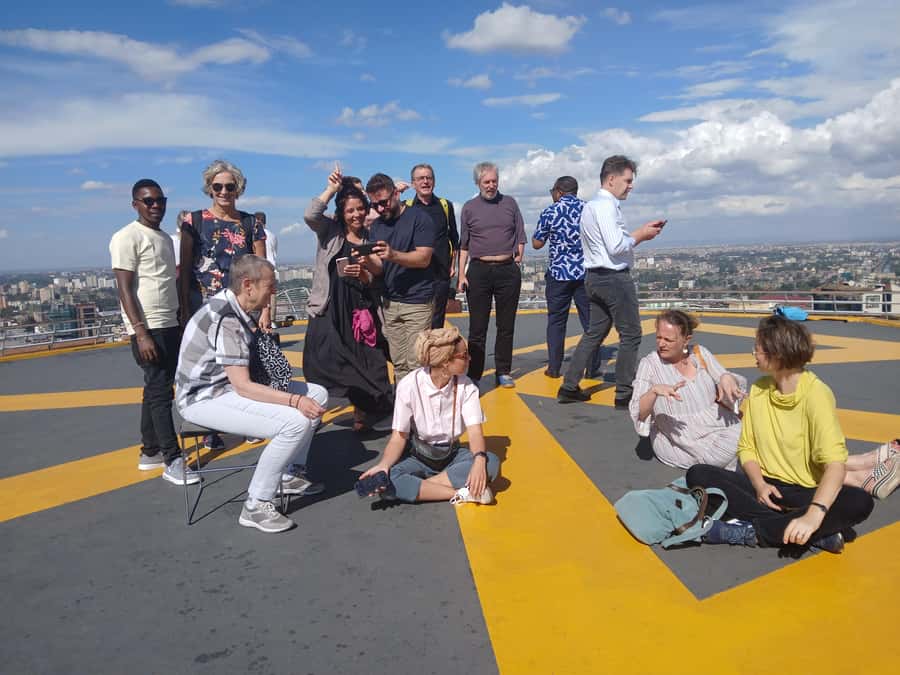
- See Nairobi through local eyes: Guides such as David, William, Ibrahim, Daniel, and Eric explain city history, culture, religion, transport, and daily work.
- Two markets, two sides of the city: Maasai Market is aimed largely at arts, crafts, and souvenirs, while City Market serves local shopping needs, including flowers and meat.
- A strong history route: McMillan Memorial Library, Jamia Mosque, the Cathedral Basilica, Parliament, and KICC give the walk real variety.
- Hotel pickup makes arrival easier: Transport is arranged from any hotel or apartment in Nairobi, and vehicle details are sent before pickup.
- The rooftop view costs extra: KICC entry is not included and costs $4 per person.
- Dress and pack for walking: Wear comfortable shoes, carry sun protection in hot weather, and bring a raincoat during the rainy season.
What this Nairobi walk is really about

This is not a polished sightseeing loop that keeps you behind a coach window. It is a street-level introduction to central Nairobi, where office blocks, old civic buildings, religious sites, market stalls, public transport, and government offices share a fairly tight area.
The guide’s job is to connect those pieces. You can ask about Nairobi’s past, present-day city customs, matatu culture, religion, street vendors, and the way people use downtown markets. The strongest part of the experience is the human explanation. Without a guide, you might pass the library, mosque, cathedral, and government buildings without understanding why they matter.
The route also gives you several kinds of Nairobi in a short time. You move from busy streets and commercial activity to quieter historical corners, then back into markets and public spaces. That change of pace keeps two and a half hours from feeling like a long march.
The guides receive the most consistent praise for being patient, friendly, and clear. David is repeatedly singled out for explaining the city’s past and adjusting his pace. William is praised for answering questions and making solo visitors feel at ease. Ibrahim is noted for guiding people carefully through the city and helping with transport at the end, while Daniel is often described as accommodating and easy to talk with.
That matters because downtown walking requires more than memorized dates. You want someone who can pause when you need a photo, explain an unfamiliar custom, and respond sensibly when the streets become crowded.
More Walking Tours in Nairobi
- Nairobi: Historic and Modern Highlights Walking Tour
★ 4.8 · 703 reviews - Nairobi Historical Walking City Tour
★ 5.0 · 258 reviews - Nairobi City Walking Tour with Traditional Kenyan Lunch
★ 5.0 · 106 reviews
Starting on Simba Street and Kimathi Street
Pickup is included from any hotel or apartment in Nairobi County. You will receive the car details before collection, which is useful in a city where finding the right vehicle can otherwise become a small adventure of its own.
The walk begins around Simba Street with a safety briefing. This opening is practical rather than decorative. Your guide sets expectations for moving through the city center, then leads you toward Kimathi Street for sightseeing and photographs.
Kimathi Street helps set the tone. You are not looking at Nairobi from a distant viewpoint. You are walking through its working center, with the guide pointing out details and explaining how the area fits into the city. The route is suitable for visitors who want a quick orientation early in a Nairobi stay, as well as those with a short stopover.
The pace appears flexible. Pat, from the United States, particularly appreciated David’s slow and considerate walking style. Daniel also received praise for being patient and allowing time for questions and pictures. If you need a gentler pace, mention it at the start rather than trying to keep quiet and fall behind.
Nation Media Group and McMillan Memorial Library
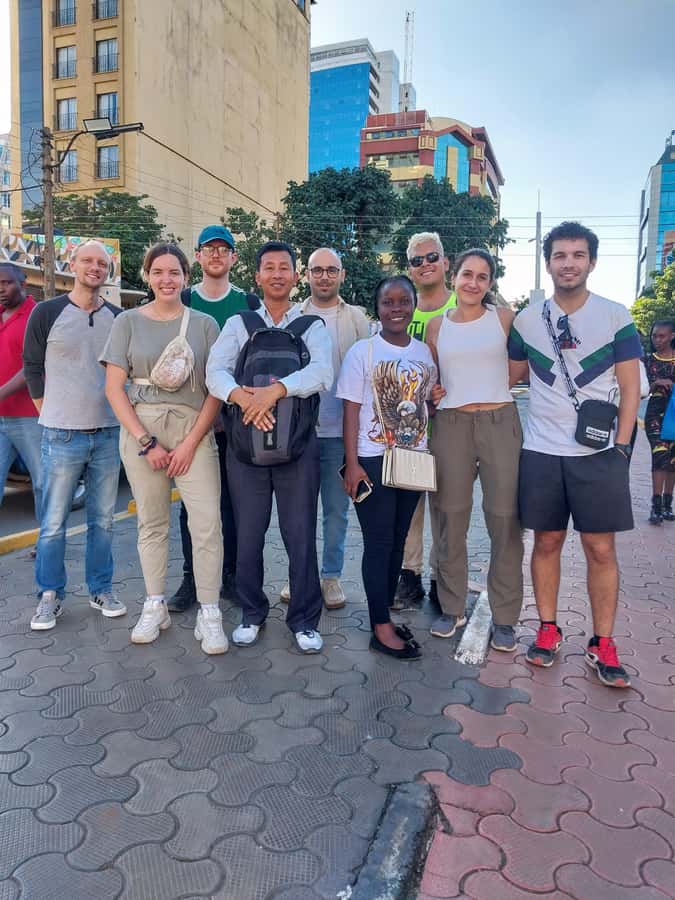
The walk passes the headquarters of Nation Media Group. This is a sightseeing stop from the outside, not a stated interior visit. Its place on the route helps introduce Nairobi as a center of news, business, and public debate.
The more substantial stop is McMillan Memorial Library. A visit here is included in the price, making it one of the clearest value points of the tour. The building provides a break from the traffic and a chance to see an older part of Nairobi’s civic story.
Your guide can give the building context and explain why it belongs on a downtown route. This is the sort of stop that can easily disappear from an independent walk because it is less obvious than a major monument. I would pay close attention here, since the included visit adds more substance than another quick photo outside an office building.
The tour is not a museum-heavy experience, so do not expect long indoor visits at every stop. It is mainly an outdoor walk, with the library as the specified included visit.
Jamia Mosque and Nairobi’s religious character
Jamia Mosque is passed from the outside. The stop adds an important religious dimension to the walk, especially because the guide also discusses city religion and cultural life.
Nairobi’s center is not presented as one single tradition or one tidy story. The route later passes the Cathedral Basilica of the Holy Family, allowing you to see two major places of worship within the wider downtown setting. The value here is comparison and context, not a formal religious tour.
Be respectful around both religious sites. The supplied details do not promise interior access, so treat these as exterior sightseeing stops unless your guide tells you otherwise.
A completely different kind of day:
- Nairobi National Park Half-Day Tour; Free Wi-Fi connection
★ 5.0 · 878 reviews - Nairobi: National Park & Optional Elephants & Giraffe Center
★ 4.8 · 874 reviews - NAI NAMI: Nairobi Storytelling Tour with Street Children
★ 5.0 · 792 reviews - Nairobi National Park Half-Day Game Drive
★ 4.5 · 738 reviews
Maasai Market: shopping with room for conversation
Maasai Market is the first major shopping stop. Local people and tourists come here for souvenirs and handmade goods, so this is the place to browse for a small reminder of Kenya or gifts to take home.
The guide can help you understand the market’s role and give you time to look around. Several visitors appreciated guides who allowed unhurried souvenir stops, and Daniel was specifically praised for helping someone find items they wanted in downtown Nairobi.
The market can be more useful if you arrive with a clear idea of what you want. You might find crafts, decorative pieces, and gifts, but prices and selection can vary. Ask your guide for help with local customs and practical shopping questions, while remembering that the final purchase is yours to judge.
This is also a good point to notice the difference between a market used for visitors and a market used mainly for daily local needs. The tour does not hide the commercial side of downtown. That is a strength. You are seeing how people sell, bargain, browse, and work, rather than being shown only monuments.
Smoking Zone, street culture, and matatus
The route includes a walk through the Smoking Zone, followed by scenic city views along the way. The name alone tells you this is not a standard postcard stop. It is part of the everyday public life of the center, and the guide can explain how such spaces function within Nairobi’s street culture.
The tour also covers matatu culture. Matatus are a major part of urban life in Kenya, and learning about them helps you read the city beyond the buildings. Your guide may explain the customs and social role surrounding this transport culture, though the exact detail will depend on the guide and your questions.
This section is likely to feel less scripted than the historic stops. You may see street vendors, workers, pedestrians, and ordinary city movement. That is the point, but it also means the experience can feel busy and rough around the edges. If you prefer quiet lanes and formal attractions, this will not be your ideal Nairobi outing.
The Cathedral, Parliament, and Kenya’s civic center
The Cathedral Basilica of the Holy Family is a sightseeing pass-by. It gives the route another architectural and religious reference point before you reach the government district.
Parliament of Kenya is also viewed from outside. The tour covers governmental areas, so this part helps place Nairobi’s political institutions within the same city center where people shop, commute, worship, and work.
Do not book this expecting guaranteed access inside Parliament. The stated program is sightseeing and passing by. The value comes from your guide’s explanation of the area, its buildings, and the city’s historical development.
The walk’s broad range is one of its best features. In a single afternoon, you can discuss colonial-era and modern Nairobi, religious life, commerce, public transport, media, and government. The experience is not a specialist architecture tour, but it gives you a practical framework for understanding central Nairobi.
KICC rooftop: the extra-cost highlight
The Kenyatta International Convention Centre is the route’s major viewpoint. The KICC rooftop is listed for a visit, photos, and sightseeing, but entry costs an additional $4 per person.
That extra fee is modest, but it should not surprise you. Add it to the $27 tour price when working out your budget. The rooftop is likely to be the best place on the route for a broad view of the city, and one visitor called the sky view a highlight.
You should confirm the rooftop access arrangements at booking or with the operator before setting your expectations. The supplied details clearly state the additional charge, but they do not promise a particular length of time at the top or specify what happens if weather or access conditions change.
Bring your camera, but keep the walk itself in mind. KICC is one scenic pause in a tour built around street-level contact and local explanation.
City Market: a useful contrast with Maasai Market
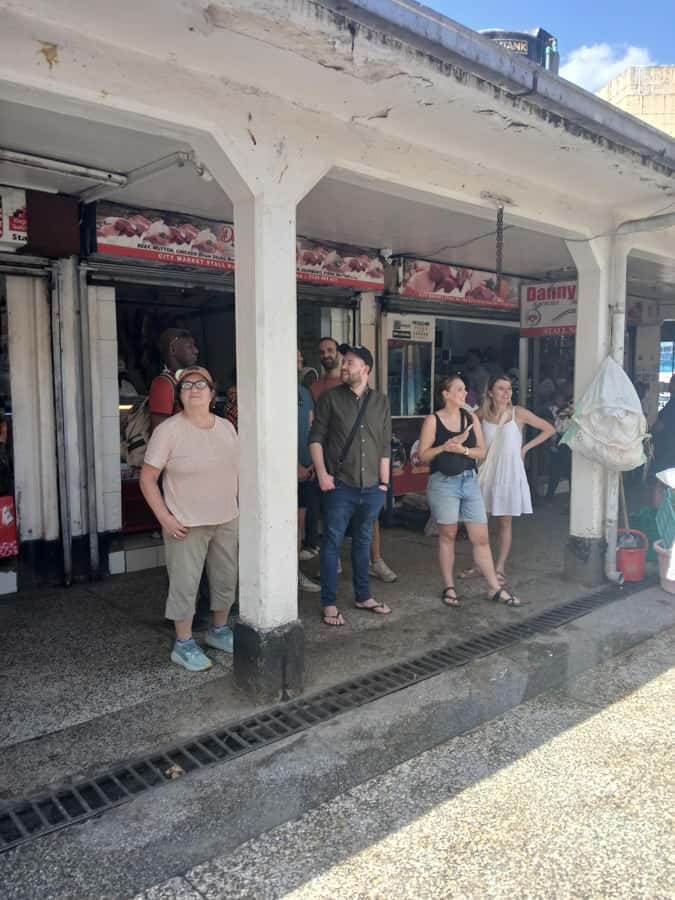
The final major stop is City Market. This market serves local shopping needs, including flowers and meat, so it offers a different view from Maasai Market’s souvenir trade.
That contrast is valuable. You get to see both the market Nairobi presents to shoppers from outside and the market that supports ordinary city life. The sights and smells may be stronger here, especially around food stalls and meat counters, so you should come prepared for a working market rather than a tidy retail hall.
The guide can explain what you are seeing and help you move through the space. You may have time to shop, but the main purpose is understanding the market and its place in the city. If you are sensitive to strong food smells or crowded indoor areas, this is worth considering before you book.
After City Market, the group walks for about 10 minutes to City Walk Kenya Ltd at the Hilton for a break. The tour ends there, not back at your hotel. Guides may help arrange a taxi or Uber, as Ibrahim and other guides have done, but that return transport is not included.
Price, pace, and practical value
At $27 per person, the tour is good value if you want history, orientation, and local context in one compact outing. The included hotel pickup adds real convenience, especially on your first day in Nairobi, and the McMillan Memorial Library visit gives you one included indoor-style cultural stop.
The price is less attractive if you mainly want a viewpoint and a few quick photographs. You will need to add $4 for KICC entry, and you pay separately for any purchases at the markets. You also need to arrange and pay for your own return to the hotel.
The two and a half hour duration is about right for this route. You see many places, but the schedule leaves room for explanations, photos, and shopping. Several people found the tour relaxed, while others appreciated that it covered the major central sites without taking a full day.
Group size is not specified, so ask before booking if a private or small-group format matters to you. The experience is described as intimate, but you should not assume a completely private walk unless that is confirmed.
Wear comfortable shoes. High heels, luggage, and large bags are not allowed, and jewelry is discouraged. Because the walk is outdoors, sunglasses and a hat make sense in hot seasons. Carry a raincoat during rainy periods. Alcohol and drugs are prohibited.
Free cancellation is available up to 24 hours before the start for a full refund, and you can reserve now and pay later. Those terms are helpful if your Nairobi schedule may change.
Who will get the most from this tour?
I would choose this for a first visit to Nairobi, a short stopover, or a traveler who wants downtown context before visiting other parts of Kenya. It is especially useful if you would not feel comfortable finding markets, alleys, government buildings, and historic sites on your own.
Solo visitors may appreciate the arranged pickup and the presence of a local guide. Families can also make it work. One family with a nine-year-old felt well looked after, and another with children aged 10 and 14 enjoyed the walk.
The tour also suits curious shoppers who want market time without spending the whole day in shops. It is less suitable for anyone looking for a safari, a food-focused outing, or a quiet architectural tour.
Wheelchair users and people with hearing impairments should not book this experience, according to the stated restrictions. The outdoor route, street conditions, and communication format may not provide the support required.
English and Spanish are available. When choosing your time, consider heat, rain, and how lively you want the city to feel. A Sunday may be quieter, as one local participant found, while busier periods can bring more traffic and street activity.
Should you book the Nairobi Downtown Walking Tour?
Yes, if you want an affordable and direct introduction to Nairobi’s center. The best reason to book is not one single monument. It is the combination of markets, religious sites, civic buildings, street culture, and a guide who can explain how they connect.
I would book it early in a Nairobi visit, then use what you learn to decide where to return. Choose it with David, William, Ibrahim, Daniel, or another available guide if you have the chance, since their patience and local explanations are central to the experience.
Skip it if you need wheelchair access, dislike outdoor city walking, or want hotel drop-off included. For everyone else, $27 buys a useful two and a half hours, with pickup, a library visit, market stops, and a rooftop option that costs only a little extra.
FAQ
How long does the Nairobi Downtown Walking Tour last?
The tour lasts 150 minutes, or two and a half hours.
How much does the tour cost?
The price is $27 per person. Entry to the KICC rooftop costs an additional $4 per person.
Is hotel pickup included?
Yes. Pickup is included from any hotel or apartment in Nairobi. Vehicle details are sent before pickup.
Is hotel drop-off included?
No. The tour ends at City Walk Kenya Ltd near the Hilton, and return transport to your hotel is not included.
Which languages are available?
The live guide is available in English or Spanish.
What should I bring?
Bring comfortable shoes. Sunglasses and a hat are useful during hot seasons, while a raincoat is recommended during the rainy season.
Can I shop during the tour?
Yes. The route includes Maasai Market and City Market, with time for shopping and browsing.
Is the tour suitable for wheelchair users?
No. The experience is not suitable for wheelchair users or people with hearing impairments.
Just added in Nairobi
- Wildlife Capital: Half-Day Safari at Nairobi National Park★ 5.0 · 2 reviews
- 3 days maasai mara migration safari★ 4.5 · 7 reviews
- 4 Days Tour Landcruiser in Masai Mara and Lake Nakuru★ 5.0 · 10 reviews
- 4 Days Safari to Lake Nakuru N/P and Maasai Mara N/R★ 5.0 · 18 reviews
- Day Tour to Nairobi national park, Elephants, and Giraffe Center★ 3.5 · 8 reviews
- 6 Days Kenya Budget Group Safari★ 5.0 · 2 reviews
- Maasai Mara Day Trip★ 5.0 · 15 reviews
- 3 Days Masai Mara Wildebeest migration Budget safari★ 5.0 · 2 reviews
Walking Tours, compared.

Walking Tour Through Old Town Mombasa and Fort Jesus
Read our review →

Nairobi Walking tour:Explore History Culture and Traditions
Read our review →
Nairobi City Walking Tour with Traditional Kenyan Lunch
Read our review →

Browse the lists this tour appears in