
Reviewed · WALKING TOURS
Mombasa: Guided Nature Walk Amongst Giraffes
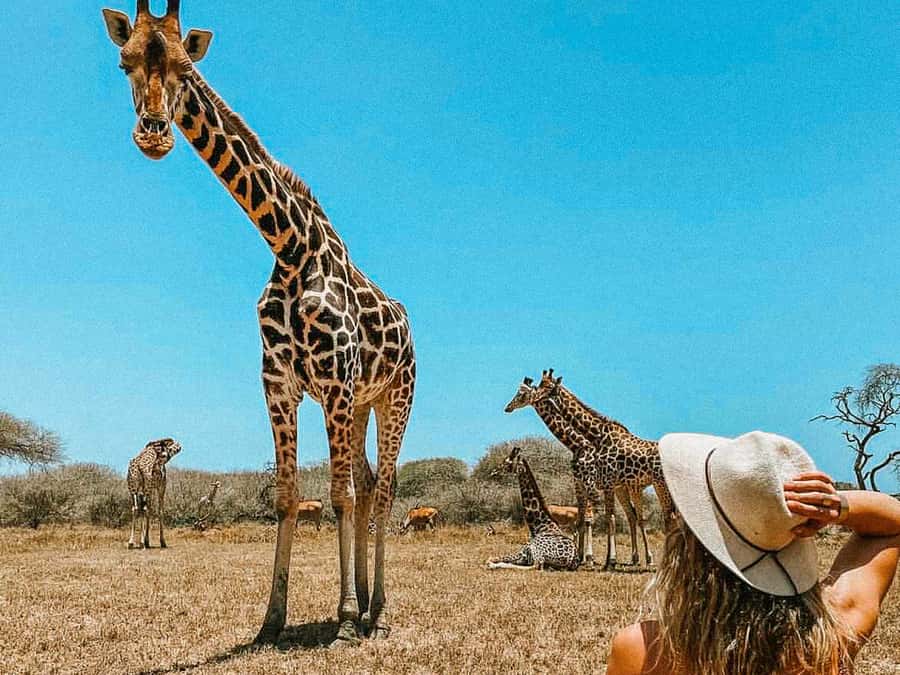
You get close to giraffes here. This quiet sanctuary outside Mombasa offers a simple, unusual wildlife outing where I like the free-roaming animals and the chance to learn about conservation from a local guide. I also like that the $38 price includes entry and a guided walk, though transport is not included and the visit may feel short for some people.
This is not a big safari with jeeps, dramatic predator sightings, or a long game drive. It is a small nature experience built around walking, watching, and giving animals room. The strong 4.8 rating from 48 ratings reflects how much people value the close animal encounters, but you should know that one visit lasted only about an hour and another guest found the meeting directions confusing.
In This Review
- Key points before you book
- What this Mombasa wildlife walk is really like
- Meeting your guide at Nguuni Nature Sanctuary
- The first 30 minutes: a gentle walk into the sanctuary
- Meeting giraffes at close range
- Ostriches, antelopes, and the wider sanctuary
- Sitting down after the animal walk
- The project behind the animal experience
- What the $38 price includes and leaves out
- Who will enjoy this most
- Practical preparation for a better visit
- Should you book the Nguuni giraffe walk?
- FAQ
- Where does the giraffe walk begin?
- Where do I meet the guide?
- How long does the walk last?
- What animals can I see?
- Can I feed the giraffes?
- Is transportation included?
- Is food included for participants?
- What should I wear?
- Is the activity wheelchair accessible?
Key points before you book
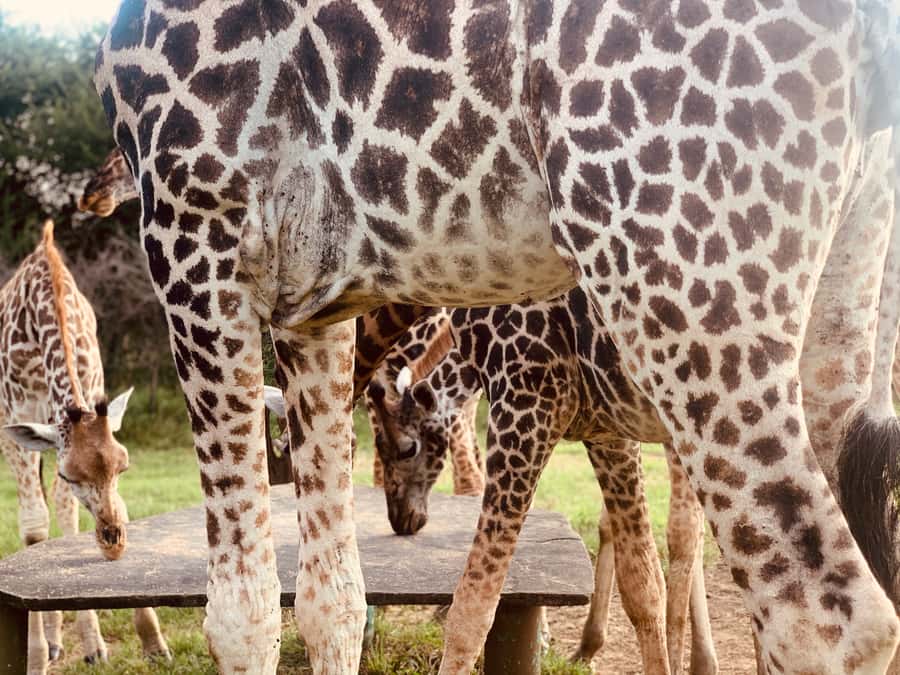
- Giraffes roam freely near the walking route, giving you a close look without the distance of a standard safari vehicle.
- Nguuni Nature Sanctuary is a conservation and community project, with a library, health centre, and auditorium serving nearby residents.
- The basic experience lasts about 30 minutes of walking, with extra time for animal observation and sitting at benches.
- Staff provide food for the giraffes, but you should not assume you will personally feed them.
- Transport, meals, drinks, and footwear are not included, so plan your own ride and pack sensibly.
- A tuk-tuk may help with movement around the sanctuary, depending on the weather and group arrangements.
What this Mombasa wildlife walk is really like
Nguuni Nature Sanctuary gives you a different kind of wildlife outing. Instead of spending hours searching for animals across a large national park, you visit a contained animal sanctuary where giraffes, ostriches, antelopes, and other animals are already part of the setting.
I like the directness of the experience. You arrive at the reception, meet the Travel4Purpose guide, receive a safety briefing, and then walk into the sanctuary. The guide explains how to behave around the animals, points out the different species, and adds facts about wildlife protection in Africa.
The animals are the main attraction, but the conservation message gives the visit more purpose. You are not just stopping for a photograph with a giraffe. You are also learning why animal care, trained local staff, and community support matter.
The outing is priced at $38 per person. That is fair if you want a guided encounter with several animal types and do not need a full-day safari. It is less attractive if you expect a packed day, hotel pickup, lunch, or extensive time on foot. Those extras are not part of the price.
More Walking Tours in Mombasa
- Walking Tour Through Old Town Mombasa and Fort Jesus
★ 5.0 · 393 reviews - Mombasa walking tour
★ 4.9 · 28 reviews - Fort Jesus Museum Walking Tour in Mombasa
★ 5.0 · 25 reviews
Meeting your guide at Nguuni Nature Sanctuary
You meet at the sanctuary reception and should ask for the Travel4Purpose guide. This detail matters because one person had trouble with the meeting point shown for the booking and was taken to the wrong place by an Uber.
I recommend checking the exact sanctuary location before setting off. Since pickup and drop-off are not included, you are responsible for reaching Nguuni Nature Sanctuary. Build in enough time to find reception and confirm you are in the right place rather than relying only on a map pin.
The tour is conducted in English. A live guide makes a real difference here because the experience depends on observation and explanation, not on a long printed route. If you are curious about the animals or conservation work, this is the time to ask questions.
The sanctuary is wheelchair accessible, although the activity includes a walk. If you need specific help with the route, it is sensible to raise that with the organiser before arrival.
The first 30 minutes: a gentle walk into the sanctuary
The listed walking portion takes about 30 minutes. It is not presented as a strenuous hike, but you still need comfortable shoes and clothing suited to outdoor conditions.
The guide begins by explaining the sanctuary and its safety rules. This briefing is important. Giraffes may look calm and friendly, but they are large wild animals, and a responsible visit depends on keeping a suitable distance, following instructions, and avoiding sudden or careless behaviour.
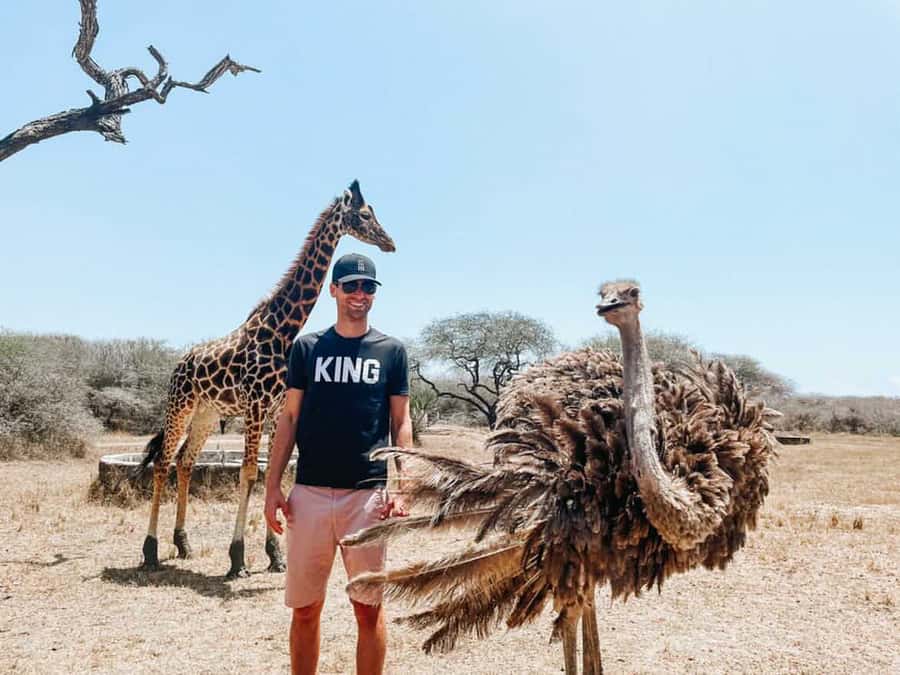
As you walk, the guide takes you to the different animal areas. Giraffes are the star, but ostriches and antelopes add variety. You may be only inches away from some of the animals, which creates a much more personal encounter than seeing them far across a national park.
That closeness is also the main reason to listen carefully. You are there to watch the animals responsibly, not to chase them, crowd them, or treat the sanctuary like a petting zoo. The guide helps keep the meeting safe and respectful.
Bring sunscreen, long pants, and comfortable clothes. The advice to wear long pants is especially useful for an outdoor walk, where protection from sun and rough ground matters more than dressing for a formal sightseeing stop.
Meeting giraffes at close range
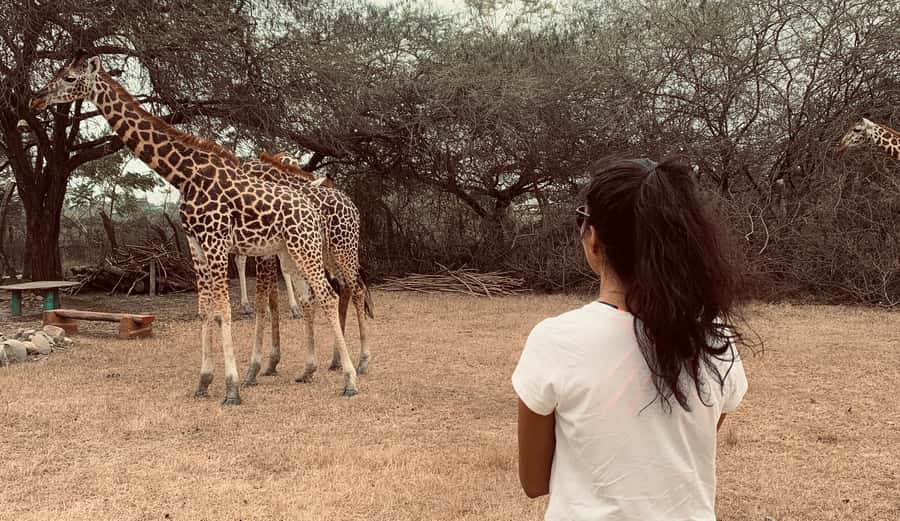
The giraffes are the emotional centre of the visit. Seeing one at close range lets you notice details that can disappear during a distant safari sighting: the height of the animal, the patterned coat, the slow movements, and the way it reacts to the people nearby.
The setting also gives you time to watch rather than simply snap a quick picture. One particularly positive account described walking for a while before reaching the animals, followed by plenty of time to observe them and ask questions. That is a useful picture of the experience: a short approach, then a longer animal-focused stop.
The description says food for the giraffes is included and that staff feed them. Do not read that as a promise that you will personally feed the giraffes. A visitor specifically noted that personal feeding was not allowed, despite the wording suggesting otherwise. The safer expectation is that staff handle the feeding while you observe.
That arrangement is sensible from an animal-care point of view. It helps control what the animals eat and keeps the interaction from becoming too forceful or chaotic. You still get the close encounter without turning the animals into a feeding prop.
A completely different kind of day:
- Mombasa: Kisite Park Private Cruise with Breakfast and Lunch
★ 4.7 · 181 reviews - Mombasa City Tour
★ 5.0 · 170 reviews - Mombasa: Tusks, Fort Jesus, Old Town, Beach and City Tour
★ 4.7 · 137 reviews - Half-Day Scenic Bike Tour
★ 5.0 · 75 reviews
Ostriches, antelopes, and the wider sanctuary
The walk does not stop with giraffes. Ostriches and antelopes are included among the animals you may see, and the guide takes you around to visit the different types in the sanctuary.
This makes the activity more worthwhile than a single-animal photo stop. You can compare the animals, learn how each fits into the sanctuary, and ask questions as you go. The guide’s fun facts help keep the walk lively, especially for children or anyone who does not already know much about African wildlife.
Still, keep your expectations measured. This is a sanctuary visit, not an open wilderness safari. You are unlikely to get the scale, unpredictability, or long-distance animal searching associated with a national park. The reward here is access and explanation, not the thrill of finding a hidden predator.
I would choose this outing for a first introduction to African wildlife, a family activity, or a relaxed break from beach time in Mombasa. I would not choose it as my only wildlife experience if I wanted a full day in the bush.
Sitting down after the animal walk
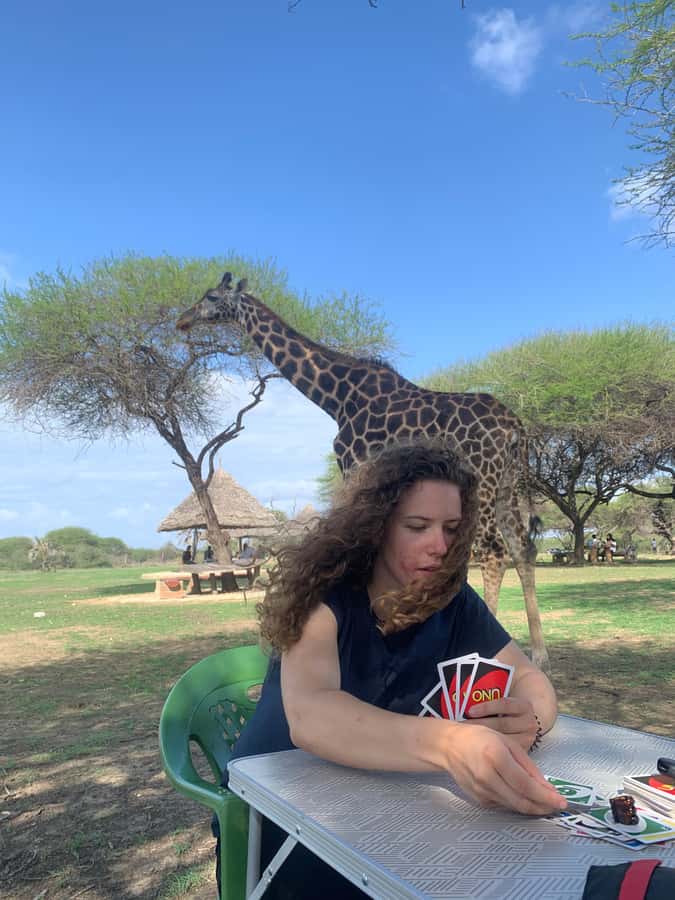
After walking around the sanctuary, you have time to sit on benches and take in the surroundings. This pause is easy to overlook, but I think it improves the experience. You can slow down, look back toward the animals, and let the visit feel less rushed.
The activity is described as lasting one day because it is valid for a day and has flexible starting times, but the actual guided walking segment is only around 30 minutes. One person reported that the whole visit finished after about an hour. That may be perfect if you want a compact outing, but disappointing if you planned a full-day program.
Ask about the sanctuary tuk-tuk if walking between areas is difficult. Its use depends on weather and the group, so it is not a guaranteed part of every visit. Treat it as a possible aid rather than a scheduled ride.
You may bring your own food and drinks. Since no refreshments are included, this is a practical option if you expect to stay beyond the main walk or want to make the bench stop longer. Keep all food away from the animals unless staff give clear instructions.
The project behind the animal experience
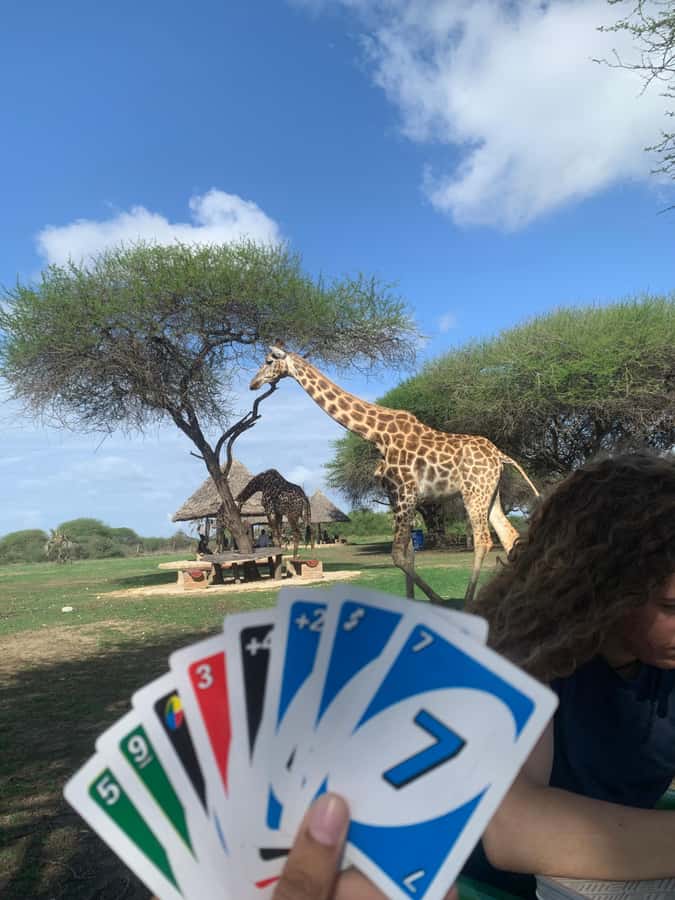
The sanctuary is presented as more than an animal enclosure. Its wider work includes a community library, health centre, and auditorium. These facilities connect the wildlife visit with local needs, which gives the outing a broader meaning than a simple attraction.
The project also hires local people and provides training. That matters to me because tourism works best when it creates useful jobs and skills in the place you visit. Your booking supports the animal sanctuary while also contributing to local employment.
The affordable price is part of that aim. A $38 guided nature activity is easier for more people to consider than a costly private safari, and the organisers describe the experience as accessible to all. You should still account for your own transport and any food or drinks, but the entry and guide are covered.
This does not mean every part will feel polished or perfectly timed. The conflicting directions and the short duration show that practical details may need your attention. But the community focus and local staffing add real value, especially if you prefer experiences that connect wildlife with people who live nearby.
What the $38 price includes and leaves out
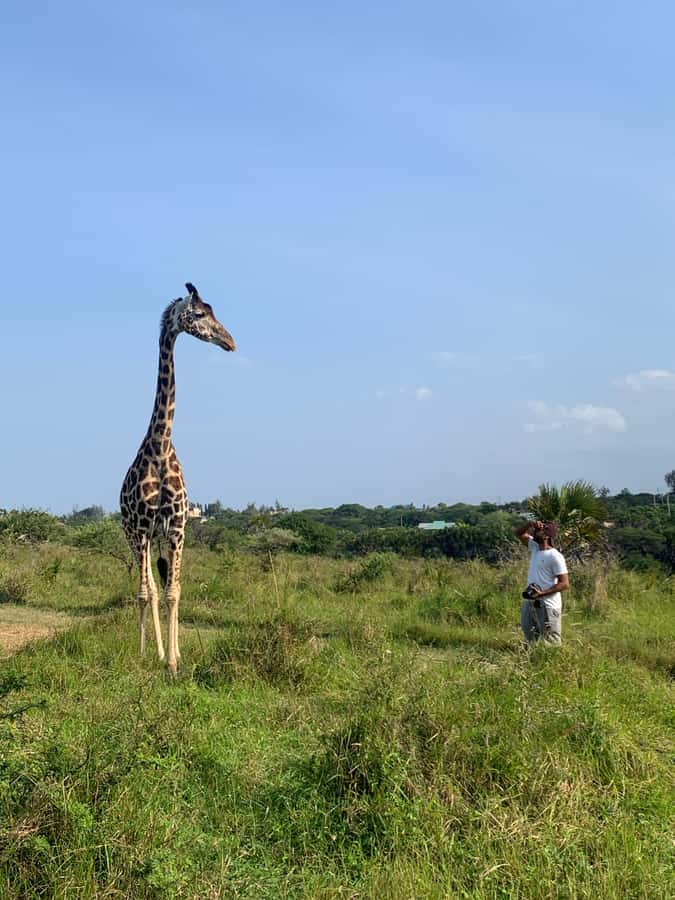
The fee includes the entrance day ticket, a tour guide, and food for the giraffes handled by staff. It does not include transport pickup or drop-off, your own meals and drinks, or comfortable footwear.
I see the price as good value for three reasons. First, you get a guide rather than simply entering on your own. Second, you have access to several animal types in one visit. Third, the experience supports a sanctuary and local workers rather than offering only a commercial photo opportunity.
The value drops if you need a long itinerary. The guided walk itself is about 30 minutes, and the full visit may be close to an hour. If you are coming from another part of the coast and paying a high taxi fare, include that transport cost before deciding.
There is free cancellation up to 24 hours before the activity, and you can reserve now and pay later. Those terms help if your Mombasa schedule is still changing. Starting times vary, so check availability for the date you want.
Who will enjoy this most
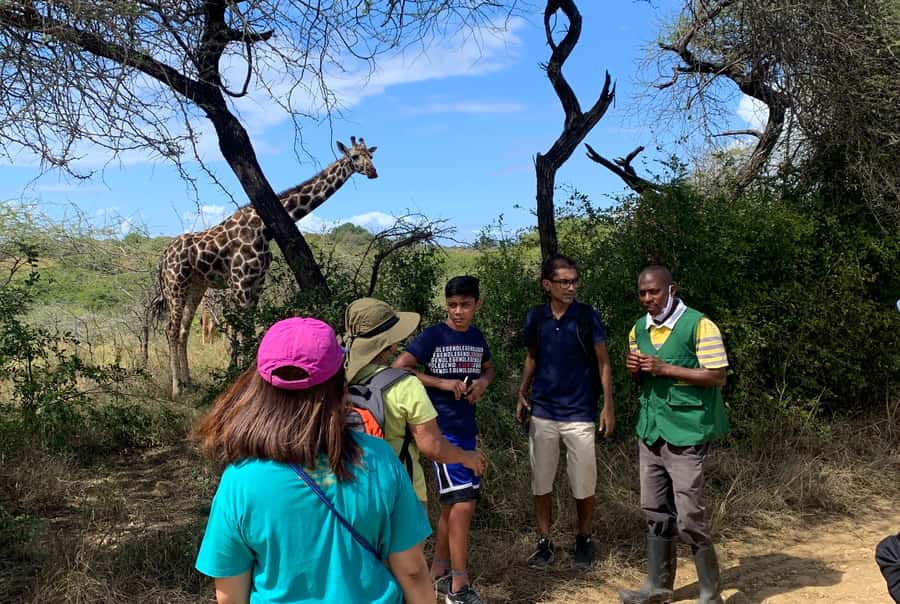
I would recommend the experience to:
- Families who want an easy introduction to giraffes and other African animals
- Couples looking for an unusual nature outing near Mombasa
- Visitors who prefer a short, guided activity over a full safari day
- People interested in conservation and community projects
- Anyone who enjoys close animal observation and time for questions
I would be more cautious if you want a long wildlife program, hotel transportation, or a guaranteed opportunity to feed the giraffes yourself. You should also think carefully about the transfer if you are unfamiliar with the sanctuary’s location.
The high overall rating reflects strong satisfaction, especially with the close contact, helpful explanations, and value for money. One person found the visit exceeded expectations and had the good fortune of being there with only one other participant. Group size is not specified, so do not assume every departure will be that private.
Practical preparation for a better visit
Wear long pants, comfortable shoes, and clothing suitable for outdoor conditions. Sunscreen is essential, and you should bring water and any food you want during the visit.
Do not arrive expecting to wander around without guidance. Listen to the safety briefing and follow the instructions around the animals. The close distance is special precisely because it depends on calm, respectful behaviour.
Confirm the meeting point with the organiser and ask for the Travel4Purpose guide at reception. Since transportation is your responsibility, make sure your driver has the sanctuary itself as the destination, not just a general area nearby.
If you want a longer outing, bring your own refreshments and ask whether the tuk-tuk is operating that day. Also allow time to sit at the benches after the walk rather than treating the 30-minute route as the entire experience.
Should you book the Nguuni giraffe walk?
Book it if you want an affordable, close-up animal experience with a conservation angle and a local guide. The giraffes are the clear reward, while the ostriches, antelopes, community work, and quiet sitting time give the visit more substance.
Skip it if you are seeking a full-day safari, included transport, or personal giraffe feeding. Go in with the right expectations: this is a compact sanctuary visit, and some people may finish in about an hour.
For a short wildlife break from Mombasa, I think the experience offers good value. Just verify the meeting point, arrange your own transport, pack for the sun, and treat the animals as wildlife rather than photo equipment.
FAQ
Where does the giraffe walk begin?
The activity begins at Nguuni Nature Sanctuary in Kenya’s Coast Province.
Where do I meet the guide?
Meet the guide at the sanctuary reception and ask for the Travel4Purpose guide.
How long does the walk last?
The listed walking section lasts about 30 minutes. The total visit may be longer, with time for animal observation and sitting at the benches.
What animals can I see?
The sanctuary includes giraffes, ostriches, antelopes, and other animals.
Can I feed the giraffes?
Food for the giraffes is included, but it is fed by staff. You should not assume that you will personally feed the giraffes.
Is transportation included?
No. Pickup and drop-off are not included, so you must arrange your own transportation to and from Nguuni Nature Sanctuary.
Is food included for participants?
No. You may bring your own food and drinks if needed.
What should I wear?
Bring comfortable shoes, sunscreen, comfortable clothing, and long pants.
Is the activity wheelchair accessible?
Yes, the activity is listed as wheelchair accessible.
Just added in Mombasa
- 4-Day Tsavo East West and Amboseli National Park from Mombasa★ 4.0 · 5 reviews
- 1-Day Tsavo East Safari From Mombasa★ 5.0 · 3 reviews
- Tsavo East National Park 2 days Voi Safari Lodge from Mombasa.★ 5.0 · 2 reviews
- 4×4 Safari in Tsavo East National Park★ 5.0 · 4 reviews
- 4 Days Mount Kenya Trekking★ 5.0 · 6 reviews
- Private Transfer from Mombasa★ 5.0 · 6 reviews
- Swahili Street Food Tour★ 5.0 · 7 reviews
- Fort Jesus Sound and Light show Mombasa★ 4.0 · 17 reviews
Walking Tours, compared.
Walking Tour Through Old Town Mombasa and Fort Jesus
Read our review →
Nairobi Walking tour:Explore History Culture and Traditions
Read our review →

Nairobi City Walking Tour with Traditional Kenyan Lunch
Read our review →

Browse the lists this tour appears in