

Reviewed · KIBERA COMMUNITY TOURS
Nairobi: Kibera Street Art Tour with Local Artists
Art changes how you see a place. This Kibera street art tour replaces quick judgments with conversations, murals, studios, and the personal stories behind them. I especially like the access to Sun Valley Art Collective and the chance to meet artists such as Saviour and Anthony in the neighborhood where they grew up. I also like that your money can go directly toward local artwork and community projects. The main consideration is that this is a walking tour through an informal settlement, with uneven conditions and no suitability for wheelchair users or people with mobility impairments.
The tour costs $45 per person and lasts about 150 minutes. That is not the cheapest Nairobi outing, but the small guide ratio, local leadership, art visits, and street food samples make it a fair price if you want conversation rather than a drive-by view. Bring water, closed-toe shoes, and a respectful attitude toward residents going about their daily lives.
In This Review
- Key points at a glance
- Why this Kibera walk offers more than sightseeing
- Meeting at Gateway Supermarket
- Following the murals through Kibera
- Meeting the artists behind the walls
- A taste of local street food
- Visiting HOF Gallery Kibera
- Is $45 a fair price?
- Practical advice for a comfortable visit
- Who will enjoy this tour most?
- Should you book the Kibera street art tour?
- FAQ
- Where does the Kibera street art tour begin?
- Where does the tour finish?
- How long does the tour last?
- What languages are available?
- How many guides are provided?
- Is street food included?
- Can I buy artwork during the tour?
- What should I bring?
- Can I take photographs?
- Is the tour suitable for wheelchair users?
- What happens if I need to cancel?
Key points at a glance

- Local artists lead the walk: Sun Valley Art Collective is made up of about 15 artists who grew up in Kibera.
- Murals carry real messages: You hear the social, political, and personal ideas behind collaborative paintings.
- The visit includes working art spaces: You may meet artists in their homes, studios, collectives, and galleries.
- Street food adds a local taste: Samples are available on request, with stops at favored vendors.
- Small guiding setup: One guide is provided for every two guests, allowing plenty of time for questions.
- Art can be bought directly: Paintings and recycled-metal pieces are available for purchase from local artists.
Why this Kibera walk offers more than sightseeing
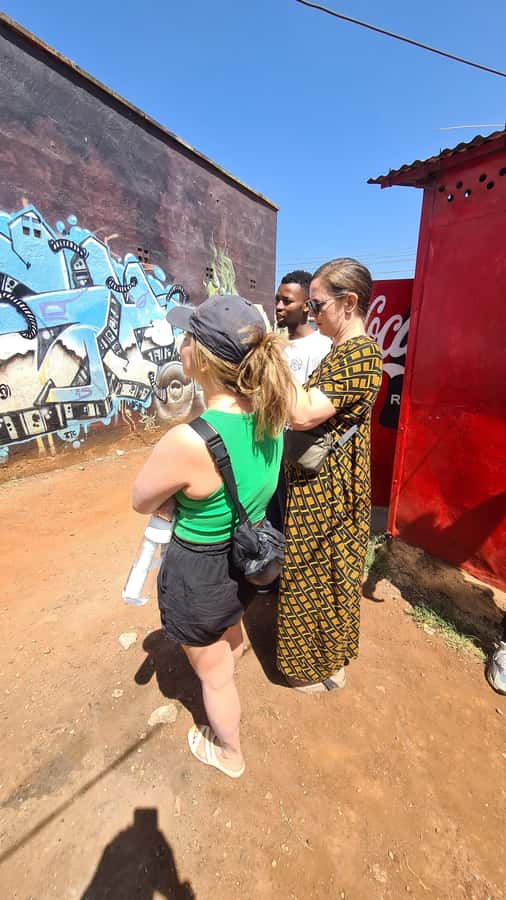
Kibera is often reduced to a few grim headlines. This tour asks you to slow down and see a fuller picture. You still walk through a place facing serious challenges, but you also see education projects, healthcare efforts, sports groups, creative programs, and artists building a future through their work.
That balance matters. The purpose is not to turn hardship into a spectacle, and it is not to pretend every problem has vanished. Instead, local guides explain daily life from their own point of view. They show you the art, explain its purpose, and tell you how creativity can give young people a useful outlet and a sense of direction.
I appreciate that the tour is led by artists who grew up in Kibera. Saviour and Anthony are described as committed, generous guides who explain both the artwork and their own lives as artists. You are not simply handed a set of facts. You can ask about inspiration, collaboration, social issues, and the practical work of making art in the neighborhood.
The group size also helps. With one guide for every two guests, you should have a better chance to hear clearly, ask questions, and avoid the rushed feel of a large walking group.
More Kibera community tours:
- Nairobi: Explore Kibera Slum with Local Guides
★ 4.9 · 365 reviews - Kevins Kibera Slum Tours
★ 5.0 · 213 reviews - Nairobi: Kibera Slum storytelling tour with a Local
★ 5.0 · 185 reviews
Meeting at Gateway Supermarket
The tour begins outside Gateway Supermarket on Kibera Station Road. The meeting area is described as safe, but you should plan your arrival carefully. There is no parking, so an Uber or taxi is the sensible choice.
The starting point is in Jamhuri Estate, and the exact map location can be provided. Make sure you have the correct meeting details before leaving your accommodation. Nairobi traffic can be slow, so allow extra time even though the meeting point itself is straightforward.
From there, you walk into Kibera with the guides. This opening section is useful because it gives you time to get comfortable with the pace and with the basic etiquette of the visit. You will pass people handling ordinary tasks, and the guides can tell you when photography is appropriate.
That last point is important. Kibera is a lived-in neighborhood, not an open-air exhibit. Ask before photographing people, especially children, homes, shops, and private activities. Listen when your guide says a camera should stay away. Good conduct is part of the experience, not a minor travel detail.
Following the murals through Kibera

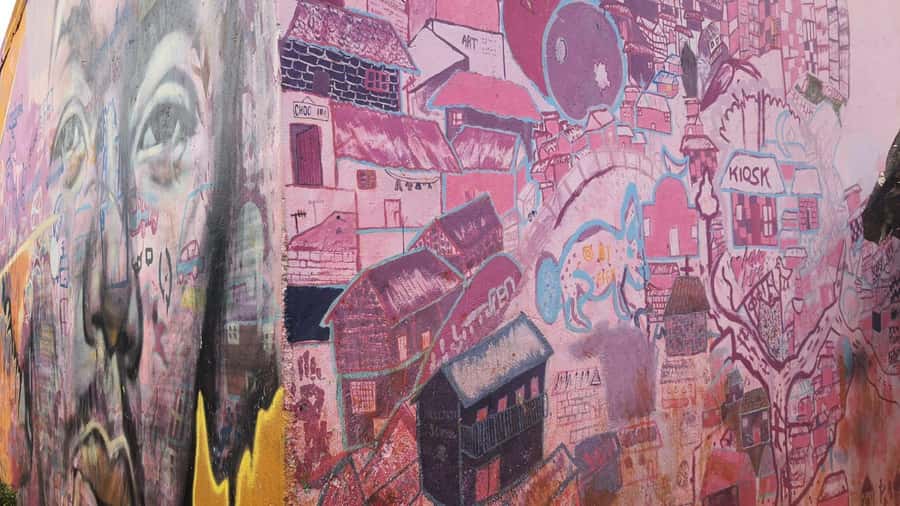
The main walking section lasts about two hours. Along the route, the guides point out murals and urban art placed throughout the settlement. The paintings are not treated as decoration alone. You learn what they mean, who helped create them, and how they connect to local concerns.
Several works are collaborative. That gives you a useful glimpse into how art can become a group activity rather than a solo pursuit. A mural may express a public message, encourage education, raise awareness, or give young people a place to contribute their ideas.
The strongest part of the walk is the explanation behind each piece. A colorful wall can look impressive from a distance, but the story gives it weight. Saviour and Anthony discuss the motivations, context, and inspiration behind their work, along with its social and political side.
You should expect a real neighborhood walk rather than a polished art district. Conditions can be uneven, and the route is not designed for wheelchairs. Comfortable closed-toe shoes are essential. A hat and water will help, especially if the sun is strong.
The walk may also feel emotionally mixed. You can admire the creativity while recognizing the difficult conditions around it. That is precisely why the guides matter. Their perspective helps keep the visit grounded in real life rather than turning it into either pity or romantic fantasy.
Meeting the artists behind the walls
The tour may take you to artist houses, studios, and creative groups. This is where the experience becomes more personal. Instead of seeing only finished murals, you learn about the people who make them and the role art plays in their lives.
Sun Valley Art Collective includes about 15 local artists who all grew up in Kibera. Their work is not presented as a separate project imported from outside. It comes from people with long ties to the area and a strong interest in using art to support local opportunity.
The collective also provides a place for creative expression. The guides explain their long-term relationship with art and their efforts to use that interest to improve life in the wider community. For you, this means the studio stop has more purpose than a standard souvenir visit.
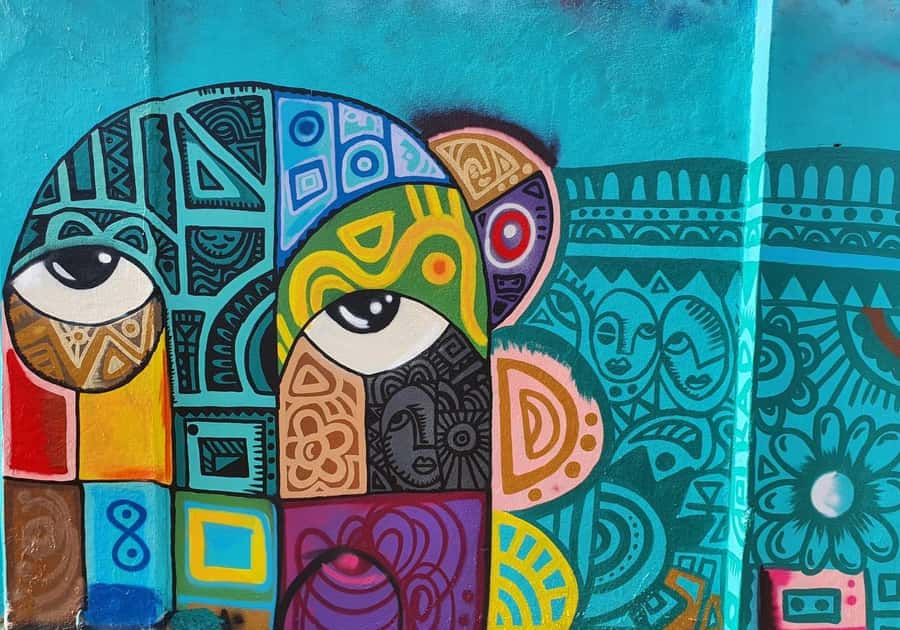
You may see paintings and objects made from recycled metal. One artist introduced on the route creates animal figures from recycled metal, showing how discarded materials can become saleable artwork. Another gallery displays work by several artists, including attractive blown glass made from recycled glass.
The exact mix of studios and artists may vary, so think of this as a guided introduction to Kibera’s art network rather than a fixed museum itinerary. That flexibility is a benefit if you enjoy personal meetings, though it means you should not expect a formal exhibition with printed labels and a set viewing order.
A few more options to weigh up in Nairobi
- Nairobi National Park Half-Day Tour; Free Wi-Fi connection
★ 5.0 · 878 reviews - Nairobi: National Park & Optional Elephants & Giraffe Center
★ 4.8 · 874 reviews - NAI NAMI: Nairobi Storytelling Tour with Street Children
★ 5.0 · 792 reviews - Nairobi National Park Half-Day Game Drive
★ 4.5 · 738 reviews
A taste of local street food
Street food samples are included on request. During the walk, the guides stop at vendors they personally like, giving you a chance to try local snacks along the route.
This is a small feature, but it adds useful context. Food makes the walk feel connected to everyday life rather than separated from it. You can ask the guides what you are eating and why they chose that vendor.
Because samples are available on request, tell the organizers in advance if you want this part included. The information does not specify a fixed menu, so do not book the tour expecting a full meal or a guaranteed list of dishes. Bring your own snacks and water as well.
Food safety is always a personal decision. If you have dietary restrictions or special requirements, contact the provider before the tour. The organizers say they are flexible with requests, which is helpful, but you should still state your needs clearly.
Visiting HOF Gallery Kibera

The walk finishes at HOF Gallery Kibera, near Olympic Stage. This creates a natural ending point for the art focus of the tour. You may see work for sale and continue talking with the artists before leaving.
The gallery visit gives you one more chance to compare different styles and materials. Along with paintings and recycled-metal objects, the wider art stops can include recycled glass work. If you have been considering a purchase, this is a good time to look carefully rather than buying in a hurry.
You can buy artwork directly from local artists. That direct sale is one of the clearest ways to support the people you meet, and it gives you a meaningful reminder of the day. Prices are not specified, so ask about the cost, payment method, and how to carry the piece safely before committing.
You finish near Olympic Stage, where you can call an Uber or taxi or take a matatu onward. Since the tour ends in a busy local area rather than returning to your hotel, plan your next journey before the walk begins.
Is $45 a fair price?
At $45 per person, this is best judged as a small, locally led cultural experience, not as a basic two-and-a-half-hour walk. The price includes a guide ratio of one guide for every two guests, which can make a major difference when you want to discuss sensitive topics or ask detailed art questions.
It also supports a local art collective rather than relying only on a large sightseeing operation. You visit several kinds of creative spaces, hear from artists, and may sample street food. Those elements give the tour more substance than a short mural photo stop.
Still, value depends on what you want. If you only need to see colorful walls, you can likely find a cheaper way to view street art elsewhere in Nairobi. If you want local explanation, direct contact with artists, and a thoughtful look at Kibera beyond stereotypes, the price makes more sense.
Artwork costs extra. That is not a flaw, but you should budget separately if you expect to bring home a painting or sculpture. Buying directly can be one of the most worthwhile parts of the day, but you are under no obligation to purchase anything.
Practical advice for a comfortable visit

Wear sturdy, closed-toe shoes. The route is on foot and may include uneven ground, so sandals and delicate footwear are poor choices.
Carry water, a hat, and a camera. Bring snacks if you tend to get hungry, especially since the food samples are available on request rather than automatically guaranteed.
Photography requires care. Ask the guides when it is suitable, and avoid treating residents as part of the scenery. Do not litter. A small bag for your own rubbish is a simple way to follow the rules.
The tour is offered in English and Swahili. If you need a special arrangement, contact Sun Valley Art Collective ahead of time. The provider says it can be flexible with requests, but the route is not suitable for wheelchair users or people with mobility impairments.
Cancellation is free up to 24 hours before the tour for a full refund. You can also reserve now and pay later, which helps if your Nairobi plans are still shifting.
Who will enjoy this tour most?
I would choose this experience if you want to understand a place through the people who live there. It suits visitors interested in public art, youth programs, social issues, independent artists, and community-led projects.
It is also a good fit if you prefer conversation to passive sightseeing. The guides explain their own work, introduce you to other artists, and show how creative projects connect with wider community efforts.
You should think twice if you dislike walking, need step-free access, or want a tightly controlled tourist setting. This is not a polished gallery tour. It takes place in an active neighborhood, and the conditions may feel demanding at times.
It is also not the right choice if you want to photograph freely. Respectful behavior comes first, and the guides decide when images are appropriate.
Should you book the Kibera street art tour?
Book it if you want a locally led, thoughtful visit that treats Kibera as a real community with challenges, talent, humor, and creative energy. The strongest reasons to go are the small guide ratio, the personal stories from Saviour and Anthony, the studio visits, and the chance to buy directly from artists.
I would not book it for a simple checklist stop or a guaranteed food tour. The value comes from listening, walking, and allowing the guides to explain what you are seeing. Wear the right shoes, ask before taking photographs, and keep an open mind.
For the right visitor, this is one of Nairobi’s more human art experiences. You leave with a better understanding of the neighborhood and, perhaps, a piece of art made by someone you met along the way.
FAQ
Where does the Kibera street art tour begin?
It begins outside Gateway Supermarket on Kibera Station Road. The meeting point is in Jamhuri Estate, and a map location can be provided.
Where does the tour finish?
The tour finishes at HOF Gallery Kibera, near Olympic Stage. From there, you can call an Uber or taxi or take a matatu.
How long does the tour last?
The listed duration is 150 minutes. The experience is also described as lasting about two to three hours.
What languages are available?
The tour is offered in English and Swahili.
How many guides are provided?
One guide is provided for every two guests.
Is street food included?
Street food samples are available on request. The tour does not specify a fixed menu or full meal.
Can I buy artwork during the tour?
Yes. Artwork is available to purchase directly from local artists. The price of artwork is not included in the tour fee.
What should I bring?
Bring comfortable closed-toe shoes, water, a hat, a camera, and snacks. You should also avoid littering.
Can I take photographs?
Photography is possible, but you should follow the guides’ instructions about when it is appropriate. The walk passes people engaged in their daily lives, so ask before photographing them.
Is the tour suitable for wheelchair users?
No. The experience is not suitable for wheelchair users or people with mobility impairments.
What happens if I need to cancel?
You can cancel up to 24 hours in advance for a full refund. Reserve now and pay later is also available.
Just added in Nairobi
- Wildlife Capital: Half-Day Safari at Nairobi National Park★ 5.0 · 2 reviews
- 3 days maasai mara migration safari★ 4.5 · 7 reviews
- 4 Days Tour Landcruiser in Masai Mara and Lake Nakuru★ 5.0 · 10 reviews
- 4 Days Safari to Lake Nakuru N/P and Maasai Mara N/R★ 5.0 · 18 reviews
- Day Tour to Nairobi national park, Elephants, and Giraffe Center★ 3.5 · 8 reviews
- 6 Days Kenya Budget Group Safari★ 5.0 · 2 reviews
- Maasai Mara Day Trip★ 5.0 · 15 reviews
- 3 Days Masai Mara Wildebeest migration Budget safari★ 5.0 · 2 reviews
Kibera Community Tours, compared.





Kibera Slum Tour with Local Social Entrepreneurs
Read our review →


Browse the lists this tour appears in