

Reviewed · KIBERA COMMUNITY TOURS
Kibera Chocolate City Tour
Kibera is more than a headline. This two-hour walk in Nairobi pairs local guides such as Collins with visits to Toi Market, Victoria Bones Craftshop, a school and library, and the historic railway. I like the direct contact with residents and the clear effort to show Kibera as a working community, not just a place of hardship.
I also like the tour’s community focus, especially the stop at Agape Hope’s school and library. The main consideration is that this is a serious look at poverty and daily challenges, so you should come with respect, patience, and a willingness to listen rather than expect a polished sightseeing route.
In This Review
- Key points to know before you go
- Why this Kibera walk feels different
- Starting at Kibera Town Centre
- Toi Market: seeing local enterprise at work
- Victoria Bones Craftshop and the creative side of Kibera
- Agape Hope School and library
- Walking beside the historic railway
- What Collins and the local guide team add
- Is $22 a fair price?
- Who should book this experience?
- Practical advice for a respectful visit
- Should you book the Kibera Chocolate City Tour?
- FAQ
- How long does the Kibera Chocolate City Tour last?
- Where does the tour begin?
- Where does the tour end?
- What places are visited during the tour?
- How much does the tour cost?
- How large can the group be?
- Can I request a private tour or a special focus?
- Can I cancel for a refund?
Key points to know before you go

- Local leadership: Guides including Collins, Allan, and Rama have strong ties to Kibera, with Collins described as having grown up in the community.
- Four useful stops: The route includes Toi Market, Victoria Bones Craftshop, Agape Hope’s school and library, and the railway.
- A short walking tour: Plan on about two hours, with the wider experience lasting roughly two to three hours.
- A personal look at daily life: The tour is designed to explain how residents live, work, earn money, and support one another.
- Small price, visible purpose: At $22 per person, the tour is modestly priced and includes a school and library visit linked to the organizing group.
- Flexible arrangements: Private tours and visits centered on particular subjects or places can be requested.
Why this Kibera walk feels different

Kibera is often reduced to a single word: slum. That label tells you very little about the people who live there, the businesses they run, or the ways they organize daily life. This tour tries to correct that narrow picture.
You walk with someone who can explain the area from personal experience. Collins is repeatedly singled out as a guide who grew up in Kibera and knows the neighborhood closely. Allan and Rama are also named as guides connected with the organization. That local connection matters. You are not simply being led past buildings while someone recites statistics. You have a better chance of hearing how particular places fit into community life.
The aim is not to pretend that Kibera’s problems do not exist. The tour addresses hardship, limited resources, and the practical ways residents make a living. At the same time, it gives space to creativity, education, small businesses, friendship, and local pride. That balance is the best reason to book it.
I would approach the walk as a learning experience, not as a photo opportunity. Ask questions politely. Follow the guide’s advice about photography. Remember that people are living ordinary lives around you, even if the setting is unfamiliar.
More Kibera community tours:
- Nairobi: Explore Kibera Slum with Local Guides
★ 4.9 · 365 reviews - Kevins Kibera Slum Tours
★ 5.0 · 213 reviews - Nairobi: Kibera Slum storytelling tour with a Local
★ 5.0 · 185 reviews
Starting at Kibera Town Centre
The meeting point is Kibera Town Centre at Kamukunji Grounds in Nairobi. The activity returns to this same point at the end, which simplifies the day and means you do not need to arrange a second pickup location.
The stated operating hours are Monday through Sunday, from 8:00 a.m. to 6:00 p.m., for the published activity period ending June 17, 2026. Your confirmed start time matters, so check it carefully when booking. The experience is available with a mobile ticket, and confirmation is sent at the time of booking.
The group limit is 30 people. That is not a tiny private walk, but the tour can also be arranged privately if you want more control over the pace or subjects discussed. A private option may suit families, students, photographers, or anyone who wants to focus on education, local enterprise, crafts, or community projects.
The opening explanation at Kibera Town Centre gives you a broader sense of how life works in the area. This is an important part of the tour because the later stops make more sense when you understand that Kibera is not one uniform place. It contains homes, shops, markets, workshops, schools, roads, paths, and gathering places.
Toi Market: seeing local enterprise at work
Toi Market is one of the strongest stops for understanding the economic side of Kibera. The market contains many local businesses, so it gives you a chance to see the neighborhood as a place where people buy, sell, repair, trade, and earn money.
A guide can help you notice what you might otherwise miss. Instead of seeing only a crowded market, you can ask how businesses operate, what goods are sold, and how the market fits into the surrounding community. The point is not simply to look at poverty. It is to see work and enterprise under difficult conditions.
This is also where respectful behavior matters most. Keep your belongings secure, stay with the group, and ask before taking photographs of people or stalls. The tour is intended to create contact with local residents, but contact should be mutual and polite, not intrusive.
Toi Market may feel busy and unpredictable compared with a standard city attraction. That is part of its value, but it can also make the stop less comfortable for someone who prefers quiet, carefully arranged sightseeing. You will get more from it if you pay attention, listen to your guide, and avoid rushing through.
Victoria Bones Craftshop and the creative side of Kibera

The next stop is Victoria Bones Craftshop. Its inclusion adds an important layer to the walk because it moves the focus from basic survival to making and selling crafted goods.
A craft workshop shows how creativity can become income. It also gives you a chance to meet people through their work rather than only through the conditions of the neighborhood. The stop may appeal to anyone interested in handmade products, local business, or community-based enterprise.
I would treat purchases here as optional, not as an obligation. You should feel free to browse, ask questions, and buy something only if you genuinely want it. If you do purchase an item, it can serve as a useful reminder of the people and skills you encountered, rather than as a token bought out of discomfort.
The supplied information does not specify exactly which crafts are made or how long the workshop visit lasts. That means you should keep your expectations open. The value lies in meeting a working local enterprise and hearing how the guide places it within Kibera’s wider economy.
A few more options to weigh up in Nairobi
- Nairobi National Park Half-Day Tour; Free Wi-Fi connection
★ 5.0 · 878 reviews - Nairobi: National Park & Optional Elephants & Giraffe Center
★ 4.8 · 874 reviews - NAI NAMI: Nairobi Storytelling Tour with Street Children
★ 5.0 · 792 reviews - Nairobi National Park Half-Day Game Drive
★ 4.5 · 738 reviews
Agape Hope School and library

The school and library are central to the tour’s community purpose. They serve children from Agape, giving them a place to receive education and play with friends.
This stop can be especially meaningful because it shows a local response to one of the area’s major needs. Education is not presented as an abstract topic. You see a project connected to children and the future of the neighborhood.
At the same time, this is the point where you should be most careful about your behavior. Children may be curious and welcoming, but they are not part of a display. Follow the guide’s instructions, ask before taking photographs, and do not hand out sweets, money, or gifts unless the organization specifically approves it.
One account describes the children playing happily in the streets during a Boxing Day visit. That detail is worth holding onto, not because it erases hardship, but because it reminds you that children’s lives contain play, friendship, and joy as well as serious challenges. A respectful visit allows both truths to exist at once.
The school and library also help explain why the organization offers this tour. Agape Hope for Kibera Tours is not simply guiding people through an unfamiliar neighborhood. Its work is connected to a local education project, giving the experience a more direct community link than a sightseeing loop with no local purpose.
Walking beside the historic railway
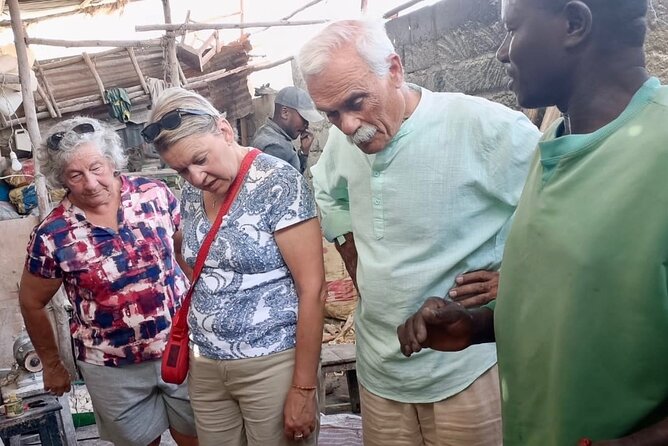
The final section follows the historical railway and gives you a broader view of Kibera. After the market, workshop, school, and library, this wider vantage point helps you connect the individual stops.
The railway is not treated only as an object to photograph. It provides context for the area and helps you see how the community fits into Nairobi’s past and present. Your guide can also tie together the stories of movement, work, housing, and change that you have heard during the walk.
This part may be less intimate than the earlier stops, but it is useful. You are no longer looking at one shop or one project. You are considering the scale of the neighborhood and the many lives contained within it.
The route is on foot and lasts about two hours, though the full activity may take two to three hours. Wear practical shoes and leave enough time afterward for your next plan. The supplied details do not promise a fixed pace, so the exact timing can vary with the group, conversations, and conditions.
What Collins and the local guide team add

The strongest praise for this experience centers on its guides. Collins is described as someone born and raised in Kibera who works to improve the local community and help people in need. That background gives him a personal stake in how the area is presented.
A guide with community roots can introduce you to residents in a more natural way and explain local issues without turning the walk into a lecture. The feedback also describes Collins as welcoming and attentive, with several accounts noting that guides took care of the group throughout the visit.
Allan and Rama are also associated with the tour. Since guide assignments can vary, you should not assume Collins will lead every departure. If meeting a particular guide matters to you, ask the operator when arranging the tour.
I appreciate that the guides are praised not just for information, but for making people feel comfortable. That is important on a walk through a place where you may feel conspicuous at first. A good guide helps you move respectfully, understand what you are seeing, and speak with residents without treating the neighborhood as a stage.
Is $22 a fair price?

At $22 per person, this is an affordable Nairobi activity. The value is not in a long list of attractions or included meals. It is in the local access, the guide’s time, the community explanation, and the visit to a school and library connected to Agape Hope.
The tour also includes several distinct types of place in a short period: a market, a craft business, an education project, and a railway area. That makes it a useful choice if you have only a morning or afternoon available in Nairobi.
You should not book it expecting a luxury excursion. The price does not suggest private transport, refreshments, or a carefully staged cultural performance, and none of those are listed. What you are paying for is a guided walk and a more informed way to encounter Kibera.
A practical question is how much of the fee reaches local programs. One account says a large amount goes to children, and the school visit makes the community connection visible. If this point is important to you, ask Agape Hope for Kibera Tours directly how the price supports the school, library, guides, or other local work.
Who should book this experience?
I would recommend this tour to you if you want to understand Nairobi beyond its major sights. It suits curious visitors who can listen well, accept an unpolished setting, and handle difficult subjects without turning them into entertainment.
It is also a good fit for people interested in:
- Community education projects
- Small local businesses and craft production
- The daily work of residents in Kibera
- Responsible cultural tourism
- Personal stories from locally based guides
Families may find the school and library especially relevant, though adults should set clear expectations about respectful conduct around children. Students and community development groups may also find the tour useful, particularly if they can request a private outing focused on a specific topic.
This may not suit you if you want a relaxed stroll, formal museum exhibits, or guaranteed comfort at every point. The tour addresses real hardship, and the walk may feel emotionally demanding. That is not a flaw, but you should know what kind of afternoon you are choosing.
Practical advice for a respectful visit
Wear shoes suited to walking and stay close to the guide. The experience is described as suitable for most people, and service animals are allowed, but the information does not provide details about the exact walking surface or facilities along the route.
Keep your mobile ticket ready and meet at Kamukunji Grounds. Public transportation is nearby, which can make the start point easier to reach, though the experience itself ends back at the meeting point.
Bring questions, but let the guide set the tone for personal subjects. A question about work, education, or community projects is generally more useful than asking someone to describe suffering for its own sake.
The operator can tailor a private tour or focus on particular places and topics if you ask in advance. This flexibility may improve the experience for you, especially if you have a clear interest in local schools, craft work, neighborhood history, or community organization.
Free cancellation is available if you cancel at least 24 hours before the start time. Cancellations inside that window are not refunded, and changes are not accepted within 24 hours. Poor weather may lead to a new date or a full refund.
Should you book the Kibera Chocolate City Tour?
Book it if you want a short, direct, locally guided introduction to Kibera and you are prepared to meet the community with humility. The combination of Collins or another local guide, Toi Market, Victoria Bones Craftshop, Agape Hope’s school and library, and the railway gives you more than a quick pass through the area.
I would choose it for the guide’s community connection and the chance to see education and enterprise alongside hardship. I would skip it only if you are looking for an easy sightseeing stop with little emotional weight.
At $22, it offers good value for an experience built around people, place, and local work. Go ready to listen, keep your camera in check, and allow the neighborhood to challenge your first impression.
FAQ
How long does the Kibera Chocolate City Tour last?
The tour takes about two hours, while the full experience may last approximately two to three hours.
Where does the tour begin?
It begins at Kibera Town Centre, at Kamukunji Grounds in Nairobi, Kenya.
Where does the tour end?
The activity ends back at the meeting point at Kibera Town Centre.
What places are visited during the tour?
The route includes Kibera Town Centre, Toi Market, Victoria Bones Craftshop, the Agape Hope school and library, and the historical railway.
How much does the tour cost?
The listed price is $22 per person.
How large can the group be?
The maximum group size is 30 people.
Can I request a private tour or a special focus?
Yes. Private tours and visits focused on particular topics or places can be requested.
Can I cancel for a refund?
Yes, if you cancel at least 24 hours before the experience begins. Cancellations or changes made less than 24 hours in advance are not accepted, and no refund is provided within that period. If poor weather causes the operator to cancel, you are offered another date or a full refund.
Just added in Nairobi
- Wildlife Capital: Half-Day Safari at Nairobi National Park★ 5.0 · 2 reviews
- 3 days maasai mara migration safari★ 4.5 · 7 reviews
- 4 Days Tour Landcruiser in Masai Mara and Lake Nakuru★ 5.0 · 10 reviews
- 4 Days Safari to Lake Nakuru N/P and Maasai Mara N/R★ 5.0 · 18 reviews
- Day Tour to Nairobi national park, Elephants, and Giraffe Center★ 3.5 · 8 reviews
- 6 Days Kenya Budget Group Safari★ 5.0 · 2 reviews
- Maasai Mara Day Trip★ 5.0 · 15 reviews
- 3 Days Masai Mara Wildebeest migration Budget safari★ 5.0 · 2 reviews
Kibera Community Tours, compared.





Kibera Slum Tour with Local Social Entrepreneurs
Read our review →


Browse the lists this tour appears in