
Reviewed · KIBERA COMMUNITY TOURS
A Visit To KIBERA The Chocolate City.
Kibera rewards curiosity, not quick judgments. This three-hour walk offers a direct look at Chocolate City, with a local guide explaining daily life, community projects, and the changes shaping one of Nairobi’s best-known informal settlements. I like the personal scale of the visit, and I like that public transport is part of the experience rather than a tourist bubble around it. The main consideration is that the route uses narrow paths and uneven ground, so it is not suitable for wheelchair users, visually impaired visitors, babies, or very young children.
I also like the guide-led approach. Musa and Moses are praised for explaining Kibera clearly, introducing visitors to personal parts of the community, and keeping the visit friendly and safe. You should expect a serious look at difficult conditions, balanced by practical examples of creativity and resilience. This is not a sightseeing stroll designed to polish away the hard parts.
In This Review
- Key points to know before you go
- Starting at Olympic Primary School
- Riding public transport into Kibera
- Walking through Chocolate City
- Meeting residents and seeing daily life
- Learning beyond the usual Nairobi visit
- Why the guide matters so much
- Food, markets, and ordinary places
- The $20 price and what you receive
- Practical limits and who should book
- Should you book A Visit to Kibera The Chocolate City?
- FAQ
- Where does the Kibera tour start?
- Where does the tour finish?
- How long does the experience last?
- How much does the tour cost?
- Is public transport included?
- Do I need to pay an entrance fee for Kibera?
- What language is the tour offered in?
- Can I cancel for a full refund?
- Who should not book this activity?
Key points to know before you go
- Chocolate City is the central focus: You will visit a named part of Kibera and learn how it fits into the wider settlement.
- Public transport is included: The journey to Kibera forms part of the experience, not just the walk itself.
- Local guides make the difference: Musa and Moses are praised for personal explanations and strong knowledge of the area.
- The visit can include homes, a pub, a factory, markets, and local snacks: Exact stops may vary, but the route connects everyday places with community stories.
- The meeting details need checking: The information gives both a mall meetup and the Main Gate of Olympic Primary School, so confirm the final point before setting out.
- Three hours and $20 offer solid value: You get a guided walk, transport as part of the tour, local context, and direct access without a separate entry charge.
Starting at Olympic Primary School
The stated walking route begins at Olympic Primary School, where you meet the guide at the Main Gate. Another part of the booking information refers to meeting at a mall before using public transport to Kibera. Those details do not perfectly match, so I would confirm the exact meeting arrangement before the day of the tour.
That small bit of planning matters. A first visit to Nairobi’s informal settlements is not the time to arrive at the wrong landmark with your phone battery fading. Ask the provider to confirm the school gate, the mall location if it is used, the start time, and how you will connect with the guide.
Once you meet, expect a short safety briefing and an introduction to the route. The guide’s role is important here. Kibera is not a museum with signs at every corner. You need someone who can explain what you are seeing, tell you where to walk, and help you behave properly around homes, businesses, and residents.
More Kibera community tours:
- Nairobi: Explore Kibera Slum with Local Guides
★ 4.9 · 365 reviews - Kevins Kibera Slum Tours
★ 5.0 · 213 reviews - Nairobi: Kibera Slum storytelling tour with a Local
★ 5.0 · 185 reviews
Riding public transport into Kibera
Using public transport gives the tour a more ordinary beginning. You are not simply dropped at a photo stop and taken away again. You travel as part of the city, which helps place Kibera within Nairobi rather than treating it as an isolated curiosity.
The transport section also adds a practical lesson. You see how the tour connects with the city’s daily movement and how local residents get around. It may be less polished than a private vehicle, and that is part of the tradeoff. You should be ready for a normal public transport experience rather than a private, air-conditioned transfer.
For some people, this will be one of the most useful parts of the day. You get a better sense of Nairobi’s scale and rhythm before entering the walking route. For others, the public transport portion may feel less comfortable or predictable. The tour is best for visitors who can stay flexible and follow the guide’s instructions.
Walking through Chocolate City

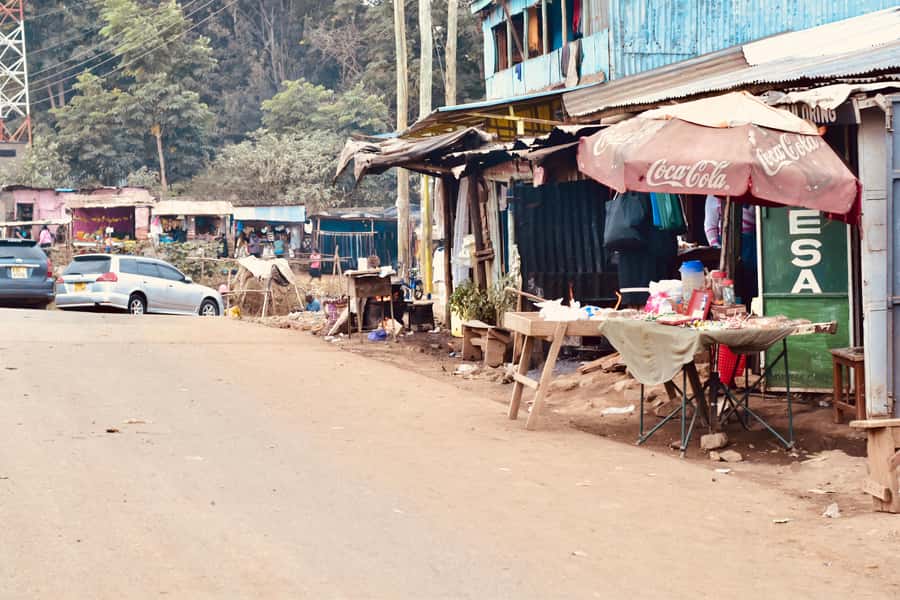
Chocolate City is one of the named highlights, and the visit gives the tour its strongest local identity. The name is memorable, but the point is not a quick label. Your guide explains the area through its people, streets, homes, work, and ongoing efforts to improve living conditions.
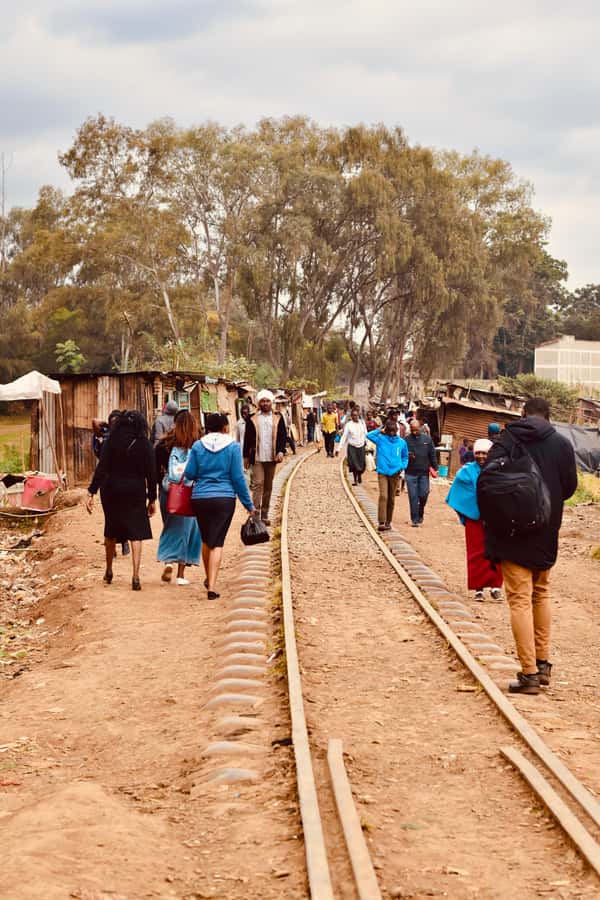
The walk uses narrow pathways. You may pass close to homes and small businesses, so your conduct matters. Ask before taking photographs, listen when the guide asks you to pause, and remember that this is where people live rather than a stage built for visitors.
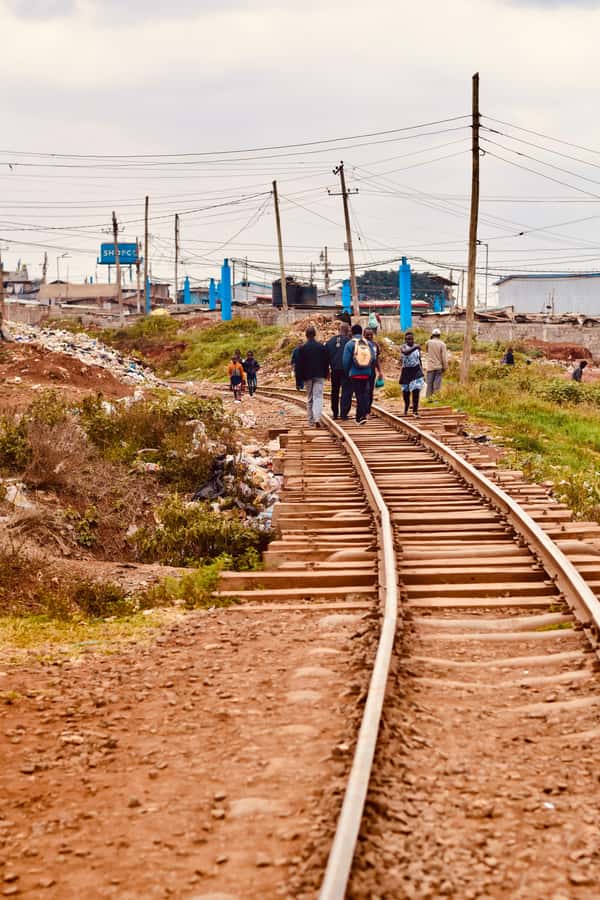
The best part of a route like this is the chance to replace vague images with specific understanding. You can learn how families manage limited resources, how people earn money, and how local groups and government agencies are working on infrastructure and living conditions. The tour presents Kibera as a community with serious problems, but not as a place without ideas, humor, work, or pride.
The walking conditions also limit the audience. This is not suitable for wheelchair users or people with visual impairments, and it is not recommended for babies under one year or children under five. The activity also lists people over 95 as unsuitable, likely because of the walking demands. If you have limited mobility but are not covered by those categories, ask for a clear description of the route before booking.
Meeting residents and seeing daily life

The strongest feature of this experience is the personal connection. The guide is linked to the community and can explain Kibera from lived experience rather than from a prepared script alone. One guide has taken visitors to personal parts of his home and family life, which gives the visit an unusually direct feel.
That access should be handled with care. You are entering a residential area, and the goal is to understand, not collect dramatic photographs. Keep your camera away unless you have permission. A friendly greeting, a willingness to listen, and a simple question can go further than a lens pointed at someone’s doorway.
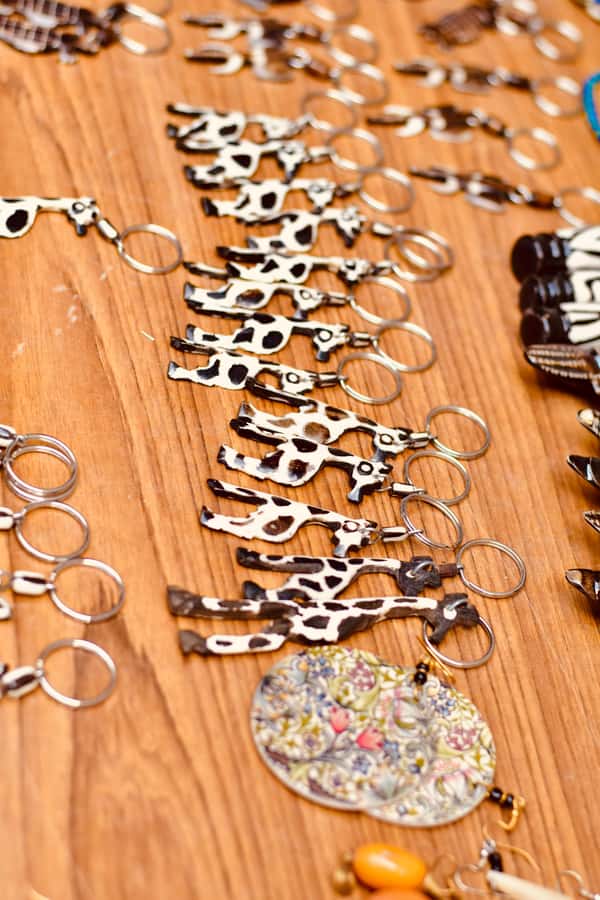
The tour may include a house, a pub, a factory, a food market, and local snacks. These stops help show the range of ordinary life. A house can make the discussion of living conditions more concrete. A factory can show how people create work with limited resources. A pub or food market can reveal the social side of the neighborhood, not only its hardships.
The exact sequence is not fully fixed in the information provided, so I would treat these as possible components rather than guaranteed stops. The route may change according to time, local conditions, or the guide’s judgment. That flexibility can be useful, but it also means you should not book expecting a rigid checklist.
A few more options to weigh up in Nairobi
- Nairobi National Park Half-Day Tour; Free Wi-Fi connection
★ 5.0 · 878 reviews - Nairobi: National Park & Optional Elephants & Giraffe Center
★ 4.8 · 874 reviews - NAI NAMI: Nairobi Storytelling Tour with Street Children
★ 5.0 · 792 reviews - Nairobi National Park Half-Day Game Drive
★ 4.5 · 738 reviews
Learning beyond the usual Nairobi visit

A visit to Kibera can change how you see the rest of Nairobi. If your stay is built around hotels, restaurants, and major attractions, it is easy to miss the lives of the people who clean rooms, prepare food, and keep the city running. This tour brings those everyday realities closer without pretending that three hours can explain everything.
I value the context the guide provides about Kibera’s past, present, and future. The focus is not only on poverty. You hear about resilience, local enterprise, community action, and attempts to improve infrastructure. That balance is vital. A tour that shows only hardship turns real people into scenery. A tour that shows only hope can gloss over the problems. This experience aims to show both.
The wording admire the real identity of Kibera is a useful way to think about the visit, provided you remember that no three-hour route can represent every part of the settlement. Kibera is large and varied. Your guide offers one informed path through it, with access to places and stories that you would not find on your own.
Why the guide matters so much
The strongest praise goes to the guides. Musa is described as friendly, clear, and informative, while Moses is praised for explaining Kibera and showing several parts of the community. One guide also shared personal details about his home and family, which gave the visit a more human scale.
Do not treat the guide as simply someone who leads the way. The guide sets the tone. A good guide helps you understand what is appropriate, answers difficult questions without turning the tour into a lecture, and makes sure you do not wander into places where you should not be.
The safety briefing is part of that service. Follow it closely. Keep your group together, stay on the route, and ask before approaching people or entering any home, business, or social space. The experience is described as safe when visitors follow the guide’s instructions, which is sensible advice for any unfamiliar urban area.
The tour is offered in English. If you need detailed explanations of social, political, or economic issues, make sure you are comfortable listening in English for three hours. There is no language option listed beyond English.
Food, markets, and ordinary places

The itinerary allows time for local snacks and a food market visit. These details may sound small, but they can make the walk feel less like a formal lesson. Food shows how people shop, work, socialize, and manage daily budgets.
You may find that the market section is more immediately understandable than a long historical explanation. The guide can point out what is sold, how the market serves local residents, and how the area functions. Still, do not expect a restaurant meal to be included. The information says local snacks, not a full lunch.
A food stop also calls for basic care. Ask the guide what is suitable before buying or eating anything, especially if you have allergies or dietary restrictions. Since no menu or snack list is provided, you should not assume that a particular food will be available.
The $20 price and what you receive
At $20 per person, this is a low-cost way to add a more direct side of Nairobi to your itinerary. The price covers a three-hour guided experience, the local guide, and public transport used as part of the route. There is no separate entry fee for accessing Kibera.
The value comes from access and interpretation rather than expensive equipment or a grand attraction. You are paying for a local person’s time, route planning, safety guidance, and ability to explain what you see. That makes the price reasonable if you want context and human contact.
It is less suitable if you want a private car, a polished visitor center, or a predictable set of photo stops. The transport is public, the route is on foot, and the setting is a working neighborhood. You should pay for the experience with respect as well as money.
The 4.9 rating from 12 ratings points to very strong satisfaction, especially with the guides. It is a small sample, so I would view it as encouraging rather than conclusive. The repeated praise for Musa and Moses is more useful than the number alone because it tells you what makes the tour work.
Practical limits and who should book
This tour suits adults and older children who are comfortable walking through narrow paths and listening carefully to a local guide. It is a good match if you want to see more than Nairobi’s standard attractions and are willing to approach a sensitive subject with humility.
You should think twice if you dislike public transport, uneven walking routes, or visits to places where poverty is visible. You may also prefer another activity if you want privacy, comfort, or a highly controlled schedule.
The experience is not suitable for children under five, babies under one, wheelchair users, visually impaired people, or people over 95. The route may also be tiring for anyone with health concerns, even if they do not fall into those listed categories. Ask the provider about walking conditions if you are unsure.
Free cancellation is available up to 24 hours before the tour for a full refund. You can also reserve and pay later, which helps if your Nairobi schedule is still changing.
Should you book A Visit to Kibera The Chocolate City?
I would book it if you want a grounded, local view of Nairobi and understand that the subject requires respect. The personal guiding, public transport, market visit, and chance to see homes, work spaces, and community life give the three hours real substance.
I would not book it simply to take dramatic photographs or to collect a quick poverty experience. That approach would miss the point and could make the visit uncomfortable for everyone.
Confirm the meeting point before you go, wear practical walking shoes, follow the guide’s instructions, and ask permission before taking photos. If you do that, the $20 price is fair for a thoughtful introduction to Kibera, especially for visitors who want to understand Nairobi through the people who live and work there.
FAQ
Where does the Kibera tour start?
The walking route starts at Olympic Primary School, with the guide meeting you at the Main Gate. The booking details also mention meeting at a mall before using public transport, so confirm the exact meeting point before the tour.
Where does the tour finish?
The tour finishes at Olympic Estate in Nairobi, Kenya.
How long does the experience last?
The experience lasts three hours. The main Nairobi walking and sightseeing portion is listed as about two and a half hours, with the remaining time covering the full tour schedule.
How much does the tour cost?
The price is $20 per person.
Is public transport included?
Yes. Public transport to Kibera is used as part of the tour.
Do I need to pay an entrance fee for Kibera?
No separate entry is needed to access the settlement.
What language is the tour offered in?
The live tour guide speaks English, and English is the listed tour language.
Can I cancel for a full refund?
Yes. You can cancel up to 24 hours in advance for a full refund.
Who should not book this activity?
The activity is not suitable for children under five, babies under one year, wheelchair users, visually impaired people, or people over 95 years old.
Just added in Nairobi
- Wildlife Capital: Half-Day Safari at Nairobi National Park★ 5.0 · 2 reviews
- 3 days maasai mara migration safari★ 4.5 · 7 reviews
- 4 Days Tour Landcruiser in Masai Mara and Lake Nakuru★ 5.0 · 10 reviews
- 4 Days Safari to Lake Nakuru N/P and Maasai Mara N/R★ 5.0 · 18 reviews
- Day Tour to Nairobi national park, Elephants, and Giraffe Center★ 3.5 · 8 reviews
- 6 Days Kenya Budget Group Safari★ 5.0 · 2 reviews
- Maasai Mara Day Trip★ 5.0 · 15 reviews
- 3 Days Masai Mara Wildebeest migration Budget safari★ 5.0 · 2 reviews
Kibera Community Tours, compared.





Kibera Slum Tour with Local Social Entrepreneurs
Read our review →


Browse the lists this tour appears in