
Reviewed · WALKING TOURS
Private Walking Tour in Old Town
Mombasa’s past is packed into two walkable hours. This private tour links Fort Jesus, the Old Port, the spice market, and old colonial streets while guide Malik adds the local connection that makes the walk feel personal. I like the small-group format and the way the route joins Swahili, Arab, Indian, Portuguese, and British-era stories in one compact outing. The main drawback is that Fort Jesus admission costs extra, and two hours can feel tight if you want a long museum visit.
I also like the promise of a guide who grew up in Old Town and knows people across Mombasa. That local access can turn a simple street walk into something more useful and lively. Keep in mind that the advertised $45 price is for a group of up to one person, so ask how the rate changes if more than one person joins.
In This Review
- Key points at a glance
- Why this two-hour walk works in Mombasa
- Starting at the Old Port
- Fort Jesus and the Portuguese chapter
- The Mombasa Spice Market at 30 minutes
- Sir Mbarak Hinawy Road and the politics of names
- Ndia Kuu Road and the first police station
- The 1899 Old Post Office
- Malik’s local style and the personal touch
- Timing, comfort, and what the price includes
- Who should book this Old Town walk
- Booking, cancellation, and practical questions
- Should you book the Mombasa Old Town tour?
- FAQ
- Where does the tour start?
- Where does the tour finish?
- How long does the walking tour last?
- Is this a private tour?
- How much does the tour cost?
- Is Fort Jesus admission included?
- What is included in the tour price?
- Are the other listed stops included?
- Does the tour operate every day?
- Can I cancel for a full refund?
Key points at a glance
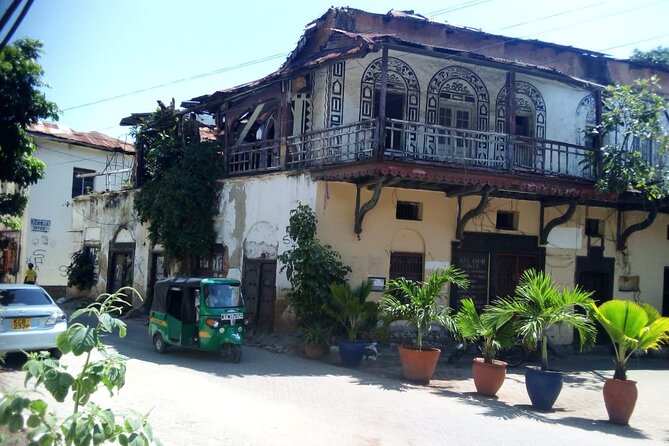
- Malik’s Old Town connection: He grew up in the area and is praised for knowing local people and places.
- Six compact stops: The route covers Fort Jesus, the Old Port, the spice market, three historic streets or buildings, and returns to the starting point.
- A strong history mix: Portuguese construction, Arab rule, Indian trade, Swahili customs, and colonial administration all appear during the walk.
- Private experience: Only your group takes part, allowing room for questions and a more personal pace.
- Simple logistics: The tour lasts about two hours, includes bottled water, uses a mobile ticket, and operates daily from 9:00 a.m. to 5:30 p.m.
- One cost to plan for: Entry to Fort Jesus is not included, although the other listed stops do not add admission charges.
Why this two-hour walk works in Mombasa
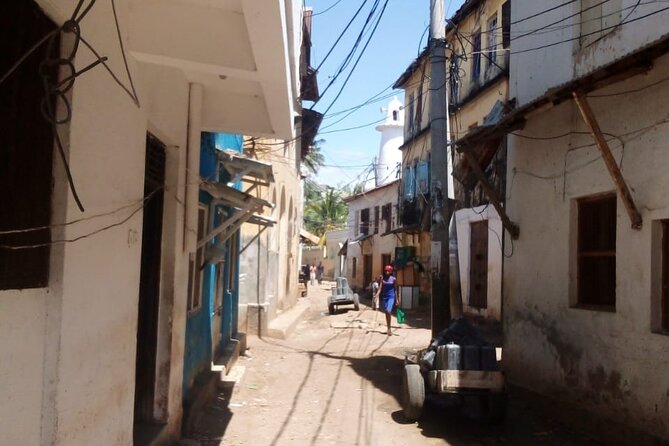
Mombasa Old Town is best understood on foot. The streets, port, market, and old civic buildings sit close enough together to form a readable story, yet each stop points to a different period of coastal life.
This is not a broad city tour with a vehicle and a long list of photo stops. You meet at the Old Port and remain on foot for the full outing. That keeps the focus on lanes, buildings, trade, and the way different communities shaped the town.
The private format is important. You are not being moved along with a large crowd, so you can ask Malik to explain a name, a custom, or a building that catches your eye. The description also places strong emphasis on safety and careful attention to visitors, which matters in a busy historic district where a local guide can help you move with more confidence.
At $45 for one person, this is not the cheapest way to see Old Town. It can still offer fair value if you want personal guiding rather than a standard group walk. The price is harder to assess for more than one person because the supplied rate says up to one person. Confirm the final group price before booking.
More Walking Tours in Mombasa
- Walking Tour Through Old Town Mombasa and Fort Jesus
★ 5.0 · 393 reviews - Mombasa: Guided Nature Walk Amongst Giraffes
★ 4.8 · 48 reviews - Mombasa walking tour
★ 4.9 · 28 reviews
Starting at the Old Port
The Old Port is the natural place to begin. It introduces Mombasa as a trading center before the tour turns inland toward forts, markets, and civic buildings.
You receive an explanation of the port’s place in East African commerce, including Arab and Indian trade connections. The port is described as dating to the 12th century and as the oldest port in East Africa. Those claims are part of the tour’s historical framing, and Malik’s role is to connect the dates and names to the people who used this waterfront.
The stop lasts about 15 minutes. That is enough for orientation and a clear account of the port’s role, but not enough for a long waterfront lesson. I would treat this as the opening chapter rather than a full port visit.
The meeting point is also the ending point, which keeps the outing easy to manage. You do not need to arrange a second pickup or work out where to go after the walk.
Fort Jesus and the Portuguese chapter
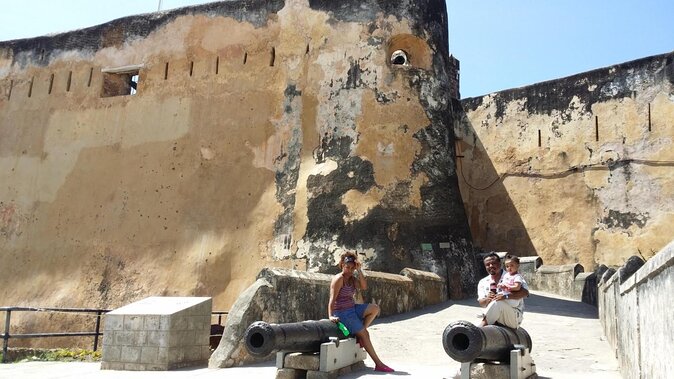
Fort Jesus receives the longest single visit, about 30 minutes. Built in 1593 to a design by Giovanni Battista, the fort brings Portuguese and Arab periods into one place.
The fort is the tour’s main admission stop, but the entry ticket is not included in the $45 price. That detail matters because the listed duration is short. You may see the key areas and hear the main story, but you should not expect an extended museum session with time for every display.
The guide’s role is especially useful here. A fort can become a pile of dates if you walk through it alone. Malik can place the structure within the larger story of control, trade, and changing colonial power around Mombasa. The tour description specifically connects the fort to both Portuguese and Arab rule, giving you a wider view than a single-colonial-period account.
If Fort Jesus is your main reason for visiting Old Town, consider asking at the start how the 30-minute stop will be handled. The private format gives you a chance to make that priority clear, but the overall tour still has five more stops to cover.
The Mombasa Spice Market at 30 minutes
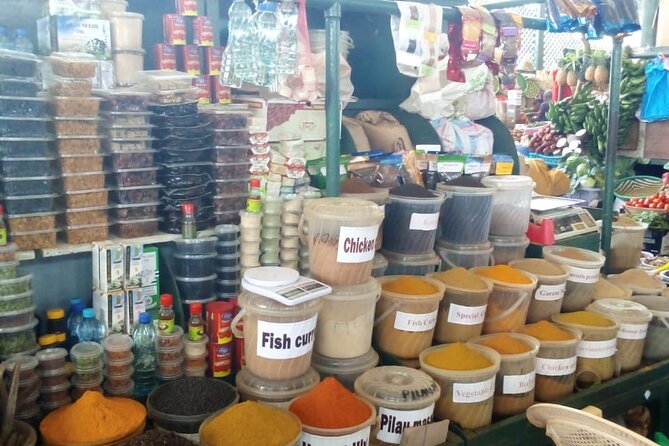
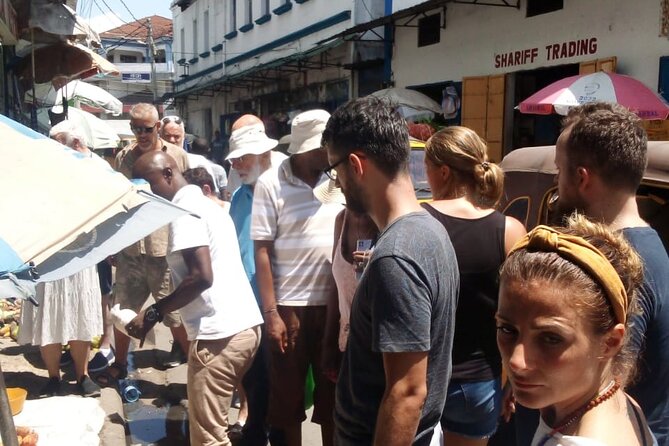
The spice market is the most sensory part of the route. It is described as Mombasa’s oldest market, built in 1914 and officially opened by Sir Henry Mackinnon.
Its original position served Asian and European communities in Old Town. That detail gives the market more than a shopping angle. It shows how commerce, migration, and colonial planning met in one building.
You will hear about Swahili spices and traditions, with the market providing a practical setting for that discussion. The stop lasts about 30 minutes, tying it with Fort Jesus as the two main sections of the walk.
This is also a good place to ask questions. The advertised tour style is interactive, and the market offers clear subjects to discuss: the role of spices, the building’s purpose, and the way Indian, Arab, and Swahili influences overlap in coastal culture. The data does not promise tastings or shopping time, so do not book it expecting a food tour. Think of it as a cultural and historical market visit.
A completely different kind of day:
- Mombasa: Kisite Park Private Cruise with Breakfast and Lunch
★ 4.7 · 181 reviews - Mombasa City Tour
★ 5.0 · 170 reviews - Mombasa: Tusks, Fort Jesus, Old Town, Beach and City Tour
★ 4.7 · 137 reviews - Half-Day Scenic Bike Tour
★ 5.0 · 75 reviews
Sir Mbarak Hinawy Road and the politics of names
The next stop takes about 15 minutes on Sir Mbarak Hinawy Road. The street was renamed for Sir Mubarak Hinawy, described as an important figure in coastal rule before independence and the first governor of Mombasa in 1937.
Street names can tell you who was honored, who held power, and which parts of the past remain visible in daily life. This stop gives the walking tour a political layer that Fort Jesus and the market do not provide.
There is no admission charge. The value comes from the explanation and the surrounding street scene, not from entering a paid attraction. Because the stop is brief, Malik’s local knowledge matters. A guide who understands the names and their place in Old Town can make a short pause more meaningful than a long walk past an unnamed road.
Ndia Kuu Road and the first police station

The route then passes along Ndia Kuu Road, another 15-minute stop. The road is associated with Old Town’s early administration and housed the area’s first police station.
This is the kind of detail that helps you read ordinary streets differently. A road is no longer just a route between attractions. It becomes evidence of how the town was organized and governed.
The stop is free and largely interpretive. The supplied details do not say that you enter the former police station, so expect to pass by and hear its story rather than tour a preserved interior. That distinction is useful if you prefer substantial indoor visits.
Together, Sir Mbarak Hinawy Road and Ndia Kuu Road make the tour less dependent on famous monuments. They point to the less obvious parts of Old Town, where names, offices, and public buildings show how the district functioned.
The 1899 Old Post Office
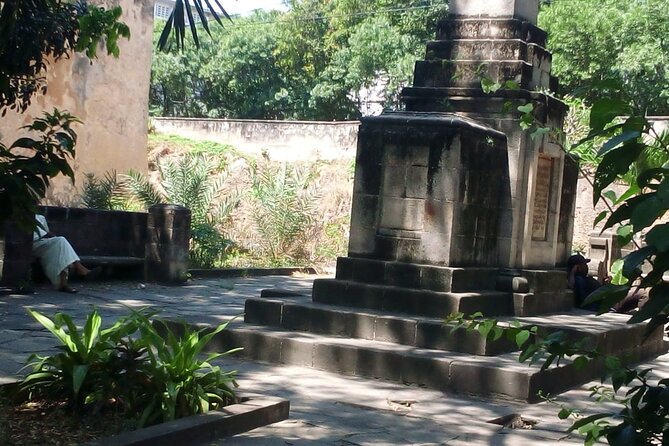
The final listed stop is the Old Post Office, visited for about 10 minutes. It opened in 1899 and helped Indians in Mombasa send money back home.
That short fact opens a larger window onto migration and family life. Postal services were not only about letters. Money transfers connected people on the coast with relatives and communities elsewhere, making the post office part of a wider Indian Ocean network.
The stop is listed as included, with no additional admission charge. You pass by the building rather than receiving a long indoor visit, at least according to the supplied timing. Ten minutes is enough for the essential explanation, especially after the market and port have already introduced trade and movement.
It also gives the walk a useful ending. You finish with communication and family ties, not only forts and colonial authority.
Malik’s local style and the personal touch
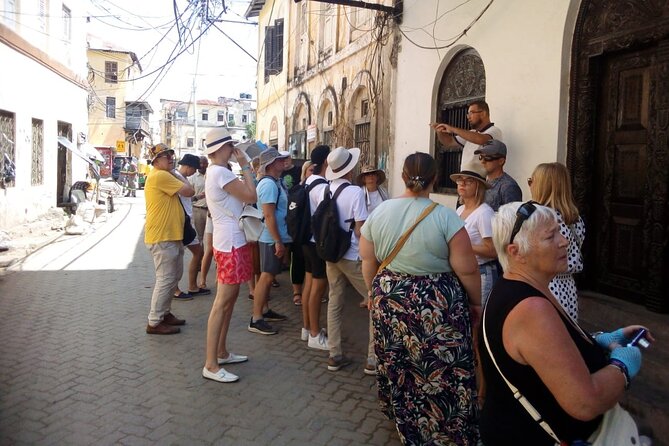
The strongest reason to choose this tour is Malik. He is described as having grown up in Old Town and as knowing people throughout Mombasa. That can give you a more direct connection to the city than a guide who simply recites prepared dates.
The praise for him is unusually specific. He is credited with knowing details of Old Town that other guides may not cover, and with creating access to local people and places. You should still keep expectations sensible: the supplied information does not guarantee entry into private homes or special sites. It does suggest a guide who can add personal context and local relationships to the official history.
There is also a personal musical detail. You are encouraged to ask Malik to show you his music. That small tip may appeal if you like meeting the person behind the guiding script. It is not part of the formal itinerary, and no performance is promised, but it gives you a natural question to ask during or after the walk.
The tour description also stresses Swahili tradition and an interactive guiding style. In practical terms, that means you should not be shy about asking questions. A private walk works best when you help shape the conversation.
Timing, comfort, and what the price includes
The full outing lasts about two hours, with the listed stop times adding up to roughly the same length. You receive bottled water, which is a welcome basic on a walking tour.
There is no restroom on board. Since this is a walking activity, that wording is a little odd, but you should not count on a dedicated restroom service during the tour. Plan accordingly before meeting at the Old Port.
The activity operates Monday through Sunday from 9:00 a.m. to 5:30 p.m. A morning start may make the two-hour schedule easier to handle, though the supplied information does not promise a particular temperature or crowd level. The tour is near public transportation, and a mobile ticket makes the meeting information easy to carry on your phone.
Service animals are allowed, and most people can participate. The route is described as a private walking tour, but no details are supplied about step-free access, pavement, or seating. If you have mobility concerns, ask the provider before reserving.
Who should book this Old Town walk
I would recommend it to someone who wants a short introduction with a strong local voice. It suits a solo visitor especially well, since the published price is for a group of up to one person and the private setup avoids being folded into a larger party.
It also suits history-minded visitors who want more than Fort Jesus. The Old Port, spice market, street names, police station, and post office show how trade and administration shaped the district over time.
You may want a different plan if you want a long museum visit, extensive market shopping, or a full-day exploration. Thirty minutes at Fort Jesus and thirty minutes at the market leave limited time for lingering. The route is compact and focused, not an all-day survey of Mombasa.
The strongest match is someone who values conversation and local contacts. Malik’s ties to Old Town are the tour’s clearest advantage. If you prefer a highly scripted walk with detailed information about every building, ask how much of the tour is guided discussion and how much is direct site viewing.
Booking, cancellation, and practical questions
Confirmation is provided at booking. You can cancel for a full refund up to 24 hours before the local start time. Cancellations or changes made within 24 hours are not refunded or accepted, so check your plans before that deadline.
The tour returns to the Old Port meeting point. That simple out-and-back arrangement is useful if you have other plans in Mombasa afterward, though the supplied information does not give an exact finishing time beyond the approximate two-hour duration.
Should you book the Mombasa Old Town tour?
Book it if you want a private, compact walk led by someone with real ties to Old Town. Malik’s local background, contacts, and personal style are the best reasons to choose this experience, while the route gives you a good first look at Mombasa’s Portuguese, Arab, Indian, Swahili, and colonial chapters.
Before paying, confirm the group pricing and the Fort Jesus admission cost. If you are happy with a brisk schedule and mostly exterior visits, $45 can be a sensible price for personal guiding. If you want more time inside the fort or market, ask about extending the tour. That one question could make the difference between a quick orientation and a fuller Old Town experience.
FAQ
Where does the tour start?
It starts at the Old Port in Mombasa, Kenya.
Where does the tour finish?
The activity ends back at the Old Port meeting point.
How long does the walking tour last?
It lasts approximately two hours.
Is this a private tour?
Yes. Only your group participates.
How much does the tour cost?
The listed price is $45 per group, for up to one person. Confirm the rate with the provider if more than one person will join.
Is Fort Jesus admission included?
No. Admission to Fort Jesus is not included.
What is included in the tour price?
Bottled water is included.
Are the other listed stops included?
The Old Port, Mombasa Spice Market, Sir Mbarak Hinawy Road, Ndia Kuu Road, and Old Post Office are listed as included or free stops.
Does the tour operate every day?
Yes. It operates Monday through Sunday, from 9:00 a.m. to 5:30 p.m.
Can I cancel for a full refund?
Yes, if you cancel at least 24 hours before the experience start time. Cancellations within 24 hours are not refunded.
Just added in Mombasa
- 4-Day Tsavo East West and Amboseli National Park from Mombasa★ 4.0 · 5 reviews
- 1-Day Tsavo East Safari From Mombasa★ 5.0 · 3 reviews
- Tsavo East National Park 2 days Voi Safari Lodge from Mombasa.★ 5.0 · 2 reviews
- 4×4 Safari in Tsavo East National Park★ 5.0 · 4 reviews
- 4 Days Mount Kenya Trekking★ 5.0 · 6 reviews
- Private Transfer from Mombasa★ 5.0 · 6 reviews
- Swahili Street Food Tour★ 5.0 · 7 reviews
- Fort Jesus Sound and Light show Mombasa★ 4.0 · 17 reviews
Walking Tours, compared.
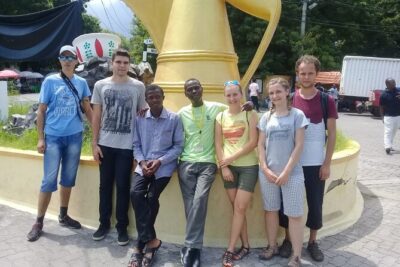
Walking Tour Through Old Town Mombasa and Fort Jesus
Read our review →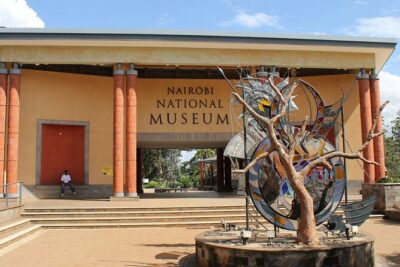
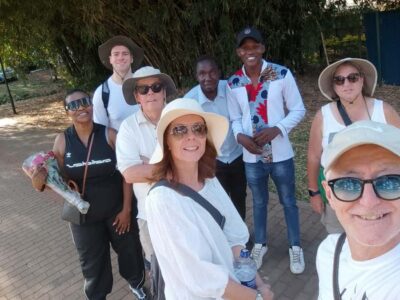
Nairobi Walking tour:Explore History Culture and Traditions
Read our review →
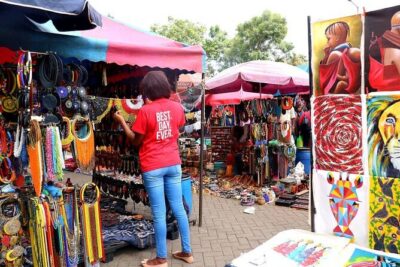
Nairobi City Walking Tour with Traditional Kenyan Lunch
Read our review →

Browse the lists this tour appears in