

Reviewed · WALKING TOURS
Nairobi; City Walk Tour
Nairobi reveals itself one layer at a time. This city walk links three very different sights: the KICC rooftop, the National Museum, and the Nairobi Railway Museum. I like the mix of broad city views and focused cultural stops, and I also like the small group size, capped at 10 people. The main drawback is cost: the $22 tour price does not include the three entrance fees, which add another $26.
The tour begins and ends at International House in Nairobi’s Central Business District. You walk through central Nairobi with an English-speaking guide, spending about four and a half hours on the activity, although the itinerary also describes the visit as lasting five hours. That difference is worth noting if you have a flight or another booking later in the day.
This is a useful introduction to Nairobi, not a deep survey of every neighborhood. The strongest praise has gone to the guides, who have been described as pleasant, well prepared, and helpful with practical needs, including arranging an Uber for a visitor rushing to the airport. You should still leave extra time after the tour rather than cutting your airport transfer close.
In This Review
- Five things to know before you book
- Meeting at International House in Nairobi CBD
- KICC rooftop views and Nairobi’s modern center
- National Museum: fossils, culture, and Kenya’s long story
- Nairobi Railway Museum and the making of modern Kenya
- What the $22 price really covers
- Timing, airport plans, and useful preparation
- The guides are the key part of the experience
- Who should book this Nairobi city walk?
- Should you book it?
- FAQ
- Where does the Nairobi city tour start and finish?
- How long does the tour last?
- What attractions are included in the route?
- Are entrance fees included in the $22 price?
- What language is the tour conducted in?
- What should I bring?
Five things to know before you book

- KICC gives you Nairobi from above: The rooftop view reaches across the city toward the Ngong Hills, making this the clearest visual introduction to Nairobi’s size and shape.
- The National Museum covers both people and nature: Expect fossils, early human history, traditional crafts, ethnic culture, contemporary art, and conservation displays.
- The Railway Museum adds a different kind of history: Vintage locomotives, carriages, and railway objects show how transport helped connect Kenya.
- Your $22 ticket is not the full price: Add $15 for the National Museum, $6 for the Railway Museum, and $5 for the KICC rooftop, making $48 if you visit all three.
- A small group helps the walking tour work: With no more than 10 participants and a live English-speaking guide, you should have a better chance to ask questions and hear the commentary.
- Bring a passport or ID card: A copy is accepted, according to the tour information.
Meeting at International House in Nairobi CBD
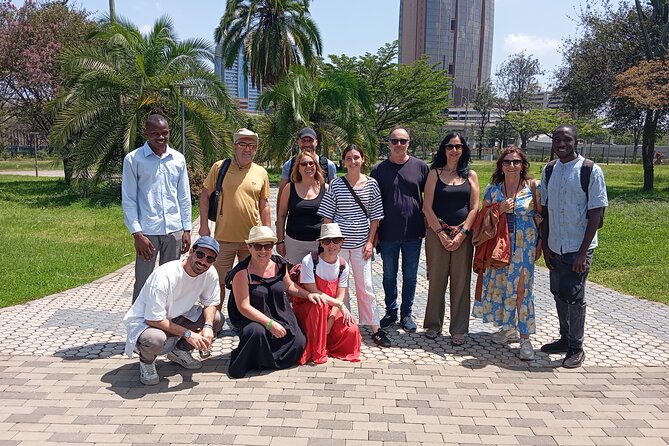
The meeting point is International House, in the center of Nairobi. This is a practical starting place because the tour stays within central Nairobi and returns to the same location.
The experience is presented as a walking tour, and no private vehicle or sightseeing bus is included. That matters. You are paying for a guide-led city walk, not door-to-door transport between attractions. Wear comfortable shoes and keep your daypack light. The provided information does not give a walking distance, so you should be ready for several hours on your feet.
A small group of up to 10 is a real advantage here. In a large group, city commentary can turn into a muffled voice at the back of the pack. With fewer people, you can ask about buildings, streets, and local customs as they come up. One highly praised guide even carried supporting materials, which suggests the commentary may be more than a string of memorized sights.
The tour is conducted in English. If English is comfortable for you, this gives the outing a clear and simple format. If you need another language, this is not the right choice based on the information available.
More Walking Tours in Nairobi
- Nairobi: Historic and Modern Highlights Walking Tour
★ 4.8 · 703 reviews - Nairobi Historical Walking City Tour
★ 5.0 · 258 reviews - Nairobi Downtown Walking Tour
★ 4.7 · 208 reviews
KICC rooftop views and Nairobi’s modern center
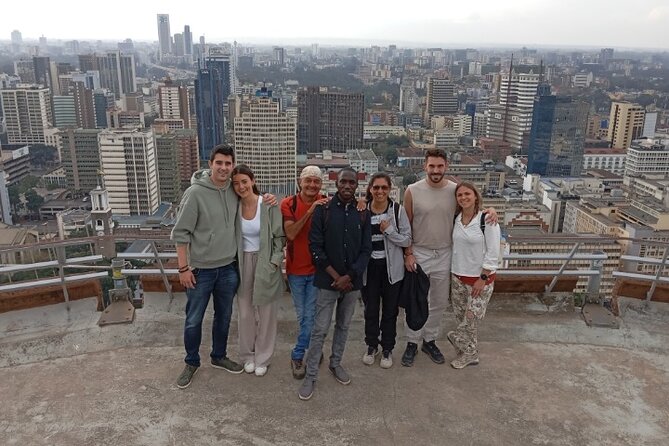
The first major stop is the Kenyatta International Convention Centre, usually called KICC. The rooftop is the visual high point of the tour, quite literally. For a $5 admission fee, you get a broad view over Nairobi’s central buildings, roads, and surrounding terrain.
The Ngong Hills provide an especially useful point of reference. From street level, Nairobi can feel like a collection of separate blocks and busy corridors. From above, the city becomes easier to understand. You can see the contrast between the central towers and the wider setting around them, while the guide explains how Nairobi functions as a center for business, commerce, and diplomacy in East Africa.
I like placing this stop near the start of the experience. You get your bearings before spending time in museums. It also gives you a visual answer to a basic question: how large and important is Nairobi within Kenya? The rooftop supplies that answer quickly.
The view is weather dependent, and the tour does not promise a particular level of visibility. On a clear day, the Ngong Hills should add drama. On a hazier day, the central city itself remains the main subject.
Do not confuse the rooftop admission with the tour price. The $5 fee is separate. The activity information also mentions a separate entrance for skipping the line, but you should confirm exactly which attraction that applies to when booking, since the details do not explain the arrangement at each site.
National Museum: fossils, culture, and Kenya’s long story

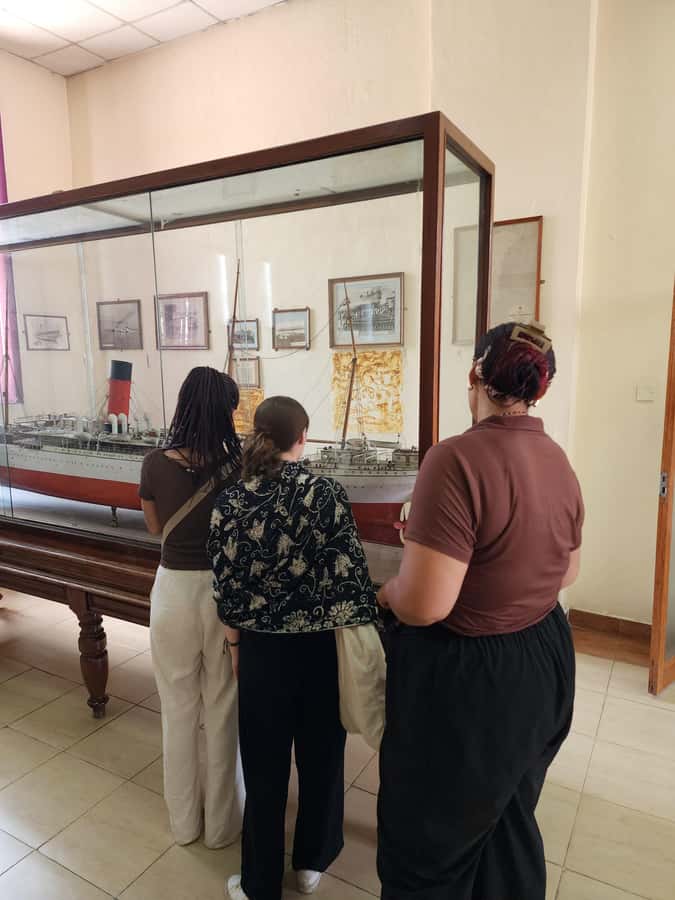
The National Museum is the most varied stop. Its displays cover prehistoric fossils, early human ancestors, traditional crafts, ethnic culture, contemporary art, and wildlife conservation. The admission fee is $15 per person, making it the largest extra expense on the route.
The fossil material gives the museum a strong connection to Kenya’s place in the study of human origins. Turkana Boy is specifically highlighted, along with other discoveries connected to early human development. You are not simply looking at old objects here. The displays help explain why Kenya is so important to researchers studying human evolution.
The museum also broadens the picture beyond prehistory. Traditional masks and crafts point to the country’s many communities and artistic traditions. Contemporary art adds a more current view, while conservation displays connect Kenya’s natural heritage with the work of protecting it.
This range is the museum’s great strength, but it can also make the visit feel packed. The tour gives you a guide to help connect the exhibits, yet you should not expect the leisurely pace of a full museum day. If fossils are your main interest, you may want more time in those galleries. If you prefer a broad introduction to Kenya’s people, art, nature, and past, the guided visit should serve you well.
I would listen carefully to how the guide links the displays together. A museum can be a series of cases and labels, or it can become a way to understand the country. The guide’s explanation is what makes this stop more useful than a quick solo walk through the galleries.
Nairobi Railway Museum and the making of modern Kenya
The final main attraction is the Nairobi Railway Museum, with a $6 admission fee. Its collection includes vintage locomotives, carriages, and railway artifacts tied to Kenya’s early transport development.
This stop changes the mood. The KICC rooftop looks toward Nairobi’s present-day role, while the Railway Museum turns your attention to the systems that helped connect the country in an earlier period. The engines and carriages are physical objects, not just photographs or written accounts, so the past feels especially tangible here.
The museum also helps explain why railways matter to the growth of cities and regional trade. Transport links affected how people and goods moved, how settlements connected, and how Nairobi developed. You will hear about that wider role while looking at the machinery itself.
Railway enthusiasts may wish the schedule allowed a longer inspection of each locomotive and carriage. For most people, the value is the change of subject. After city streets, a high rooftop, and museum galleries about fossils and culture, the railway collection gives the tour a clear final chapter.
Because this is a walking experience with several stops, ask the guide how much time is available at the museum. The provided schedule does not break the five-hour itinerary into exact timings. That makes it hard to know in advance how long you will have for detailed viewing.
A completely different kind of day:
- Nairobi National Park Half-Day Tour; Free Wi-Fi connection
★ 5.0 · 878 reviews - Nairobi: National Park & Optional Elephants & Giraffe Center
★ 4.8 · 874 reviews - NAI NAMI: Nairobi Storytelling Tour with Street Children
★ 5.0 · 792 reviews - Nairobi National Park Half-Day Game Drive
★ 4.5 · 738 reviews
What the $22 price really covers
At first glance, $22 is a modest price for a guided half-day in a capital city. But the attractions charge separately, so the practical total is higher.
Here is the full calculation if you enter all three paid sites:
- Tour and guide: $22
- Nairobi National Museum: $15
- Nairobi Railway Museum: $6
- KICC rooftop: $5
- Total: $48 per person
That total is fair if you want all three attractions and value the guide’s explanations. You are not just paying for admission. You are paying for a planned route, central meeting point, English commentary, and a small group limited to 10.
The value is less clear if you mainly want a general walk through downtown. In that case, the attraction fees make up more than half of the final cost. The tour makes the most financial sense for someone who specifically wants the KICC view, National Museum, and Railway Museum in one organized outing.
Personal expenses are not included. The information also does not list food, drinks, or transport after the tour, so budget for those separately. Since the experience returns to International House, you can make your own arrangements from the CBD afterward.
Timing, airport plans, and useful preparation
The listed duration is 270 minutes, or four and a half hours. The itinerary describes the central Nairobi visit as five hours, so plan around five hours rather than the shorter figure. That small difference can matter in Nairobi, particularly if you need an airport transfer.
One visitor enjoyed the tour but had to hurry because of a flight. The guides helped arrange an Uber, which is a useful practical touch, but it should not become part of your plan. I would not book this outing close to an airport departure unless you have a generous buffer after returning to International House.
You need a passport or national ID card, and a copy is accepted. Keep it accessible, but secure. The tour information does not give more detail about security procedures at the three venues.
The activity offers free cancellation up to 24 hours before departure, with a full refund. You can also reserve now and pay later. Those terms are useful if your Nairobi schedule may change, though you should still check the available start time before committing to another appointment.
The tour does not list hotel pickup. Meet at International House and return there. If you are staying outside central Nairobi, allow time to reach the meeting point and do not assume the guide will arrange your first ride.
The guides are the key part of the experience

The strongest praise centers on the guiding. One visitor described two guides as informative and pleasant, while another praised a guide who brought materials and showed strong knowledge and understanding during the walk. The practical help with booking an Uber also suggests a willingness to assist beyond the formal sightseeing script.
That matters because central Nairobi is best understood through explanation. Buildings, streets, and museums can tell you what something is, but a guide can explain why it matters. The KICC rooftop needs context about Nairobi’s role in East Africa. The National Museum needs help connecting fossils, art, culture, and conservation. The Railway Museum benefits from an explanation of how transport shaped development.
The small group should make this stronger. A group of 10 is large enough to create a social outing but small enough for questions. The experience will still depend on the guide assigned that day, and no guide names are provided, so you cannot select a particular person in advance.
One review rated the experience four out of five and said the group spent five enjoyable hours together while the guide followed their wishes. That is a good sign for flexibility, but it also hints that the exact rhythm may adjust to the group and available time. If one stop matters most to you, say so early.
Who should book this Nairobi city walk?

I would recommend this tour to a first-time Nairobi visitor who wants a structured introduction without arranging several admissions and routes alone. It suits you especially well if you enjoy a mix of city views, museum collections, and transport history.
It also works for a short stay. In one half-day, you get three distinct views of Nairobi: the modern capital from KICC, Kenya’s wider cultural and natural story at the National Museum, and the country’s railway past at the Railway Museum.
The tour is less suitable if you want a slow museum day or a very relaxed stroll. The schedule is full, admission is extra, and the total time may run close to five hours. You should also choose another plan if you need hotel pickup, a language other than English, or a precise end time for a flight.
Should you book it?
Book this Nairobi city walk if you want efficient sightseeing with a guide and are happy to pay the additional entrance fees. The best reasons are the KICC rooftop view, the wide range of National Museum exhibits, and the personal guidance that past participants praised.
Before booking, calculate the real cost of $48 per person if you plan to enter every attraction. Then allow a generous gap before your next commitment. With those points settled, this is a sensible way to get your first clear picture of Nairobi, from its skyline and museums to the railway story that helped shape the city.
FAQ
Where does the Nairobi city tour start and finish?
It starts and finishes at International House in Nairobi’s Central Business District.
How long does the tour last?
The activity is listed as 270 minutes, or four and a half hours. The itinerary also describes the central Nairobi visit as five hours, so allow about five hours.
What attractions are included in the route?
The route visits the KICC rooftop, the Nairobi National Museum, and the Nairobi Railway Museum.
Are entrance fees included in the $22 price?
No. The National Museum costs $15, the Railway Museum costs $6, and the KICC rooftop costs $5 per person.
What language is the tour conducted in?
The live guided tour is conducted in English.
What should I bring?
Bring a passport or ID card. A copy is accepted.
Just added in Nairobi
- Wildlife Capital: Half-Day Safari at Nairobi National Park★ 5.0 · 2 reviews
- 3 days maasai mara migration safari★ 4.5 · 7 reviews
- 4 Days Tour Landcruiser in Masai Mara and Lake Nakuru★ 5.0 · 10 reviews
- 4 Days Safari to Lake Nakuru N/P and Maasai Mara N/R★ 5.0 · 18 reviews
- Day Tour to Nairobi national park, Elephants, and Giraffe Center★ 3.5 · 8 reviews
- 6 Days Kenya Budget Group Safari★ 5.0 · 2 reviews
- Maasai Mara Day Trip★ 5.0 · 15 reviews
- 3 Days Masai Mara Wildebeest migration Budget safari★ 5.0 · 2 reviews
Walking Tours, compared.

Walking Tour Through Old Town Mombasa and Fort Jesus
Read our review →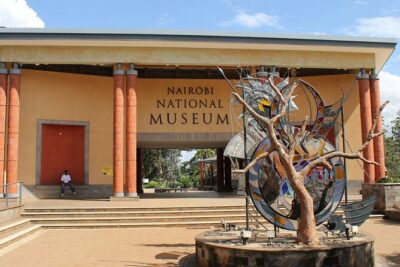

Nairobi Walking tour:Explore History Culture and Traditions
Read our review →

Nairobi City Walking Tour with Traditional Kenyan Lunch
Read our review →

Browse the lists this tour appears in