
Reviewed · COFFEE AND TEA FARM TOURS
Nairobi Coffee Farm and Factory Tour
Coffee tells Kenya’s story one bean at a time. This private trip to Fairview Coffee Estate gives you a close look at how Kenyan coffee is grown, graded, processed, roasted, and brewed just outside Nairobi. I like the hotel pickup and drop-off, and I also like that the experience includes coffee, snacks, bottled water, and a tasting session. The main thing to check before booking is the farm admission charge, since one booking notes an additional $30 fee despite the tour information saying fees and taxes are included.
The experience earns a strong 4.9 rating from 87 ratings, with 99 percent recommending it. Guides such as Elvis, James, Moses, Ann, Obed, Alex, Tim, and Hottensia are praised for being friendly, punctual, funny, and well informed. I would treat the advertised two to three hours as a rough guide and allow half a day, since the estate schedule lists four hours.
In This Review
- Key points to know before you book
- Why this coffee tour works in Nairobi
- The drive from Nairobi to Fairview Estate
- Walking through the coffee estate
- From coffee cherry to graded bean
- Watching the roasting and finishing stages
- The coffee tasting and snacks
- Guides, drivers, and the private format
- Timing, cost, and the admission question
- Who should book this Fairview coffee visit
- Should you book the Nairobi Coffee Farm and Factory Tour?
- FAQ
- Where is the coffee farm located?
- How long does the tour last?
- Is hotel pickup included?
- Is this a private tour?
- What will I see at Fairview Coffee Estate?
- Is coffee included?
- Can I buy coffee to take home?
- Is the farm admission fee included?
- What is the cancellation policy?
Key points to know before you book
- Fairview Estate is about 20 minutes from central Nairobi: You get a quick change from city streets to green farm country without giving up a full day.
- The tour follows coffee from plant to cup: You see coffee trees, harvesting, grading, drying, processing, roasting, and tasting.
- The tasting is a real part of the visit: You may sample several grades or roasts, with one experience describing four different grades.
- Private transport makes the trip easy: Pickup and drop-off at your Nairobi hotel are included, along with bottled water.
- Guide quality is a major strength: Moses, Obed, Ann, Alex, Elvis, James, and others are praised for clear explanations and warm service.
- Check the admission charge carefully: The information is not fully consistent about whether the farm fee is included, and one booking reported paying $30 separately.
Why this coffee tour works in Nairobi
Nairobi has plenty of wildlife and city attractions, but coffee offers a different way to understand Kenya. Coffee is one of the country’s major exports, and this visit connects the polished drink in your cup with the manual work behind it.
I like that the tour is not limited to a factory room or a quick cup at the end. You walk through the estate, see the plants, learn about the beans, and follow the chain of work that turns fruit from a coffee tree into roasted coffee. That sequence gives the tasting more meaning. After seeing the stages, you have a better sense of why different grades and roasts taste different.
The setting also matters. Fairview Coffee Estate is described as a lush country property about 20 minutes from Nairobi’s city center, with fresh air and scenic views. That short transfer gives you a pleasant break from the capital without requiring a long journey.
The private format is another advantage. Only you and your party participate, so the visit should feel more personal than a large group outing. You can ask questions about Kenyan coffee, the estate, or the production process without trying to catch a guide’s words over a crowd.
More coffee and tea farm tours in Nairobi:
- Nairobi to Kiambethu Tea Farm Tour
★ 5.0 · 51 reviews - Coffee Farm Village & Factory Half Day Tour with Pick-Up
★ 5.0 · 33 reviews - Private Day Trip to Kiambethu Tea Farm in Limuru from Nairobi
★ 5.0 · 31 reviews
The drive from Nairobi to Fairview Estate
Hotel pickup and drop-off are included, and private transportation is part of the price. This is useful in Nairobi, where arranging your own ride can add time, cost, and uncertainty to a short outing.
The estate is said to be roughly 20 minutes from central Nairobi, though your actual journey will depend on your hotel and traffic. The driver may also add value beyond simply getting you there. Tim was praised for safe driving and useful information during the journey, while Alex was credited with explaining parts of Kenya during the drive.
I would use this transfer as part of the experience rather than treating it as dead time. You are not only being moved to a farm. You are shifting from the capital’s urban rhythm to a working agricultural setting.
The tour is listed at $98.50 per person. That is not a cheap coffee tasting, but the value improves if you want private transportation, hotel transfers, a guide, farm access, drinks, snacks, and a full production explanation in one booking. If you are already staying near the estate or only want to buy coffee, the price may feel high.
Walking through the coffee estate
The farm walk is the heart of the visit. You see the coffee trees and learn about growing and harvesting before the beans reach the factory. The exact route and amount of walking can vary, but the experience is repeatedly described as a walk through the coffee fields followed by an explanation of the next stages.
This is where the tour becomes more than a caffeine stop. Coffee beans do not begin as the brown roasted pieces most of us recognize. Seeing the plants helps you understand that the final drink depends on farming, harvesting, sorting, processing, and careful roasting.
The estate setting is also one of the most praised parts of the experience. The grounds are described as beautiful and green, with country air and scenic views. You should expect an outdoor portion, so comfortable shoes and clothing suited to walking are sensible. The supplied information does not give a specific accessibility rating, although it says most people can participate.
Guides have a strong role here. Elvis is praised for being funny and engaging, while Ann is described as an excellent guide who explained how complex and labor-intensive coffee production can be. Obed and Hottensia led a visit that included coffee trees, harvesting, grades, processing, roasting, and tasting. The names may not be guaranteed, but you can ask whether one of these guides is available when booking.
From coffee cherry to graded bean
After the farm walk, the explanation moves into processing. You learn how coffee is prepared after harvesting and how beans are graded. The experience is valuable because it shows that coffee quality is not decided at the roasting stage alone.
The available information does not promise a fixed demonstration of every machine or production method, so I would not expect a factory tour to mean a long technical presentation. Instead, you should expect a guided explanation of the main steps, with the exact detail depending on the day and the guide.
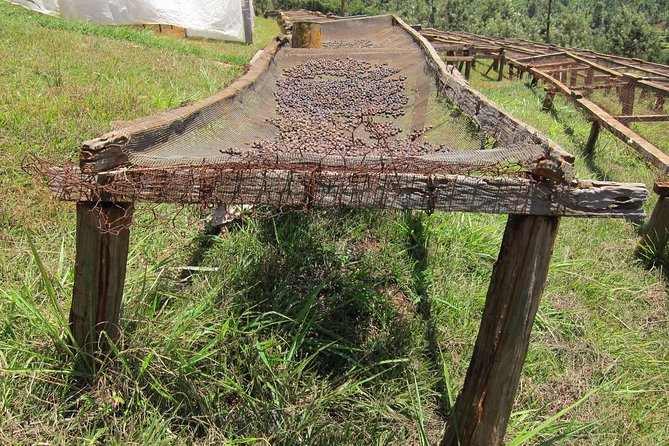
Several visits included seeing beans drying, learning about different grades, and following processing before roasting. That matters for anyone who buys coffee at home. You leave with a clearer idea of what terms such as grade, roast, and processing mean, rather than treating them as decoration on a packet.
The hands-on setting also suits people who are not coffee experts. One guide’s explanation apparently made the labor behind a good cup clear even for someone who simply enjoys drinking coffee. You do not need to arrive with a detailed knowledge of Arabica varieties or brewing methods.
A few more options to weigh up in Nairobi
- Nairobi National Park Half-Day Tour; Free Wi-Fi connection
★ 5.0 · 878 reviews - Nairobi: National Park & Optional Elephants & Giraffe Center
★ 4.8 · 874 reviews - NAI NAMI: Nairobi Storytelling Tour with Street Children
★ 5.0 · 792 reviews - Nairobi National Park Half-Day Game Drive
★ 4.5 · 738 reviews
Watching the roasting and finishing stages
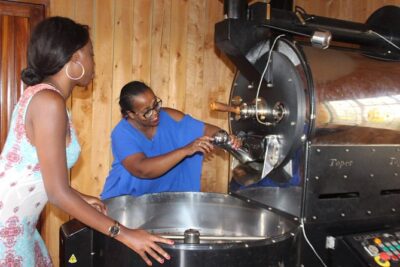
The tour continues through roasting, the stage that gives coffee much of its familiar color and aroma. You learn how beans change as they are prepared for brewing, then connect that explanation to the samples served at the end.
This part can be especially helpful if you normally choose coffee by roast color alone. Tasting several grades or roasts after the production talk gives you a practical comparison. One visit included four coffee grades, while other descriptions refer to different roasts and types of coffee beans.
The visit also shows why Kenyan coffee has an important place in the country’s economy. The tour presents coffee as Kenya’s black gold, but the useful point is not the slogan. It is the connection between a major export and the people, plants, and work involved in producing it.
Packaged farm coffee is not included in the tour price. You may be able to buy coffee at the estate, and one person bought a dark roast to take home. If you want a souvenir, budget for it separately and ask about available packages and prices on the day.
The coffee tasting and snacks
The tasting is the reward at the end, but it is also part of the lesson. You receive coffee and snacks, and the tasting may include several grades or roasts. This is not just a quick sip before returning to Nairobi. The samples let you compare what you have been learning.
I like the way the tasting follows the farm and factory visit. You first see the trees, then learn about production, and only then taste the result. That order makes the cup feel less anonymous.
Coffee enthusiasts will get the most from this section, especially if you enjoy comparing flavors. Still, you do not need to be a serious coffee fan. The farm walk, setting, and production story carry the visit, and the tasting is an easy finish for anyone who drinks coffee.
The tour includes free coffee and snacks, but it does not say exactly what snacks are served or how many samples you receive. If you have dietary restrictions or do not drink caffeine, ask the operator before booking. The supplied information confirms coffee and snacks, but not substitute drinks or special dietary arrangements.
Guides, drivers, and the private format
The clearest strength of this experience is the human service. Moses is praised for being engaging and enthusiastic, while Tim is described as punctual, friendly, helpful, and good at communicating before and during the trip. Alex received praise for explaining Kenya during the drive as well as guiding the estate visit.
Elvis was remembered as funny and warm. James was praised for explaining the full production process. Ann was described as highly informed and excellent at making the labor involved in coffee clear. Obed was called friendly and helpful, and Michael, the estate owner, was praised for being approachable and able to explain the farm.
That range of praise suggests the operator has several strong guides and drivers, though you should not assume a particular person is guaranteed. If you have a preference, ask when you reserve.
The private format is useful for couples, families, and small groups with different interests. You can spend more time on questions, move at a comfortable pace, and avoid waiting for a large group. Group discounts are available, which may make the cost more reasonable for several people booking together.
Timing, cost, and the admission question
The experience is priced at $98.50 per person and is commonly booked about 23 days ahead. That booking pattern suggests you should reserve before your Nairobi stay is fully packed, especially if you want a particular date or guide.
The listed duration is approximately two to three hours, but the Fairview Estate portion is also shown as four hours. I would not build a tight schedule around the shorter figure. Allow at least a half day, including hotel pickup, the drive, the farm and factory visit, tasting, and return journey.
The price includes private transportation, hotel pickup and drop-off, bottled water, coffee, snacks, and all fees and taxes according to the supplied details. Yet one booking specifically reports a separate $30 farm fee and says the inclusion wording was unclear.
This is the one issue I would resolve before paying. Ask Safari Port in writing whether the Fairview admission charge is included in the $98.50 price and whether the $30 fee applies to your booking. A clear answer protects the value of the experience and prevents an awkward surprise at the estate.
Free cancellation is available if you cancel at least 24 hours before the start time. Changes or cancellations inside that window are not accepted for a refund, and cut-off times follow local Nairobi time.
Who should book this Fairview coffee visit
I would recommend it most strongly to:
- Coffee drinkers who want to understand production, not just taste a finished drink
- Couples and families looking for a private half-day outing
- First-time Nairobi visitors who want a non-wildlife activity
- People who value hotel transport and do not want to arrange a separate taxi
- Curious eaters and drinkers who enjoy comparing grades or roasts
- Visitors with a free morning or afternoon who can allow extra time
It may be less suitable if you want a fast tasting only, dislike walking outdoors, or have a tightly timed Nairobi itinerary. The duration information is not perfectly consistent, so leave room for delays and a longer estate visit.
The tour is suitable for most people, according to the supplied details, but no specific mobility information is provided. If walking conditions, transport access, or seating are important to you, confirm those points before booking.
Should you book the Nairobi Coffee Farm and Factory Tour?
Book it if you want a clear, friendly introduction to Kenyan coffee and prefer the ease of private hotel transfers. The strongest reasons are the estate setting, the full plant-to-cup explanation, the tasting, and the quality of the guides and drivers.
At $98.50 per person, the experience offers fair value when you use the transport, private guide, refreshments, and farm visit. It becomes less attractive if the separate $30 admission fee applies and you were expecting every cost to be covered.
My practical advice is simple: reserve ahead, allow a half day, wear shoes suited to a farm walk, and confirm the admission charge before departure. If those details work for your budget and schedule, this is a thoughtful way to spend time outside Nairobi and to understand the work behind one of Kenya’s best-known exports.
FAQ
Where is the coffee farm located?
Fairview Coffee Estate is just outside Nairobi, about 20 minutes from the city center according to the supplied tour information.
How long does the tour last?
The experience is advertised as approximately two to three hours, while the estate itinerary lists four hours. You should allow a half day to avoid a rushed schedule.
Is hotel pickup included?
Yes. Private transportation and hotel pickup and drop-off in Nairobi are included.
Is this a private tour?
Yes. Only you and your party participate in the private activity.
What will I see at Fairview Coffee Estate?
You can expect to see coffee trees and learn about harvesting, bean grades, drying, processing, and roasting before the tasting.
Is coffee included?
Yes. Coffee and snacks are included, along with bottled water.
Can I buy coffee to take home?
Packaged farm coffee is not included in the tour price, but coffee may be available for purchase at the estate. One visit included buying a dark roast to take home.
Is the farm admission fee included?
The information is inconsistent. The included section says all fees and taxes are covered, but one booking reports a separate $30 farm fee. Confirm this with Safari Port before booking.
What is the cancellation policy?
You can cancel for a full refund up to 24 hours before the experience starts. Cancellations or changes made less than 24 hours before the start time are not accepted for a refund.
Just added in Nairobi
- Wildlife Capital: Half-Day Safari at Nairobi National Park★ 5.0 · 2 reviews
- 3 days maasai mara migration safari★ 4.5 · 7 reviews
- 4 Days Tour Landcruiser in Masai Mara and Lake Nakuru★ 5.0 · 10 reviews
- 4 Days Safari to Lake Nakuru N/P and Maasai Mara N/R★ 5.0 · 18 reviews
- Day Tour to Nairobi national park, Elephants, and Giraffe Center★ 3.5 · 8 reviews
- 6 Days Kenya Budget Group Safari★ 5.0 · 2 reviews
- Maasai Mara Day Trip★ 5.0 · 15 reviews
- 3 Days Masai Mara Wildebeest migration Budget safari★ 5.0 · 2 reviews
Coffee and Tea Farm Tours, compared.
Coffee Farm Village & Factory Half Day Tour with Pick-Up
Read our review →
Private Day Trip to Kiambethu Tea Farm in Limuru from Nairobi
Read our review →
Coffee farm tour, coffee roasting and tasting experience
Read our review →Browse the lists this tour appears in