
Reviewed · BOMAS OF KENYA TOURS
Day tour to Kibera Slums and Bomas Cultural Dance Show
Nairobi tells its story in two very different places. This private tour pairs a guided visit to Kibera with the music, dance, and traditions presented at the Bomas of Kenya, giving you two useful ways to understand the city and the country.
I like the direct contact with daily life in Kibera, especially the visit to a local home and the handicraft workshop where animal bones become ornaments. I also like the front-door pickup and drop-off, plus the chance to have guides such as Kelvin or Stephen explain Kenya through personal experience. The main consideration is timing: the experience is described as a full-day tour, yet the listed duration is about five hours, before you add transfers and lunch.
In This Review
- Key points to know before booking
- Why combine Kibera with Bomas?
- Entering Kibera through Soweto Village
- A Kibera home and a local craft workshop
- The lunch break and Karen stop
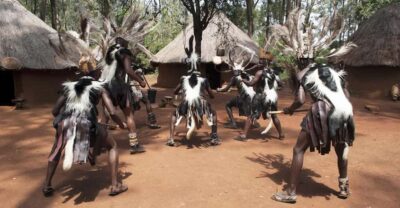
- Bomas of Kenya and the cultural dance show
- What the private format adds
- Is $135 good value?
- The guides can shape the whole day
- Who should book this Nairobi experience?
- Should you book it?
- FAQ
- How long does the tour last?
- What time does the tour start?
- Is hotel pickup included?
- Can I be dropped at the airport?
- Is lunch included?
- Are drinks included?
- Are entrance fees included?
- What happens at Kibera?
- What happens at Bomas of Kenya?
- What is the cancellation policy?
Key points to know before booking

- Kibera includes a local home visit: You can ask questions about everyday life inside a typical Kibera house rather than simply viewing the settlement from a vehicle.
- Animal-bone crafts show local enterprise: The curio workshop offers a close look at how residents create ornaments and earn income from available materials.
- Bomas brings many cultures together: The dance show presents Kenya’s ethnic groups, customs, and histories in one scheduled performance.
- Private transport keeps the day simple: Pickup and return are offered from any location in Nairobi, with a possible return to the airport.
- Lunch costs extra: You receive a lunch break, but food, alcoholic drinks, and soft drinks are not included.
- The price is $135 per person: That can be fair for private transport, a guide, entrance fees, and two very different cultural stops.
Why combine Kibera with Bomas?
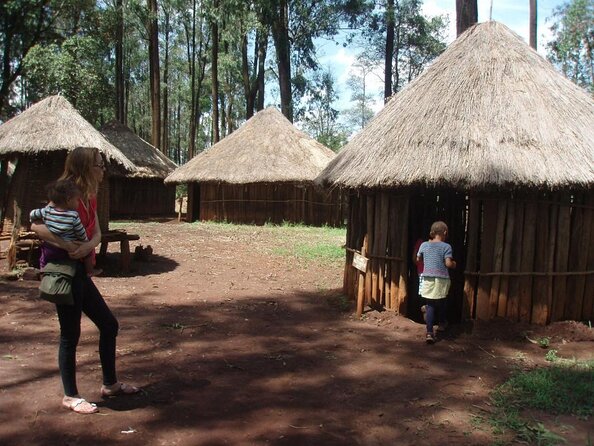
Kibera and Bomas answer different questions about Kenya. At Kibera, you focus on present-day Nairobi: homes, schools, water vendors, small businesses, and the ways people make a living. At Bomas, the focus shifts to traditional dance, music, dress, and the customs of Kenya’s different ethnic groups.
That contrast gives the day its purpose. You are not spending five hours looking at similar attractions. Instead, you see one side of modern urban life and one organized presentation of national culture.
I find this pairing more useful than a standard sightseeing loop because it asks you to pay attention to people, not just buildings. Kibera is not presented as a polished attraction, and Bomas is not meant to represent every part of Kenyan life. Together, they give you a broader starting point.
You should approach the Kibera visit with respect. This is a residential area, not a stage set. Listen to your guide, ask questions politely, and remember that homes, schools, and workplaces are part of someone’s real life.
More Bomas of Kenya visits:
- Giraffe Centre, Elephant Orphanage, and Bomas of Kenya Day Tour from Nairobi
★ 4.5 · 96 reviews - Half-Day Cultural Tour to Bomas of Kenya in Nairobi
★ 4.5 · 23 reviews - Nairobi city sights, Giraffe Encounters and Bomas Kenya Tour
★ 5.0 · 19 reviews
Entering Kibera through Soweto Village
The tour begins with pickup at your Nairobi hotel at about 8:30 a.m. You then head toward Kibera by way of Ngong Road before reaching the Soweto Village area.
The first part is largely about orientation. You are driven through the settlement and begin to see how people move through their daily routines. The supplied plan mentions water vendors, shower shops, nursery schools, and residents carrying out ordinary chores. These details matter because they show how a large urban community functions day by day.
You should not expect a neat sequence of monuments or a conventional sightseeing route. Kibera is an informal settlement, and the experience depends heavily on the guide’s explanation. A good guide can help you understand what you are seeing without turning people’s homes and work into a spectacle.
That makes the guide especially important. Kelvin received praise for patience, kindness, and detailed answers to questions. Those qualities are valuable here. You may want to ask about housing, local services, work, schooling, or how small businesses operate. A guide who takes time with your questions can make this visit thoughtful rather than hurried.
The listed Kibera portion lasts about two hours and includes admission. Since the area is active and densely lived in, keep your expectations practical. You are going to learn through observation and conversation, not through a highly produced visitor center.
A Kibera home and a local craft workshop
One of the most meaningful parts of the Kibera visit is entering a typical house. You are welcomed inside and given a chance to ask about daily life directly.
This is the moment when the tour can move beyond general statements about poverty. A home visit may help you understand how space is used and how residents describe their own routines. The available information does not promise a particular style of home or a set presentation, so keep an open mind and let the conversation guide the visit.
The craft workshop adds another layer. You see residents making ornaments from animal bones, an example of local skill and practical enterprise. I like this part because it shifts the focus from hardship alone to work, creativity, and income.
You may find items available for purchase, but the supplied details do not specifically promise a shopping opportunity. If buying something is important to you, ask the guide or workshop staff what is available and how proceeds are handled. Do not assume every craft display is a formal retail stop.
The itinerary also includes nursery schools and public-service points such as water vendors and shower shops. These are small details, yet they help you understand the systems residents use every day. They also remind you that a place can be economically challenged while still being organized, active, and full of initiative.
Photography deserves care here. The tour information does not set out a photography policy, so ask before photographing people, homes, children, or businesses. A simple request shows courtesy and avoids reducing the visit to a collection of snapshots.
The lunch break and Karen stop

After Kibera, you have a lunch break at your own expense. Lunch is not included in the $135 price, and alcoholic and soft drinks are also excluded.
The itinerary refers to a stop called Maasai Market Collections Karen before the Bomas cultural performance. The supplied details do not clearly explain whether this is a shopping stop, a meeting point, or simply the location associated with the lunch portion. Ask your guide how the timing works on the day.
This is a useful place to manage your expectations. The tour includes a lunch pause, but it does not promise a specific restaurant or meal. Bring enough money for lunch and drinks, and remember that tips are not included either.
Because the total experience is listed at about five hours, lunch and driving time can affect how long you spend at each attraction. If you have a flight later in the day, tell the operator in advance. The plan says the driver can return you to your hotel or take you to the airport, but you should still allow a generous buffer.
More Kibera community tours:
- Nairobi: Explore Kibera Slum with Local Guides
★ 4.9 · 365 reviews - Kevins Kibera Slum Tours
★ 5.0 · 213 reviews - Nairobi: Kibera Slum storytelling tour with a Local
★ 5.0 · 185 reviews - Kibera Slum Tour with Lucas
★ 5.0 · 119 reviews
Bomas of Kenya and the cultural dance show
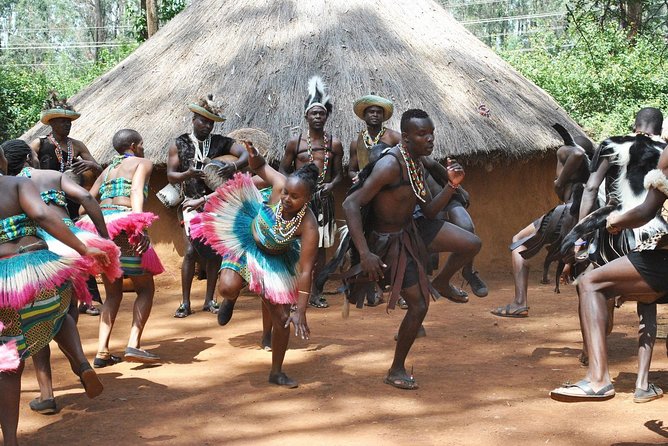
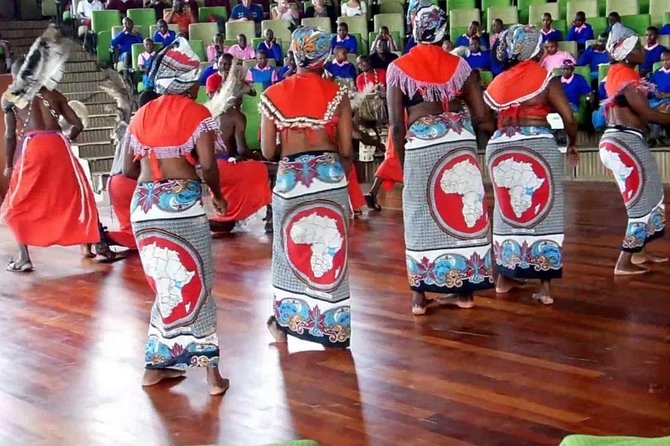
The second main stop is the Bomas of Kenya, where you watch a cultural dance show and learn about Kenya’s different ethnic and cultural groups.
This is a more formal setting than Kibera. Rather than meeting people in their homes or workshops, you see a planned performance designed to introduce national traditions to an audience. The show provides a clear way to encounter music, dance, dress, and stories from several communities in one place.
The experience is especially helpful if this is your first visit to Kenya. The country contains many communities with distinct customs and histories, and a performance can give you basic reference points before you continue your trip.
I would treat the show as an introduction, not a complete account of Kenyan culture. A staged presentation has limits. It selects and arranges traditions for an audience, so it cannot capture every regional difference or modern interpretation. Still, it offers a lively counterpoint to the direct, informal conversations in Kibera.
Stephen, one of the named guides associated with this experience, was praised for connecting Kenyan history and tradition with personal experiences. That combination can make the Bomas visit more memorable. Instead of simply identifying a dance or costume, a guide who adds personal context can explain why the material matters.
The Bomas portion is listed as about two hours and includes admission. Check the exact performance timing with your guide on the day, since the tour description does not provide a start time for the show.
What the private format adds
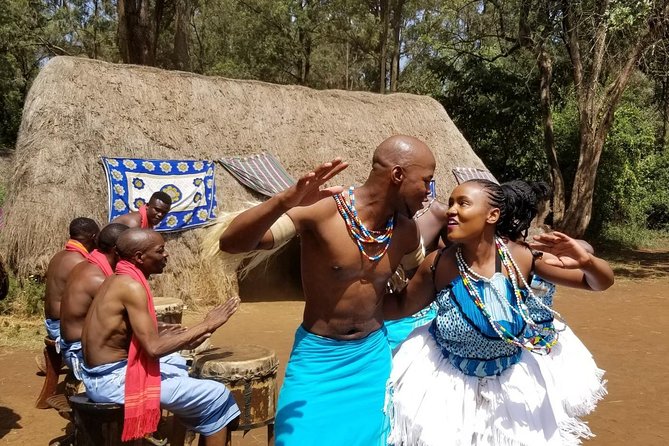
The private format is one of the strongest features of this tour. You are not tied to a large sightseeing bus schedule, and you can ask questions as the day develops.
That matters most in Kibera. A private guide can slow down when you want more explanation or clarify something you do not understand. It can also make the home visit feel more conversational. The tour may still have operational limits, but the format gives you more room than a fixed group excursion.
Pickup and drop-off from any location in Nairobi are offered, and the itinerary also allows for a return to the airport. This is helpful if you are using the tour between hotel stays or near the end of a Nairobi visit. Confirm your exact pickup point when booking, since a citywide pickup promise still requires clear arrangements.
The maximum group size is listed as 100 people, which sounds large for a private tour. The wording suggests the activity can accept up to 100 participants, but it does not explain whether your own booking will be fully private in every operational detail. If a private vehicle and private guide are essential to you, confirm that point directly with Gracepatt Safaris before paying.
Bottled water is included. Park entrance fees and a professional guide are also covered, which makes the price easier to assess.
Is $135 good value?
At $135 per person, this is not the cheapest way to see Nairobi. The price becomes more reasonable if you value private transportation, a guide, hotel transfers, admission fees, and the combination of two major cultural stops.
You are paying for convenience as much as for entry tickets. Nairobi traffic can make independent planning tiring, and arranging Kibera and Bomas separately may take more time. A single booking gives you a guide who can connect the two parts and manage the driving.
The value is strongest for first-time visitors, short stays, and people who want cultural context without arranging several separate visits. It is less attractive if you prefer to explore slowly, choose your own meals, or spend a long period at one site.
Keep extra money available for lunch, drinks, and tips. Those costs are not included. You should also confirm how the listed five-hour duration fits with pickup, traffic, lunch, and airport drop-off.
The guides can shape the whole day

The strongest praise attached to this experience concerns the guides. Kelvin was described as kind, patient, and willing to answer detailed questions. Those are not minor qualities on a tour that deals with sensitive social subjects and complex cultural traditions.
Stephen was praised for his understanding of Kenyan culture and for adding personal experiences to historical explanations. That personal connection can make Bomas feel less like a general performance and more like a guided introduction to Kenya.
You should use that strength. Prepare a few questions before pickup. Ask about the differences between what you see in Kibera and what is presented at Bomas. Ask how the guide’s own experiences shape the explanation. A question-led tour usually gives you more than simply following the route.
The operator is Gracepatt Safaris. Confirmation is provided at booking, and free cancellation is available until 24 hours before the start time. Changes or cancellations made inside that window are not accepted for a refund.
Who should book this Nairobi experience?
I would recommend this tour if you want a guided introduction to two very different parts of Nairobi and prefer having transport arranged. It suits you especially well if you have limited time, want to ask many questions, or are interested in community enterprise as well as performance and tradition.
Families and mixed-age groups may also find the structure manageable because the day combines a moving visit with a seated cultural show. The information says most people can participate, though it does not provide detailed accessibility notes. If you have mobility or other access needs, ask the operator before booking.
I would hesitate if you dislike organized cultural performances or feel uncomfortable visiting residential communities. Kibera requires sensitivity, and Bomas presents culture in a formal show. Neither stop should be treated as a quick photo opportunity.
Should you book it?
Book this experience if you want context, conversation, and convenience in one Nairobi outing. The Kibera home visit and craft workshop give the day a human focus, while Bomas provides a structured look at Kenya’s many traditions.
Before booking, confirm the exact duration, the lunch location, the meaning of the Karen stop, and whether your booking includes a truly private vehicle and guide. If those details fit your plans, $135 can be fair value for the transport, guidance, entrance fees, and access to places that are difficult to arrange together on your own.
FAQ
How long does the tour last?
The tour is listed as approximately five hours. The two main stops are each listed at about two hours, with additional time needed for driving and lunch.
What time does the tour start?
The listed start time is 8:30 a.m.
Is hotel pickup included?
Yes. Pickup and drop-off are offered from locations in Nairobi.
Can I be dropped at the airport?
Yes. The itinerary says the driver can return you to your hotel or take you to the airport.
Is lunch included?
No. The tour includes a lunch break, but lunch is at your own expense.
Are drinks included?
Bottled water is included. Alcoholic drinks and soft drinks are not included.
Are entrance fees included?
Yes. Park entrance fees and admission to the listed attractions are included.
What happens at Kibera?
The visit includes a drive through the Soweto Village area, a handicraft workshop, nursery schools, water vendors, shower shops, and a typical Kibera home visit.
What happens at Bomas of Kenya?
You attend a cultural dance show and learn about Kenya’s different ethnic and cultural groups and their histories.
What is the cancellation policy?
You can cancel up to 24 hours before the experience begins for a full refund. Cancellations or changes made less than 24 hours before the start time are not accepted for a refund.
Just added in Nairobi
- Wildlife Capital: Half-Day Safari at Nairobi National Park★ 5.0 · 2 reviews
- 3 days maasai mara migration safari★ 4.5 · 7 reviews
- 4 Days Tour Landcruiser in Masai Mara and Lake Nakuru★ 5.0 · 10 reviews
- 4 Days Safari to Lake Nakuru N/P and Maasai Mara N/R★ 5.0 · 18 reviews
- Day Tour to Nairobi national park, Elephants, and Giraffe Center★ 3.5 · 8 reviews
- 6 Days Kenya Budget Group Safari★ 5.0 · 2 reviews
- Maasai Mara Day Trip★ 5.0 · 15 reviews
- 3 Days Masai Mara Wildebeest migration Budget safari★ 5.0 · 2 reviews
Bomas of Kenya Tours, compared.

Giraffe Centre, Elephant Orphanage, and Bomas of Kenya Day Tour from Nairobi
Read our review →
Giraffe Center, Elephant Orphanage, Beads Center & Bomas of Kenya Tour Nairobi
Read our review →
Half-Day Cultural Tour to Bomas of Kenya in Nairobi
Read our review →

Nairobi city sights, Giraffe Encounters and Bomas Kenya Tour
Read our review →
Nairobi National Park, Elephants, Giraffes & Bomas Day Trip
Read our review →
Browse the lists this tour appears in