
Reviewed · HISTORICAL TOURS
Private Historical Walking Tour in Innercity Nairobi
Nairobi’s center tells Kenya’s story on foot. This private walk links Jeevanjee Gardens, Jamia Mosque, City Market, KICC, the Kenya National Archives, and Nairobi Gallery in one compact route through the capital. I like the mix of grand public buildings, working city streets, art, religion, and local crafts. I also like that your guide can adjust the pace and focus, as guide Steve did for guests who wanted more detail on their questions.
The main drawback is that entrance fees are extra, and the full route may take closer to four hours once you include the paid sights. The walk also requires good weather, so you should keep some flexibility in your plans.
In This Review
- What makes this Nairobi city walk worth considering
- Starting at Jeevanjee Gardens on Monrovia Street
- Jamia Mosque and the many layers of Banda Street
- City Market: the stop for crafts and small purchases
- KICC rooftop: Nairobi from above
- Kenya National Archives and the Murumbi Gallery
- Nairobi Gallery and the old Provincial Commissioner’s office
- How the private format changes the experience
- What the $28.24 price really covers
- Who will get the most from this walk
- Should you book the Private Historical Walking Tour in Inner-City Nairobi?
- FAQ
- Where does the tour begin?
- Where does the tour end?
- How long does the walking tour last?
- Is the tour private?
- Is a guide included?
- Is KICC admission included?
- Is entry to the Kenya National Archives included?
- Is Nairobi Gallery admission included?
- Is lunch included?
- Can I cancel for a full refund?
What makes this Nairobi city walk worth considering
- Jeevanjee Gardens begins the tour in a calm public park donated by Alibhai Mulla Jeevanjee and named after Kenya’s second president, Daniel arap Moi.
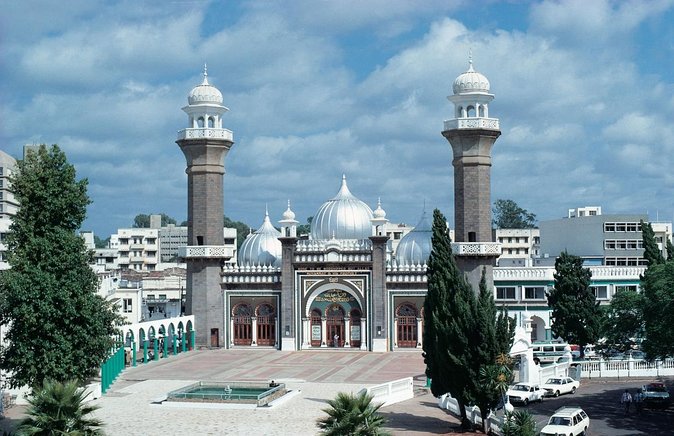
- Jamia Mosque adds an important religious and architectural stop on Banda Street, in the heart of Nairobi’s central business district.
- City Market is the best place for craft browsing, with beadwork, basketry, jewelry, soapstone, carvings, and African artifacts.
- KICC rooftop views give you a high look across central Nairobi, though the $5 entry fee is not included.
- The Kenya National Archives connects independence-era Kenya with older cultural collections, including the Murumbi Gallery.
- The private format gives you room to ask questions, with an art historian guide included rather than a fixed large-group presentation.
Starting at Jeevanjee Gardens on Monrovia Street
The meeting point is Jeevanjee Gardens at 27 Monrovia Street. This small recreational park provides a sensible opening because it gives you a little breathing room before the city walk begins.
The park was donated by Alibhai Mulla Jeevanjee and is located along Moi Avenue. It was later named after Daniel arap Moi, Kenya’s second president. That detail gives your guide an early chance to explain how Nairobi’s public spaces, political figures, and civic life overlap.
I like starting here because a first-time visit to central Nairobi can feel busy and unfamiliar. A park offers a clear meeting point and a quieter place to get oriented. The tour then moves into the surrounding streets, where the contrast between open public space and the dense city center becomes part of the experience.
The tour ends back at the same meeting point. That is useful if you have left luggage at a nearby hotel or need to continue from a known location. The meeting area is also near public transportation.
More Walking Tours in Nairobi
- Nairobi: Historic and Modern Highlights Walking Tour
★ 4.8 · 703 reviews - Nairobi Historical Walking City Tour
★ 5.0 · 258 reviews - Nairobi Downtown Walking Tour
★ 4.7 · 208 reviews
Jamia Mosque and the many layers of Banda Street
Jamia Mosque is on Banda Street, close to the center of Nairobi’s commercial district. Founded by Syed Maulana Abdullah Shah in 1902 and constructed between 1925 and 1933, it has served as a major center of Muslim religious organization in East and Central Africa.
The mosque is both an active place of worship and an important heritage site. Its location makes the point clearly: Nairobi’s story is not only about colonial offices, government buildings, or post-independence politics. Islamic communities and institutions have helped shape the city for generations.
Your guide can help you read the mosque as architecture, religious space, and part of Nairobi’s civic center. Since the supplied timing does not give a separate duration for this stop, the length of the visit may depend on the day’s pace and what you want to ask.
This is a place where you should follow your guide’s instructions on appropriate behavior. The tour information does not promise interior access, so you should treat the mosque primarily as an exterior and cultural stop unless your guide confirms otherwise.
City Market: the stop for crafts and small purchases

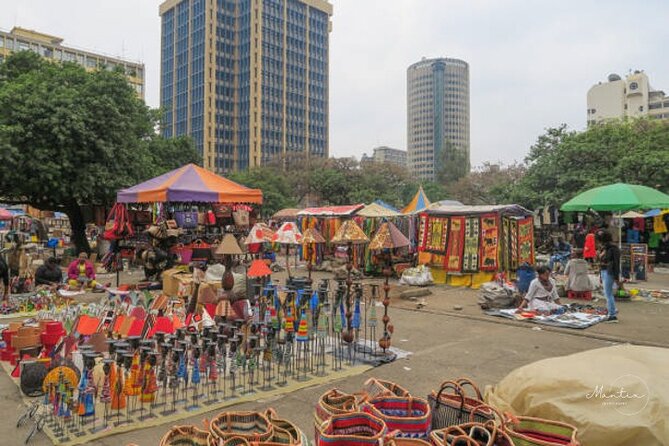
City Market is one of the most appealing parts of the walk if you enjoy handmade goods. The craft market occupies the central part of the building and a semi-open area behind it, creating a display of African artifacts, beadwork, basketry, jewelry, Kisii soapstone, wooden carvings, and life-sized animal figures.
You get about 20 minutes here, with no admission fee listed. That is enough for a quick look and perhaps a small purchase, but not enough for a slow, detailed shopping session. If you see something you like, keep an eye on the time and ask your guide how much longer the group has.
The market is especially suited to anyone looking for a useful souvenir rather than a mass-produced item. You might find a carved animal, a beaded piece, a basket, or a soapstone object. The presence of money changers is also noted, which can make transactions easier for international visitors, though you should still confirm prices and exchange rates before buying.
The craft stalls near the Supreme Court are worth keeping in mind. One guest specifically pointed out the handicrafts market a few steps away from the Supreme Court and described the vendors as friendly. That makes City Market, and the nearby craft area, a practical place to spend extra time if handmade Kenyan goods interest you.
KICC rooftop: Nairobi from above
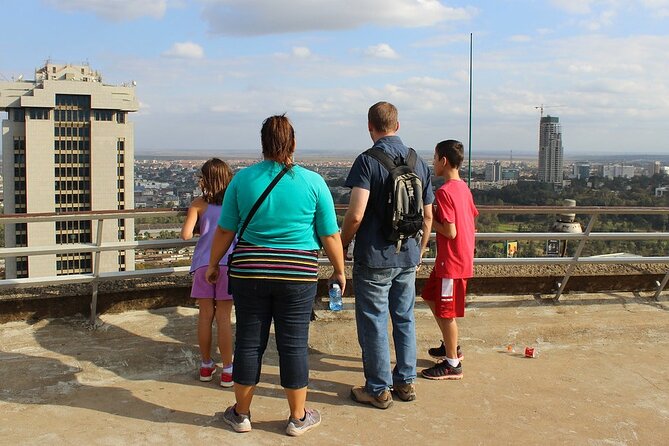
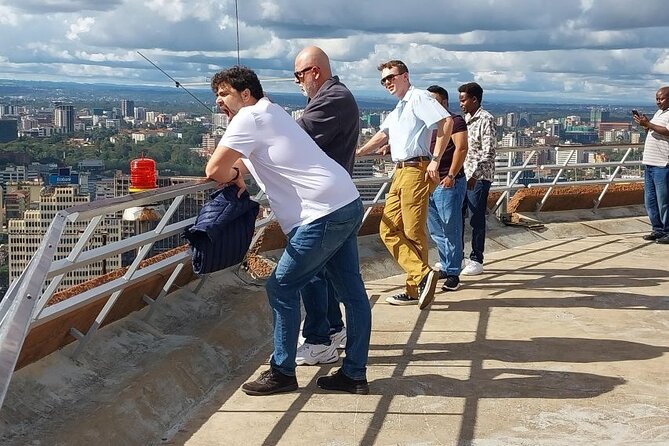
The Kenyatta International Convention Centre is the tour’s major architectural stop. Usually called KICC, the building is 28 stories tall and occupies City Square in central Nairobi. It has hosted conferences, meetings, exhibitions, seminars, summits, and other major events for more than four decades.
The scheduled visit lasts about one hour, and the plan includes the KICC rooftop. This is the clearest chance on the route to see central Nairobi from above and understand how the city center fits together.
The rooftop access costs $5 and is not included in the tour price. That extra fee is modest, but it matters when you compare the advertised cost with the likely final total. You should also confirm current access conditions with the operator, since rooftop entry can depend on opening arrangements and weather.
I like this stop because a view can make the street-level walk easier to understand. After seeing the city’s buildings from the ground, you can look back across them from above. The visit is not just about taking a photograph. It helps you connect City Square, government offices, hotels, roads, and the central business district in one glance.
KICC is also a useful stop for architecture fans. Its scale and civic role give the tour a modern counterpoint to the older mosque, archive collections, and colonial-era buildings that come later.
More History Tours in Nairobi:
- Full Day Nairobi Cultural and Historical Tour
★ 5.0 · 153 reviews - Nairobi Cultural and Historical City Tour with a Local
★ 5.0 · 67 reviews - Nairobi souvenir Shopping and Historical Half day Tour
★ 5.0 · 61 reviews - Nairobi History and Modern Culture 3 Hours Tour
★ 4.5 · 31 reviews
Kenya National Archives and the Murumbi Gallery

The Kenya National Archives sits along Moi Avenue at the edge of Nairobi’s downtown district, beside Ambassadeur Hotel and opposite the Hilton Hotel. Tom Mboya Street lies to the rear.
Established in 1965 by an Act of Parliament, the archives hold about 40,000 volumes. The building also contains the Murumbi Gallery, with African artifacts collected in the 19th century.
This is one of the most valuable stops for understanding Kenya beyond the present-day street scene. The displays cover Kenya before and after independence, tribal regalia, and the country’s flora and fauna. You are not simply looking at old objects. You are getting a compact introduction to the political, cultural, and natural subjects that shaped the country.
The planned visit takes about one hour. Admission costs $3 and is not included. That is a reasonable add-on for a substantial indoor stop, especially if you want context rather than a quick photo walk.
The archives can also give the tour a welcome change of pace. Central Nairobi can be lively and demanding on foot, while an hour inside lets you focus on objects, documents, and displays. I would pay close attention to the guide here and ask questions. The private format is most useful in a place like this, where a short explanation can make an unfamiliar item much easier to understand.
Nairobi Gallery and the old Provincial Commissioner’s office

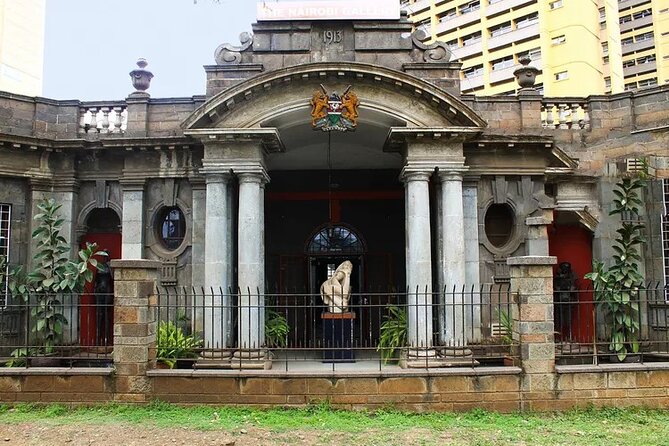
Nairobi Gallery occupies a building completed in 1913. It was designed by C. Rand Ovary for the Ministry of Native Affairs during the colonial period. The building originally handled records such as marriages, births, and deaths.
After Kenyan independence in 1963, it served as the Provisional Commissioner’s office until 1984. It later became a Nairobi branch office of KANU until 1997. The building was declared a national monument in 1995, and ownership passed to the National Museums of Kenya in 1997. Renovation work was completed in 2005.
That sequence makes the building itself part of the exhibit. You can read its changing uses as a record of Kenya’s government, colonial administration, independence, and later public culture.
The planned visit lasts about one hour. Admission to Nairobi Gallery, listed as the GPO entry, costs $8 and is not included. This is the largest single extra entrance fee on the route, so budget for it if you want the complete indoor program.
The tour information does not specify which temporary or permanent displays will be on view. That means you should think of this stop as valuable for both the building and its exhibitions, but avoid expecting a particular collection unless Arata Tours confirms it before your visit.
How the private format changes the experience

The tour is private, so only your group participates. That is important in a city walk with several different themes. You can ask about architecture at Jamia Mosque, shopping at City Market, politics at the National Archives, or design at KICC without waiting for a large group to move on.
The guide included is a professional art historian. Steve is named in the available feedback, and he is praised for being kind, experienced, and able to adapt the program to the group’s requests. That flexibility is the strongest reason to choose a private tour instead of a standard city sightseeing circuit.
You should tell the operator what interests you before the walk begins. The stated duration is about two to four hours, while the listed stop times alone add up to more than three hours if you include City Market, KICC, the Archives, and Nairobi Gallery. The actual length may depend on which sites you enter, how much time you spend shopping, and how many questions you ask.
Lunch is not included. Plan to eat before or after the walk, or ask the operator if a break can be arranged. No meal stop is specified, so do not count on lunch being part of the route.
What the $28.24 price really covers
At $28.24 per person, the base price is appealing for a private city walk with a professional art historian guide. You are paying for a tailored introduction to central Nairobi rather than only transportation or a checklist of photo stops.
The extra fees change the calculation:
- KICC entrance: $5
- Kenya National Archives: $3
- Nairobi Gallery GPO admission: $8
- Lunch: not included
If you enter all three paid attractions, the listed admissions add $16 per person. That brings the likely sightseeing cost to about $44.24 per person before lunch, assuming the fees remain current.
That is still fair for a private half-day introduction, especially if Steve or another guide gives you the background you need to make sense of each place. It is less attractive if you only want an outdoor walk and do not plan to enter the buildings.
The average booking lead time is 11 days. You do not need to plan months ahead, but booking about a week and a half before your preferred date is sensible. Confirmation is received at booking, and free cancellation is available up to 24 hours before the start time. If bad weather cancels the walk, you can receive a different date or a full refund.
Who will get the most from this walk
I would choose this tour if you are staying in Nairobi and want an organized first look at the city center. It suits people who prefer streets, civic buildings, religious sites, markets, and museums over a vehicle-based overview.
It is also a good match for anyone who likes asking questions. The private setup means you can shape the conversation around art, architecture, independence, religion, shopping, or daily city life.
The tour may be less suitable if you want a relaxed food experience, since lunch is not included. It may also feel rushed if you want to spend a long time at every museum and shop. The two to four hour estimate is broad, and the complete route requires a fairly active schedule.
Most participants can take part, according to the available tour information. Still, you should consider your comfort with several hours in an urban setting and confirm any personal needs with Arata Tours before booking.
Should you book the Private Historical Walking Tour in Inner-City Nairobi?
Book it if you want a private, guide-led introduction to Nairobi’s center with real cultural range. The strongest features are the adaptable guide, the National Archives, the craft market, and the chance to connect older buildings with modern Kenyan life.
Before paying, add the $5 KICC fee, $3 Archives fee, and $8 Nairobi Gallery admission if you want the full route. Ask how the day will be paced, especially if you want time for shopping or detailed museum visits.
For a first stay in Nairobi, this is a good-value way to get your bearings on foot. I would choose it for the history, art, architecture, and personal attention, then keep the rest of the day open rather than scheduling another demanding activity immediately afterward.
FAQ
Where does the tour begin?
It begins at Jeevanjee Gardens, 27 Monrovia Street, Nairobi, Kenya.
Where does the tour end?
The tour ends back at the meeting point at Jeevanjee Gardens.
How long does the walking tour last?
The approximate duration is two to four hours.
Is the tour private?
Yes. Only your group participates in the activity.
Is a guide included?
Yes. A professional art historian guide is included.
Is KICC admission included?
No. KICC admission costs $5 and is paid separately.
Is entry to the Kenya National Archives included?
No. The listed admission fee is $3, paid separately.
Is Nairobi Gallery admission included?
No. The GPO entry admission is listed at $8 and is not included.
Is lunch included?
No. Lunch is not included in the tour price.
Can I cancel for a full refund?
Yes. You can cancel at least 24 hours before the start time for a full refund. If poor weather cancels the experience, you will be offered another date or a full refund.
Just added in Nairobi
- Wildlife Capital: Half-Day Safari at Nairobi National Park★ 5.0 · 2 reviews
- 3 days maasai mara migration safari★ 4.5 · 7 reviews
- 4 Days Tour Landcruiser in Masai Mara and Lake Nakuru★ 5.0 · 10 reviews
- 4 Days Safari to Lake Nakuru N/P and Maasai Mara N/R★ 5.0 · 18 reviews
- Day Tour to Nairobi national park, Elephants, and Giraffe Center★ 3.5 · 8 reviews
- 6 Days Kenya Budget Group Safari★ 5.0 · 2 reviews
- Maasai Mara Day Trip★ 5.0 · 15 reviews
- 3 Days Masai Mara Wildebeest migration Budget safari★ 5.0 · 2 reviews
Historical Tours, compared.


Nairobi Walking tour:Explore History Culture and Traditions
Read our review →

Nairobi Cultural and Historical City Tour with a Local
Read our review →
Nairobi souvenir Shopping and Historical Half day Tour
Read our review →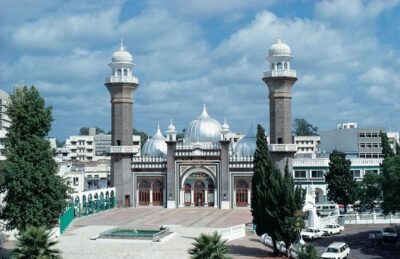

Half-Day Cultural Tour to Bomas of Kenya in Nairobi
Read our review →Browse the lists this tour appears in