
Reviewed · HISTORICAL TOURS
Nairobi Walking Tours, Historic and Modern Highlights
Nairobi makes more sense on foot. This three-hour city walk links quiet Jevanjee Gardens, lively City Market, the National Archives, and the rooftop of KICC, giving you a useful first look at Kenya’s capital. I like the mix of local daily life and major city sights, and I like that the guides can work in English, Swahili, or French. The main drawback is that the KICC rooftop is not included in the $32 price, and access can occasionally be blocked by an event.
I also like the practical extras: hotel pickup and drop-off, bottled water, and portable Wi-Fi. Guides such as Michael, who grew up in Nairobi, and David, who adjusted the route around his guest’s interests, can add a personal layer that a bus tour cannot. Still, the quality may depend on your guide. One French-speaking guest felt the tour did not offer enough information, so I would arrive with a few questions ready.
In This Review
- Key points at a glance
- Starting gently at Jevanjee Gardens
- City Market, where Nairobi gets practical
- The National Archives and Kenya’s past
- Walking through central Nairobi to KICC
- The KICC rooftop and Nairobi from above
- What the guides add to the walk
- Pickup, Wi-Fi, and the day-to-day details
- How this tour compares with exploring alone
- Who should book this Nairobi walking tour?
- Should you book it?
- FAQ
- How long does the Nairobi walking tour last?
- What places are included on the route?
- Is the KICC rooftop entrance included in the price?
- Is hotel transportation included?
- What languages are available?
- Is food included?
- Is bottled water provided?
- Is Wi-Fi available during the tour?
- What should I bring?
- Can I cancel the booking for a refund?
Key points at a glance
- A three-hour walking route: You cover four central Nairobi stops at a steady city pace, with time for stories, photos, shopping, and people-watching.
- KICC rooftop views cost extra: Budget an additional $5 if you want the city panorama from the viewing deck.
- City Market includes food and Swahili practice: This is the most hands-on part of the walk, with street food, local products, and basic language lessons.
- Personal guides can shape the route: David asked about priorities, while Michael brought memories of growing up in Nairobi.
- Hotel pickup and Wi-Fi add convenience: These useful inclusions make the tour easier to fit into a first day in the city.
- Proper shoes matter: Nairobi’s center is best handled in comfortable footwear, not dress shoes or sandals made only for lounging.
Starting gently at Jevanjee Gardens
The tour begins at Jevanjee Gardens, a green public space in the middle of central Nairobi. That is a smart starting point. You get a calmer introduction before moving into the city streets, and you can watch locals sit, meet, rest, and pass through the gardens.
I like this opening because it gives your guide room to explain Nairobi as a lived-in city, not just a list of buildings. The gardens are also a useful place to settle into the walking rhythm. You are not thrown straight into traffic, shops, and market noise.
Expect the first part to be more about orientation and conversation than formal sightseeing. The guide can help you understand where the central district sits and how the stops connect. Since the full tour lasts three hours, the pace needs to keep moving, but this first stop should feel unhurried.
Wear comfortable clothes and supportive shoes from the start. The route is not described as difficult, but you will be walking through streets and market areas, and one guest specifically recommended proper footwear.
More Walking Tours in Nairobi
- Nairobi: Historic and Modern Highlights Walking Tour
★ 4.8 · 703 reviews - Nairobi Historical Walking City Tour
★ 5.0 · 258 reviews - Nairobi Downtown Walking Tour
★ 4.7 · 208 reviews
City Market, where Nairobi gets practical
From Jevanjee Gardens, the route continues to City Market. This is where the tour shifts from open green space to commerce, food, color, and close contact with ordinary city life.
You can expect stalls selling handicrafts and fresh produce, along with street food that gives you a taste of Nairobi beyond hotel dining rooms. Food and drinks are not included, so bring money if you want to sample something. That extra cost is small compared with the chance to try food while your guide explains what you are seeing.
The Swahili lesson is a particularly useful touch. Even a few simple words can make your time in Kenya feel less like observation from the outside. I would ask your guide to repeat phrases slowly and write them down if possible. Language practice is often easier to remember when you use it right away at a market stall.
City Market may also be the busiest and most crowded stop. Keep your belongings close and stay aware of the group. The tour rules advise leaving jewelry at home, which is sensible for a walk through busy public areas. Alcohol and drugs are not allowed.
You may also have a chance to look at souvenirs. David’s route included a market stop where shopping remained optional rather than turning into a hard-sell session. That is useful if you want to browse without feeling trapped into buying something. Still, personal shopping is your own expense, so decide in advance how much time and money you want to give it.
The National Archives and Kenya’s past

The next stop is the Nairobi National Archives, a major cultural stop in the center of the city. Its collection includes artifacts, photographs, and documents tied to Kenya’s past.
This part gives the walk more substance. City markets show you how Nairobi feels now, while the archives help connect the capital to the events, people, and cultural traditions that shaped the country. If you enjoy museums, photographs, and historical material, this is likely to be one of the more rewarding stops.
The value here depends heavily on how your guide explains what you see. A good guide can turn a display into a story and help you connect national events with present-day Nairobi. That is why I would not treat this as a silent museum visit. Ask questions about the objects, the photographs, and the parts of Kenya’s past that interest you.
The supplied details do not specify how long you spend inside the archives or list a separate entrance fee. You should therefore think of it as one part of a guided city walk, not a long museum study session. If you want to examine every display closely, three hours may feel tight.
Walking through central Nairobi to KICC

After the archives, you continue toward the Kenyatta International Conference Centre, usually called KICC. The route takes you through Nairobi’s central business district, giving you a change of mood from the market and museum.
KICC is one of the city’s best-known modern landmarks. Its tall form and central location make it easy to understand why it is part of a highlights tour. As you approach, the guide can place the building within Nairobi’s working city center, where offices, public institutions, shops, and street traffic all meet.
This section is less about one single attraction and more about seeing how Nairobi functions. I like that the route does not stay inside gardens and museums. You get a sense of the city as people use it, with the walking time between stops adding context.
There is one important caveat. A scheduled event prevented one tour from reaching KICC, even though the guide tried to make alternative arrangements. That means the rooftop should not be treated as guaranteed under every circumstance. If seeing KICC is your main reason for booking, confirm conditions close to your tour date and keep your expectations flexible.
More History Tours in Nairobi:
- Full Day Nairobi Cultural and Historical Tour
★ 5.0 · 153 reviews - Nairobi Cultural and Historical City Tour with a Local
★ 5.0 · 67 reviews - Nairobi souvenir Shopping and Historical Half day Tour
★ 5.0 · 61 reviews - Nairobi History and Modern Culture 3 Hours Tour
★ 4.5 · 31 reviews
The KICC rooftop and Nairobi from above

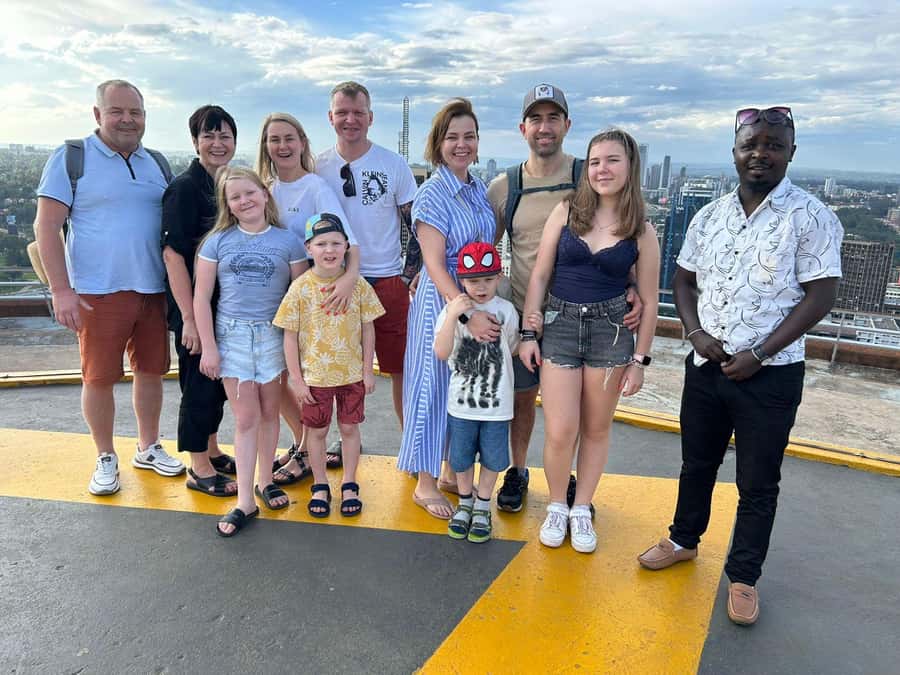
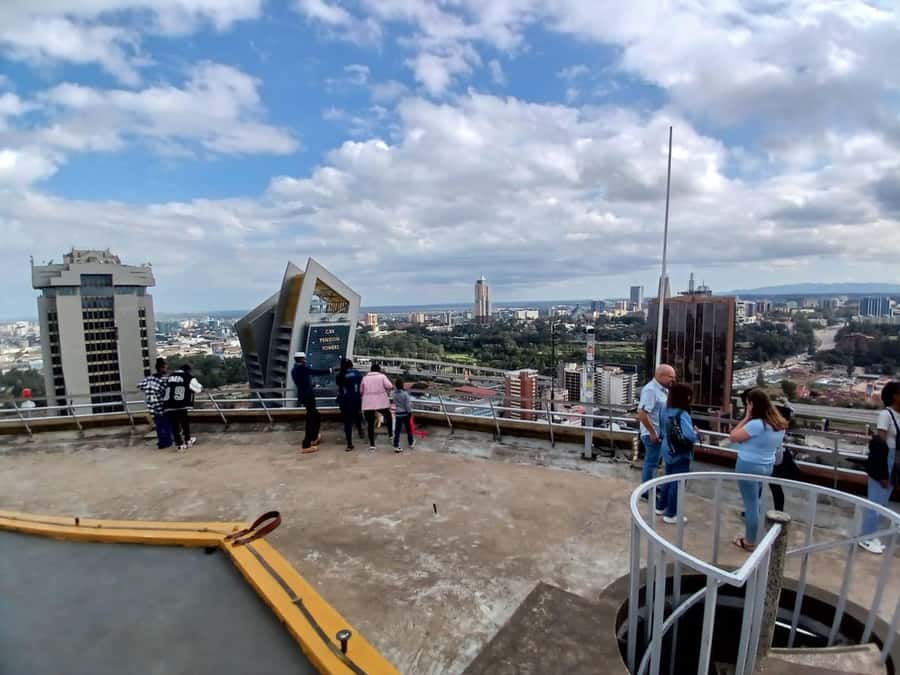
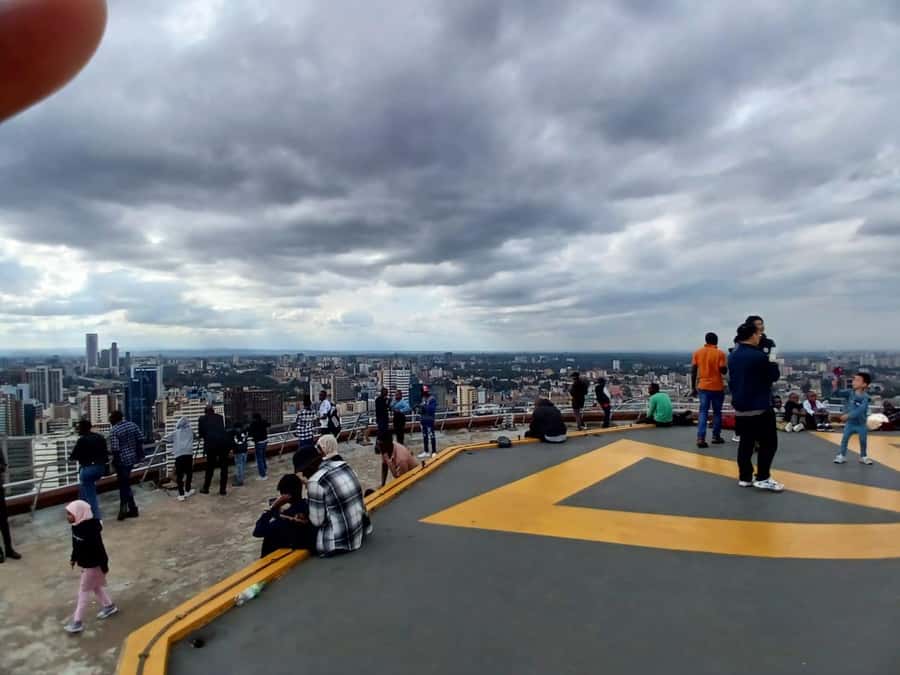
When access is available, the tour ends at KICC’s rooftop viewing deck. This is the visual payoff of the walk, with broad views across Nairobi and its skyline.
The panorama helps you place the city after spending several hours at street level. You can look back over the central district and understand how the gardens, markets, archives, and office blocks fit together. Bring your camera, but leave space for simply looking. A city view is most useful after you have already walked through the streets below.
The KICC entrance fee is not included. You pay an additional $5, so the advertised $32 cost is not the final total if you want the rooftop. Food, drinks, personal purchases, and any other personal expenses are also extra.
That still makes the tour reasonably priced for a three-hour guided introduction. You are paying for a guide, a planned route, hotel pickup and drop-off, bottled water, portable Wi-Fi, and access to several central sights. The value is strongest if you are new to Nairobi and want orientation without arranging each stop yourself.
It is less compelling if you only want a viewpoint. In that case, you are paying for the full walking route, not just the KICC roof. The tour makes the most sense when you want the street experience, market visit, cultural context, and skyline in one outing.
What the guides add to the walk

The guide is the key variable. One guide, Michael, was a Nairobi native and student who could speak about the city’s past from personal experience. That sort of background can make the walk feel grounded in real life rather than copied from a script.
Another guide, David, asked about priorities at the start and adjusted the plan. That is a strong sign for anyone who wants a flexible walking tour. He also added a side route away from the main roads and finished with a beer together afterward, according to the supplied account. The drink was not part of the package, so treat it as an optional personal expense, not a promised feature.
French is available alongside English and Swahili. A French-speaking guide can be a major help if you are more comfortable asking questions in French. At the same time, language ability alone does not guarantee a detailed tour. One guest found the French excellent but wanted more information about Nairobi. I would ask early for the kind of tour you want: history, food, architecture, daily life, photography, or a mix.
Pickup, Wi-Fi, and the day-to-day details
Hotel pickup and drop-off make this easier to fit into a Nairobi itinerary. You do not need to arrange your own way to the starting point, at least in the package description, and the return transfer removes some uncertainty at the end of the walk.
Bottled water is included, which is a small but welcome detail. Portable Wi-Fi is also provided. That can help you check messages, access maps, or keep in touch during the outing, though I would still save important addresses and booking details before leaving your hotel.
The tour is not suitable for people over 95 years old. No other mobility guidance is provided, so anyone concerned about walking should ask the operator for current route details before booking. Comfortable clothing is recommended, and jewelry is discouraged.
The reserve-now, pay-later option helps if your Nairobi schedule is still changing. You can cancel up to 24 hours in advance for a full refund, giving you some room to adjust plans.
How this tour compares with exploring alone

You can walk around central Nairobi independently, but a guide changes what you notice. The route links places that might otherwise feel disconnected, and the guide can explain local habits, point out details, and help you move from a market to a museum to a major landmark without spending your first day planning.
The tradeoff is structure. You have three hours, and the group may not stop as long as you would at every location. If you want a long museum visit or extended time at City Market, a private or self-guided day may suit you better.
I see this tour as a strong first look rather than a complete study of Nairobi. It gives you a sample of the city’s public spaces, food culture, historical material, business district, and skyline. Afterward, you can decide where to return on your own.
Who should book this Nairobi walking tour?

I would recommend it to first-time visitors who want a guided introduction without spending a full day in a vehicle. It also suits people who care about local food, public markets, basic Swahili, and conversations about daily life.
It is a good match for solo visitors who want a planned route and some local company. The hotel transfer and portable Wi-Fi are useful if you are still getting settled in Nairobi.
You may want another option if your priority is a guaranteed KICC visit, a long museum session, or highly detailed historical commentary. The tour can be affected by events at KICC, and the depth of explanation may vary by guide. Tell the operator what you want to learn before the walk begins.
At $32 per person, plus the optional $5 KICC fee and your own food or shopping, I think the package offers fair value. You get a compact city introduction with several different settings, not just a photo stop. The best part is the chance to walk with someone who can connect the landmarks to Nairobi life.
Should you book it?
Book this tour if you want to get your bearings through Nairobi’s streets, try market food, practice a little Swahili, and finish with a city view. I especially like it for a first or early day in town, when a local guide can help you understand what you are seeing.
Before booking, make two checks: ask what language and guide are available, and confirm whether KICC rooftop access is expected on your date. Bring proper walking shoes, leave jewelry behind, budget for the $5 rooftop fee and food, and arrive ready to ask questions. With those expectations, this is a useful, good-value introduction to central Nairobi.
FAQ
How long does the Nairobi walking tour last?
The guided walking tour lasts three hours.
What places are included on the route?
The route includes Jevanjee Gardens, City Market, the Nairobi National Archives, and the Kenyatta International Conference Centre, including its rooftop viewing deck when access is available.
Is the KICC rooftop entrance included in the price?
No. The KICC rooftop entrance fee costs an additional $5 per person.
Is hotel transportation included?
Yes. Hotel pickup and drop-off are included.
What languages are available?
The tour is available in English, Swahili, and French.
Is food included?
No. Food and drinks are not included. You can purchase street food at City Market as a personal expense.
Is bottled water provided?
Yes. Bottled water is included.
Is Wi-Fi available during the tour?
Yes. Portable Wi-Fi is included.
What should I bring?
Bring comfortable shoes and comfortable clothes. Jewelry is not allowed, and alcohol and drugs are also prohibited.
Can I cancel the booking for a refund?
Yes. You can cancel up to 24 hours in advance for a full refund.
Just added in Nairobi
- Wildlife Capital: Half-Day Safari at Nairobi National Park★ 5.0 · 2 reviews
- 3 days maasai mara migration safari★ 4.5 · 7 reviews
- 4 Days Tour Landcruiser in Masai Mara and Lake Nakuru★ 5.0 · 10 reviews
- 4 Days Safari to Lake Nakuru N/P and Maasai Mara N/R★ 5.0 · 18 reviews
- Day Tour to Nairobi national park, Elephants, and Giraffe Center★ 3.5 · 8 reviews
- 6 Days Kenya Budget Group Safari★ 5.0 · 2 reviews
- Maasai Mara Day Trip★ 5.0 · 15 reviews
- 3 Days Masai Mara Wildebeest migration Budget safari★ 5.0 · 2 reviews
Historical Tours, compared.


Nairobi Walking tour:Explore History Culture and Traditions
Read our review →

Nairobi Cultural and Historical City Tour with a Local
Read our review →
Nairobi souvenir Shopping and Historical Half day Tour
Read our review →

Half-Day Cultural Tour to Bomas of Kenya in Nairobi
Read our review →Browse the lists this tour appears in