
Reviewed · MAASAI VILLAGE VISITS
Maasai Village: Cultural Experience of The Maasai Tradition
Kenya’s city edge gives way to Maasai country. I like this six-hour outing for its hands-on activities, especially making fire, cooking ugali, and learning beadwork rather than simply watching a performance. I also like the small-group format, with no more than 10 people, and guides such as Ben and Jen, who have earned praise for being friendly and accommodating.
The main concern is the word village. You may find a small family settlement with only a few huts, not a large community spread across the savanna. The extra $30 entry fee per person also changes the value calculation, and some people may feel the visit leans toward fundraising instead of offering the fully authentic encounter they expected.
In This Review
- Key points before you book
- From Nairobi streets to open Kenyan country
- Meeting the Maasai through song and jumping
- Inside a manyatta made from earth and branches
- Making fire without matches
- Cooking ugali with local women
- Beadwork, identity, and buying directly
- A livestock market on selected days
- Is $55 a good deal after the extra fee?
- Guides, group size, and the feel of the day
- Who will enjoy this Maasai visit?
- Should you book this tour?
- FAQ
- How long does the Maasai village experience last?
- How much does the experience cost?
- Is hotel pickup included?
- What activities are included?
- Is food included?
- Can I buy Maasai jewelry?
- Is the livestock market included on every visit?
- What language is used during the tour?
- Can I take photographs?
- Is the experience suitable for wheelchair users?
Key points before you book
- A six-hour outing from Nairobi: Hotel pickup and drop-off within Nairobi are included, with the drive forming a major part of the day.
- Real participation, not only a show: You can try fire-making, beadwork, and cooking ugali with local women.
- The welcome is lively: Maasai warriors and women perform songs and a jumping dance when you arrive.
- A traditional manyatta is part of the visit: You can enter a hut made from mud, sticks, and cow dung and learn how it functions.
- The total cost is higher than the headline price: The listed rate is $55 per person, plus a $30 village admission fee per person, before meals and personal purchases.
- The setting may be smaller and more arranged than expected: Prepare for a family-based visit rather than a large, untouched village.
From Nairobi streets to open Kenyan country
The day begins with pickup at your Nairobi hotel or another address within the city. After booking, you provide the exact pickup point and receive a confirmed time, which matters in a city where a smooth start can save plenty of waiting.
The drive takes you away from city traffic and toward open savanna. The changing scenery is part of the experience, not just a transfer between two points. Your English-speaking driver or guide provides commentary about Kenya’s different cultures and ecosystems along the way.
The journey to the village takes about two hours according to one detailed account, so the six-hour duration includes a meaningful amount of time in the vehicle. I would treat the drive as part of the outing, but not pretend it is a quick half-day stop. If you dislike long road transfers, this may feel less efficient than the headline duration suggests.
Bottled water is included. You should still bring sunscreen, a hat, comfortable shoes, and your own extra water if you prefer to stay well supplied. High heels are not suitable, and bare feet are not allowed.
More Maasai village visits:
- Nairobi: Day Tour to Amboseli National Park & Maasai Village
★ 4.5 · 310 reviews - Masai village Day Tour Experience
★ 5.0 · 284 reviews - Maasai Village Experience Day Tour
★ 5.0 · 72 reviews
Meeting the Maasai through song and jumping
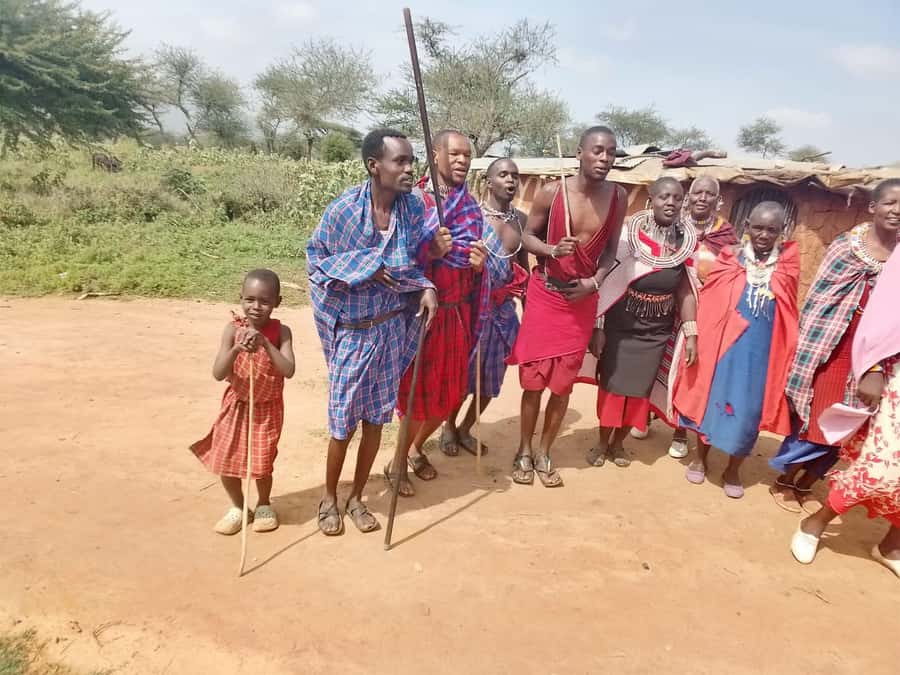
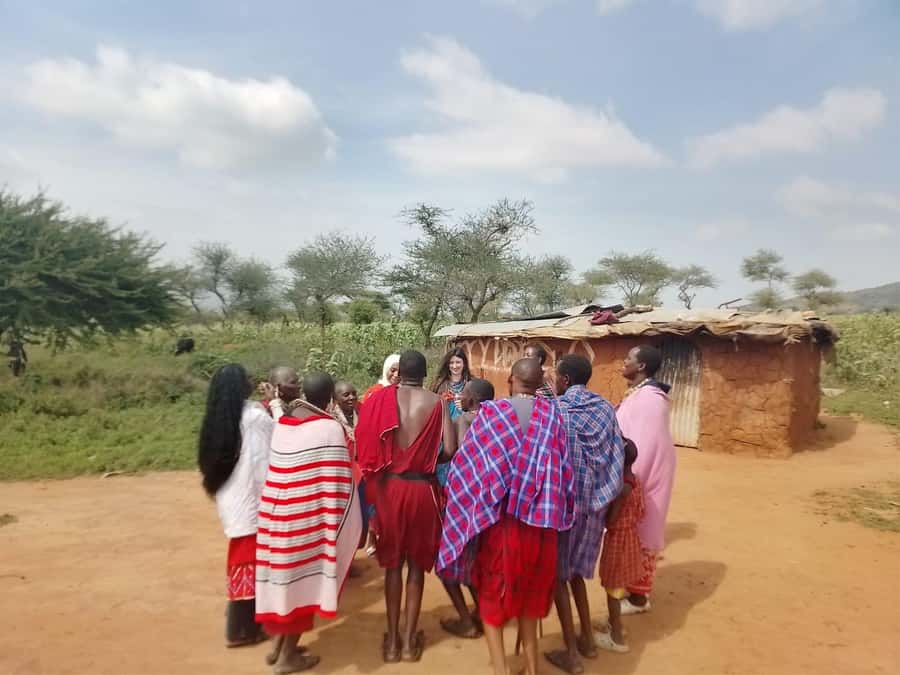
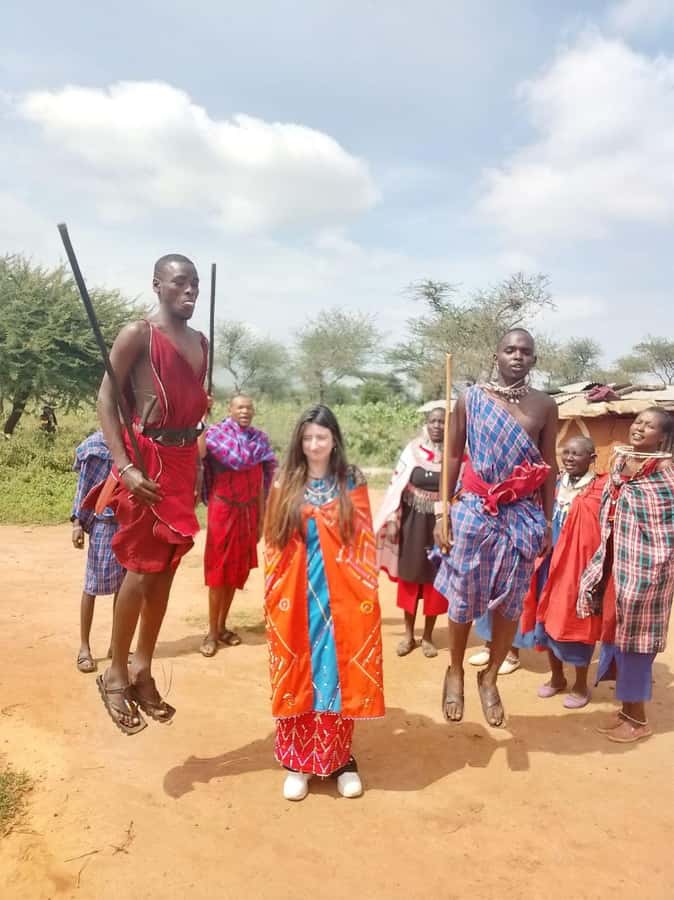
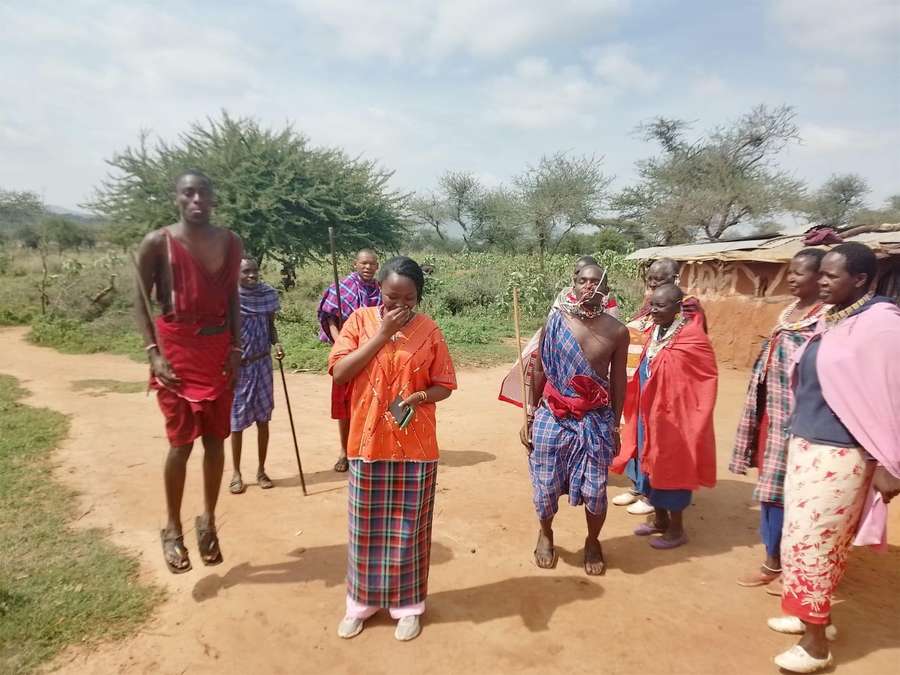
Arrival begins with a welcome from Maasai warriors and women. Expect traditional songs, energetic movement, and the familiar jumping dance associated with Maasai ceremonies and public presentations.
This opening gives the visit energy right away, but it is also the most performance-like part of the day. You are there to watch a prepared welcome, so it should not be confused with observing an ordinary private moment. That does not make it worthless. The songs and jumping are a direct way to introduce important forms of Maasai expression, provided you keep your expectations realistic.
Photography is part of the experience, and you are told that photos are allowed. Still, good manners matter. Ask before photographing individuals up close, especially children, and listen if your guide or hosts set limits. The day involves plenty of social contact, so this is not the right choice if you want a quiet, hands-off cultural visit.
The strongest praise for this part of the outing centers on the lively welcome, friendly hosts, and the chance to ask questions. You are not rushed through a photo stop and sent back to the vehicle. The aim is conversation, though the depth of that conversation can vary with the guide, group, and time available.
Inside a manyatta made from earth and branches
One of the more useful parts of the visit is entering a traditional manyatta. The hut is made from mud, sticks, and cow dung, materials chosen for practical reasons and shaped by local knowledge.
Inside, the guide explains how the homes are built, how families are organized, and how daily tasks take place. This gives you a better sense of Maasai life than a dance alone. A home is not a stage prop. It shows how shelter, family roles, cooking, and work fit together.
The visit is also a chance to ask direct questions about customs and beliefs. You may find that the explanation is broad rather than academic, but that can be a strength. The point is to hear local people describe their lives in an accessible setting, not to sit through a formal lecture.
The word traditional should not lead you to assume that every part of the village is untouched by modern life. One criticism of the experience is that the settlement can feel small and arranged for visitors. I would go ready to learn from the home and its construction without expecting a large permanent village that exists entirely outside tourism.
Making fire without matches
The fire-making demonstration is one of the best reasons to choose this outing over a standard sightseeing drive. You learn how the Maasai start a fire with traditional methods rather than matches, then get the chance to try it yourself.
This activity turns an abstract lesson into a physical one. You see the materials, watch the technique, and discover how much patience and control it takes. Even if you do not succeed immediately, the attempt helps you understand the skill involved.
It is also a good example of why the experience works best when you participate. Watching a guide make a fire takes a few minutes. Trying it yourself gives you a small connection to the practical knowledge being shared.
Do not expect a survival course or a long workshop. The supplied details do not promise advanced instruction or that everyone will successfully create a fire. Think of it as a short, memorable activity that opens a conversation about daily life and the use of local resources.
A few more options to weigh up in Nairobi
- Nairobi National Park Half-Day Tour; Free Wi-Fi connection
★ 5.0 · 878 reviews - Nairobi: National Park & Optional Elephants & Giraffe Center
★ 4.8 · 874 reviews - NAI NAMI: Nairobi Storytelling Tour with Street Children
★ 5.0 · 792 reviews - Nairobi National Park Half-Day Game Drive
★ 4.5 · 738 reviews
Cooking ugali with local women
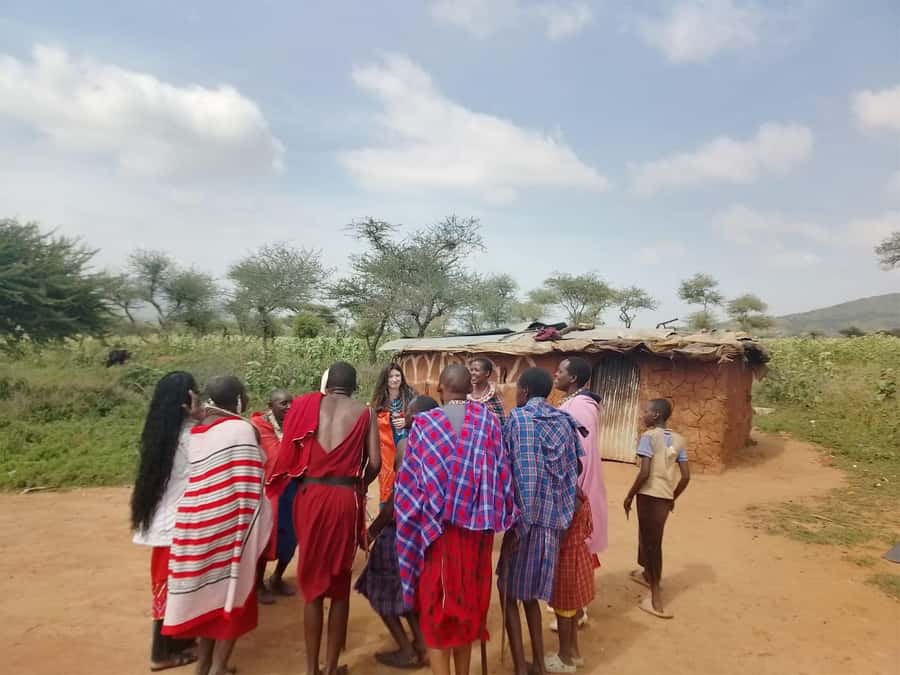
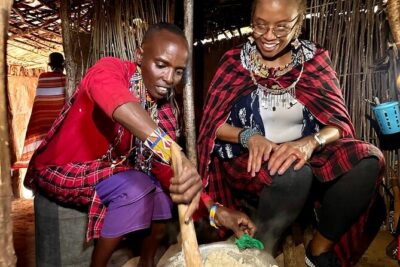
You also have a chance to prepare ugali with local women. This firm Kenyan staple is made from maize flour and is commonly served as part of a meal, though no meal is included in the tour price.
Cooking provides a natural setting for conversation. Instead of only asking what Maasai people eat, you take part in a basic kitchen task and see how food preparation fits into everyday life. The women guide you through the process, making this one of the more personal activities on the schedule.
The limits are worth noting. Since meals and extra drinks are not included, you should not book this expecting a full lunch. You may receive instruction and a taste or sample as part of the activity, but the information provided does not promise a complete meal. Ask your guide what food is available that day if you need lunch during the six-hour outing.
I like this stop because it adds ordinary domestic life to the visit. Songs and jumping make a strong first impression, but cooking helps balance the day with something quieter and more familiar.
Beadwork, identity, and buying directly
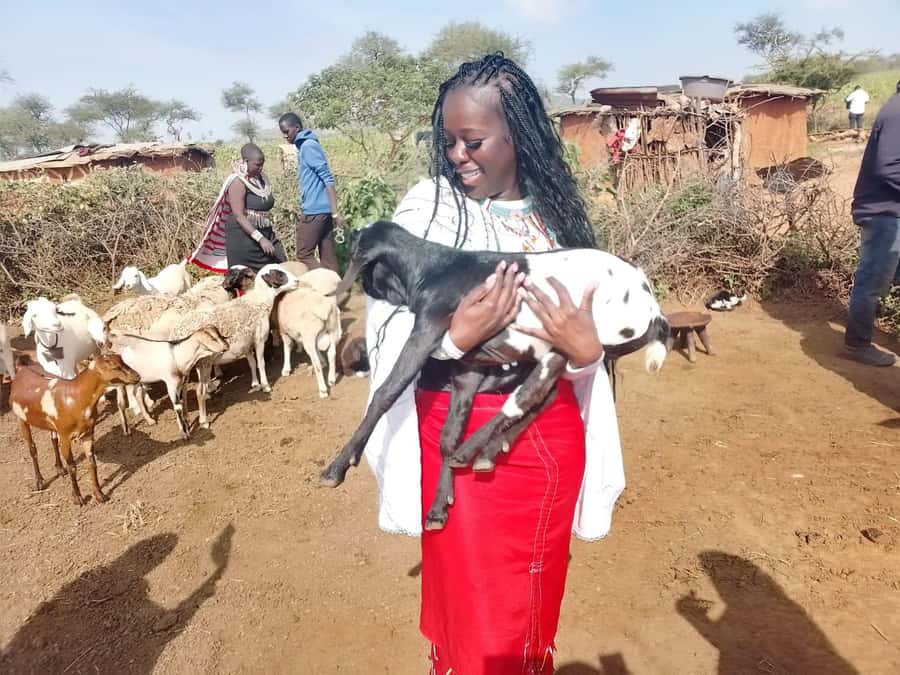
Beadwork is another hands-on activity. You can learn how intricate Maasai jewelry is made and try creating a piece yourself.
The beads are not just decoration. They form an important part of Maasai identity, and the designs can open a conversation about clothing, status, family, and community. The exact meaning of colors or patterns is not specified, so avoid assuming that every bracelet carries a fixed message. Let the local makers explain what their work means.
You can purchase handmade jewelry, with proceeds described as going directly to the village. This offers a more direct way to support the people hosting you than buying an unrelated souvenir in Nairobi. It also gives you something small and useful to remember the day by.
At the same time, buying should remain optional. The experience allows optional donations or gifts, and you should never feel that participation requires spending more. Set a budget before you arrive. A friendly conversation and a respectful visit should not depend on how much jewelry you purchase.
A livestock market on selected days
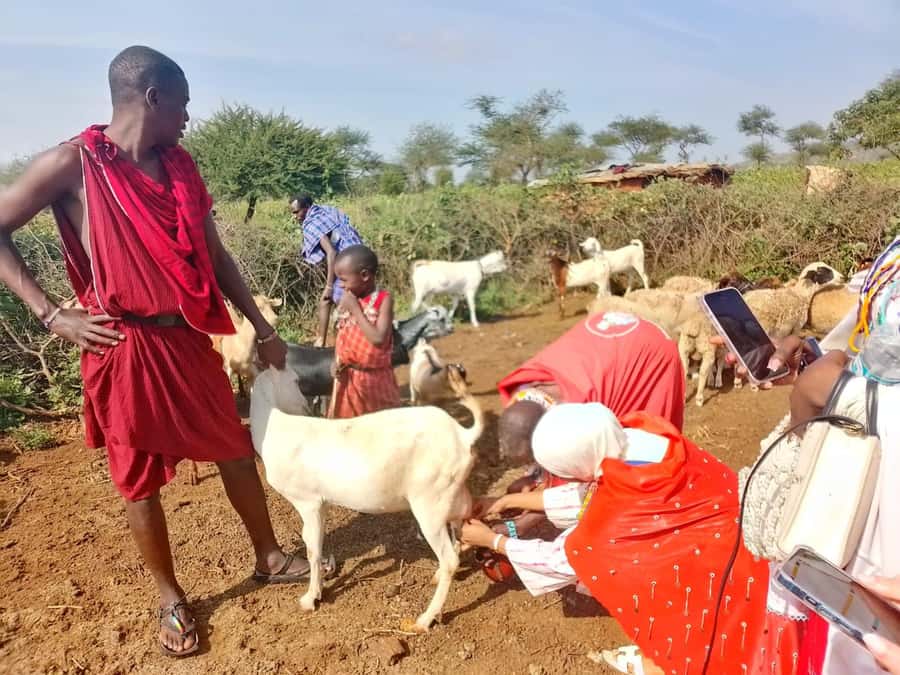
On selected days, the outing includes a visit to one of Kenya’s largest livestock markets. This is not guaranteed on every departure, so you should check the day’s schedule before booking if the market is important to you.
The market adds an economic side to the cultural picture. You may see Maasai herders trading cattle, goats, and sheep, and learn how livestock connects to work, family, and social life. That context helps you see the community as more than a collection of costumes, huts, songs, and souvenirs.
Because the visit happens only on certain days, the overall experience can vary. One group may spend more time at the village, while another may also see the movement and negotiation of a market. Ask about the market when confirming your pickup time so you know what kind of day you are getting.
Is $55 a good deal after the extra fee?
The advertised cost is $55 per person. That includes transport from and back to Nairobi, bottled water, a guided visit, and the listed activities. The village admission fee is not included and is stated as $30 per person, bringing the basic cost to $85 per person before meals, drinks beyond the supplied water, jewelry, donations, or other personal expenses.
At $85, the outing is not a cheap local stop. The value depends on what you want. If you care about small-group transport, guided conversation, and practical activities, the price may feel fair. If you expected to visit a large village for a short photo stop, the added fee may feel high.
There is also a pricing detail worth clarifying before you commit. One account described $110 as covering the two-hour drive and the additional $30 village fee, while the supplied booking details list $55 plus $30. I would ask for the complete per-person total before payment so there are no surprises.
The fee may support the village, and the activity description says donations and purchases can benefit local people without exploitation. Still, you should decide for yourself if the arrangement feels comfortable. A clear explanation of where the admission money goes can make the experience feel more transparent.
Guides, group size, and the feel of the day
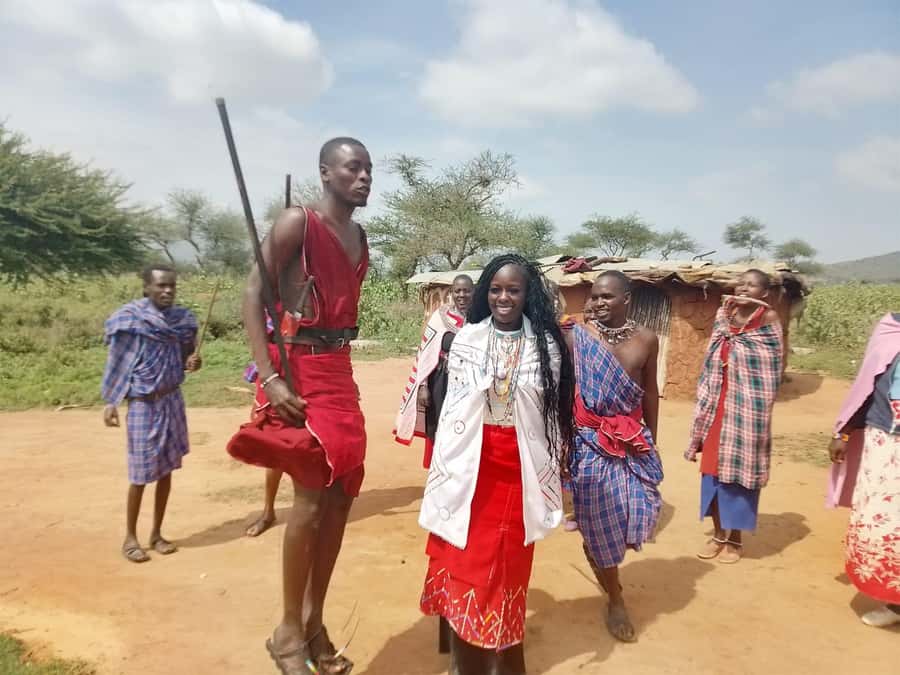
The group is limited to 10 people, a useful size for cooking, beadwork, questions, and hut visits. A large coach group would make those activities less personal, so the small-group promise matters here.
Ben is praised for being both a strong guide and a friendly companion. Jen and Ben are also described as accommodating and focused on helping the group have a good experience. Individual guides can shape the day, especially when the activity depends on conversation rather than fixed museum displays.
English is the listed language. Pickup is available from any location within Nairobi, and the provider confirms the exact pickup place and time after booking. Cancellation is free up to 24 hours ahead, and you can reserve now and pay later, which helps if your Nairobi schedule is still moving.
There is conflicting information about mobility. The booking details say wheelchair accessible, but the same information lists the experience as unsuitable for wheelchair users and people with mobility impairments. Do not rely on the accessibility label alone. Contact Great Moments Safaris Kenya before booking and ask about the vehicle, paths, hut entrance, ground surface, and toilet arrangements.
Who will enjoy this Maasai visit?
I would recommend it to you if you want more than a staged dance and are willing to join in. The fire-making, ugali cooking, beadwork, and manyatta visit give the day several layers, from performance to food to practical knowledge.
It suits first-time visitors to Nairobi who want a direct introduction to Maasai traditions without arranging a longer safari. It also works for photographers, provided you are comfortable with a social visit and ask permission before close-up shots.
I would be cautious if you require a fully private, non-commercial encounter. The village may be smaller than the name suggests, and the welcome, jewelry sales, and admission fee can make the visit feel organized for tourists. That does not erase the cultural value, but it does mean you should approach it as a hosted cultural experience, not an unobserved look at private life.
Should you book this tour?
Book it if you value participation, conversation, and practical demonstrations more than scale. The best parts are the fire-making, cooking, beadwork, hut visit, and warm guiding associated with Ben and Jen.
Skip it if the extra $30 fee, long drive, or possibility of a small family settlement will bother you. Before booking, confirm the final total, ask whether the livestock market is included on your date, and settle the accessibility question directly.
For the right person, this can be a memorable six-hour introduction to Maasai life. Go with respect, a flexible attitude, and realistic expectations about what a village visit can be.
FAQ
How long does the Maasai village experience last?
The experience lasts six hours, including pickup and drop-off within Nairobi and the drive to the village.
How much does the experience cost?
The listed price is $55 per person. A separate village admission fee of $30 per person is not included, so the stated base cost is $85 per person before meals and personal expenses.
Is hotel pickup included?
Yes. Pickup and drop-off are included from locations within Nairobi. After booking, you provide your address and receive a confirmed pickup time and exact meeting point.
What activities are included?
The activities include guided cultural learning, traditional fire-making, ugali cooking with local women, Maasai beadwork, songs, a jumping dance, and a visit inside a traditional manyatta.
Is food included?
No. Meals and extra drinks are not included. Bottled water is provided.
Can I buy Maasai jewelry?
Yes. You can purchase handmade jewelry, and the proceeds are described as directly supporting the village.
Is the livestock market included on every visit?
No. The livestock market is available on selected days only. Check the schedule before booking if this is important to you.
What language is used during the tour?
The listed tour language is English.
Can I take photographs?
Photography is part of the experience, and photos are allowed. You should still ask permission before photographing people closely.
Is the experience suitable for wheelchair users?
The information is conflicting. It is marked as wheelchair accessible in one section but also listed as unsuitable for wheelchair users and people with mobility impairments. Confirm the actual conditions with Great Moments Safaris Kenya before booking.
Just added in Nairobi
- Wildlife Capital: Half-Day Safari at Nairobi National Park★ 5.0 · 2 reviews
- 3 days maasai mara migration safari★ 4.5 · 7 reviews
- 4 Days Tour Landcruiser in Masai Mara and Lake Nakuru★ 5.0 · 10 reviews
- 4 Days Safari to Lake Nakuru N/P and Maasai Mara N/R★ 5.0 · 18 reviews
- Day Tour to Nairobi national park, Elephants, and Giraffe Center★ 3.5 · 8 reviews
- 6 Days Kenya Budget Group Safari★ 5.0 · 2 reviews
- Maasai Mara Day Trip★ 5.0 · 15 reviews
- 3 Days Masai Mara Wildebeest migration Budget safari★ 5.0 · 2 reviews
Maasai Village Visits, compared.
Day Tour to Amboseli National Park & Maasai Village
Read our review →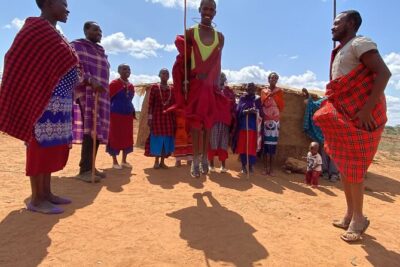

Day Trip: Amboseli National Park & Maasai Village – Nairobi
Read our review →
Day Trip to Maasai Mara Reserve & Maasai village
Read our review →
3days/2nights group joining Masai Mara with Masai Village Visit
Read our review →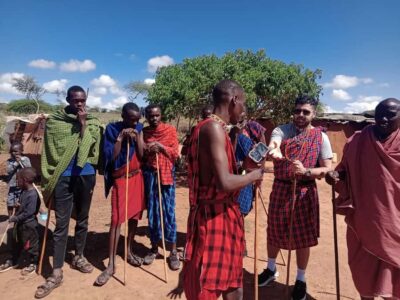
Kenya: Maasai Village Visit with Traditional Dance Show
Read our review →Browse the lists this tour appears in