
Reviewed · MAASAI VILLAGE VISITS
Kenya: Maasai Village Visit with Traditional Dance Show
Small villages can teach big lessons. This seven-hour outing from Nairobi offers a direct look at Maasai customs, including a traditional dance, a visit inside the houses, and time with local community members. I like the personal contact and the chance to support the village through its entry contribution. I also like that return transport and drinking water are included, making this a simple add-on to a Nairobi stay or safari.
The main drawback is the long road transfer. One visitor reported leaving Nairobi at 6:00 a.m. and spending about two hours on local roads before reaching a very small village. Vehicle quality may vary, and air conditioning is not guaranteed, so you should treat the ride as part of the day rather than a quick shuttle.
In This Review
- Key points to know before booking
- Why this village visit feels different from a standard safari stop
- Leaving Nairobi for the central Kenyan countryside
- Meeting the Maasai community
- Inside the Maasai houses
- Traditional dancing, jumping, and fire-making
- The village fee and the real cost
- How the guides shape the day
- Who should book this experience
- Booking, cancellation, and what to pack
- Should you book the Maasai village visit?
- FAQ
- How long does the Maasai village visit take?
- What is included in the price?
- Is the village entry fee included?
- Where can pickup take place in Nairobi?
- What should I bring?
- Can wheelchair users join the activity?
Key points to know before booking
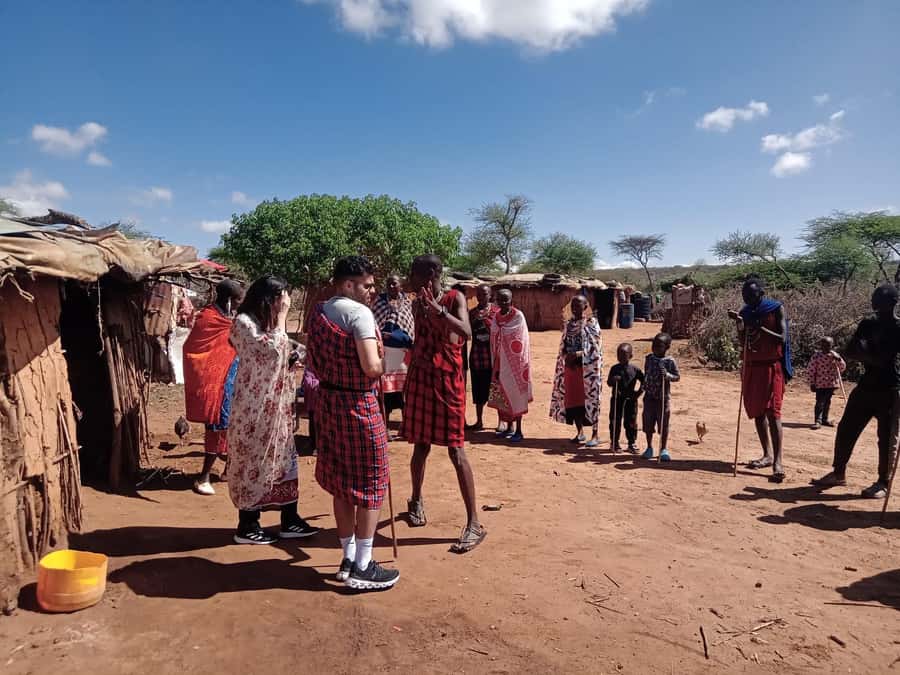
- Expect a small village rather than a large cultural center: One account described about three huts, three men, and five women. That can feel personal, but it may seem modest if you expect a major staged attraction.
- The dance is only one part of the visit: You may also see inside Maasai houses, watch fire-making, try spear throwing, jump with the performers, and sing together.
- The village contribution is extra: The advertised price is around $50, but the separate entry or community fee may cost about $30. Confirm the full amount before you go.
- Brian and Alfred receive especially warm praise: Brian is mentioned as a helpful guide, while Alfred is described as the Maasai leader who welcomes visitors and explains local customs.
- Plan for a full seven-hour morning or day: The village program lasts about two hours, with the rest of the time used for pickup, driving, and returning to Nairobi.
- Bring sun protection and patience: Comfortable shoes, a hat, sunscreen, water, a camera, and hand sanitizer will make the outing easier.
Why this village visit feels different from a standard safari stop
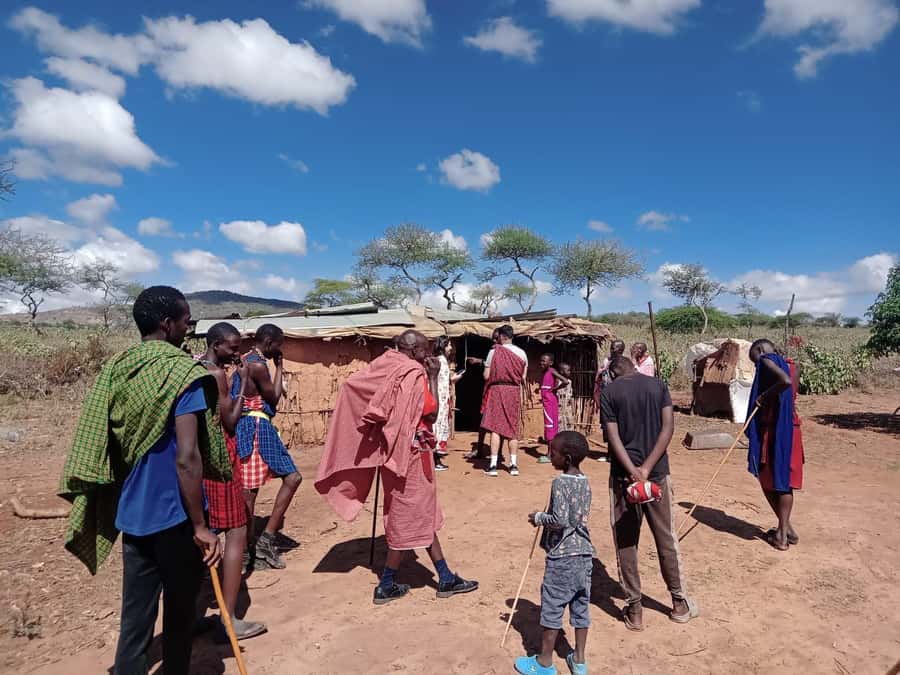
A safari shows you Kenya’s animals. This outing shows you the people whose lives and traditions are part of the country’s story. You are not simply looking across a vehicle roof at distant wildlife. You are invited into a Maasai setting, meet community members, and hear explanations of daily life and customs.
That human contact is the main reason to book. The experience includes a house tour, a traditional dance show, a scenic drive, and time to ask questions. The visit is active enough to keep the morning moving, but it is not a museum-style presentation with polished displays and long formal speeches.
The Maasai trace their own origins to the area north of Lake Turkana in northwestern Kenya. Oral history says the community began moving south in the 15th century, reaching the broad region of northern Kenya and central Tanzania during the 17th and 18th centuries. That background gives useful context to the village visit. You are seeing customs connected to a long migration story, not a performance detached from place.
Still, keep your expectations sensible. This is a short cultural encounter, not a full course in Maasai society. The quality depends heavily on the local guide, the day’s schedule, and the condition of the road. If you approach it as a chance to listen, observe, and ask respectful questions, it can be memorable. If you want a large production with many exhibits and a busy program, this may feel too small.
More Maasai village visits:
- Nairobi: Day Tour to Amboseli National Park & Maasai Village
★ 4.5 · 310 reviews - Masai village Day Tour Experience
★ 5.0 · 284 reviews - Maasai Village Experience Day Tour
★ 5.0 · 72 reviews
Leaving Nairobi for the central Kenyan countryside
Pickup is available from areas across Nairobi, including Karen, Westlands, Kilimani, Kileleshwa, Kitisuru, Loresho, and central Nairobi locations. You provide your address or a nearby landmark, then receive a pickup time and meeting point.
The flexibility is useful because Nairobi traffic can make exact timing tricky. A very early start is possible, and one account describes pickup at 6:00 a.m. The early departure may help you avoid some traffic, though you should be ready for a long morning.
Return road transport is included, but comfort can vary. One vehicle was described as old and dirty, with weak or nonworking air conditioning. Another account said there was no air conditioning, though the cooler December weather made that manageable. This is important practical information: ask about the vehicle if you are sensitive to heat, dust, or long drives.
Local roads can add time. One visitor reported roughly two hours of driving before reaching the village. The precise journey depends on your pickup point and the day’s road conditions, but the seven-hour duration makes sense once you allow for Nairobi pickup, the rural drive, the village visit, and the return.
I would bring a light scarf or face covering if dust bothers you, though the listed essentials are comfortable shoes, sunscreen, a sun hat, water, a camera, and hand sanitizer or tissues. Smoking, alcohol, and drugs are not allowed, and you are asked not to touch plants.
Meeting the Maasai community
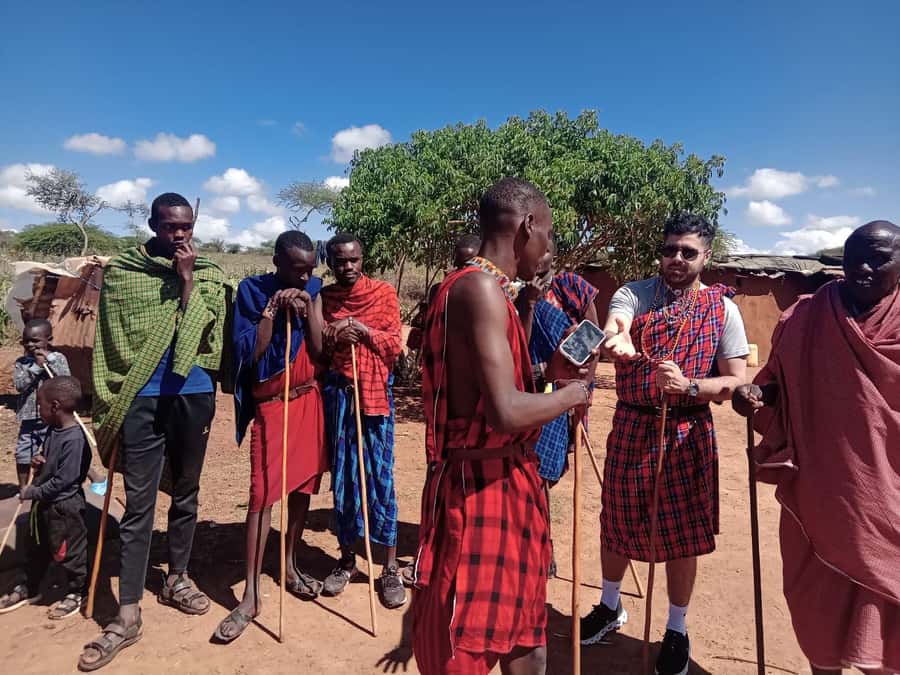
On arrival, the visit begins with an introduction to the village and its people. The local leader or guide explains Maasai traditions and customs, giving you a better idea of how the community lives.
Alfred is specifically mentioned as the tribe leader who welcomes visitors. That personal greeting matters because it frames the visit as an exchange with a community, not simply a photo stop. Brian, the English-speaking guide, is also praised for answering questions about Maasai culture and Kenya. Suffik is noted for coordinating the outing, which may be useful if you need help with pickup arrangements or last-minute booking.
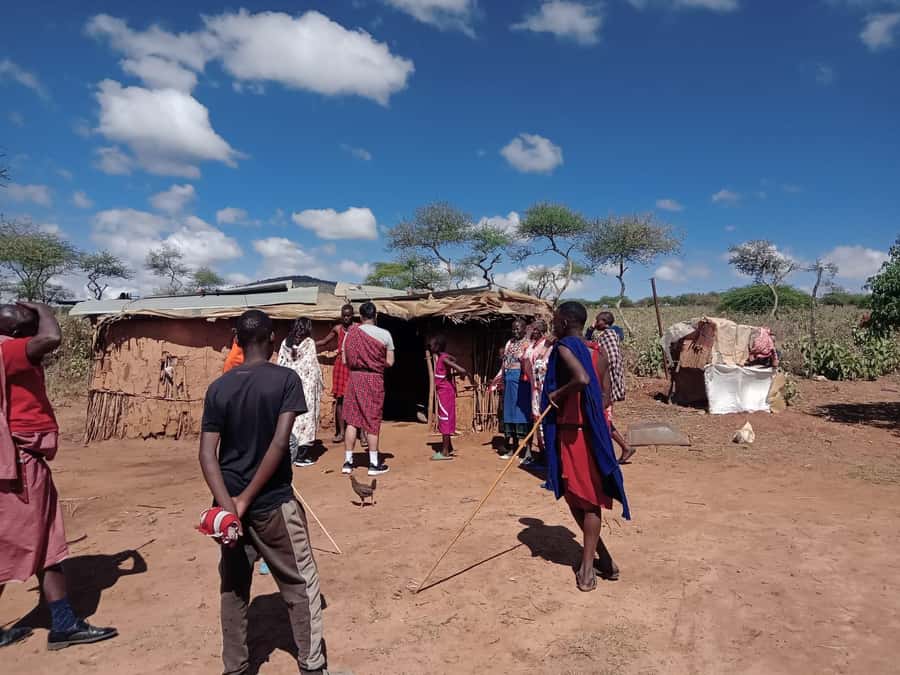
The village may be quite small. A detailed account described three huts and a small group of men and women. That scale can be a strength. You may have more room to ask questions and observe without being swept through a large crowd.
It can also create a less polished experience. A small village may have limited facilities, fewer demonstrations, and a shorter formal program. The same account found about an hour was enough for the activities, even though the scheduled village portion is listed as two hours. That suggests the exact length can change depending on the day and what is happening when you arrive.
Respect is essential here. Ask before taking close-up photographs, listen when customs are explained, and remember that the people you meet are not actors in a theme park. The experience includes shopping and personal expenses, so you may be offered locally made items. Buy only what you genuinely want, and carry small amounts of cash if you intend to purchase something.
Inside the Maasai houses
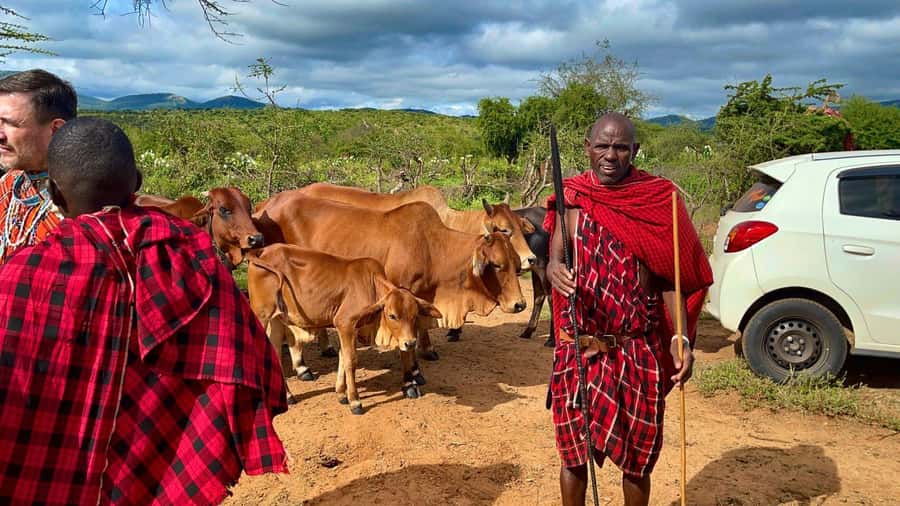
The house tour is one of the most useful parts of the visit because it moves the experience beyond dancing and photographs. You can see the interior of a traditional Maasai home and gain a better sense of how domestic space is arranged.
The available information does not specify every feature of the houses, so you should not expect a detailed architectural lecture. Instead, use the opportunity to ask how the homes are built, who uses them, how daily tasks are divided, and how traditional housing fits with modern life.
The house visit also helps balance the public performance. Dance and jumping are lively, but a home shows the quieter side of community life. You get a glimpse of how people organize their surroundings rather than only seeing a presentation prepared for visitors.
Because this is a working community, conditions may be basic. You may need to walk over uneven ground, and there is no promise of extensive seating or indoor comfort. Wear shoes that can handle a dusty or rough path, and keep your camera secure while walking.
A completely different kind of day:
- Nairobi National Park Half-Day Tour; Free Wi-Fi connection
★ 5.0 · 878 reviews - Nairobi: National Park & Optional Elephants & Giraffe Center
★ 4.8 · 874 reviews - NAI NAMI: Nairobi Storytelling Tour with Street Children
★ 5.0 · 792 reviews - Nairobi National Park Half-Day Game Drive
★ 4.5 · 738 reviews
Traditional dancing, jumping, and fire-making
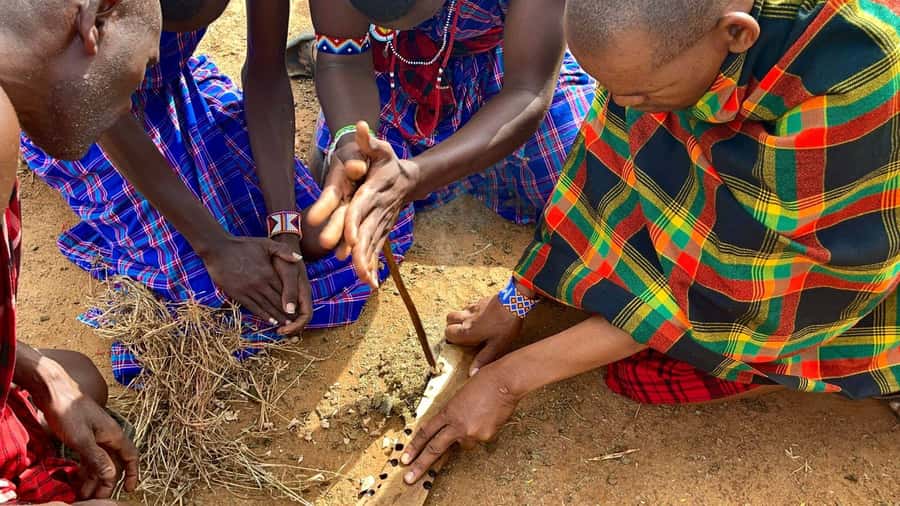
The dance show is the most theatrical section of the visit. Expect singing, jumping, and traditional movement, with an invitation to take part in some activities. One account describes joining the singing, trying a jump, watching fire-making, and learning how to throw a spear.
These activities make the visit more engaging than simply standing back with a camera. You can watch first, then decide how much you want to join. If you are uncomfortable participating, you can still enjoy the music and movement from the side.
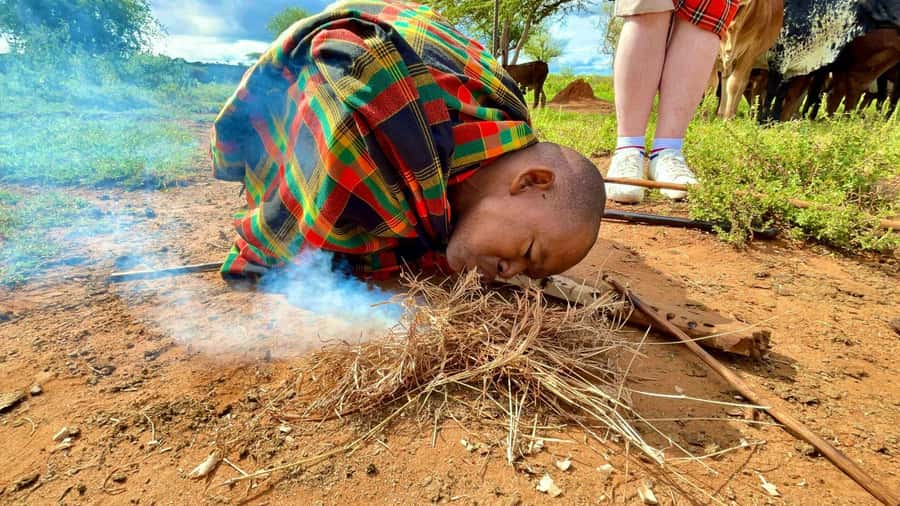
The fire-making demonstration offers a different kind of interest. It shows a practical skill rather than a purely ceremonial one. The spear lesson is also presented as an introduction to a traditional tool, not as a hunting expedition. Follow the guide’s instructions carefully and do not handle anything without permission.
This is still a performance for visitors, so it is fair to recognize that the show has a staged element. That does not make it worthless. Cultural demonstrations often provide a way for communities to explain traditions and earn income. The important question is how respectfully the exchange is handled. Here, the village fee is intended to support community development, giving the visit a direct financial purpose.
The village fee and the real cost
The advertised price is around $50 per person, with prices described elsewhere as varying from about $25 to $60. The return transfer, traditional dancing, house tour, and drinking water are included.
The confusing part is the community fee. The experience information also lists a $30 entry fee as not included, while another description says the price may include a contribution to the village. In practical terms, do not assume the displayed price is your final cost. Ask whether the village contribution is already covered and how much you will pay on arrival.
If the total comes to around $50 to $60, the value depends on your priorities. You are paying for a full day of transport from Nairobi, an English-speaking driver, access to a village, a guided cultural introduction, a dance show, a house tour, and a contribution to community development. For a private or small-scale cultural outing, that can be reasonable.
Meals and drinks beyond the supplied water are not included. Carry water and snacks, particularly if you have an early pickup. The driver may stop during the return journey, but that is not a guaranteed meal arrangement. One kind driver stopped for chai at a café and paid for the drink, but you should treat that as a generous extra, not part of the package.
Personal expenses, including shopping and tips, are also separate. You may be asked for a tip after the entry fee, so decide in advance what you are comfortable giving. A polite explanation of all charges at the start would make the day easier, and you should request that clarification before departure.
How the guides shape the day
Guide quality matters a great deal on a cultural visit. Brian receives particularly strong praise for being friendly, helpful, and able to answer questions about Maasai culture and Kenya. Alfred is described as a warm local leader who explains daily life and cultural practices.
Those names are worth noting when you confirm your booking. Ask who will accompany you, who will lead the village portion, and whether your driver is also your main guide. The driver’s role can affect the whole day because of the long road transfer.
There is one warning sign in the feedback: one local guide was repeatedly distracted by phone calls during the explanation. That kind of interruption can weaken a short visit, especially when you have driven for hours to reach the village. It is reasonable to expect the guide to give the group focused attention during the formal talk.
Communication is in English. If you want to understand specific customs, prepare a few questions before leaving Nairobi. Ask about family life, housing, ceremonies, work, cattle, education, and how older traditions are changing. Good questions can turn a brief visit into a much more thoughtful conversation.
Who should book this experience
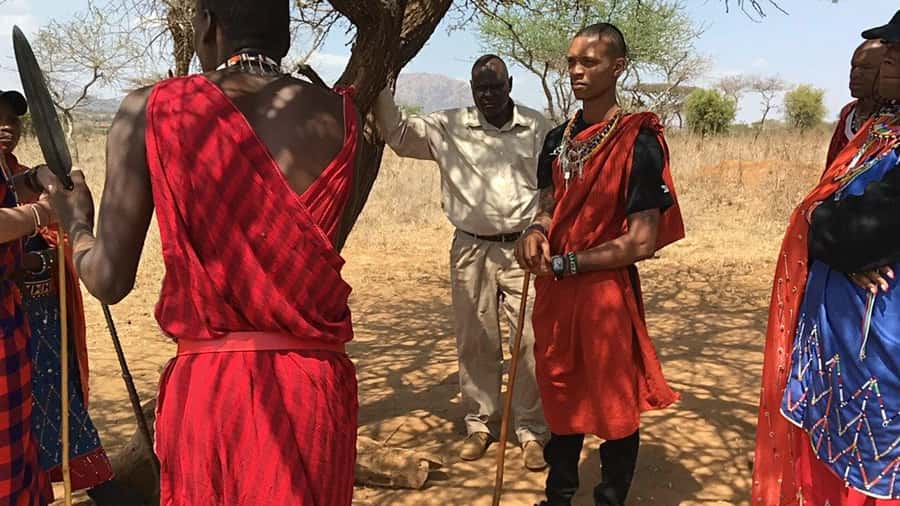
I would recommend it to you if you want a human encounter to add to a wildlife safari. It suits adults and older children who can manage a long vehicle ride, uneven walking, sun, and a basic village setting.
It is also a good choice if you prefer a smaller community visit to a large commercial cultural center. The reported village was tiny, and that may give the morning a more direct feel. You will have less spectacle, but you may gain more personal contact.
I would hesitate if you have limited time in Nairobi and do not want to spend much of the day on the road. The village program itself may last about an hour to two hours, while the total outing takes seven hours. You should also think twice if vehicle comfort is a major concern.
The experience is not suitable for children under five, pregnant women, or people with mobility impairments. The information is inconsistent about wheelchair access: one section says wheelchair access is available, while another says wheelchair users are not suitable for the activity. Confirm this directly before paying, especially because the village ground may be uneven.
Booking, cancellation, and what to pack
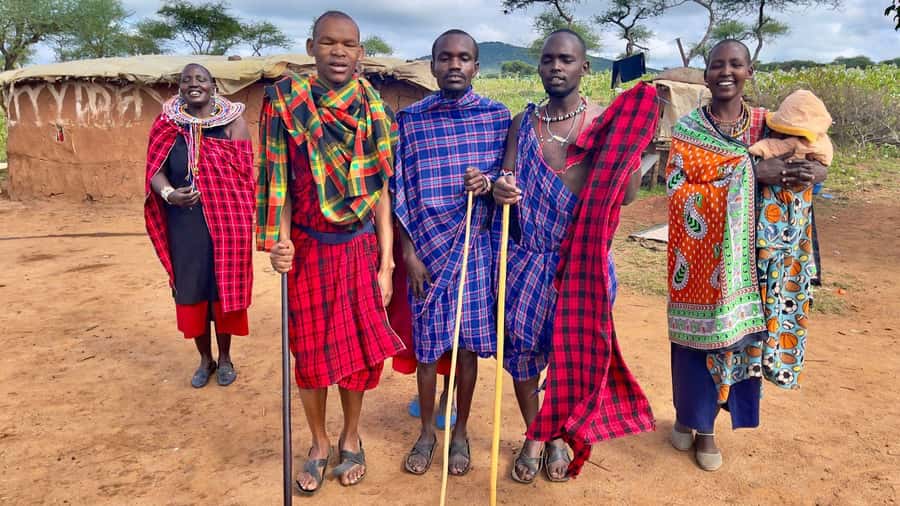
Pickup is available from a wide range of Nairobi neighborhoods, and you should provide a precise address or landmark. Free cancellation is available up to 24 hours before the activity, and you can reserve now and pay later, which helps if your safari schedule is still shifting.
Pack light. Your essentials are:
- Comfortable walking shoes
- A sun hat
- Sunscreen
- Water
- A camera
- Hand sanitizer or tissues
A snack is sensible because meals are not included. Wear breathable clothing that covers you comfortably in strong sun, and keep valuables close during the drive and village walk.
The activity is offered in English, and the driver speaks English. Since the road transfer can be long, use the drive to rest, watch the countryside, and save your energy for the village program.
Should you book the Maasai village visit?
Book it if you want a modest, direct cultural experience and you accept that the village may be very small. The strongest reasons are the personal welcome from people such as Alfred, the helpful guidance associated with Brian, the house tour, and the chance to join traditional singing, jumping, fire-making, and spear-throwing demonstrations.
Do not book it expecting luxury transport, a large cultural center, or a tightly polished show. Confirm the vehicle, the exact village fee, the total price, and who will guide you. If those details are clear, the experience offers solid value at roughly $50 to $60 for a seven-hour outing, especially when community support matters to you.
FAQ
How long does the Maasai village visit take?
The full experience lasts about seven hours, including pickup and return transport from Nairobi. The village portion is scheduled for about two hours.
What is included in the price?
Return road transfers, traditional Maasai dances, a house tour, and drinking water are included.
Is the village entry fee included?
The information gives conflicting details. It lists a separate entry fee of about $30, while another price description says the village contribution may be included. Confirm the exact total before departure.
Where can pickup take place in Nairobi?
Pickup is available from Nairobi locations including Karen, Westlands, Kilimani, Kileleshwa, Kitisuru, Loresho, and Nairobi County addresses. Provide your address or a nearby landmark when booking.
What should I bring?
Bring comfortable shoes, a sun hat, sunscreen, water, a camera, and hand sanitizer or tissues. Meals and drinks are not included.
Can wheelchair users join the activity?
The information is inconsistent. One section says the activity is wheelchair accessible, while another says it is not suitable for wheelchair users. Confirm the conditions directly before booking.
Just added in Kenya
- Wildlife Capital: Half-Day Safari at Nairobi National Park★ 5.0 · 2 reviews
- 3 days maasai mara migration safari★ 4.5 · 7 reviews
- 4 Days Tour Landcruiser in Masai Mara and Lake Nakuru★ 5.0 · 10 reviews
- 4 Days Safari to Lake Nakuru N/P and Maasai Mara N/R★ 5.0 · 18 reviews
- Day Tour to Nairobi national park, Elephants, and Giraffe Center★ 3.5 · 8 reviews
- 6 Days Kenya Budget Group Safari★ 5.0 · 2 reviews
- Maasai Mara Day Trip★ 5.0 · 15 reviews
- 3 Days Masai Mara Wildebeest migration Budget safari★ 5.0 · 2 reviews
Maasai Village Visits, compared.

Day Tour to Amboseli National Park & Maasai Village
Read our review →



Day Trip: Amboseli National Park & Maasai Village – Nairobi
Read our review →
Day Trip to Maasai Mara Reserve & Maasai village
Read our review →
3days/2nights group joining Masai Mara with Masai Village Visit
Read our review →
Browse the lists this tour appears in