
Reviewed · MAASAI VILLAGE VISITS
Maasai Cultural Village Tour: Traditions, Dance & Daily Life
A village visit with real participation. This six-hour outing from Nairobi takes you to Bisil, near Kajiado, where you can join a Maasai jumping dance, try daily tasks such as goat milking and ugali cooking, and make your own beadwork. I especially like the hands-on format and the chance to meet villagers through simple shared activities rather than only watching a staged performance. The savannah scenery along the road adds plenty of interest.
The main consideration is cost and timing. The advertised price is $50 per person, but the Maasai activities fee adds another $30, before any donation or souvenir purchase. You also leave Nairobi around 6:00 in the morning and spend about two hours each way in the van, so this suits you best if you want a full cultural outing rather than a quick city excursion.
In This Review
- The best parts of this six-hour village visit
- Leaving Nairobi at 6:00 for Bisil
- Arriving in a Maasai village near Kajiado
- Joining the Maasai dance and call-and-response singing
- Trying goat milking and preparing ugali
- Making beadwork and browsing village crafts
- A practical look at the $50 price
- What to bring and what to leave behind
- Private groups, small groups, and the pace of the day
- Who will enjoy this Maasai cultural experience?
- Should you book the Bisil village tour?
- FAQ
- Where is the Maasai Cultural Village Tour located?
- How long does the tour last?
- What time is pickup?
- Is hotel or airport pickup included?
- What activities are included at the village?
- Is the $30 Maasai activities fee included in the $50 price?
- Are donations included?
- What language is spoken on the tour?
- Is the tour wheelchair accessible?
- Can I cancel the tour?
The best parts of this six-hour village visit
- The jumping dance is participatory: You do not only watch the rhythmic calls and responses. You can join the singing and dancing.
- Daily work becomes the lesson: Goat milking, ugali cooking, and beadwork give you a clearer sense of ordinary routines.
- Nancy and Daniel receive high praise: Their translation and friendly guidance helped one visitor speak directly with a Maasai woman.
- The road trip has a useful halfway stop: Kitengela Mall provides a bathroom, snacks, and ATM access before the rural visit.
- Your donation can be practical: Teaching materials, cooking oil, rice, wheat flour, and clothes are suggested items for the local community.
- The outing is flexible in format: Private and small-group options are available, with hotel and airport pickup included.
Leaving Nairobi at 6:00 for Bisil
Your guide collects you from a hotel lobby, airport, or another listed pickup point in Nairobi. Options include Four Points by Sheraton Nairobi Hurlingham, Eka Hotel, Ole Sereni, Sarit Centre, Wilson Airport, Jomo Kenyatta International Airport, Karen, Gigiri, Westlands, Kilimani, and several roads around the city.
Be ready at least 10 minutes before the agreed pickup time. That small bit of discipline matters in Nairobi, where a morning departure can involve several pickups and city traffic. You travel in an air-conditioned van with bottled water and onboard WiFi, which makes the two-hour journey more comfortable.
The road to Bisil is part of the experience. You leave the city behind and see the scenery change as Nairobi gives way to open savannah country. The tour description refers to the earthy scent of the area, and that detail helps set expectations: this is not a polished cultural center inside town. You are heading to a rural community where the setting is part of the lesson.
About halfway along, the guide stops at Kitengela Mall. You can use the bathroom, buy snacks, or visit an ATM. I consider this a useful practical feature, especially because the day includes a long drive and village activities. Bring cash anyway, since you may want to purchase beadwork or contribute supplies to the community.
More Maasai village visits:
- Nairobi: Day Tour to Amboseli National Park & Maasai Village
★ 4.5 · 310 reviews - Masai village Day Tour Experience
★ 5.0 · 284 reviews - Maasai Village Experience Day Tour
★ 5.0 · 72 reviews
Arriving in a Maasai village near Kajiado
Bisil is the main destination, and you have roughly four hours there for the village visit, photographs, cultural activities, and arts and crafts. The pace appears designed to give you time to participate instead of rushing through a short photo stop.
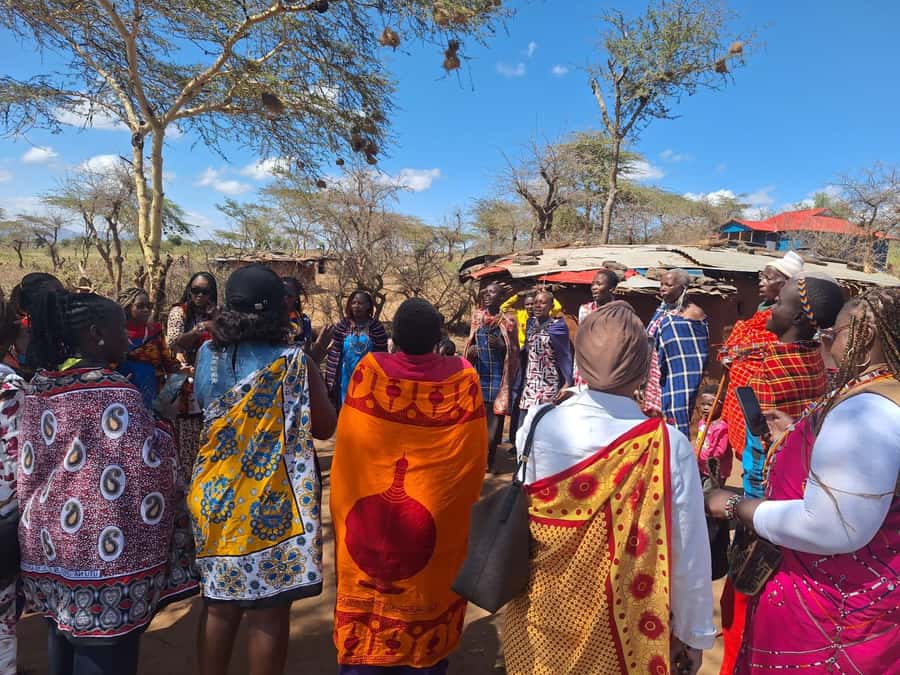
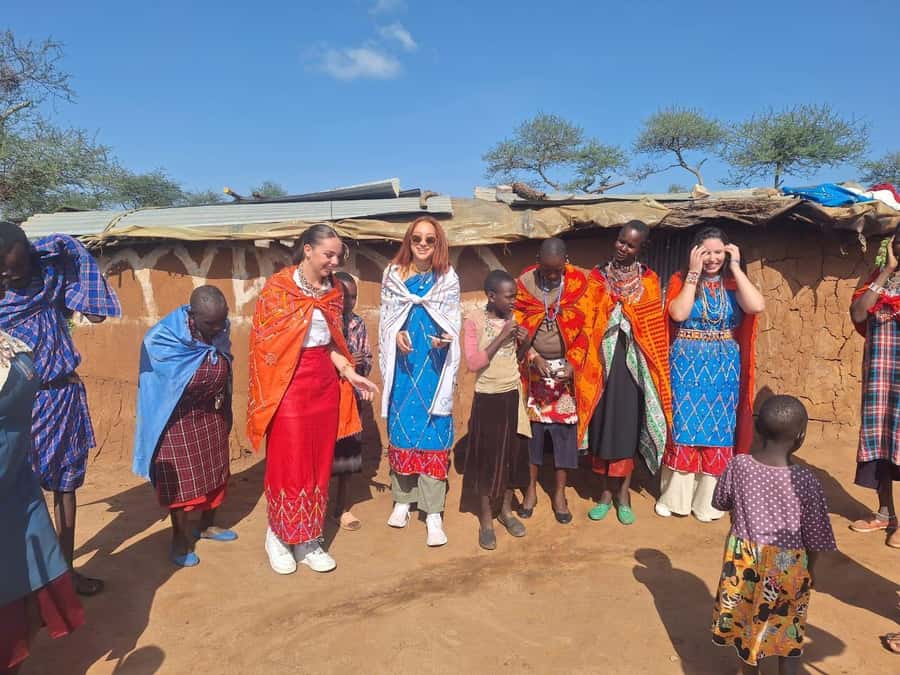
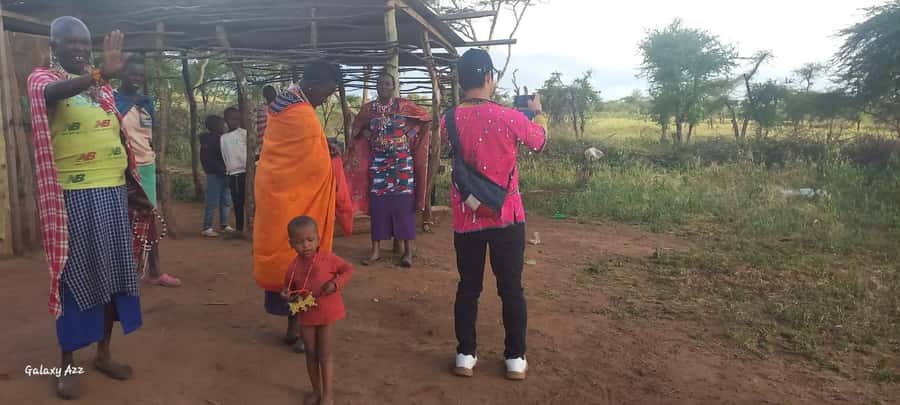
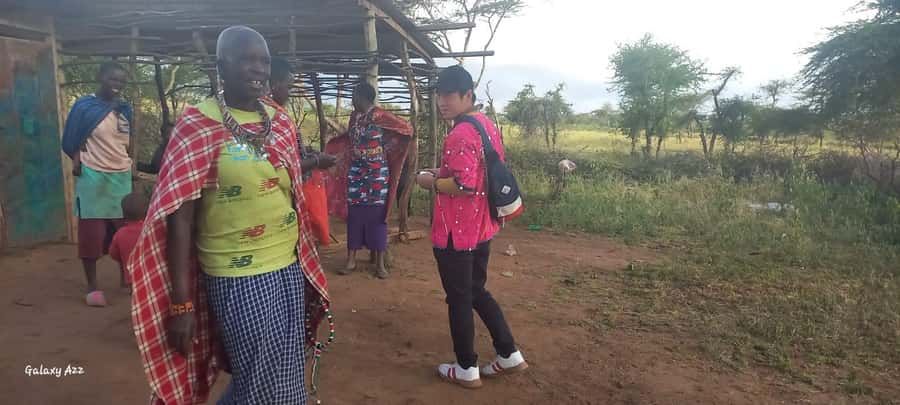
Expect a warm welcome from smiling villagers and an introduction to Maasai clothing and jewelry. One especially memorable part of the visit can come right at the start: you may be dressed in traditional clothing and offered beaded jewelry. This gives you a visual connection to the community, but it is also worth approaching respectfully. Ask before taking close photographs, and treat the clothing as part of someone’s culture, not simply as a costume for a picture.
A useful feature of this experience is the direct conversation. At least one Maasai woman who met the group spoke English, while guide Nancy translated questions and answers in Swahili when needed. That arrangement allows you to ask about daily life without relying only on a rehearsed explanation. Guide Daniel also helps lead the visit.
The strongest praise for the guides centers on Nancy and Daniel’s personal care. They were described as going out of their way to make the visit memorable, which matters on a cultural tour. A good guide does more than keep the schedule. The guide helps you understand when to ask a question, how to take part, and how to avoid treating a community visit like a quick performance.
Joining the Maasai dance and call-and-response singing
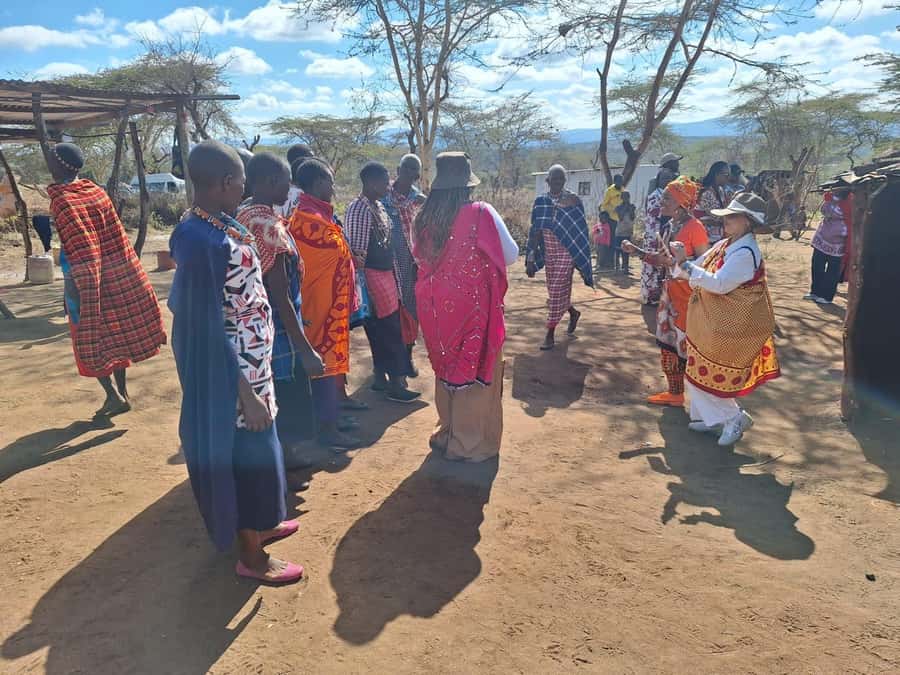
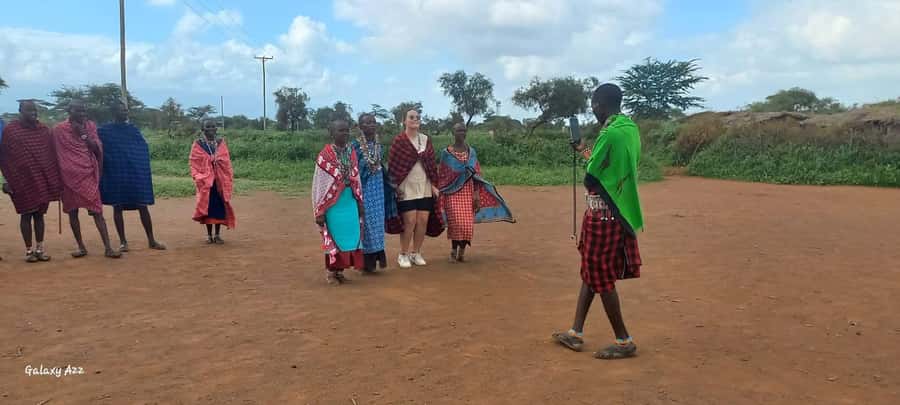
The traditional dance is the most lively part of the day. You can watch the performers, listen to the rhythmic singing, and join in with the famous jumping dance. The call-and-response structure gives you an easy way to take part, even if you do not know the songs.
You should not expect a polished theater show with a fixed stage and a large production. The appeal is the direct exchange. The singing, movement, and group energy give you a short but memorable introduction to a form of expression that is closely tied to Maasai identity.
One visitor particularly enjoyed watching the songs and dances before joining the group. That sequence may suit you if you feel shy at first. Watch the rhythm, follow the guide, and step in when you are ready. You do not need to perform perfectly. The point is to participate respectfully and enjoy the moment.
The activity does require physical movement, and the tour is specifically not suitable for people with back problems. If jumping or repeated movement may cause discomfort, you should consider staying on the viewing side or choosing a less active cultural experience. The information also says the tour is wheelchair accessible, so it is sensible to discuss your exact needs with the provider before booking, especially since the village activities themselves may involve uneven outdoor surfaces or physical tasks.
Trying goat milking and preparing ugali
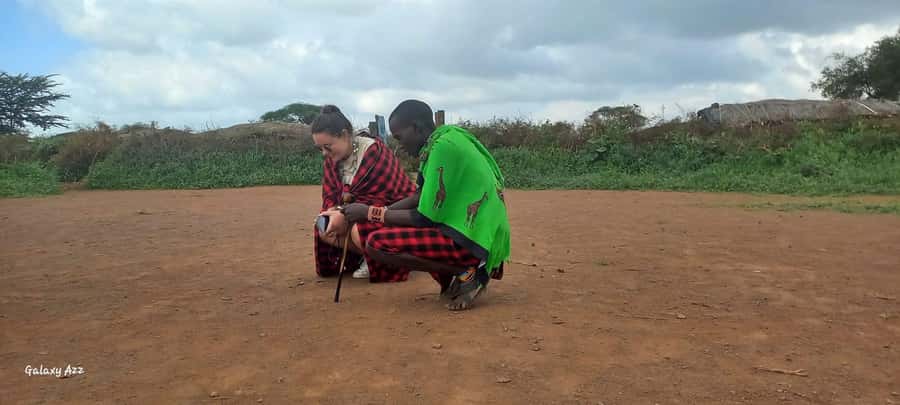
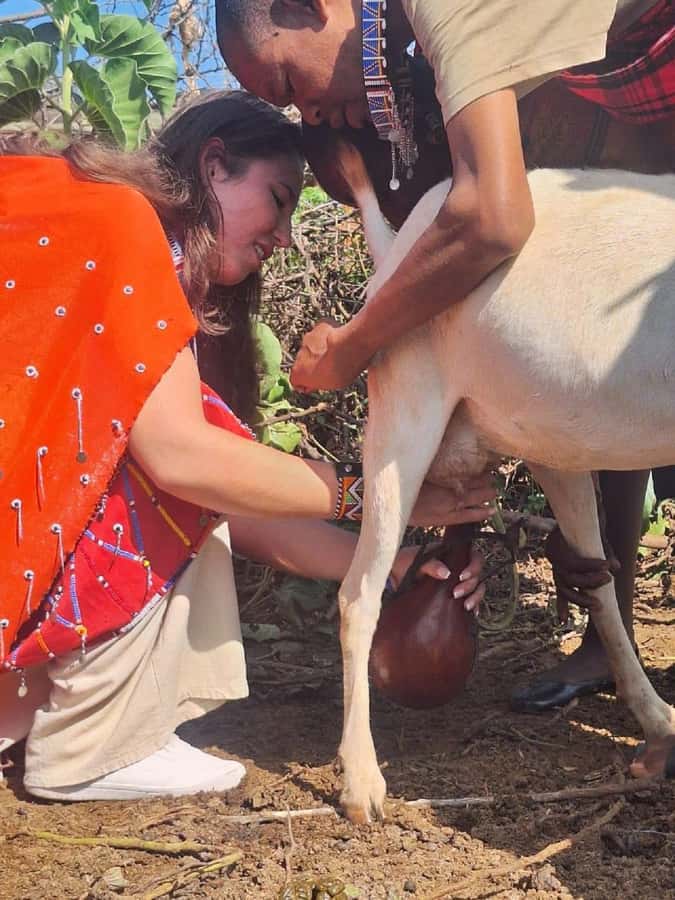
This tour works best when you treat the village as a place to learn by doing. Goat milking is one of the listed activities. You can try it yourself, though the level of hands-on access may depend on the animal, the guide, and the comfort of the people hosting you.
One visitor chose not to milk the cows and goats because of concern about hurting the animals through inexperience, but still enjoyed watching the process. That is a sensible choice. You should never feel pressured to handle an animal, and observing carefully can be just as useful as trying it yourself.
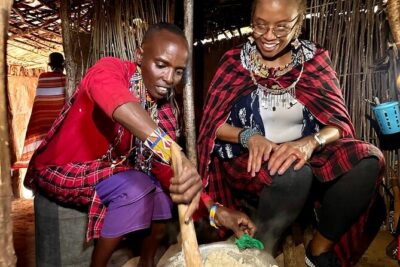
Cooking ugali adds another practical lesson. Ugali is a firm maize-based staple widely associated with everyday meals in Kenya. Here, the value is not just tasting food. You get a look at the work involved in preparing a basic dish and a chance to connect food with daily routine.
The cooking activity also helps keep the experience grounded. You are not only hearing about Maasai life in broad terms. You are handling familiar household tasks and seeing how food, animals, family life, and community work connect. The information provided does not promise a full meal, so bring snacks for the drive and do not book this expecting a restaurant-style lunch.
A completely different kind of day:
- Nairobi National Park Half-Day Tour; Free Wi-Fi connection
★ 5.0 · 878 reviews - Nairobi: National Park & Optional Elephants & Giraffe Center
★ 4.8 · 874 reviews - NAI NAMI: Nairobi Storytelling Tour with Street Children
★ 5.0 · 792 reviews - Nairobi National Park Half-Day Game Drive
★ 4.5 · 738 reviews
Making beadwork and browsing village crafts
Beadwork is another activity you can try, and you can make your own piece to take home. This is a better souvenir than a generic airport purchase because it connects directly to the people and skills you encountered during the visit.
Take your time here. Ask how the piece is made, what the colors or patterns mean if the maker is willing to explain, and how much work goes into it. The tour also includes a visit to an arts and crafts market, where souvenirs are available for purchase.
The price of a souvenir is not included in the tour. Carry cash and decide in advance how much you want to spend. Buying directly from local makers can support the community, but you should still choose items because you genuinely like them rather than feeling obliged to purchase.
The beadwork activity is also a good fit for people who prefer a quieter cultural exchange. After the movement and singing, sitting down to create something gives you time to talk and observe. It is suitable for families and adults who enjoy crafts, though the available details do not specify a minimum age or the exact items you will make.
A practical look at the $50 price
At first glance, $50 per person is a moderate price for a six-hour private or small-group experience from Nairobi. It includes hotel or airport pickup and drop-off, a professional English-speaking guide, an air-conditioned vehicle, bottled water, and WiFi onboard.
The important detail is the separate $30 Maasai activities fee. That brings the basic cost to $80 per person, not including donations or souvenirs. You should calculate the full amount before booking so the price does not surprise you later.
For that total, you are paying not only for admission to a village. You are also covering transport for roughly four hours of driving, guide services, organization, and several activities. I see reasonable value here if you want a structured cultural visit and do not have your own transport.
The value is weaker if your main goal is a short dance performance or a quick photo stop. In that case, the long road time and extra activity fee may feel heavy. This outing makes more sense when you want to spend several hours learning, talking, cooking, crafting, and taking part.
Donations are optional and separate. Suggested items include teaching materials, cooking oil, rice, wheat flour, and clothes. These are more useful choices than random gifts, but you should bring them only if you can do so comfortably. Cash is also useful for crafts and snacks.
What to bring and what to leave behind
Pack a camera, snacks, cash, a charged smartphone, and a power bank. Your phone can help with photographs, communication, and keeping your battery alive during the long day. Bottled water is included, but extra snacks are wise because the schedule does not promise a full meal.
Professional cameras are not allowed. A normal camera or smartphone is the practical choice. Ask before photographing people, animals, homes, clothing, or ceremonies. A respectful question is more important than getting one more picture.
Wear clothing that lets you move comfortably and does not make you worry about dust or activity. The supplied information does not set a dress code, so I would choose practical daywear and sensible shoes rather than anything delicate or formal.
If you have back problems, think carefully before booking. The dance and village activities may involve standing, walking, bending, or jumping. The tour is listed as wheelchair accessible, but you should still explain your mobility needs in advance so the provider can clarify how the activities can be adapted.
Private groups, small groups, and the pace of the day
You can book this experience as a private or small-group tour. That choice can shape the whole visit. A private group may make it easier to ask questions, spend more time on beadwork, and set a comfortable pace for photography and conversation. A small group can be a pleasant way to share the dance and keep the cost practical, depending on the booking arrangement.
The total duration is six hours, including the drive. The village portion is scheduled for about four hours, which gives the day a clear rhythm:
- Morning pickup in Nairobi
- About two hours by van to Bisil
- A stop at Kitengela Mall for facilities, snacks, and an ATM
- Roughly four hours of village activities
- Return drive and drop-off at your original area
Drop-off options cover many of the same parts of Nairobi as pickup, including Mombasa Road, Lower Kabete Road, Kilimani, Karen, Gigiri, Westlands, Wilson Airport, and Jomo Kenyatta International Airport. Confirm your exact point when booking, especially if you have a flight or another fixed appointment later in the day.
The tour offers free cancellation up to 24 hours before departure and a reserve-now, pay-later option. Those policies are helpful if your Nairobi plans are still moving around, but they do not remove the need to plan the early start.
Who will enjoy this Maasai cultural experience?
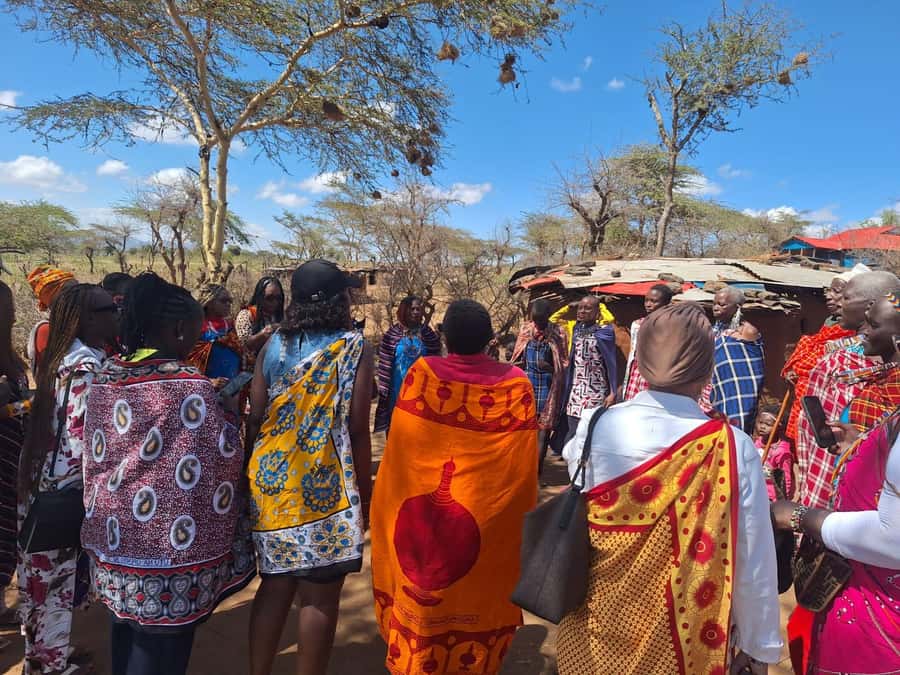
I would recommend it most strongly to you if you want active cultural contact and prefer doing something over sitting through a talk. Families, first-time visitors to Kenya, craft lovers, photographers using ordinary cameras, and people interested in local food preparation should all find useful elements here.
It is also a good choice if you have limited time in Nairobi but still want to reach a rural setting. The drive is long, yet the included pickup makes the logistics much easier than arranging transport to Bisil yourself.
You may want another option if you dislike early mornings, long van journeys, physical activity, or organized cultural visits. The experience is friendly and hands-on, but it is still a scheduled tour. You should also reconsider it if your main priority is wildlife viewing, since no game drive is included.
The guide team is a major reason to book. Nancy’s translation helped one visitor communicate directly with a Maasai woman, while Nancy and Daniel were praised for their care and effort. That kind of human connection can make the difference between simply seeing a community and gaining a more respectful understanding of it.
Should you book the Bisil village tour?
Book it if you want a full morning and afternoon built around participation: dance, singing, beadwork, goat milking, ugali preparation, conversation, and a rural drive from Nairobi. The strongest reasons are the hands-on activities and the support of guides Nancy and Daniel, who have been praised for making the exchange feel personal.
Before you commit, budget $80 per person for the listed tour price and activities fee, plus any donation or souvenir. Be ready for the 6:00 pickup, the two-hour drive each way, and physical participation. If those details suit your plans, this is a thoughtful way to spend a day meeting a Maasai community near Nairobi rather than remaining inside the city.
FAQ
Where is the Maasai Cultural Village Tour located?
The village is in Bisil, in the Kajiado area on the outskirts of Nairobi, Kenya.
How long does the tour last?
The full experience lasts six hours. The drive from Nairobi to Bisil takes about two hours, and the village visit lasts about four hours.
What time is pickup?
The guide is scheduled to pick you up at about 6:00 in the morning. You should wait in your hotel lobby at least 10 minutes before pickup.
Is hotel or airport pickup included?
Yes. Pickup and drop-off are included from listed hotels, roads, airports, and areas in Nairobi.
What activities are included at the village?
You can take part in the Maasai jumping dance, call-and-response singing, goat milking, ugali cooking, and beadwork. The visit also includes an arts and crafts market.
Is the $30 Maasai activities fee included in the $50 price?
No. The $30 Maasai activities fee is listed separately from the $50 per-person tour price.
Are donations included?
No. Donations are not included. Suggested items include teaching materials, cooking oil, rice, wheat flour, and clothes.
What language is spoken on the tour?
The live tour guide speaks English. Translation into English may be provided during conversations with villagers.
Is the tour wheelchair accessible?
The tour is listed as wheelchair accessible. You should still discuss your specific needs with the provider before booking because the village activities may involve physical participation.
Can I cancel the tour?
Yes. You can cancel up to 24 hours in advance for a full refund. A reserve-now, pay-later option is also available.
Just added in Kenya
- Wildlife Capital: Half-Day Safari at Nairobi National Park★ 5.0 · 2 reviews
- 3 days maasai mara migration safari★ 4.5 · 7 reviews
- 4 Days Tour Landcruiser in Masai Mara and Lake Nakuru★ 5.0 · 10 reviews
- 4 Days Safari to Lake Nakuru N/P and Maasai Mara N/R★ 5.0 · 18 reviews
- Day Tour to Nairobi national park, Elephants, and Giraffe Center★ 3.5 · 8 reviews
- 6 Days Kenya Budget Group Safari★ 5.0 · 2 reviews
- Maasai Mara Day Trip★ 5.0 · 15 reviews
- 3 Days Masai Mara Wildebeest migration Budget safari★ 5.0 · 2 reviews
Maasai Village Visits, compared.

Day Tour to Amboseli National Park & Maasai Village
Read our review →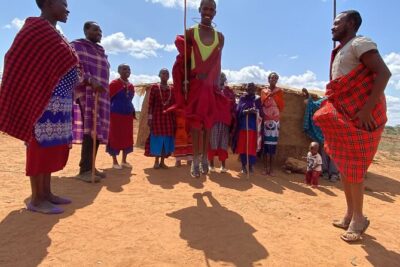


Day Trip: Amboseli National Park & Maasai Village – Nairobi
Read our review →
Day Trip to Maasai Mara Reserve & Maasai village
Read our review →
3days/2nights group joining Masai Mara with Masai Village Visit
Read our review →
Kenya: Maasai Village Visit with Traditional Dance Show
Read our review →Browse the lists this tour appears in