

Reviewed · HISTORICAL TOURS
Historical Private Tour of Nairobi City
Nairobi’s story is best read on foot. This private walking tour brings the city’s past into focus through City Market, McMillan Memorial Library, and the Sarova Stanley, then ends high above the streets at the Kenyatta International Conference Center. I especially like the chance to learn local greetings and street slang, and I like that your guide can shape the conversation around what you already know. The main consideration is the walking pace, since the two to three hours include time on city streets and a moderate level of fitness is needed.
The tour costs $36.41 per person, with bottled water and most fees included. You should also budget Ksh 500 per person for the KICC rooftop, payable by card or mobile money. The small number of published ratings is limited, but the praise is clear: Tim gave one family thoughtful answers, while another guide began with a detailed account of Kenya before the walk officially started.
In This Review
- Five details that shape the experience
- Starting near Koinange Street
- City Market and Nairobi’s everyday trade
- The kipande building and the weight of colonial rule
- McMillan Memorial Library in 10 focused minutes
- The Sarova Stanley and Princess Elizabeth’s visit
- A bus stop that turns public transport into a lesson
- Reaching KICC and paying for the rooftop view
- What the guide adds to the walk
- Is $36.41 good value?
- Who should book this Nairobi walk?
- My verdict on the Historical Private Tour of Nairobi City
- FAQ
- Where does the tour begin?
- Where does the tour end?
- How long does the tour last?
- Is this a private tour?
- What is included in the price?
- Is KICC admission included?
- What can you see at City Market?
- Can you enter McMillan Memorial Library?
- Is the tour suitable for people with limited fitness?
- Can you cancel for a full refund?
Five details that shape the experience
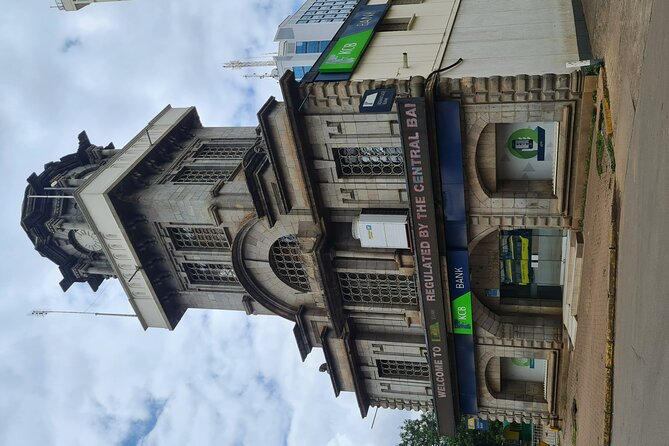
- City Market began as a boxing venue: Today, its stalls sell meat, flowers, cultural jewelry, and food from an open kibanda restaurant.
- A former warehouse became a colonial identity-card office: One stop recalls the kipande system used for African workers in Nairobi.
- McMillan Memorial Library opened in 1931: You can photograph the building and enter to look inside.
- The Sarova Stanley dates to 1902: It is described as Nairobi’s oldest hotel and is linked to Princess Elizabeth’s 1952 visit.
- KICC provides the grand finale: An elevator and some stairs lead to a rooftop view across the city.
- You get a private guide for your group: That makes it easier to ask questions, pause for photos, and discuss local customs.
Starting near Koinange Street
The tour begins at CJ’s on Koinange Street, a central meeting point in Nairobi. From there, you set out on foot with your guide, learning how the city developed and how its past still appears in ordinary streets and buildings.
The walk is not just a list of dates. The guide is encouraged to discuss what you already know, correct misunderstandings, and add local expressions that can help you interact more naturally during the rest of your stay. That conversational style matters. Nairobi can feel easier to read once you understand a greeting, a bit of street slang, or the way people use public transport.
The published duration is about two to three hours, including walking time. That makes this a useful introduction on a first day in the city, though you should not treat it as a quick photo stop between other appointments. The exact pace will depend on your questions, the time spent at each site, and the movement between them.
Because this is a private activity, only your group takes part. I see that as a real benefit for families, couples, and small groups who want to ask direct questions without holding up a larger party. It also gives you more room to talk about subjects that interest you, from colonial buildings to present-day street life.
More History Tours in Nairobi:
- Nairobi: Historic and Modern Highlights Walking Tour
★ 4.8 · 703 reviews - Nairobi Historical Walking City Tour
★ 5.0 · 258 reviews - Full Day Nairobi Cultural and Historical Tour
★ 5.0 · 153 reviews
City Market and Nairobi’s everyday trade

City Market is a practical first stop because it connects history with daily life. The building was once used for boxing tournaments. Today, it serves as a market for meat, flowers, cultural jewelry, and food.
You have about 10 minutes here, and there is no admission charge. That is enough time to take photographs and get a quick feel for the market, but it is not a long shopping visit or a full meal break. If the open kibanda restaurant catches your eye, ask the guide how much time is available before ordering.
I like this stop because it gives the tour an ordinary, human scale. You are not only looking at grand public buildings. You are also seeing where people buy food, browse jewelry, and eat. The market helps show how Nairobi’s past and present sit close together.
The short stop also means you should keep your expectations sensible. You may find the market more useful as a visual introduction than as a place for a long, relaxed meal. Keep your camera ready, follow your guide’s advice, and remember that this is an active market rather than a staged exhibit.
The kipande building and the weight of colonial rule
One of the most striking historical points comes at a former warehouse beside the Uganda railway line. It was once considered the tallest building in the city and later became a colonial government center for issuing identity cards, known as kipande, to African workers in Nairobi.
This stop has no listed admission fee and is suitable for photographs. More important, it adds political weight to the walk. The building was not simply part of Nairobi’s early commercial growth. It was also tied to a system of colonial control over the people who worked in the city.
The tour’s value is strongest here when you ask questions. The supplied details are brief, so your guide’s explanation will help connect the building to the railway, labor, and the administration of colonial Nairobi. This is one place where a private format helps. You can pause and ask what the kipande system meant in practice, rather than moving on with only a name and date.
I would not expect an indoor museum experience at this stop. The appeal is the building, its former use, and the story attached to it. The photograph is useful, but the explanation is the real reason to pay attention.
McMillan Memorial Library in 10 focused minutes
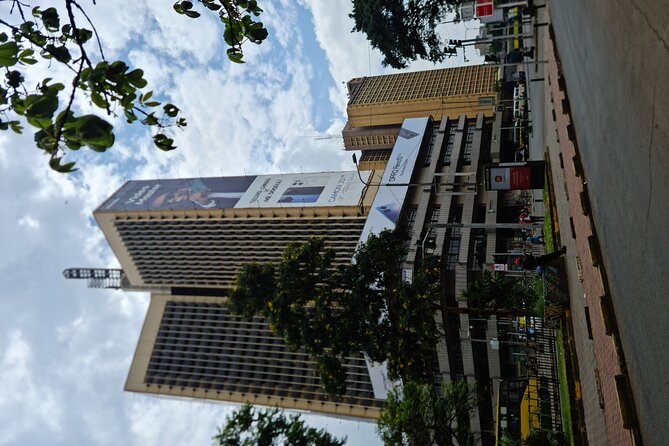
The Kaloleni branch of McMillan Memorial Library opened in 1931. Lady McMillan funded it with the U.S. Carnegie Foundation, and it was opened in honor of Lord William Northrop McMillan.
You have about 10 minutes here, with no admission charge listed. You can photograph the building and enter to look inside. That last detail makes this more than an exterior architecture stop. Even a short look inside can give you a sense of how the library functioned as a civic institution.
I like the contrast with City Market. The market shows trade and street activity, while the library points to education, public life, and the institutions that shaped Nairobi. The stop is short, so do not expect time for extended reading or a long architectural visit. Still, it is a useful pause in the walk, particularly if you enjoy historic buildings with a clear local connection.
Ask your guide about the people and purpose behind the library. The names attached to the building can otherwise pass quickly. A private guide gives you the chance to turn a 10-minute visit into a sharper lesson without making the overall walk much longer.
A few more options to weigh up in Nairobi
- Nairobi National Park Half-Day Tour; Free Wi-Fi connection
★ 5.0 · 878 reviews - Nairobi: National Park & Optional Elephants & Giraffe Center
★ 4.8 · 874 reviews - NAI NAMI: Nairobi Storytelling Tour with Street Children
★ 5.0 · 792 reviews - Nairobi National Park Half-Day Game Drive
★ 4.5 · 738 reviews
The Sarova Stanley and Princess Elizabeth’s visit
The Sarova Stanley opened in 1902 and is described as the oldest hotel in Nairobi. You spend about five minutes here, with time for photographs and a quick look at this famous address.
The hotel is especially associated with Princess Elizabeth’s visit in 1952, when she was on safari to the Treetops hotel. That detail gives the building a place in the story of the British royal family and Kenya’s colonial-era tourism.
Five minutes is enough to recognize the hotel and hear why it matters, but it is not enough for a full hotel tour or a leisurely stop inside. Think of this as a compact historical marker. The guide’s explanation will do most of the work.
This is also a good example of why context matters. A hotel can look like a grand old building, but its importance comes from the people who passed through it and the role it played in Nairobi’s early years. If you enjoy famous addresses, you will appreciate the stop. If you prefer long visits at each site, the brief timing may feel tight.
A bus stop that turns public transport into a lesson
The route includes a busy bus stop where you can photograph the scene and watch touts engage customers as they choose a bus. This may be the least polished stop, but it could be one of the most revealing.
You are seeing a working part of Nairobi rather than a preserved monument. The guide can explain what is happening as customers decide where to board and how the touts communicate with them. That gives you a look at city movement and local interaction that a standard sightseeing route often misses.
You should follow your guide’s instructions closely here. The point is to observe, not to interfere with people trying to catch transport. Keep your belongings secure and stay with your group, especially if the stop is crowded.
For me, this kind of pause makes the experience feel more connected to present-day Nairobi. It also supports the tour’s promise to teach local greetings and street slang. You are not learning language in a classroom. You are seeing how communication works in a real public setting.
Reaching KICC and paying for the rooftop view

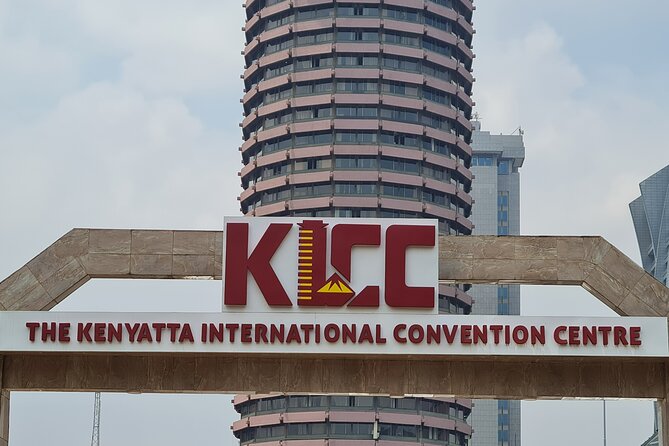
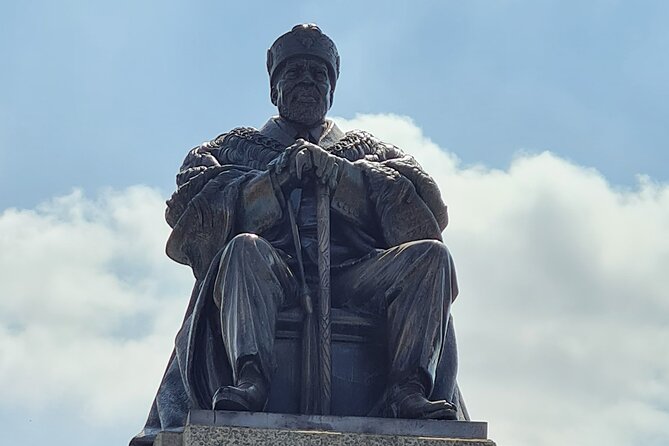
The final stop is the Kenyatta International Conference Center, known as KICC. It opened in 1973 under Kenya’s first president, Mzee Jomo Kenyatta, and now functions as an office complex, conference venue, and exhibition center.
The tour allows about 30 minutes here. You take an elevator and some stairs to reach the rooftop, where you can look across Nairobi from above. This is the one stop with a separate charge: Ksh 500 per person, payable by card or mobile money. That fee is not included in the tour price.
The view is the payoff. One family specifically praised the rooftop sight and the good weather during their visit. Of course, weather affects what you see, so the clarity of the view cannot be guaranteed. Still, the rooftop gives you a useful sense of Nairobi’s size and layout after walking through its central streets.
The stairs are worth noting. The tour is not described as difficult, but it does require moderate physical fitness, and the duration includes walking. If you have limited mobility, ask the provider for current details before booking. The listing does not provide specific accessibility information.
Ending at KICC also makes practical sense. You finish at the top of the building after the aerial view, rather than needing to retrace the route. The official end point is at City Square along Harambee Avenue, but the experience ends at the KICC rooftop.
What the guide adds to the walk
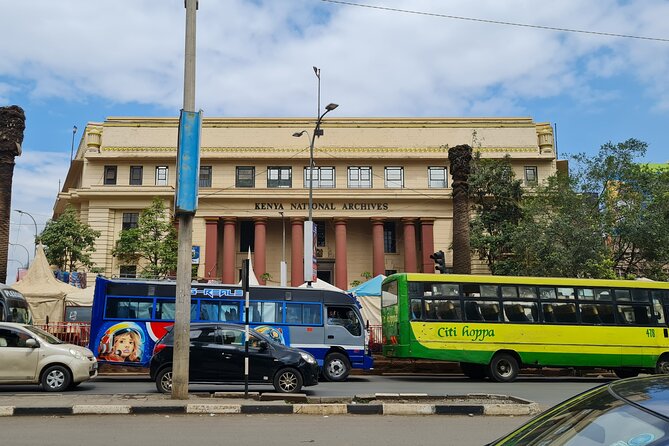
A history walk depends heavily on the person leading it. The strongest detail here is the way the guides handle questions and conversation.
Tim guided one family and answered their questions throughout the walk. The family found the experience enjoyable and informative, with the KICC view as a highlight. Another guide arrived promptly at the meeting point and gave a detailed account of Kenya before the official route even began. The conversation continued so naturally that the participant forgot the walk was a walking tour.
That tells you what to look for. The best use of this experience is not rushing from one building to the next. It is asking why a site matters, how the city changed, and how the past connects to what you see on the street today.
Since the tour is private, you can help shape the tone. If you already know some Kenyan history, say so. If you are starting from scratch, ask for the basic story first. You can also ask the guide to explain local greetings or slang again if you do not catch them the first time.
Is $36.41 good value?
At $36.41 per person, this tour offers reasonable value if you want a private introduction to central Nairobi. Bottled water and all listed fees apart from the KICC admission are included. The price also buys a guide who can answer questions for your own group, rather than a fixed lecture delivered to a large crowd.
The Ksh 500 rooftop fee is the main extra cost. It is modest, but you should include it in your budget. Payment is by card or mobile money, so do not assume cash will be required or accepted.
The value depends on your priorities. If you want a long museum visit, extensive shopping time, or transport between far-flung sights, this is not the right format. If you want a short, focused walk through central Nairobi with history, local interaction, and a city view, the price is easier to justify.
I especially like the combination of free stops and one paid viewpoint. You are not paying separate entry charges at every building, and the KICC rooftop gives the tour a clear finish.
Who should book this Nairobi walk?
I would recommend it to first-time visitors who want to understand central Nairobi before exploring more widely. It also suits families, since a private guide can adjust the conversation and answer children’s questions without affecting a larger group.
It is a good choice for anyone interested in the meeting point between colonial history and current city life. City Market, the kipande building, the library, the hotel, the bus stop, and KICC each show a different side of Nairobi.
You should be comfortable walking for two to three hours and managing an elevator plus some stairs at KICC. The tour runs through busy city areas, so it is better for people who want direct contact with urban life than for those seeking a quiet sightseeing circuit.
Book at least 24 hours ahead if your plans may change. Cancellation is free with a full refund when made at least 24 hours before the start time. Changes or cancellations inside that window are not accepted for a refund.
My verdict on the Historical Private Tour of Nairobi City
Book this tour if you want a friendly, compact introduction to Nairobi with real street scenes and a strong final view. The private format, local language tips, and chance to ask questions give it more value than a simple point-and-photo walk.
Skip it if you dislike walking, need a fully accessible route, or want detailed indoor visits at every stop. For most curious first-time visitors, though, the route offers a useful balance: market life, colonial-era buildings, public transport, a historic hotel, and a rooftop view for Ksh 500 more.
The most important tip is to treat the guide as part of the experience, not just as someone who leads you between addresses. Ask questions, practice a greeting, and leave room for the conversation. That is where this short Nairobi walk earns its keep.
FAQ
Where does the tour begin?
The tour begins at CJ’s on Koinange Street in Nairobi, Kenya.
Where does the tour end?
It ends at the top of the Kenyatta International Conference Center, also called KICC, at City Square along Harambee Avenue.
How long does the tour last?
The tour lasts approximately two to three hours, including walking time.
Is this a private tour?
Yes. Only your group participates in the private tour or activity.
What is included in the price?
Bottled water and all listed fees and taxes are included.
Is KICC admission included?
No. KICC admission costs Ksh 500 per person and is payable by card or mobile money.
What can you see at City Market?
City Market includes stalls selling meat, flowers, cultural jewelry, and food at an open kibanda restaurant. The building was once used for boxing tournaments.
Can you enter McMillan Memorial Library?
Yes. You can take photographs and enter the library to look around.
Is the tour suitable for people with limited fitness?
The tour requires a moderate level of physical fitness because it includes walking, an elevator, and some stairs to the KICC rooftop.
Can you cancel for a full refund?
Yes, if you cancel at least 24 hours before the experience’s start time. Cancellations made less than 24 hours before the start time are not refunded.
Just added in Nairobi
- Wildlife Capital: Half-Day Safari at Nairobi National Park★ 5.0 · 2 reviews
- 3 days maasai mara migration safari★ 4.5 · 7 reviews
- 4 Days Tour Landcruiser in Masai Mara and Lake Nakuru★ 5.0 · 10 reviews
- 4 Days Safari to Lake Nakuru N/P and Maasai Mara N/R★ 5.0 · 18 reviews
- Day Tour to Nairobi national park, Elephants, and Giraffe Center★ 3.5 · 8 reviews
- 6 Days Kenya Budget Group Safari★ 5.0 · 2 reviews
- Maasai Mara Day Trip★ 5.0 · 15 reviews
- 3 Days Masai Mara Wildebeest migration Budget safari★ 5.0 · 2 reviews
Historical Tours, compared.


Nairobi Walking tour:Explore History Culture and Traditions
Read our review →

Nairobi Cultural and Historical City Tour with a Local
Read our review →
Nairobi souvenir Shopping and Historical Half day Tour
Read our review →

Half-Day Cultural Tour to Bomas of Kenya in Nairobi
Read our review →Browse the lists this tour appears in