

Reviewed · HISTORICAL TOURS
Historical City Walk Tour in Nairobi
Nairobi reveals itself on foot. This two-hour private tour links Jeevanjee Gardens and City Market with major civic and religious landmarks, giving you a quick, grounded introduction to Kenya’s capital. I like the modest $29 price and the chance to explore with a guide rather than simply pass these places from a vehicle. The main catch is that admission to Nairobi Gallery and the KICC tower costs extra.
The route also works well for a first day in town. Guides Alex and Michael receive especially warm praise for their friendly manner and strong command of Nairobi’s past and present. Still, two hours moves quickly, and the city walk offers an overview rather than a long museum visit or a full-day cultural tour.
In This Review
- Key points at a glance
- Why this short Nairobi walk works
- Starting with Jeevanjee Gardens and its public purpose
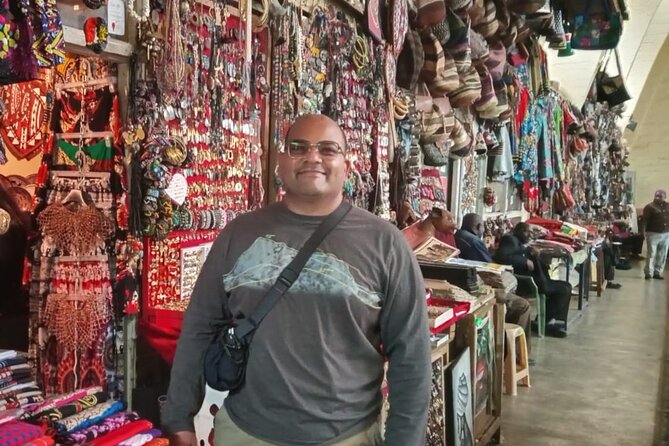
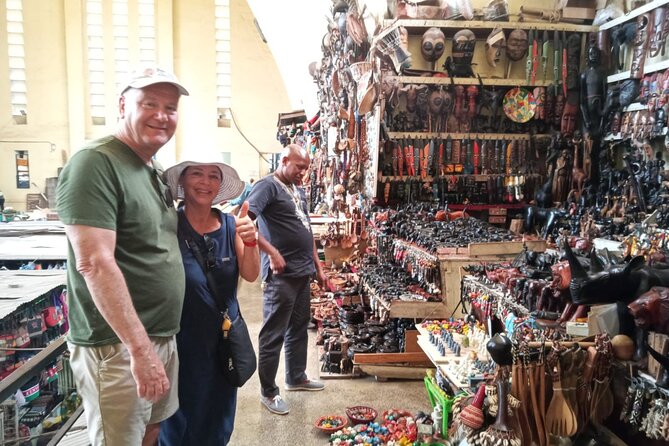
- City Market, where shopping meets ordinary city life
- Jamia Mosque and Nairobi’s Muslim heritage
- Nairobi Gallery and Kenya’s point zero
- KICC tower views over Nairobi
- What Alex and Michael add to the experience
- Timing, transport, and what to bring
- Who should book this Nairobi city tour?
- Should you book the Historical City Walk Tour in Nairobi?
- FAQ
- How long does the Historical City Walk Tour in Nairobi last?
- How much does the tour cost?
- Is this a private tour?
- What is included in the price?
- Are Nairobi Gallery and KICC admission fees included?
- Can I cancel for a full refund?
Key points at a glance

- A private two-hour introduction: Your group gets its own professional guide, with no strangers added to the booking.
- Jeevanjee Gardens has an unusual ownership story: A.M. Jeevanjee donated the park for public use, and it is held in trust for the people of Nairobi.
- City Market mixes daily life with shopping: You can look for cultural souvenirs, clothing, fresh fruit, and vegetables in a building dating from 1930.
- Nairobi Gallery marks Kenya’s point zero: The former civil service building once recorded births, marriages, and deaths, and it now serves as a museum and national monument.
- KICC supplies the big finish: The tower offers a 360-degree view of Nairobi, but the admission fee is not part of the $29 price.
- The guide is the real value: Alex and Michael are singled out for making a short visit feel informative, friendly, and easy to follow.
Why this short Nairobi walk works

Nairobi can feel large and unfamiliar when you first arrive. This tour gives you a simple route through the city center, with a guide to connect parks, markets, faith, government, independence, and modern Kenya. You are not just ticking off buildings. You are getting a basic map of how the capital developed.
I especially like the private format. You can ask questions, set the pace within reason, and focus on subjects that interest you. The two-hour length also suits a morning or afternoon between other plans. If you have only a short stay in Nairobi, this is a sensible way to get your bearings fast.
The tour is priced at $29 per person. That is fair for a private guide and a bottle of water, especially because the cost is spread across only your group. The price is less of a bargain if you expect several paid admissions to be included. Nairobi Gallery and KICC list admission charges separately, and the tour does not include souvenir photos.
The experience has a 4.8 rating from 19 ratings, with 95 percent recommending it. The strongest praise centers on the guides, not on luxury or elaborate extras. That tells you where the money goes: toward explanation, company, and a personal introduction to Nairobi.
More Walking Tours in Nairobi
- Nairobi: Historic and Modern Highlights Walking Tour
★ 4.8 · 703 reviews - Nairobi Historical Walking City Tour
★ 5.0 · 258 reviews - Nairobi Downtown Walking Tour
★ 4.7 · 208 reviews
Starting with Jeevanjee Gardens and its public purpose
The first stop, Jeevanjee Gardens, takes about 35 minutes. Admission is free, so you can spend time hearing the story without watching the clock for a ticket charge.
The park began with A.M. Jeevanjee, an Asian-born entrepreneur in Kenya. He donated the property as a resting place for the people of Nairobi. It is held in trust for the public, a detail that gives this small urban park more meaning than its greenery alone suggests.
I find this an excellent opening stop because it introduces Nairobi through civic life. You begin with a public space and a story about who it belongs to. That is more useful than starting with a grand building and a list of dates.
Your guide can also help place the park within the city’s changing identity. The supplied description calls it the only park in Nairobi directly owned by the people, so listen closely to the explanation of its legal and social role. This is the kind of detail easy to miss if you explore alone.
Do not expect a large nature outing. The value here is the story, the pause, and the contrast between a public resting place and the surrounding city center. The 35-minute visit is long enough for context without making the tour feel slow.
City Market, where shopping meets ordinary city life
Next comes City Market, with about 25 minutes set aside. The building dates from 1930 and was built near the railway line that once ran along what is now Loita Street. The railway later moved in the 1940s, but the market remained an important retail point.
You can browse cultural souvenirs, clothing, fruits, and vegetables. This makes the stop more practical than a purely historic site. If you want a small gift from Nairobi, this is one of the places where you can look, compare, and decide without adding a separate shopping trip.
The short visit means you should keep your expectations realistic. You will have time to see the market and perhaps make a purchase, but not necessarily to inspect every stall at leisure. If shopping matters to you, tell your guide early so you can use the available minutes well.
I like the way this stop balances the formal city landmarks. A market shows how people buy and sell, while a conference center shows how the city presents itself to the world. Together, they offer a more useful picture of Nairobi than monuments alone.
The market is also a good place to ask your guide about prices, local products, and what makes a souvenir genuinely connected to Kenya. The tour does not include purchases, and the description does not promise any special shopping arrangement, so treat the stop as an opportunity to browse rather than a guided retail session.
Jamia Mosque and Nairobi’s Muslim heritage
The walk also includes Jamia Mosque in Nairobi’s Central Business District. Syed Maulana Abdullah Shah founded it in 1902, while the mosque buildings were constructed between 1925 and 1933.
Jamia Mosque is an important center of Islamic practice in East and Central Africa. It also played a major role in Muslim religious organization during both the pre-independence and independent years.
This stop adds a religious and regional dimension to the walk. Nairobi’s story is not only about colonial offices, markets, and political leaders. Jamia Mosque helps you see the city as a place shaped by several communities and traditions.
The information provided does not state a separate visit length or whether entry inside the mosque is included. Plan to see the mosque as part of the walking route and follow your guide’s instructions about appropriate access. If you want detailed religious or architectural discussion, this is a good point to ask for it.
More History Tours in Nairobi:
- Full Day Nairobi Cultural and Historical Tour
★ 5.0 · 153 reviews - Nairobi Cultural and Historical City Tour with a Local
★ 5.0 · 67 reviews - Nairobi souvenir Shopping and Historical Half day Tour
★ 5.0 · 61 reviews - Nairobi History and Modern Culture 3 Hours Tour
★ 4.5 · 31 reviews
Nairobi Gallery and Kenya’s point zero

The Nairobi Gallery occupies a building completed in 1913. It once served as a civil service office where births, marriages, and deaths were recorded. That practical role earned it the nickname Hatches, Matches, and Dispatches, a memorable bit of local language that makes the building easier to remember.
Today, the building is a museum and national monument. It is also described as the point zero of Kenya, where distances were calculated from. That gives the site a quiet importance. You are not only looking at an old public building. You are standing at a reference point used to measure the country.
The stop lasts about 20 minutes. Admission is not included, so you should budget separately if you want to enter. With only 20 minutes here, the guide’s explanation may be more important than a lengthy gallery visit.
The route also passes the resting place of Mzee Jomo Kenyatta, Kenya’s first president. His presence links this part of the walk to national independence and the formation of modern Kenya. Pay attention to how your guide explains his role, since the tour is designed to connect these sites rather than treat each one as an isolated photo stop.
If you care most about museums, you may find the gallery visit too brief. If you want a compact introduction to Kenya’s public institutions and national story, it earns its place on the route.
KICC tower views over Nairobi

The final major stop is the Kenyatta International Conference Centre, usually called KICC. Allow about 40 minutes here, the longest scheduled stop of the tour.
KICC was commissioned by Mzee Jomo Kenyatta in 1967 and was among the first major buildings constructed after independence. It was created as a place where the international community could gather and present products and services. The building therefore carries both political and commercial meaning.
The main attraction is the tower rooftop, which offers a 360-degree view across Nairobi. After walking through gardens, a market, a mosque area, and older public buildings, the high viewpoint helps you see how the city fits together.
Admission is not included, so check the additional cost before you go. The tour description promises the opportunity for panoramic views, not a private rooftop event or a long independent stay. Forty minutes should give you time for the view and the guide’s explanation, but the exact amount of free viewing time may depend on the day.
For me, this is a strong ending. A city walk should help you understand the place from ground level, then give you a wider picture. KICC does that neatly. You finish with Nairobi spread out below you rather than with another small plaque and a rushed explanation.
The statue of Jomo Kenyatta adds another layer to the stop. Your guide can connect the building, the statue, independence, and the city’s role in international business. This is where the tour’s political and architectural threads come together.
What Alex and Michael add to the experience

The strongest part of this experience is the guiding. Alex and Michael are praised for being kind, friendly, and well informed about Nairobi’s past. One account describes the tour as a two-hour crash course, which is a fair way to understand the format.
You should expect a lot of information in a short span. That suits me when I want a clear introduction, but you may prefer a slower walk if you already know Nairobi or want time for photography. Ask questions as you go, especially at Jeevanjee Gardens, Jamia Mosque, Nairobi Gallery, and KICC, where each place has a different story.
A guide also helps you notice links between the stops. The market’s railway background, the gallery’s point zero, the mosque’s regional importance, and KICC’s post-independence role are easier to understand as one city story than as separate facts.
The tour is private, so your group can benefit more from that conversation than from a fixed script. The published details do not identify which guide you will receive, but Alex and Michael are names associated with particularly strong praise. You can ask the operator about guide assignment when booking if that matters to you.
One person found Sunday a smart day for the tour. The reason is not fully specified, so I would not treat Sunday as guaranteed to be better. Still, the tip is useful: if your schedule allows, ask Michoore Tours & Travel whether your chosen day affects traffic, access, or the feel of the route.
Timing, transport, and what to bring
The walk lasts about two hours and is near public transportation. That makes it easy to fit into a Nairobi day without arranging a separate vehicle for the city center.
The tour includes a professional guide and one bottle of water. Wear comfortable walking shoes and bring sun protection, even though those items are not listed as inclusions. You should also carry payment for any purchases at City Market and the separate admissions at Nairobi Gallery and KICC.
Most people can participate, according to the supplied participation information. No special fitness requirement is stated, but this is still a city walk with several stops. If you have mobility concerns, ask the operator about the exact walking route before booking, since the available information does not give step-free details.
The experience requires good weather. You can cancel for a full refund up to 24 hours before the start time. Cancellations within 24 hours are not refunded, and changes inside that period are not accepted. If bad weather causes the operator to cancel, you are offered another date or a full refund.
Who should book this Nairobi city tour?
I would choose this walk for a first visit to Nairobi, a short stop in the city, or a morning when you want local context before exploring on your own. It also fits couples, families, and small groups who prefer a private guide to a large group outing.
It is a good match if you enjoy history told through ordinary places. Jeevanjee Gardens and City Market are not grand palace-style sights, but they show how public space, trade, and community shape a capital.
I would be more cautious if your priority is extended museum time, detailed architecture, or extensive shopping. The schedule is tight, Nairobi Gallery entry costs extra, and the market stop is only about 25 minutes. You are buying a clear introduction, not a full cultural program.
Should you book the Historical City Walk Tour in Nairobi?
Book it if you want an affordable, private orientation with a strong guide and a worthwhile city-center route. At $29, the combination of personal guiding, water, free public sites, and a KICC viewpoint opportunity offers solid value, as long as you allow extra money for admissions and purchases.
Skip it if you dislike short walks, prefer to explore entirely alone, or want each museum and market stop to receive a long visit. For most first-time visitors, though, the mix of public garden, market, mosque, national history, and skyline view makes this a smart introduction to Nairobi.
FAQ
How long does the Historical City Walk Tour in Nairobi last?
The tour lasts approximately two hours.
How much does the tour cost?
The listed price is $29 per person.
Is this a private tour?
Yes. Only your group participates in the private tour or activity.
What is included in the price?
A professional guide and a bottle of water are included.
Are Nairobi Gallery and KICC admission fees included?
No. Admission to Nairobi Gallery and the Kenyatta International Conference Centre is not included.
Can I cancel for a full refund?
Yes. You can cancel at least 24 hours before the local start time for a full refund. Cancellations made less than 24 hours before the start time are not refunded.
Just added in Nairobi
- Wildlife Capital: Half-Day Safari at Nairobi National Park★ 5.0 · 2 reviews
- 3 days maasai mara migration safari★ 4.5 · 7 reviews
- 4 Days Tour Landcruiser in Masai Mara and Lake Nakuru★ 5.0 · 10 reviews
- 4 Days Safari to Lake Nakuru N/P and Maasai Mara N/R★ 5.0 · 18 reviews
- Day Tour to Nairobi national park, Elephants, and Giraffe Center★ 3.5 · 8 reviews
- 6 Days Kenya Budget Group Safari★ 5.0 · 2 reviews
- Maasai Mara Day Trip★ 5.0 · 15 reviews
- 3 Days Masai Mara Wildebeest migration Budget safari★ 5.0 · 2 reviews
Historical Tours, compared.


Nairobi Walking tour:Explore History Culture and Traditions
Read our review →

Nairobi Cultural and Historical City Tour with a Local
Read our review →
Nairobi souvenir Shopping and Historical Half day Tour
Read our review →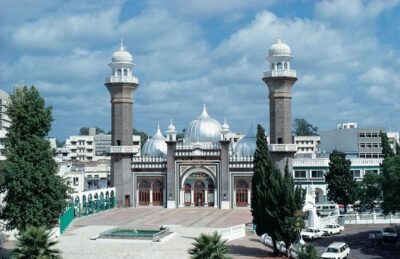

Half-Day Cultural Tour to Bomas of Kenya in Nairobi
Read our review →Browse the lists this tour appears in