
Reviewed · HALLER PARK TOURS
Haller Park Tour observing hippos, giraffes, birds, monkeys, crocs & others
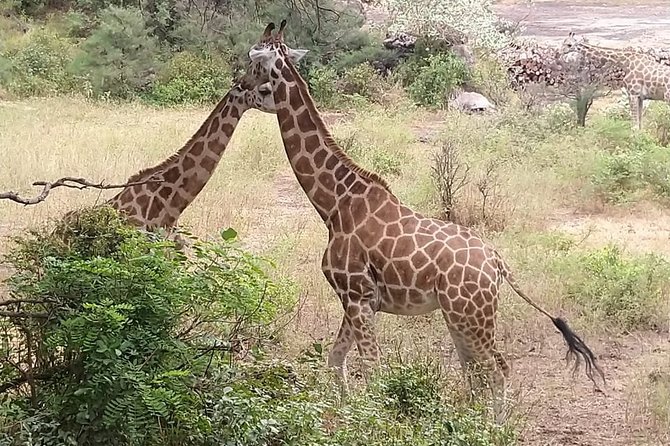
The feeding clock shapes this wildlife outing. I like the private hotel pickup and the way Teddy Mwangiri plans around feeding times, so you can watch giraffes, hippos, and crocodiles when activity is highest.
I also like seeing animals in open surroundings rather than behind rows of cages. The main caution is that Haller Park may feel less polished than a major safari reserve, and one assessment found the park poorly maintained and lacking a truly wild atmosphere.
In This Review
- Key points at a glance
- Why Haller Park works as a Mombasa wildlife stop
- A private pickup that keeps the day simple
- Entering the park and getting your bearings
- Giraffe feeding and the closest animal encounter
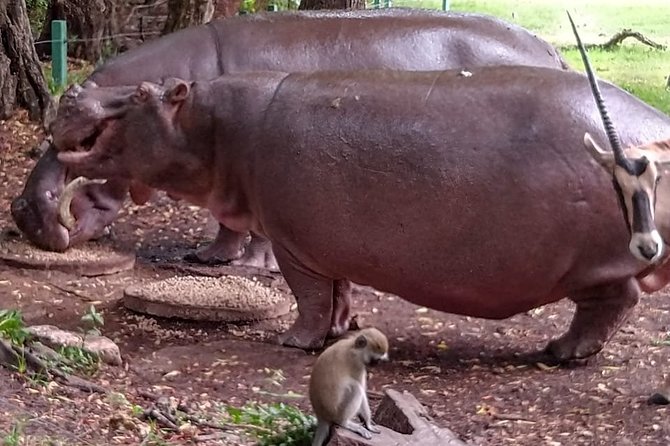
- Hippos and crocodiles at feeding time
- Buffalo, zebras, elands, and waterbucks
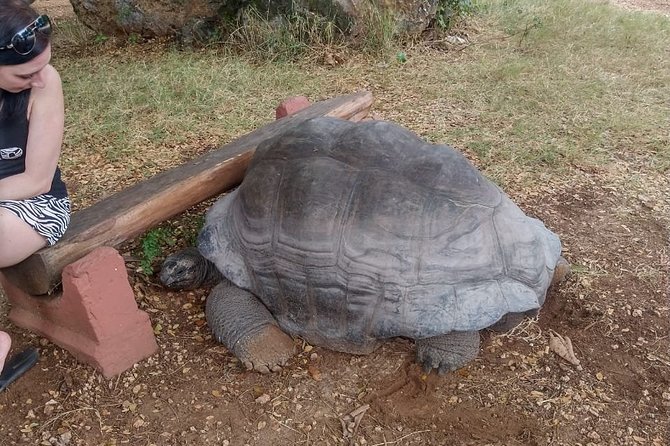
- Monkeys, tortoises, and the birdlife
- What four hours really gives you
- How Teddy Mwangiri affects the experience
- Who should book this Haller Park outing
- Is $45 per person good value?
- Final verdict: book it for access, not safari drama
- FAQ
- How long does the Haller Park tour last?
- What is the price per person?
- Is hotel pickup available?
- Is this a private tour?
- Which animals can you see?
- Can you feed the giraffes?
- Can you watch hippo and crocodile feedings?
- Is lunch included?
- Can you cancel for a full refund?
Key points at a glance
- Three feeding moments: The tour is planned around giraffe, hippopotamus, and crocodile feeding schedules.
- Open animal viewing: You can see buffalo, zebras, elands, waterbucks, monkeys, tortoises, and birds outside traditional cages.
- Private four-hour outing: Only your group takes part, with private transportation from your hotel.
- Teddy handles the timing: Teddy Mwangiri is praised for prompt pickup, follow-up messages, and clear explanations about the animals.
- Good family-friendly variety: The mix of large mammals, reptiles, primates, and birds gives you plenty to look for in one afternoon.
- A practical Mombasa wildlife option: At $45 per person, the price can make sense if you want a guided animal visit without arranging transport yourself.
Why Haller Park works as a Mombasa wildlife stop
Haller Park gives you a chance to see wildlife without committing to a full safari outside Mombasa. In roughly four hours, you can visit an animal park, watch scheduled feedings, and return to your hotel without giving up an entire day.
That makes the outing useful for a short stay. You get a taste of Kenya’s animal life, but the experience is more contained and managed than a national park safari. I would approach it as a local wildlife visit, not as a substitute for a long game drive.
The animal list is strong for a half-day trip. You may see hippos, giraffes, Cape buffalo, zebras, elands, waterbucks, tortoises, monkeys, crocodiles, and a range of birds. The appeal comes from the variety. One moment you are watching a large herbivore, and the next you are looking for a monkey or bird in the trees.
The setting also matters. The animals are viewed in open areas rather than in standard zoo-style cages. That gives the visit a more natural feel, although you should keep your expectations measured. Open enclosures do not create the same sense of space or unpredictability as a safari reserve.
More Haller Park visits:
- Mombasa: Discovery Day Tour and Haller Park
★ 4.5 · 28 reviews - Mombasa: Private City Tour with Fort Jesus & Haller Park
★ 4.6 · 24 reviews - Mombasa Half-Day City Tour with Fort Jesus and Haller Park
★ 5.0 · 23 reviews
A private pickup that keeps the day simple
The tour includes private transportation and hotel pickup, which is a major part of its value. You do not have to arrange a taxi, negotiate a fare, or work out how to reach Haller Park on your own.
Private transport also means the outing is built around your group rather than a large shared coach. Only your party participates. That should make the ride and park visit feel more personal, especially if you want to ask questions or move at a comfortable pace.
Teddy Mwangiri receives especially strong praise for being prompt and keeping in touch. He uses WhatsApp for updates, including notice of a short delay, and follows up before the outing. Those small details matter in Mombasa, where a clear meeting plan can save you a fair amount of waiting and worry.
The tour is listed at $45 per person. That price includes transport, park-related fees and taxes, and bottled water, but not lunch. I consider it reasonable if you are traveling as a small private group and want transportation plus a guide who handles the timing.
The value is less clear if you only want to enter the park and look around independently. In that case, you are paying for the convenience of private transport and the guide’s help with feeding schedules. The more you care about those two things, the better the price looks.
Entering the park and getting your bearings
Once you arrive, the visit begins with the basic pleasure of looking for animals in open surroundings. Haller Park is not presented as a cage-by-cage zoo. Instead, you should expect to move through areas where animals occupy larger shared spaces.
That setup changes the pace. You may not see every animal immediately, and some creatures may be farther away or partly hidden. This is part of the charm, but it also means you should not expect a guaranteed close view of every species listed.
A private guide helps here. Teddy can point out animals and explain what you are seeing, rather than leaving you to search without context. A previous visitor specifically appreciated his explanations and the fact that he showed the park’s main sights.
You will also have bottled water included. Lunch is not included, so plan around the four-hour schedule and your own meal arrangements. The available details do not specify a meal stop, menu, or dining arrangement, so do not assume lunch is part of the outing.
Giraffe feeding and the closest animal encounter
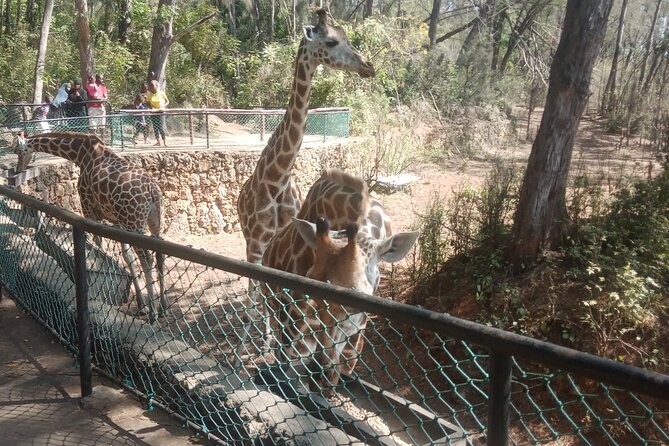
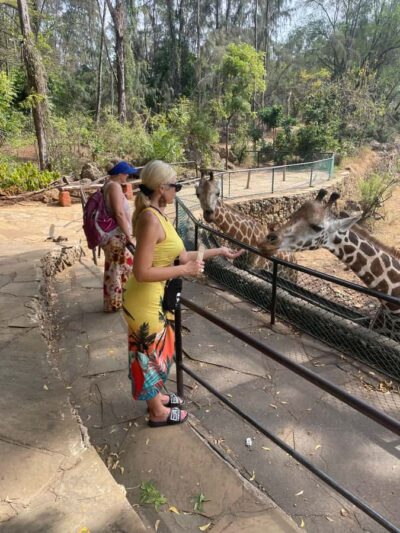
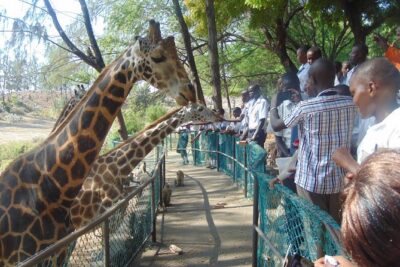
The giraffe feeding is likely to be the most hands-on part of the visit. You have the opportunity to feed the giraffes, giving you a closer look at their height, faces, and long tongues than you would get from a distant viewing area.
This is useful for families and for anyone who wants more than a simple animal sighting. The feeding gives the visit a clear focal point, and it can make giraffes feel less like a picture in the distance and more like living animals with distinctive habits.
The exact feeding procedure is not specified, so follow Teddy’s instructions and the park’s rules. Do not assume that every person will have unlimited access or that the giraffes will remain beside the feeding area for the whole stop.
Timing is important. The tour operator uses the feeding schedules to plan the visit, which is one of the strongest reasons to book a guided outing instead of arriving without a plan. Animal parks are often quiet between feeding periods, while a scheduled feeding can bring more movement and attention.
I would keep your camera ready, but do not let photography become the whole point. The best value here is the encounter itself, especially if you are bringing children who may remember feeding a giraffe more clearly than a long explanation about conservation.
A few more options to weigh up in Mombasa
- Walking Tour Through Old Town Mombasa and Fort Jesus
★ 5.0 · 393 reviews - Mombasa: Kisite Park Private Cruise with Breakfast and Lunch
★ 4.7 · 181 reviews - Mombasa City Tour
★ 5.0 · 170 reviews - Mombasa: Tusks, Fort Jesus, Old Town, Beach and City Tour
★ 4.7 · 137 reviews
Hippos and crocodiles at feeding time
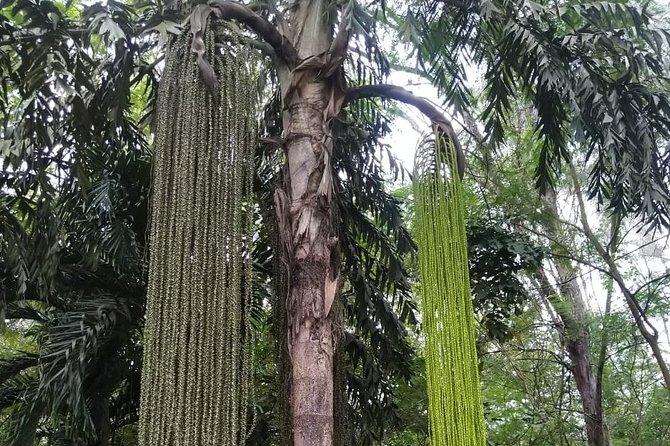
The hippopotamus feeding adds a very different kind of animal viewing. Hippos can seem slow and sleepy from a distance, but feeding time gives you a chance to watch their behavior when food is being presented.
You will be observing rather than feeding the hippos yourself. That distinction is worth noting, since the giraffe experience is described as an opportunity for you to feed the animals, while the hippo and crocodile portions focus on watching their feedings.
The crocodile feeding provides another change of pace. Crocodiles are often still and difficult to read when they are resting, so a feeding session gives you a better chance to see their size, movement, and response to food.
These moments also show why the guide’s timing matters. Arriving between feedings could leave you with a much quieter view. Teddy’s job is not simply to drive you to Haller Park, but to help place your visit within the park’s animal schedule.
You should still remember that feeding times can vary. The tour information says the operator uses its understanding of the schedules, but it does not promise a specific time or guarantee a particular animal’s behavior. Nature, even in a managed park, does not always follow the timetable perfectly.
Buffalo, zebras, elands, and waterbucks
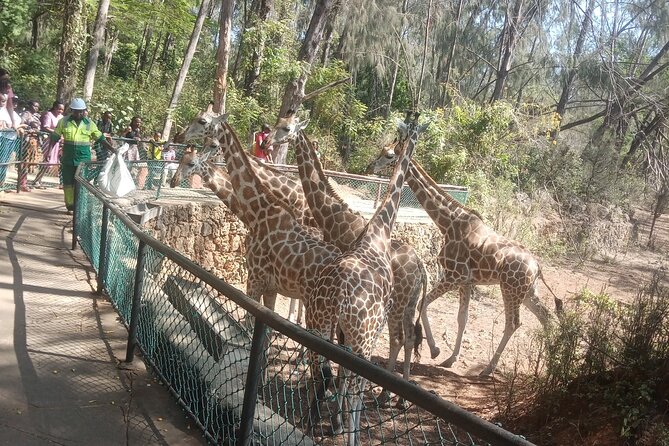
The larger herbivores provide the broad middle section of the visit. Cape buffalo, zebras, elands, and waterbucks each give you a different look at African wildlife, and seeing several species in one outing makes the park more rewarding than a single-animal attraction.
Zebras are familiar to most people, but their markings are best appreciated in person. Elands and waterbucks may be less familiar, so Teddy’s explanations can add useful context. Cape buffalo, meanwhile, bring a heavier and more powerful presence to the animal collection.
The open setting is important for these species. You are not simply moving past small pens. The animals are seen in surroundings that allow them to walk and graze, though the condition of the park may affect how natural the visit feels.
One negative assessment described the park as run-down and said the wild-animal atmosphere was missing. I would take that seriously if polished facilities and a strong safari feeling are high on your list. The tour’s strength is access and variety, not luxury presentation.
Still, a less polished park does not erase the value of seeing these animals. If your goal is to add a manageable wildlife stop to a Mombasa holiday, the range of species may matter more than perfect paths or presentation.
Monkeys, tortoises, and the birdlife
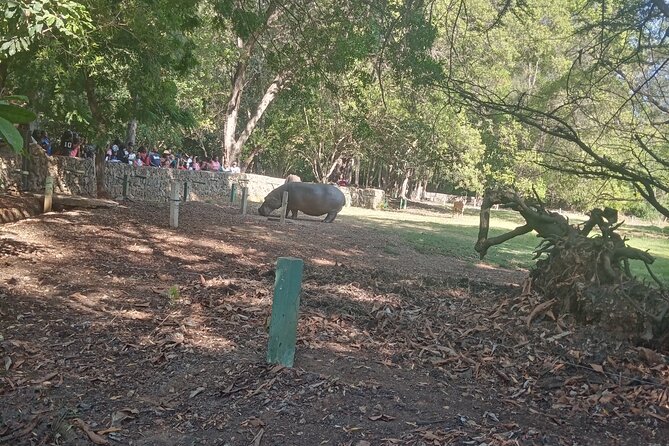
The smaller animals prevent the visit from becoming only a parade of large mammals. Monkeys can add movement and mischief, while tortoises offer a slower, quieter contrast.
Birds are also part of the experience. The tour promises a variety of bird species, but it does not provide a fixed bird list. That means you should enjoy birdwatching as an extra layer rather than book this as a specialist birding excursion.
I like this variety because it keeps you looking in different directions. Large animals tend to draw attention first, but the smaller creatures and birds reward patience. You may find that the park feels more interesting when you stop trying to rush from one famous animal to the next.
The guide’s role is useful again. Teddy is praised for sharing information about the animals and showing people around the park. If you are not familiar with African species, those explanations can help you notice details you might otherwise miss.
The park’s condition may shape this part of the visit, too. If paths or public areas feel worn, the experience may not match the neat, carefully presented animal park you imagined. Go for the animal variety and personal guiding, not for a highly polished attraction.
What four hours really gives you
A four-hour duration is long enough for a focused visit but short enough to fit beside other Mombasa plans. You should have time for the main animal areas and the key feeding events, provided the schedule and transport run as planned.
The private format can make those four hours feel more flexible than a large group excursion. You are not sharing every stop with strangers, and you can ask Teddy to explain an animal or clarify what you are seeing.
At the same time, the tour is not described as a full-day safari. Do not expect long drives through a national park, a large number of wild sightings, or the unpredictability of animals roaming across huge distances.
The difference is simple: Haller Park offers a compact introduction to wildlife, while a safari offers a much wider sense of place and animal behavior. If you are already visiting a reserve elsewhere in Kenya, this may feel supplementary. If Mombasa is your main base, it can fill an important gap.
The four-hour format should suit families, couples, and small groups who want a structured outing without a full-day commitment. It may be less satisfying for serious wildlife photographers or anyone seeking a remote, untamed setting.
How Teddy Mwangiri affects the experience
The guide can make or break a short animal tour, and Teddy’s strongest qualities are practical. He is praised for prompt pickup, advance follow-up, WhatsApp communication, and help when a short delay occurs.
That reliability matters because the experience depends on timing. A late pickup could mean missing a feeding session, so communication before the outing is not just a nice touch. It helps protect the main reason for booking.
Teddy is also praised for explaining the animals and showing the park’s sights. I would value that most if you are visiting with children or if you do not already know the difference between a waterbuck, an eland, and a buffalo.
This is a private tour, so the guiding may feel more direct than on a large group trip. You can focus on the animals that interest you instead of listening to a fixed speech designed for a busload of people.
Who should book this Haller Park outing
I think this tour suits you best if you want:
- A half-day wildlife experience from Mombasa
- Private transport from your hotel
- A guide who pays attention to feeding times
- A chance to feed giraffes
- A mix of mammals, reptiles, monkeys, and birds
- A simpler alternative to arranging a visit on your own
Families should find the range of animals and giraffe feeding appealing. The private format also makes it easier to keep the outing centered on your own group.
It can work well for first-time visitors to Kenya who want an introduction to local wildlife without spending a full day on the road. The park setting is easier to manage than a major safari itinerary, and the included transport removes one practical concern.
I would hesitate if you need pristine facilities, a strongly wild atmosphere, or the scale of a national park. One poor assessment described the park as neglected and not especially wild, so the experience may disappoint anyone expecting a polished safari attraction.
The activity allows service animals, and most people can take part. Confirmation is provided at booking. The tour requires good weather, and a weather cancellation offers either another date or a full refund.
Is $45 per person good value?
At $45 per person, you are paying for more than an entrance visit. Private transportation, bottled water, taxes and fees, and help with the feeding timetable are included.
That package is most useful when you value convenience. A private hotel pickup can be worth a fair share of the cost, especially if you would otherwise spend time arranging transport and trying to coordinate your arrival with the animal feedings.
Lunch is not included. This is not a major problem for a four-hour outing, but you should make your own plan rather than expecting a meal to appear during the visit.
The price is also easier to justify for a private group. If several people share the experience, the personal transport and guide service can feel more worthwhile than paying for a private outing alone.
Final verdict: book it for access, not safari drama
I would book this Haller Park tour if I were staying in Mombasa and wanted a straightforward half-day with private pickup, giraffe feeding, and scheduled hippo and crocodile feedings.
The best parts are clear: Teddy Mwangiri appears dependable, the communication is strong, and the animal variety is good. The main weakness is the park itself, which may feel worn or less wild than you hope.
Choose it for convenience, animal variety, and a guided introduction. Skip it if your priority is untouched nature, high-end facilities, or the scale of a true safari. At $45 per person, it is a sensible local wildlife outing when you value good timing and easy transport.
FAQ
How long does the Haller Park tour last?
The tour lasts approximately four hours.
What is the price per person?
The listed price is $45 per person.
Is hotel pickup available?
Yes. Pickup from your hotel is offered, and private transportation is included.
Is this a private tour?
Yes. Only your group participates in the activity.
Which animals can you see?
You can see hippos, giraffes, buffalo, zebras, elands, waterbucks, tortoises, monkeys, crocodiles, and a variety of birds.
Can you feed the giraffes?
Yes. The experience includes an opportunity to feed the giraffes.
Can you watch hippo and crocodile feedings?
Yes. You can watch the feeding of the hippopotamuses and crocodiles. The operator plans around the animals’ feeding schedules.
Is lunch included?
No. Lunch is not included in the tour price.
Can you cancel for a full refund?
Yes, if you cancel at least 24 hours before the experience start time. Cancellations made less than 24 hours before the start time are not refunded.
Just added in Mombasa
- 4-Day Tsavo East West and Amboseli National Park from Mombasa★ 4.0 · 5 reviews
- 1-Day Tsavo East Safari From Mombasa★ 5.0 · 3 reviews
- Tsavo East National Park 2 days Voi Safari Lodge from Mombasa.★ 5.0 · 2 reviews
- 4×4 Safari in Tsavo East National Park★ 5.0 · 4 reviews
- 4 Days Mount Kenya Trekking★ 5.0 · 6 reviews
- Private Transfer from Mombasa★ 5.0 · 6 reviews
- Swahili Street Food Tour★ 5.0 · 7 reviews
- Fort Jesus Sound and Light show Mombasa★ 4.0 · 17 reviews
Haller Park Tours, compared.
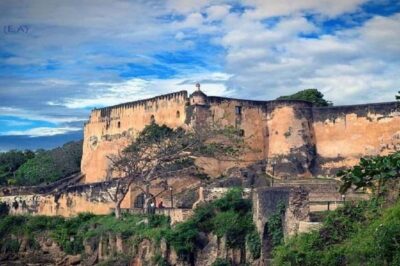
Private City Tour with Fort Jesus & Haller Park
Read our review →
Mombasa Half-Day City Tour with Fort Jesus and Haller Park
Read our review →
Mombasa Private City Tour & Haller park Sanctuary with sea food luch
Read our review →
Mombasa City Tour: Fort Jesus Museum, Old Town & Haller Park
Read our review →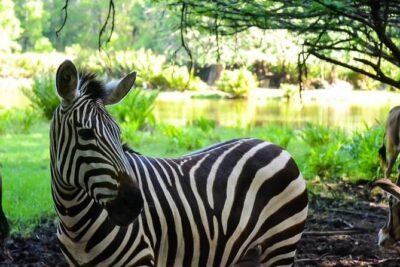
Browse the lists this tour appears in