
Reviewed · HISTORICAL TOURS
Go Granny Go – An Amazing Cultural Tour in Kenya
Meet the women who hold a community together. Go Granny Go takes you from Nairobi to a nearby Kikuyu village, where grandmothers share their work, family responsibilities, and pig-farming program with a small group. I like the direct contact with community leaders, and I like that the visit includes lunch and tea, giving you time for real conversation rather than a quick photo stop.
The tour also offers a useful look at how a small business can support families facing hard financial limits. My one concern is the price, $265 per person, which is a serious spend for a six-and-a-half-hour outing. You will need to value the personal exchange and community support, not just the number of activities, to see the full worth.
In This Review
- Key points to know before you go
- Why this Nairobi day trip feels different
- From Nairobi to the Kikuyu village near Ngong Hills
- Meeting the grandmothers and hearing their stories
- Seeing the pig farm in action
- Singing, lunch, and time to talk
- What the $265 price really covers
- Who will enjoy this experience most
- Practical planning for the 6.5-hour outing
- Is Go Granny Go worth booking?
- FAQ
- Where does the Go Granny Go tour take place?
- What time does the tour start?
- How long does the experience last?
- Is hotel pickup available?
- Is lunch included?
- How many people can join the tour?
Key points to know before you go
- Meet Kikuyu grandmothers in their own community: You are introduced to women who raise grandchildren, care for relatives, and lead family life.
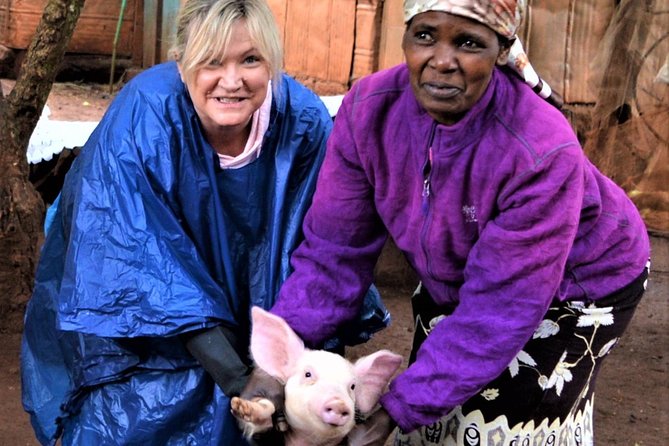
- See a working pig-farming project: One Horizon supports a program designed to give grandmothers a steady source of income.
- Expect a small group: The maximum is nine people, which allows more room for questions and conversation.
- Lunch and tea are included: These shared meals help turn a formal visit into a more relaxed social exchange.
- Plan around a 9:30 am start: Hotel pickup and drop-off are offered, making the day easier to manage from Nairobi.
- Bring an open mind: This is a community visit centered on real financial and family pressures, not a staged cultural show.
Why this Nairobi day trip feels different
Many Nairobi excursions focus on wildlife, city sights, or major attractions. This one moves in another direction. You spend the day learning from Kikuyu grandmothers who speak about family life and community work while showing you part of their daily routine.
The Kikuyu are one of Kenya’s major communities, and this experience gives you a personal introduction rather than a broad classroom-style lesson. You are not simply told that family networks matter. You see how much responsibility can rest on one grandmother’s shoulders.
The women involved may be raising grandchildren when the children’s parents can no longer care for them. In some cases, as many as 20 family members live in a one-room corrugated iron home. That detail gives the visit its weight. It also means you should arrive with respect and patience. This is not poverty presented as scenery. It is a chance to understand how people manage difficult conditions and build practical answers.
The tone is meant to be warm and welcoming. You can talk with the grandmothers, ask questions about their work, and take part in selected chores if you wish. There is also joyful singing, which adds a social and human element to the visit without turning it into a polished stage performance.
More History Tours in Nairobi:
- Nairobi: Historic and Modern Highlights Walking Tour
★ 4.8 · 703 reviews - Nairobi Historical Walking City Tour
★ 5.0 · 258 reviews - Full Day Nairobi Cultural and Historical Tour
★ 5.0 · 153 reviews
From Nairobi to the Kikuyu village near Ngong Hills
The experience begins at 9:30 am, with pickup available from your hotel. Round-trip transport matters here because the village is outside central Nairobi, and you do not need to arrange your own way there and back.
The listed stop is Ngong Hills, but the main purpose of the outing is a Kikuyu village near Nairobi. The provided schedule gives about four hours for the community portion, within a total tour time of roughly six hours and 30 minutes. That leaves room for transport and the day’s changing pace.
I like the morning start. You have enough time to begin the visit without giving up a full evening in Nairobi. Still, allow flexibility around the schedule. The exact time spent driving, talking, eating, and helping with chores may vary because this is a people-focused experience, not a tightly timed museum tour.
A maximum of nine people keeps the setting personal. You are less likely to feel lost in a crowd, and the grandmothers have a better chance to speak with each person. A small group also makes it easier to ask thoughtful questions without holding up dozens of others.
Meeting the grandmothers and hearing their stories
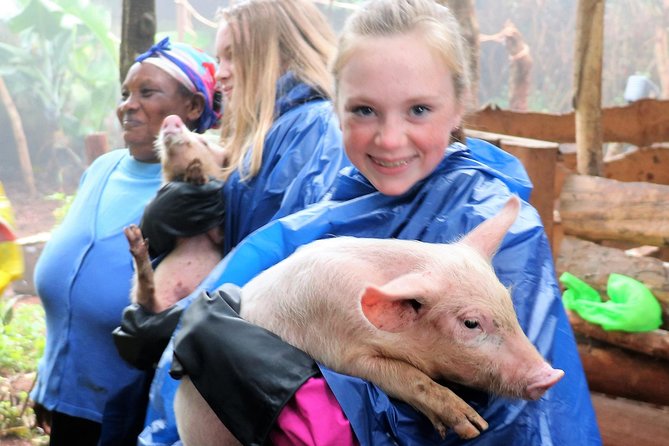
The heart of the tour is the introduction to the grandmothers. They are described as community leaders, family carers, and pig farmers, so you get several views of their lives at once.
Family responsibility is a major part of the conversation. Grandmothers may care for grandchildren and other relatives when parents are no longer able to do so. A single household can include a very large extended family, even when the home itself is only one room.
That contrast is important. You are likely to hear about love and duty, but also about pressure. Feeding a large family requires dependable income, and informal work may not offer enough security. The visit gives context to the choices families make and the role older women can play in keeping a household going.
I appreciate that the experience puts the women at the center. The cultural lesson comes through conversation, not a list of facts. You can ask about family roles, community leadership, and the work needed to support relatives. The supplied information does not provide the names of individual guides or grandmothers, so you should not expect a named celebrity host. The point is the exchange with the group you meet that day.
One practical note: listen carefully and avoid treating personal hardship as entertainment. Ask questions that invite explanation, rather than questions that demand private details. A little courtesy goes a long way in a setting built on trust.
Seeing the pig farm in action
The pig-farming program gives the visit a clear economic focus. One Horizon supports the grandmothers through a small business program based on pig husbandry. The goal is a sustainable source of income to help feed their families.
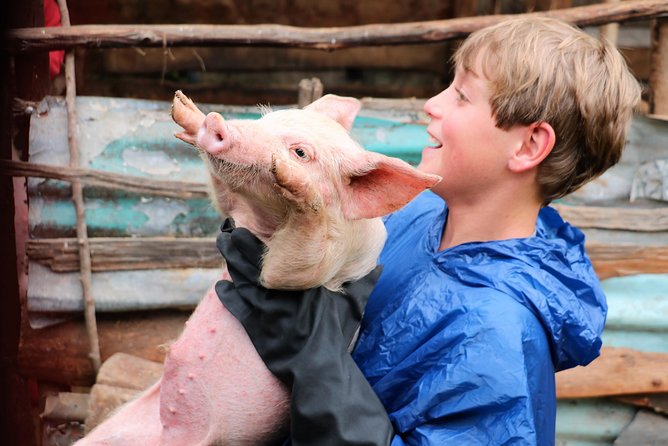
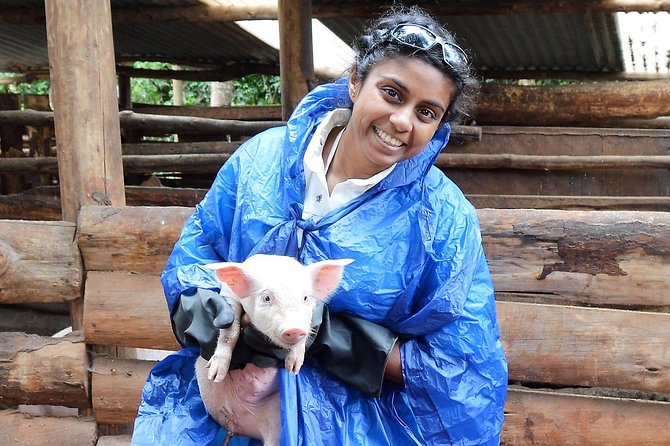
You are shown around a pig farm and may pitch in with chores if you like. That hands-on option is useful because it lets you understand the work in practical terms. You are not only hearing about an income program. You are seeing the animals and the daily tasks connected with it.
The wording matters: helping is optional. You can take part if that feels right, or focus on watching and asking questions. This makes the experience more suitable for different comfort levels. Some people will enjoy getting involved, while others may prefer a quieter conversation.
Do not expect a large commercial farm or a technical agricultural lesson. The supplied details describe a community-based program, so the value lies in understanding how modest livestock operations can support household needs. The tour presents pig farming as a tool for independence and food security, not as a novelty.
For you, the main question is how much importance you place on direct contact with a community project. If you want polished facilities or a long list of attractions, this may feel limited. If you want to see a practical response to poverty at a human scale, this part carries real meaning.
A few more options to weigh up in Nairobi
- Nairobi National Park Half-Day Tour; Free Wi-Fi connection
★ 5.0 · 878 reviews - Nairobi: National Park & Optional Elephants & Giraffe Center
★ 4.8 · 874 reviews - NAI NAMI: Nairobi Storytelling Tour with Street Children
★ 5.0 · 792 reviews - Nairobi National Park Half-Day Game Drive
★ 4.5 · 738 reviews
Singing, lunch, and time to talk
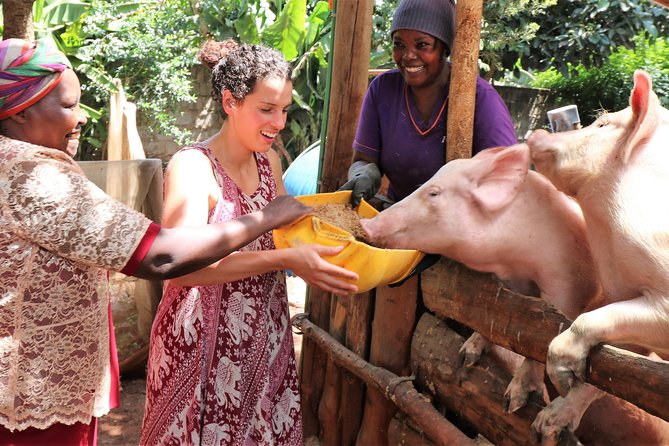
The day includes joyful singing, lunch, and tea. These details may sound simple, but they shape the visit. A meal gives everyone a natural reason to sit together, slow down, and continue the conversation.
Lunch is also a chance to learn in a less formal way. Instead of moving from one presentation to another, you have time to talk with the grandmothers and absorb what they have shared. The meal helps the visit feel social rather than purely instructional.
The available information does not specify the menu, so you should not book this expecting a particular dish. Lunch and tea are included, which is helpful for budgeting and means you do not need to build a separate meal stop into the day.
Singing adds another layer. It can make the atmosphere more open and joyful, especially after hearing about serious family pressures. The balance is one of the strongest parts of the experience: you learn about hardship, but you also meet people through connection, humor, music, and shared food.
What the $265 price really covers
At $265 per person, this is not a low-cost half-day outing. The price needs to be judged against more than transport and sightseeing. You are paying for a small-group visit, round-trip hotel transfer, a community-led cultural exchange, lunch, tea, and support for an income project connected with the grandmothers.
The group limit of nine improves the value. A large bus tour might cost less, but it would not provide the same space for direct questions or personal conversation. Here, the smaller setting is part of what you are buying.
The price may still feel high if you measure value by the number of stops. There is essentially one main community visit, with the Ngong Hills area forming the setting rather than a long list of separate attractions. You should book this for the quality and purpose of the contact, not for a packed sightseeing schedule.
I would compare it with the cost of other Nairobi activities, but I would also ask what kind of day you want. If you are choosing between another standard attraction and a chance to support a community program while learning from the women involved, the cultural value may justify the higher fee.
The tour has received a top rating from the seven reviews supplied, with particular praise for the personal meeting and the program’s effort to help women rebuild their finances. One especially strong reaction described time with the women and their families as humbling and beautiful, even when compared with seeing Kenyan wildlife for the first time. That gives you a fair clue about the tour’s emotional effect, though your own response will depend on how comfortable you are with serious social topics.
Who will enjoy this experience most
This outing suits you if you prefer conversation over sightseeing checklists. It is a good match for visitors who want to understand family life, community work, and local economic programs through direct contact.
It also suits people who value small groups. With no more than nine participants, you have a better chance of being heard and of speaking with the hosts. The pace should feel more personal than a large organized excursion.
Families and multigenerational groups may find the subject especially meaningful because grandparent care is central to the visit. The experience may also appeal to anyone interested in women’s community leadership or small-scale farming.
You should think twice if you want a purely lighthearted outing. Singing and lunch bring warmth, but the discussion includes poverty, family separation, and the strain of supporting many relatives. You need to be ready for an honest visit.
Most people can participate, and service animals are allowed. The information does not list specific physical requirements or a detailed accessibility plan, so contact the provider if you need assistance beyond those points.
Practical planning for the 6.5-hour outing
Keep the 9:30 am start in mind when planning your Nairobi stay. Since pickup is offered, provide accurate hotel details when booking and leave room in your morning schedule for the collection and drive.
The experience lasts approximately six hours and 30 minutes. The community visit itself is listed at about four hours, which is long enough to cover introductions, the pig farm, chores if you choose, singing, lunch, tea, and conversation without forcing every part into a few rushed minutes.
A mobile ticket is offered, so you can keep the booking on your phone. Confirmation is provided at the time of booking. You can cancel for a full refund if you do so at least 24 hours before the start time. Changes or cancellations made inside that window are not accepted for a refund.
The small group means you should book with the right expectations. This is a guided encounter arranged by One Horizon Africa, not an independent village visit. The provider’s role helps organize transport and the meeting, while the grandmothers provide the personal and cultural center of the day.
Is Go Granny Go worth booking?
I would recommend Go Granny Go if you want a thoughtful Nairobi experience built around people, not monuments. The strongest reasons to book are the chance to meet Kikuyu grandmothers directly, see a pig-farming income program, and share food and conversation in a small group.
The $265 cost is the main hurdle. Book it if the community connection and support for a sustainable household income program matter more to you than collecting several sightseeing stops. Skip it if you want a cheaper, faster, or more conventional tour.
For the right visitor, this can become one of the most memorable days in Kenya. You leave with more than photographs. You gain a closer look at the women carrying families forward, one household and one practical project at a time.
FAQ
Where does the Go Granny Go tour take place?
The tour travels from Nairobi to a Kikuyu village near Ngong Hills in Kenya.
What time does the tour start?
The listed start time is 9:30 am.
How long does the experience last?
The full experience lasts approximately six hours and 30 minutes. The community visit is listed as lasting about four hours.
Is hotel pickup available?
Yes. Hotel pickup and drop-off are offered as part of the experience.
Is lunch included?
Yes. Lunch and tea are included, giving you time to talk with the grandmothers in a relaxed setting.
How many people can join the tour?
The tour has a maximum group size of nine people.
Just added in Nairobi
- Wildlife Capital: Half-Day Safari at Nairobi National Park★ 5.0 · 2 reviews
- 3 days maasai mara migration safari★ 4.5 · 7 reviews
- 4 Days Tour Landcruiser in Masai Mara and Lake Nakuru★ 5.0 · 10 reviews
- 4 Days Safari to Lake Nakuru N/P and Maasai Mara N/R★ 5.0 · 18 reviews
- Day Tour to Nairobi national park, Elephants, and Giraffe Center★ 3.5 · 8 reviews
- 6 Days Kenya Budget Group Safari★ 5.0 · 2 reviews
- Maasai Mara Day Trip★ 5.0 · 15 reviews
- 3 Days Masai Mara Wildebeest migration Budget safari★ 5.0 · 2 reviews
Historical Tours, compared.
Nairobi Walking tour:Explore History Culture and Traditions
Read our review →

Nairobi Cultural and Historical City Tour with a Local
Read our review →
Nairobi souvenir Shopping and Historical Half day Tour
Read our review →
Half-Day Cultural Tour to Bomas of Kenya in Nairobi
Read our review →Browse the lists this tour appears in