Reviewed · TOURS
Swahili Carved Doors Tour by Woman Woodcarver: Lamu Island
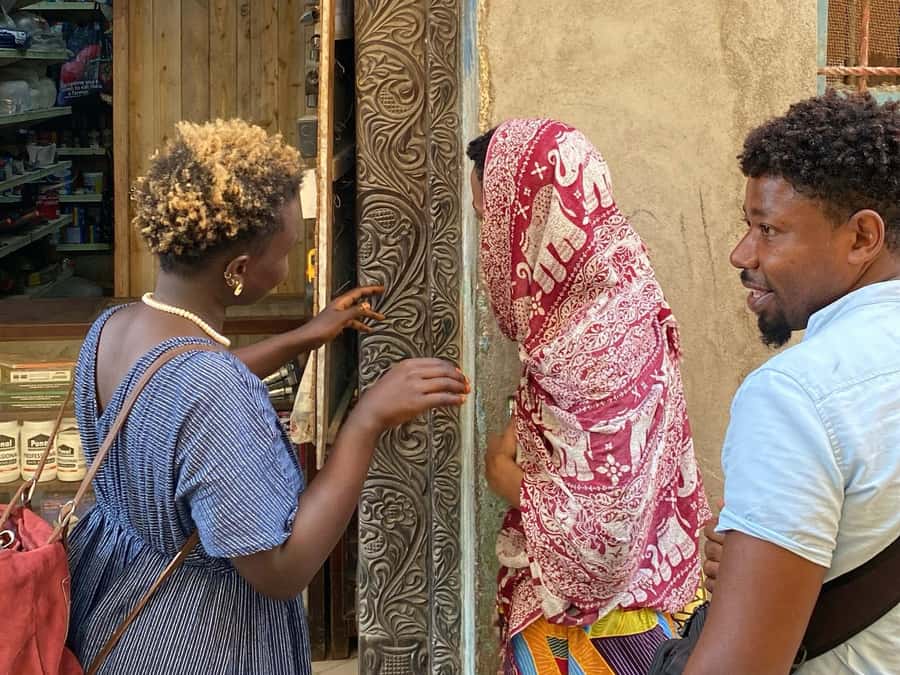
Lamu’s doors tell stories. This private walking tour brings you into Lamu Old Town with Almasi, the island’s only woman woodcarver, who explains the designs, origins, and craft behind the famous Swahili doors. I especially like the direct connection with a working artisan and the chance to explore small lanes rather than simply admire the town from a distance.
I also like the relaxed pace. You have three hours to look closely, ask questions, and enjoy the town without rushing from one sight to the next. The main consideration is the heat and walking: the tour is leisurely, but it still takes place outdoors, and the description gives both a three-hour duration and a two-hour walking-tour reference, so confirm the exact timing when you book.
- Meet Almasi, Lamu’s only woman woodcarver, and learn about her craft directly.
- Compare Swahili door styles as you walk through Lamu Old Town’s main streets and back lanes.
- Explore a UNESCO-listed historic town where the architecture is part of daily life, not just a museum display.
- Start around 3 p.m., a useful choice for avoiding the strongest midday sun.
- Add Shela, about 3 kilometers from Lamu Old Town, for more carved doors.
- Book a private group, with English and Swahili guiding and wheelchair-accessible routes.
In This Review
- Why Lamu’s doors deserve a closer look
- Starting at the town square or your chosen pickup point
- Reading the carved doors of Old Town
- The stories behind the woodwork
- Walking through a UNESCO World Heritage Site
- Adding Shela’s carved doors
- Is $40 a fair price?
- Heat, weather, and what to carry
- Who will enjoy this walk most?
- Practical booking advice for Lamu
- Should you book the Swahili Carved Doors Tour?
- FAQ
- How long does the Swahili Carved Doors Tour last?
- What time does the tour usually begin?
- Where can the tour begin?
- Is the tour private?
- What languages are available?
- What should I bring?
Why Lamu’s doors deserve a closer look
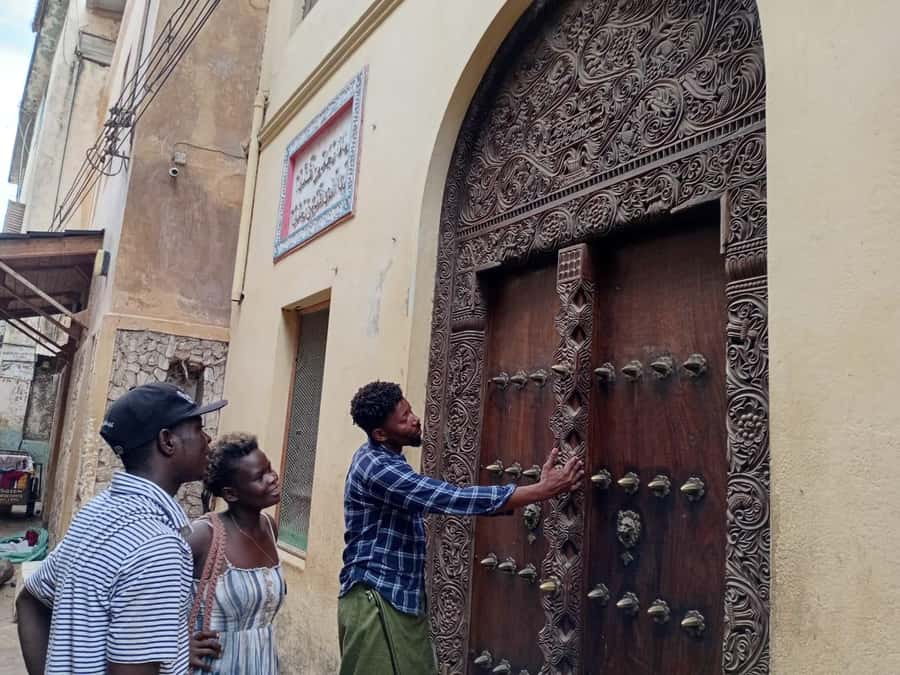
Lamu Old Town is easy to admire at a glance. Its narrow lanes, old buildings, and carved entrances create an instantly memorable setting. But the details are easy to miss if you simply wander with a camera and no local explanation.
That is where this tour earns its place. Almasi does not just point out attractive doors. She explains how the designs differ, where styles came from, and how woodcarving traditions have been passed between generations. You begin to see that a doorway is not merely an entrance. It can reveal taste, status, local identity, and a long connection with Swahili craftsmanship.
I like tours that give a place a human voice. Here, that voice belongs to a woman who works in the very tradition you are coming to understand. Her own story adds another layer to the walk, especially because she is described as the only woman woodcarver on Lamu Island.
The tour suits you if old buildings, handwork, and local stories hold your attention. If you prefer a fast-moving sightseeing trip with many formal monuments, this may feel too slow. The pleasure comes from stopping often and looking carefully.
Starting at the town square or your chosen pickup point
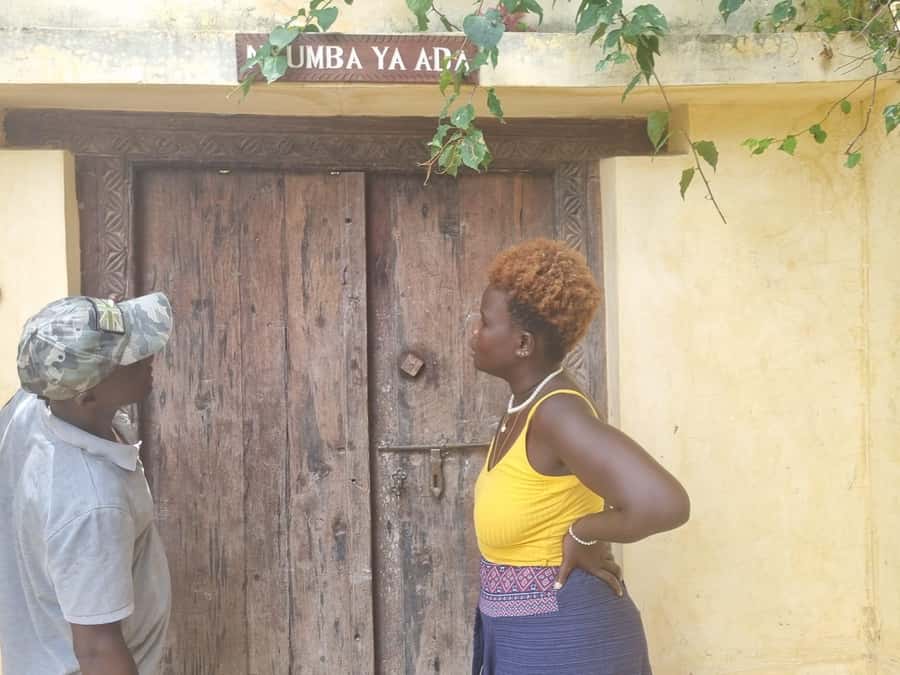
The walk can begin at Lamu’s town square or at another pickup point you select when booking. That flexibility is useful because you do not have to cross town just to meet the guide. It also lets you fit the walk around your accommodation and other plans.
The usual afternoon start is 3 p.m. This timing matters on Lamu, where a walking tour in the full midday sun could become tiring. You should still bring water, wear a hat or cap, and choose comfortable shoes. The route is designed as a leisurely walk, but narrow streets and warm weather are not a good match for stiff footwear.
Food and drinks are not included. Shops in the town can provide minor supplies, but I would carry your own water and perhaps a small snack. A bottle of water is especially sensible if you plan to add the Shela portion.
Because this is a private group, you should have more room to ask questions and set the pace than you would on a large group outing. That makes a difference here. Door details are small, and the best moments may come when you stop to ask why one pattern differs from another.
Other trips worth a look in Kenya:
- Nairobi National Park Half-Day Tour; Free Wi-Fi connection
★ 5.0 · 878 reviews - Nairobi: National Park & Optional Elephants & Giraffe Center
★ 4.8 · 874 reviews - NAI NAMI: Nairobi Storytelling Tour with Street Children
★ 5.0 · 792 reviews
Reading the carved doors of Old Town
The main part of the tour moves through Lamu Old Town, including both the main streets and the back lanes. This mix is important. The larger streets give you a general sense of the town, while the quieter routes let you notice doors in a more ordinary setting.
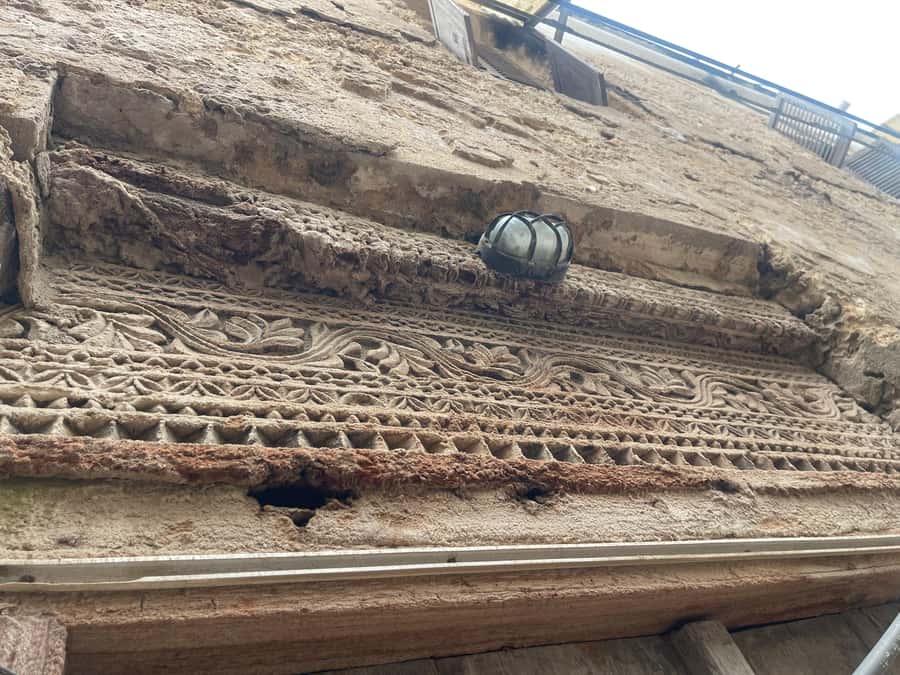
Almasi introduces different carving styles and their origins as you go. You learn to compare the designs rather than treat every carved doorway as the same. At first, you may see only handsome woodwork. By the end, you should have a better sense of how motifs and construction styles differ.
The strength of a specialist guide is that she can connect the physical object with the people who made it. You are not only looking at polished surfaces. You are hearing about the skill, care, and working tradition behind them.
Bring a camera, but do not let photography take over. The doors are highly detailed, and a quick snapshot may not capture what Almasi is explaining. I would take a few wide images to remember the setting, then a few close shots of patterns and carving details.
You should also expect the character of the walk to be observational rather than performative. There is no indication of a formal workshop or a hands-on carving lesson. The focus is on seeing doors in place and learning how to distinguish their styles from an experienced craftsperson.
The stories behind the woodwork
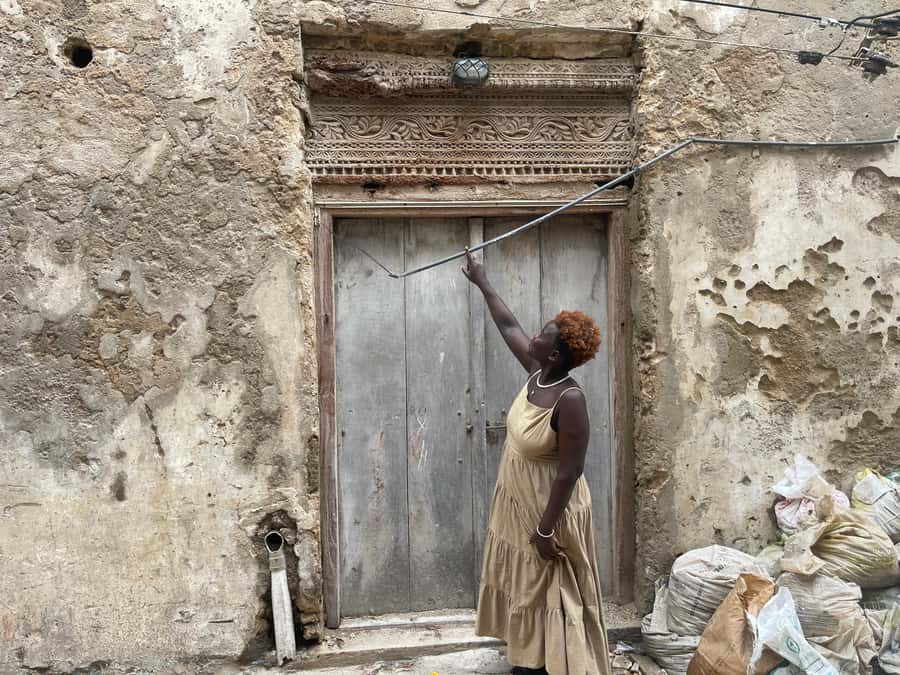
The most valuable part of this experience is the link between design and memory. Swahili doors are presented as objects with histories and stories that have carried through generations. That makes the walk more than an architecture lesson.
Almasi’s role matters here. A guide with a direct connection to woodcarving can explain the work with a level of feeling that a general town guide may not provide. Her passion comes through strongly, and the available feedback repeatedly praises her warmth, clarity, and enthusiasm for the craft.
One particularly useful quality is her willingness to make the experience personal. Her friendly manner helps keep the tour conversational, rather than turning it into a long lecture. One participant even received a refreshing glass of sugarcane juice from her after a hot walk. That was a kind gesture, but you should still carry your own drink rather than count on refreshments being provided.
I would allow yourself time to ask about the designs you find most striking. You may be curious about the meaning of a motif, the difference between two styles, or how the workmanship is carried out. The tour is best for people who enjoy that sort of patient conversation.
Walking through a UNESCO World Heritage Site
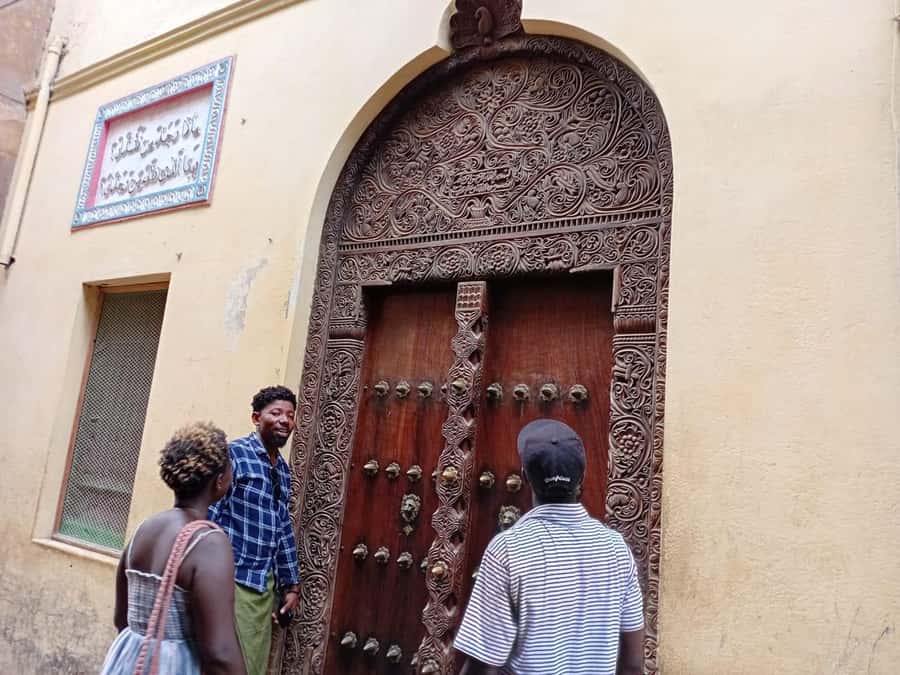
Lamu Old Town is not a backdrop built for sightseeing. It is a historic town where people live and work, and that gives the walk its strongest sense of place. The old doors are part of the town’s streetscape, not isolated objects behind glass.
That setting also calls for respectful behavior. You will be passing residential buildings, so photography should be thoughtful and discreet. Ask Almasi if you are unsure about taking a close picture of a doorway or its occupants.
The narrow lanes create a close-up experience, but they may not offer the broad views or grand scale found at a major archaeological site. The reward is texture and detail. You are looking at surfaces, entrances, and small changes in workmanship.
The route is described as wheelchair accessible, which makes the tour more practical for many visitors. Still, anyone with mobility concerns should confirm the precise route and conditions at the time of booking, since a general accessibility statement cannot describe every surface or turning point in an old town.
A completely different kind of day:
- Nairobi National Park Half-Day Game Drive
★ 4.5 · 738 reviews - Nairobi: Historic and Modern Highlights Walking Tour
★ 4.8 · 703 reviews - Safari Tour; Nairobi National Park
★ 4.5 · 594 reviews - 3 Days Masai Mara Group Joining
★ 5.0 · 486 reviews
Adding Shela’s carved doors
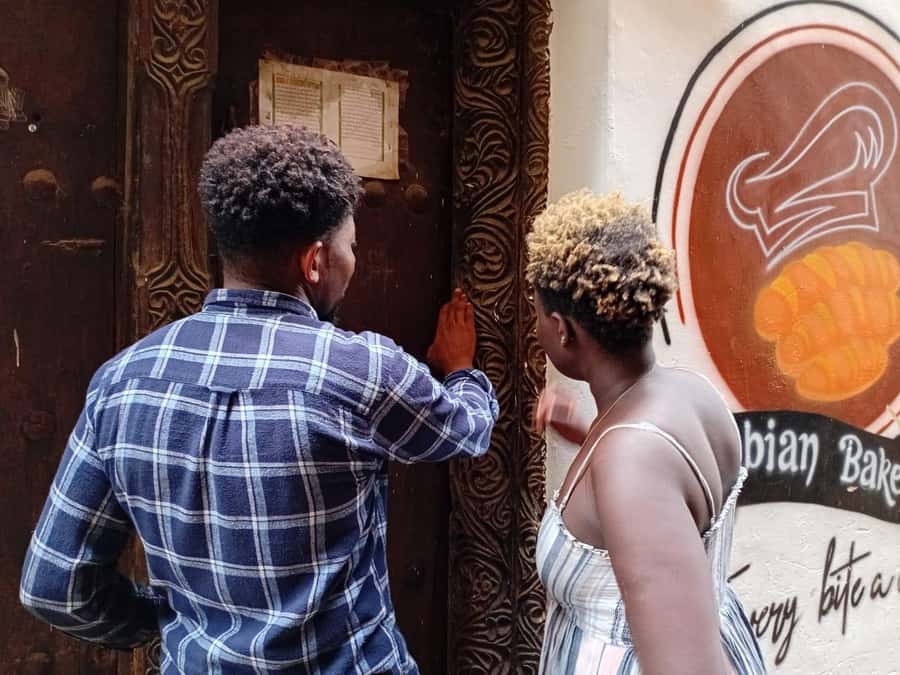
You can opt to extend the experience to Shela, about 3 kilometers from Lamu Old Town, to see more Swahili carved doors. This is a useful option if the door tradition is your main reason for booking.
The additional walk gives you a chance to compare the doors of Shela with those seen in the Old Town. That comparison can make the styles easier to understand, since you are not viewing each example in isolation.
The supplied details do not specify how the Shela extension affects the price, total duration, or transport. Ask about those points before adding it. The main activity is priced at $40 per person, but the extra portion may require separate arrangements.
I would choose Shela if you have enough time on Lamu and want a fuller look at the craft. If you are mainly interested in a gentle introduction, Old Town alone may be enough.
Is $40 a fair price?
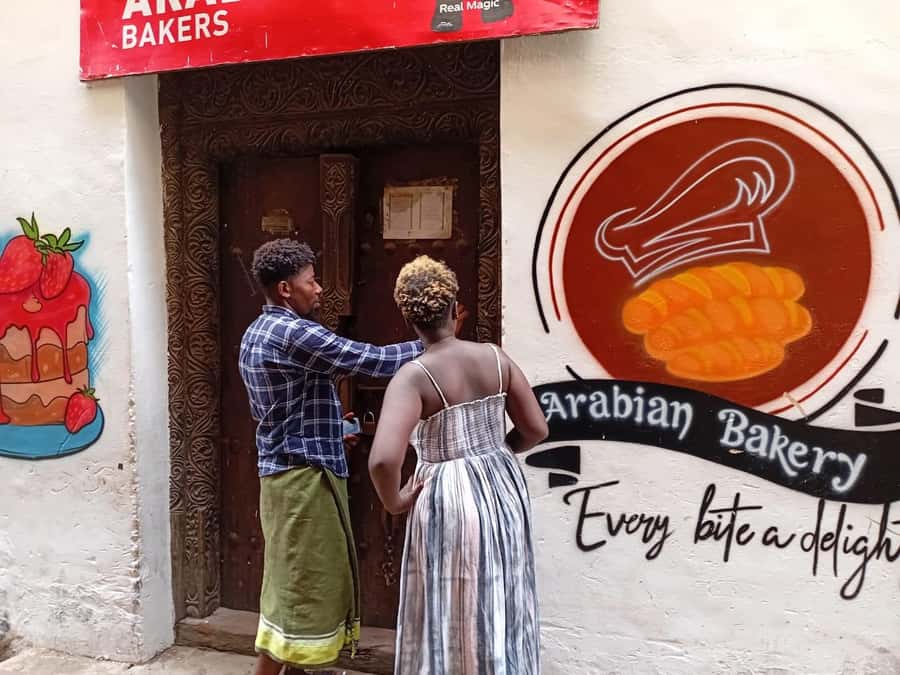
At $40 per person, this is not simply a paid stroll through streets you could walk on your own. You are paying for access to Almasi’s specialist knowledge, a private group format, and a guided way to understand details that are easy to overlook.
The value is strongest if you care about local craft and cultural context. A self-guided walk costs less, of course, but it may leave you with a collection of attractive photographs and little understanding of the differences between door designs.
The price is less compelling if you plan to spend only a short time in Lamu or have no special interest in architecture and woodwork. The tour is focused. It does not try to cover every major attraction on the island.
For me, the strongest value comes from supporting a working woman artisan while learning about a tradition she knows from the inside. That makes the payment feel connected to a person and a skill, rather than only to sightseeing.
The activity offers free cancellation up to 24 hours before the start and a reserve-now, pay-later option. Those terms help if your Lamu schedule is still changing. The exact start time should be checked when you book, even though 3 p.m. is the stated usual departure.
Heat, weather, and what to carry
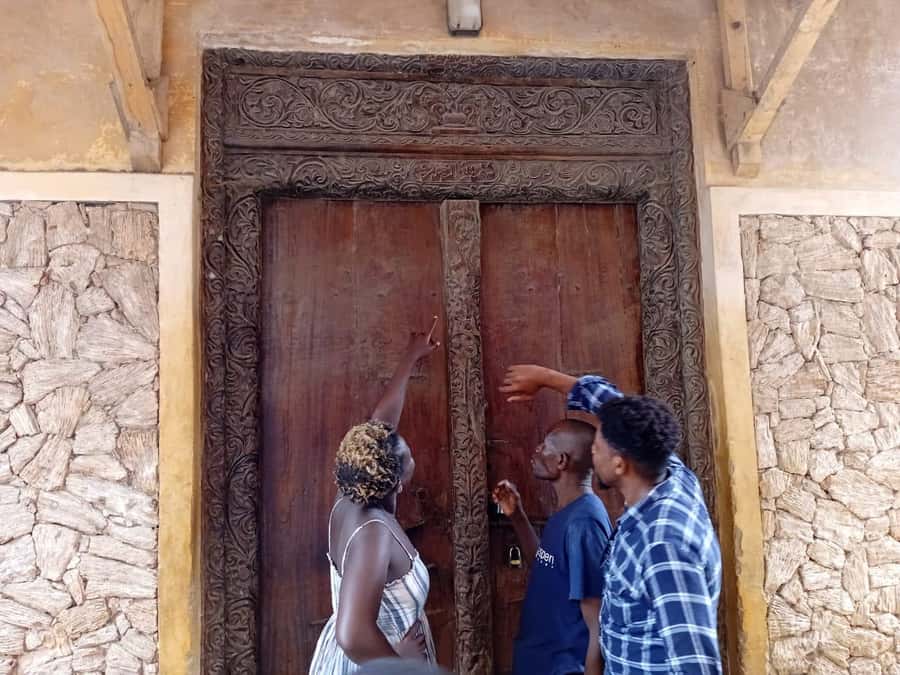
Lamu generally has favorable weather for much of the year, but rain can affect the walk. During the rainy period of May, June, and July, the tour is conducted at times when there is no rain.
That flexibility is helpful, though weather can still change your plans. If your visit falls in those months, keep some space in your schedule rather than arranging the walk immediately before an important departure.
Your packing list is simple:
- Comfortable walking shoes
- Water
- A hat or cap
- A camera
- A small snack if you prefer not to stop at a shop
Food and drinks are not included. You can find small shops in town, but carrying water from the start is easier than interrupting the walk when you are already hot.
The afternoon timing reduces some of the heat, but it does not remove it. Wear light clothing suitable for a long outdoor walk and use sun protection. The tour’s pace is relaxed, yet three hours outside can still be tiring.
Who will enjoy this walk most?
I would recommend it most strongly to you if you:
- Like traditional buildings and handmade objects
- Prefer a walking tour to a vehicle-based sightseeing trip
- Enjoy learning from a local specialist
- Want a private experience with time for questions
- Are interested in Swahili culture and Lamu’s architectural past
- Like taking photographs of fine detail
- Want to support a woman working in a traditional craft
It is also a good choice for curious visitors who want to slow down. The description openly aims at people fascinated by old things and older ways of making them. That is a fair description of the experience.
I would hesitate to recommend it if you dislike walking in warm weather, want a formal museum presentation, or expect a hands-on woodcarving session. You may also find the focus too narrow if you are looking for beaches, food, wildlife, or a broad island tour.
The private format helps families and small groups, but the experience still depends on everyone being willing to walk and pay attention. The doors reward patience. They are not a quick tick-box attraction.
Practical booking advice for Lamu
Choose the 3 p.m. slot unless another time suits your plans better. If you want an earlier or later start, contact the provider in advance rather than assuming it will be available.
Give your preferred pickup point when booking. The tour can begin at the town square or another location chosen with the guide, and settling that detail early avoids confusion on the day.
Ask one important clarification before paying: the description refers to a three-hour tour, while the included section calls it a two-hour walk. This may simply be a wording difference, but it is worth confirming, especially if you are arranging the optional Shela visit.
English and Swahili are available. The group is private, and the routes are described as wheelchair accessible. Food, drinks, hotel pickup, and hotel drop-off are not included.
The experience has a five-star rating from four verified bookings, with praise centered on Almasi’s warmth, craft knowledge, and ability to explain the different door styles clearly. The small number of ratings means you should treat that score as encouraging rather than final proof, but the consistency of the comments is notable.
Should you book the Swahili Carved Doors Tour?
Book it if you want to understand Lamu through its woodwork rather than simply pass through its streets. Almasi’s personal connection to the craft is the main reason to choose this experience, and her friendly, passionate guiding style appears to make the three-hour walk feel welcoming rather than academic.
The $40 price is reasonable for a private, specialist-led cultural tour, especially if you value supporting a local woman artisan. Bring water, prepare for heat, and confirm the exact duration and cost of the Shela extension.
Skip it if your time in Lamu is extremely limited or you are not interested in architecture and traditional craft. For the right person, though, this is a thoughtful way to see the town’s artistic character at street level.
FAQ
How long does the Swahili Carved Doors Tour last?
The activity is described as lasting 3 hours. One section refers to a 2-hour walking tour, so confirm the exact schedule when booking.
What time does the tour usually begin?
Tours are generally conducted in the afternoon at 3 p.m. Another time may be arranged if you contact the provider in advance.
Where can the tour begin?
You can start at Lamu Town’s town square or request another pickup point when booking.
Is the tour private?
Yes. The activity is offered for a private group.
What languages are available?
The live guide can conduct the tour in English or Swahili.
What should I bring?
Bring comfortable walking shoes, water, a camera, and a hat or cap for sun protection. Food and drinks are not included.
Just added in Kenya
- Wildlife Capital: Half-Day Safari at Nairobi National Park★ 5.0 · 2 reviews
- 3 days maasai mara migration safari★ 4.5 · 7 reviews
- 4 Days Tour Landcruiser in Masai Mara and Lake Nakuru★ 5.0 · 10 reviews
- 4 Days Safari to Lake Nakuru N/P and Maasai Mara N/R★ 5.0 · 18 reviews
- Day Tour to Nairobi national park, Elephants, and Giraffe Center★ 3.5 · 8 reviews
- 6 Days Kenya Budget Group Safari★ 5.0 · 2 reviews
- Maasai Mara Day Trip★ 5.0 · 15 reviews
- 3 Days Masai Mara Wildebeest migration Budget safari★ 5.0 · 2 reviews
Tours, compared.

Nairobi National Park Half-Day Tour; Free Wi-Fi connection
Read our review →
NAI NAMI: Nairobi Storytelling Tour with Street Children
Read our review →


Elephant Orphanage and Giraffe Center Tour with Options
Read our review →
Walking Tour Through Old Town Mombasa and Fort Jesus
Read our review →
Day Tour to Amboseli National Park & Maasai Village
Read our review →