
Reviewed · MOUNT KENYA TREKS
Mount Kenya: 4-Day Climbing Experience from Nairobi
Sunrise makes the hard climb worthwhile. This four-day Mount Kenya trip gives you a direct route to Point Lenana, the mountain’s highest trekking summit, with pickup in Nairobi, meals, park fees, guides, porters, and hut accommodation included. I especially like the early summit timing and the practical two-route finish, which lets you climb by Naro Moru and descend by Sirimon.
I also like that the group is limited to 15 people and that the route uses cabins and huts rather than tents. The tradeoff is clear: this is the fastest and most direct way up Mount Kenya, but it is not the mountain’s most scenic route. The marshy bog, steep rock, high altitude, and long summit day demand good fitness and a willingness to accept basic conditions.
In This Review
- The key points at a glance
- Why this four-day climb works
- Day 1: Nairobi to Met Station through forest and bamboo
- Day 2: The Vertical Bog and Mackinders Camp
- Day 3: A 3 a.m. start for Point Lenana
- Day 4: Old Moses Camp back to Nairobi
- Accommodation, meals, and mountain support
- What to pack for this specific route
- Is $1,475 a fair price?
- Who should book this climb?
- Should you book the Mount Kenya four-day climb?
- FAQ
- Where does the Mount Kenya climb begin?
- How long is the Mount Kenya experience?
- What is the highest point reached?
- What time does the summit climb begin?
- Which route does the climb use?
- Where do you sleep during the trek?
- Are meals included?
- Are a guide and porters included?
- Is the experience suitable for pregnant women?
The key points at a glance
- Point Lenana at 16,355 feet: Leave Mackinders Camp at 3 a.m. and reach the hikers’ summit in time for sunrise over central Kenya.
- The Naro Moru route: This is Mount Kenya’s fastest and most popular climbing route, with a steep profile and relatively short schedule.
- Two different mountain exits: Climb through Naro Moru, then descend through Mackinder’s Valley and the Sirimon side of the mountain.
- Huts instead of tents: Met Station, Mackinders Camp, and Old Moses Camp provide cabins or hut-style lodging, with mattresses available.
- Full support included: An English-speaking guide, porters, cook, meals, park fees, and Nairobi transfers are part of the $1,475 price.
- Useful packing lessons: Bring a headlamp, waterproof bag cover, body wipes, warm layers, and spare battery power because the overnight camps have no charging outlets.
Why this four-day climb works
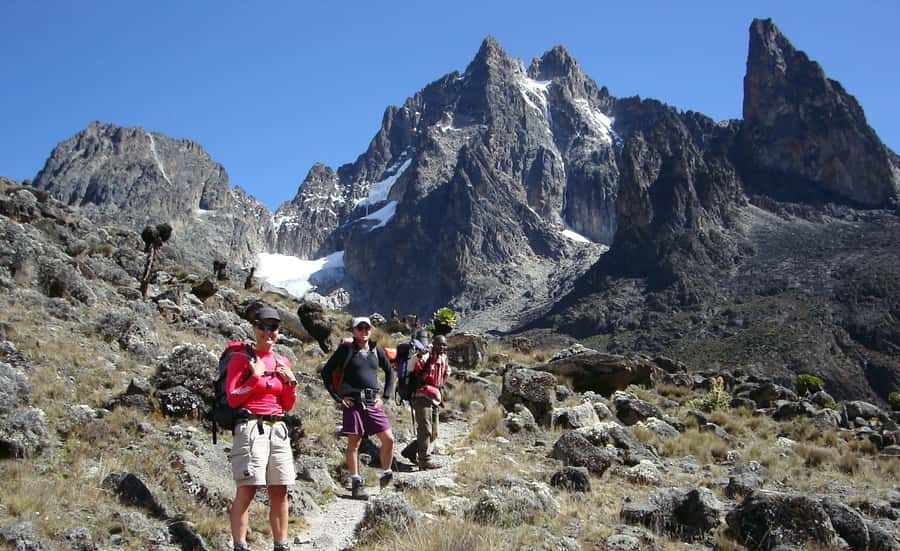
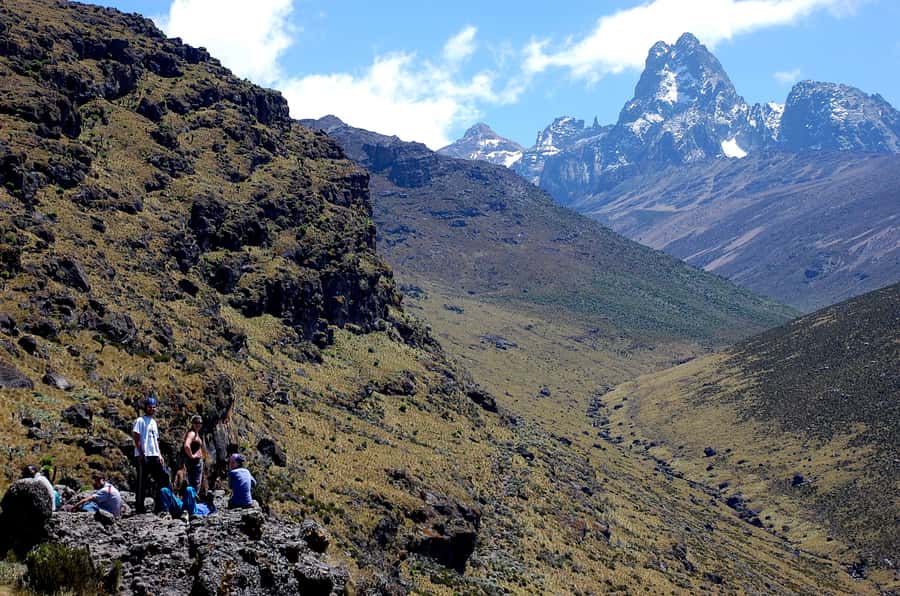
Mount Kenya is not simply a shorter Mount Kilimanjaro. It has its own character, with forest, bamboo, giant heather, moorland, bare rock, and alpine terrain packed into a demanding four-day ascent. You get a strong sense of changing altitude because the vegetation shifts quickly as you climb.
This trip is designed for efficiency. You do not spend extra days acclimatizing at intermediate camps, and you do not take a slow scenic approach. You move from Nairobi to the mountain, climb hard, reach Point Lenana before sunrise, then descend and return to Nairobi on the fourth day.
That tight schedule is both the attraction and the concern. I like it for a hiker who has limited time and wants the summit experience without a week-long expedition. If you are new to high-altitude trekking or prefer slow pacing, the fast gain in elevation may feel severe.
The price is $1,475 per person. That is a serious fee, but it covers the expensive practical pieces: transport from Nairobi, park entry and government taxes, full-board meals, huts or cabins, a professional English-speaking guide, porters, a cook, and a completion certificate. You are not paying only for a walking route. You are paying for a supported mountain operation.
More Mount Kenya treks:
- Climbing Mount Kenya 5 Days Via Chogoria Route
★ 5.0 · 44 reviews - Conquer Mt Kenya in 4 Days Sirimon to Chogoria Route Adventure
★ 5.0 · 16 reviews - 4-Day Mount Kenya Trekking with Pick Up
★ 5.0 · 14 reviews
Day 1: Nairobi to Met Station through forest and bamboo
Your pickup begins in Nairobi, followed by a drive to the Naru Moru Park Gate. Lunch is provided before you start walking, which makes the gate a useful reset point between city travel and the mountain.
The first day takes about three to four hours and covers roughly 6.2 miles. You climb from the park gate through montane forest, bamboo, and giant heather before reaching the high moorland and Met Station at 10,006 feet.
This is described as the gentlest walking day, though the elevation should not be ignored. The route gains roughly 1,300 to 1,968 feet, depending on how the ascent is measured in the trip details. Either way, you have a reasonable first afternoon, with enough time to settle into the mountain rhythm before the harder days.
The forest can also bring wildlife sightings. Keep your eyes open during the approach and the return through the lower mountain zones. You should not expect a safari, but the first and final days offer the best chance to see animals along the route.
Met Station is a practical overnight stop, not a luxury lodge. You sleep in mountain accommodation, eat dinner prepared by the cook, and prepare for a much steeper second day. There are no charging outlets at the overnight locations, so save your phone battery for photographs and carry a power bank if you have one.
Day 2: The Vertical Bog and Mackinders Camp
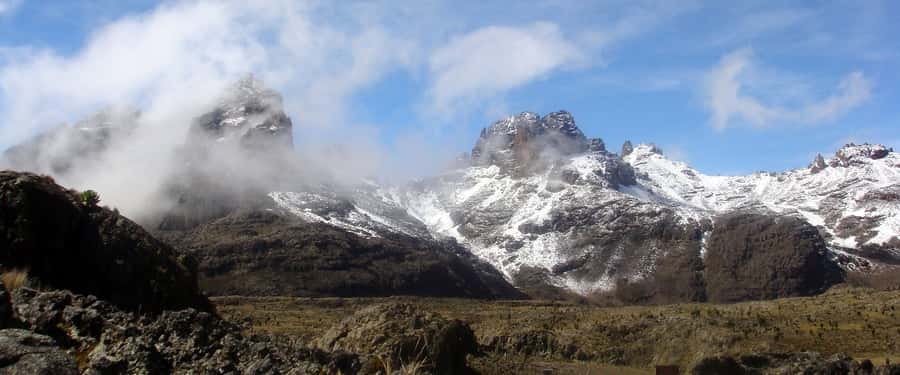
Day two takes you from Met Station to Mackinders Camp at 14,107 feet. The walk covers about 6.8 miles and takes five to six hours, with a major gain in altitude.
After a short walk beyond the forest line, the route enters the lower moorlands. The terrain includes a marshy section known as the Vertical Bog. It is not the kind of smooth, easy trail you might picture from a standard mountain walk. You should expect uneven ground and a steady uphill effort.
A picnic lunch at Picnic Rocks breaks up the climb. This is a useful pause because the day asks you to gain several thousand feet before reaching camp. The trip details give the climb as roughly 3,937 to 4,265 feet, so you should treat this as a demanding altitude day rather than a casual hike.
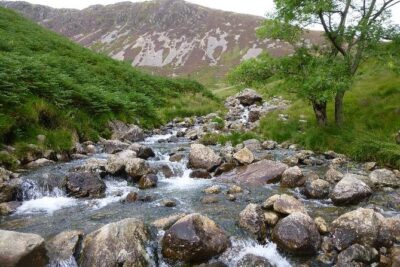
The vegetation becomes more open and unusual as you rise. Giant heather and moorland replace the denser forest, and the feeling of isolation increases. The route itself is not known for being especially scenic, but the changing plant life and broad high-altitude setting give you a strong sense of progress.
Mackinders Camp is your base for the summit attempt. You eat dinner, organize your daypack, and try to sleep before the 3 a.m. start. That early departure is not a minor detail. You will have already climbed for two days, and the summit push begins while most people are still asleep.
Day 3: A 3 a.m. start for Point Lenana
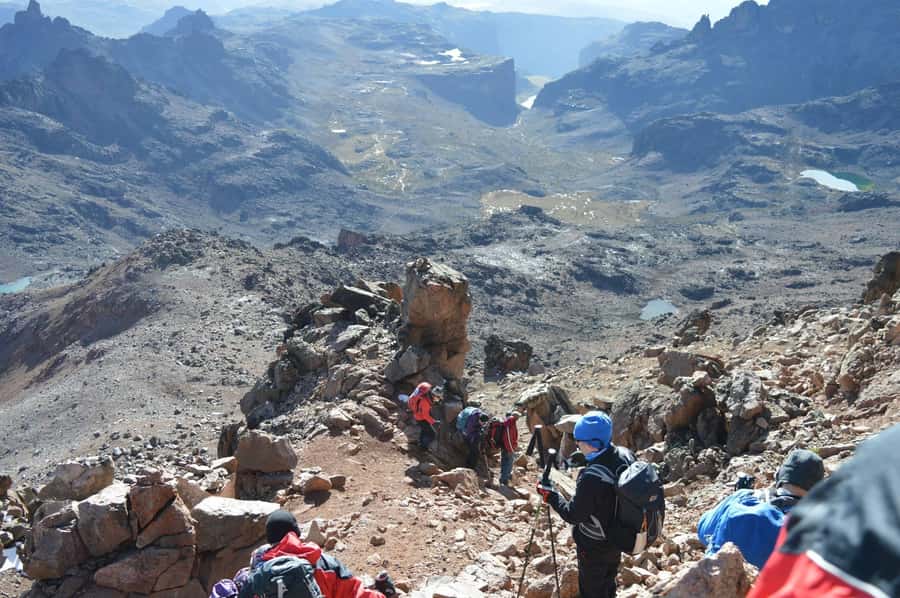
The third day is the heart of the trip and the toughest by far. You leave Mackinders Camp at 3 a.m. for a three to four-hour climb across bare rock and scree slopes.
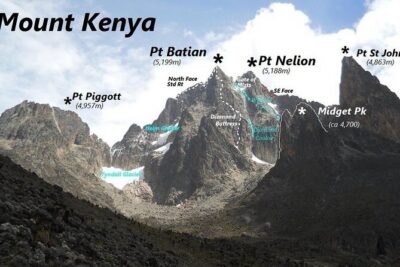
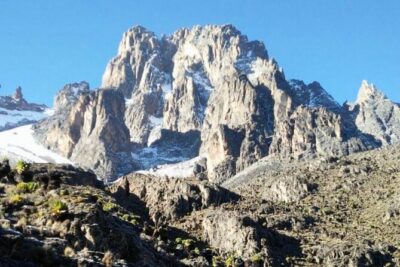
The goal is Point Lenana, at 16,355 feet. This is the highest point on Mount Kenya reached by hikers on this route. You aim to arrive around sunrise, making the timing part of the experience rather than simply a race to a summit marker.
A headlamp is essential for this start. The trail is dark, the footing is rocky, and your hands may be occupied with trekking poles or steadying yourself. Walking sticks are helpful but not mandatory. If you do not own a pair, the climb is still possible, but poles can make uneven ground and the descent easier on your legs.
The sunrise is the payoff for the early alarm. At this height, the light changes quickly, so keep your camera and extra layer easy to reach. The summit can be cold, and weather on Mount Kenya can change without much warning. A waterproof cover for your backpack is a smart choice even if the forecast looks friendly.
After Point Lenana, you descend to Shipton’s Camp on the Sirimon Route for breakfast. This change of route gives the day more variety and avoids simply retracing the same steep ground.
Breakfast at Shipton’s Camp is followed by a long descent through Mackinder’s Valley. The descent takes about five hours and ends at Old Moses Camp, at 10,826 feet. The total day runs for about 11 hours, with approximately 2,247 feet of ascent and 5,528 feet of descent.
That is a lot of time on your feet. The descent may feel gentler than the climb, but tired knees and sore feet can make it just as demanding. Pace yourself after the summit, drink regularly, and do not treat the downhill section as an easy walk.
Mackinder’s Valley and the moorlands provide some of the best scenery on the route, even though the overall Naro Moru approach is not considered particularly scenic. Old Moses Camp offers dinner and another hut-style overnight stay before the final walk out.
A few more options to weigh up in Nairobi
- Nairobi National Park Half-Day Tour; Free Wi-Fi connection
★ 5.0 · 878 reviews - Nairobi: National Park & Optional Elephants & Giraffe Center
★ 4.8 · 874 reviews - NAI NAMI: Nairobi Storytelling Tour with Street Children
★ 5.0 · 792 reviews - Nairobi National Park Half-Day Game Drive
★ 4.5 · 738 reviews
Day 4: Old Moses Camp back to Nairobi
The last morning begins with breakfast, followed by a three-hour descent through rainforest to the Sirimon Park Gate. A vehicle then takes you back to Nairobi, with arrival expected in the early evening.
This final walk is more than a formality. After the long summit day, three hours downhill can still test your legs. The rainforest also gives you one last change in vegetation, bringing you from the high mountain environment back toward the lower elevations.
The return transfer makes this a tidy four-day package. You do not need to arrange a separate ride from the mountain, and pickup and drop-off at your Nairobi accommodation are included. That is especially useful if you are adding the climb to a larger Kenya trip and want a clear start and finish point.
Accommodation, meals, and mountain support
The accommodation is one of the strongest practical features of this climb. You sleep at Met Station, Mackinders Camp, and Old Moses Camp in cabins or huts rather than carrying a tent and sleeping setup. A mattress is provided at each overnight location, so you do not need to pack a sleeping pad.
This does not mean the nights are comfortable in the city-hotel sense. The camps are basic, and there is no chance for a shower during the trek. Body wipes are a small item with a large effect after several hours of uphill walking.
Full-board service covers the meals described for each day. A skilled cook prepares the food, while porters carry equipment and supplies. The guide leads the group and manages the mountain route. This support reduces the amount you must carry, which matters on the steep second day and the long summit day.
The group size is limited to 15 participants. That is still large enough for a social group, but small enough to avoid the feel of a mass departure. The English-speaking guide is included, though no individual guide name is provided for this trip.
What to pack for this specific route
The supplied practical advice is worth taking seriously. You should pack light, but not carelessly. Your bag needs to protect electronics and spare clothing from sudden weather shifts.
I would prioritize:
- A headlamp for the 3 a.m. summit start
- A waterproof cover for your backpack
- Body wipes, since showers are not available
- A warm layer for Point Lenana before sunrise
- Walking sticks or trekking poles if you find them useful
- Extra battery power, since camps have no charging outlets
- Comfortable clothing for steep uphill and long downhill walking
You do not need a sleeping pad because mattresses are available at the overnight locations. The route is supported, but you should still prepare for cold, wet, rocky, and tiring conditions.
Is $1,475 a fair price?
The value depends on what you would otherwise need to organize. If you only compare the cost with four days of walking, the price may look high. If you add park fees, mountain transport, meals, a cook, porters, a guide, hut accommodation, and the logistics of a one-way route that begins and ends in Nairobi, the package becomes easier to justify.
The certificate at the end is a pleasant extra, but it is not the reason to book. The real value is convenience and support. You can focus on pacing and altitude instead of arranging separate transfers, food, permits, and camp staff.
The route also uses the fastest way up Mount Kenya, which suits a short holiday schedule. You give up some scenic variety on the approach, but you gain a compact plan with a clear summit target.
Who should book this climb?
I would recommend it to a fit hiker who wants to reach Point Lenana in four days and prefers hut accommodation to camping. It also suits people already based in Nairobi who want transfers handled from their accommodation.
You should be ready for steep climbing, a rapid increase in altitude, a 3 a.m. start, and an 11-hour summit day. Pregnant women should not book this activity, as it is specifically unsuitable for them.
I would hesitate to recommend it to anyone looking for a relaxed mountain holiday, scenic walks each day, or hotel-style comfort. The route’s strongest features are speed, support, and the sunrise summit, not gentle pacing or luxurious facilities.
Flexible booking helps here. You can cancel up to 24 hours before the start for a full refund, and the reserve-now, pay-later option lets you hold a place without paying immediately. Check the available start time before booking because the departure schedule can vary.
Should you book the Mount Kenya four-day climb?
Book it if your priority is a supported ascent of Point Lenana with Nairobi transfers, full meals, porters, and hut accommodation. The sunrise after the 3 a.m. climb is the central reward, and the two-route finish gives the trip a useful sense of movement rather than a simple return over the same trail.
Skip it if you want the most scenic Mount Kenya route or a slower acclimatization plan. For the right hiker, though, this is a focused and practical mountain trip, with the comfort of a cook and cabins and the honest challenge of high-altitude trekking.
FAQ
Where does the Mount Kenya climb begin?
The experience includes pickup at your accommodation in Nairobi. You then travel to the Naru Moru Park Gate, where the trek begins after lunch.
How long is the Mount Kenya experience?
The activity lasts four days.
What is the highest point reached?
You climb to Point Lenana, which is 16,355 feet high. It is the highest trekking point on Mount Kenya.
What time does the summit climb begin?
The summit attempt begins at 3 a.m. on day three so you can reach Point Lenana around sunrise.
Which route does the climb use?
The ascent follows the Naro Moru route, described as Mount Kenya’s fastest and most popular route. The descent includes the Sirimon Route and Mackinder’s Valley.
Where do you sleep during the trek?
Overnight stops are at Met Station, Mackinders Camp, and Old Moses Camp. Accommodation is provided in camps or huts according to the trip plan.
Are meals included?
Yes. Full-board accommodation and the meals described for each day are included.
Are a guide and porters included?
Yes. The price includes an English-speaking professional guide, porters, and a skilled cook.
Is the experience suitable for pregnant women?
No. Pregnant women are listed as not suitable for this activity.
Just added in Nairobi
- Wildlife Capital: Half-Day Safari at Nairobi National Park★ 5.0 · 2 reviews
- 3 days maasai mara migration safari★ 4.5 · 7 reviews
- 4 Days Tour Landcruiser in Masai Mara and Lake Nakuru★ 5.0 · 10 reviews
- 4 Days Safari to Lake Nakuru N/P and Maasai Mara N/R★ 5.0 · 18 reviews
- Day Tour to Nairobi national park, Elephants, and Giraffe Center★ 3.5 · 8 reviews
- 6 Days Kenya Budget Group Safari★ 5.0 · 2 reviews
- Maasai Mara Day Trip★ 5.0 · 15 reviews
- 3 Days Masai Mara Wildebeest migration Budget safari★ 5.0 · 2 reviews
Mount Kenya Treks, compared.
Conquer Mt Kenya in 4 Days Sirimon to Chogoria Route Adventure
Read our review →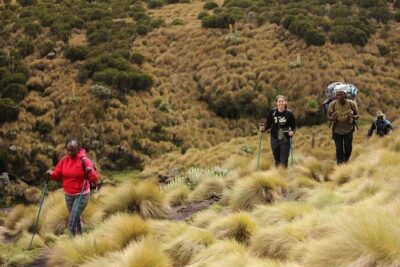
4 Days Mt Kenya Climb, Chogoria Route up and out Sirimon route
Read our review →
5 Days Mount Kenya Climbing Via Chogoria Sirimone Route
Read our review →
Browse the lists this tour appears in