
Reviewed · MUSEUMS
Half Day – Nairobi City Walking/Bus Tour Museums, Monuments & Rooftop City View
Nairobi reveals itself one street at a time. This small-group city tour mixes walking with local matatu rides, then adds the National Archives, Nairobi Railway Museum, and a 360-degree view from the Kenyatta International Conference Center. I like the maximum group size of seven, which should make questions and conversation easier. I also like the chance to ride public minibuses rather than seeing the city only through a tourist vehicle. The main drawback is that the $61 price does not include the three attraction tickets, adding another $11 per person.
The day runs about five to seven hours, beginning at 8:30 a.m. at the National Archives on Moi Avenue. You should expect a fair amount of walking, some time on public transport, and a schedule that may feel full rather than leisurely. Still, for a first look at central Nairobi, this is a useful way to connect the city’s art, independence story, railway past, government buildings, and everyday transport.
In This Review
- Key points at a glance
- Why this tour gives you more than a standard city drive
- Meeting at the National Archives on Moi Avenue
- Inside the National Archives: art, culture, and independence
- The matatu ride to Kasarani
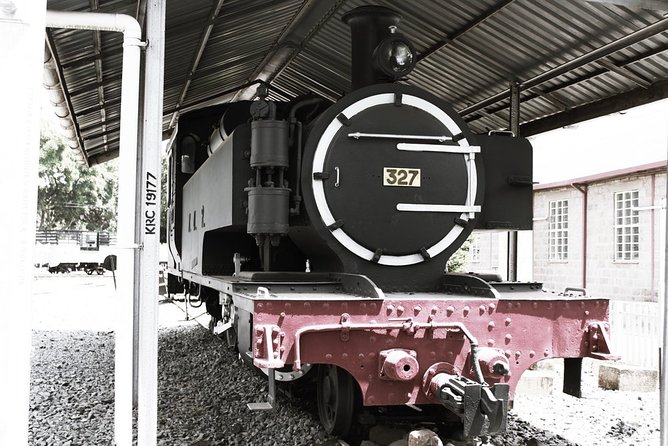
- Nairobi Railway Museum and the story of the railway
- KICC rooftop views in the final half hour
- What the $61 price really covers
- Walking, timing, and group size
- Who will enjoy this Nairobi outing most
- Should you book it?
- FAQ
- Where does the tour begin?
- What time does the tour start?
- Where does the tour end?
- How long does the tour last?
- How many people can join the tour?
- Is transport included?
- Are attraction tickets included in the price?
- How much are the additional entrance fees?
- Is the tour suitable for anyone with limited fitness?
- Can I cancel for a full refund?
Key points at a glance
- Ride Nairobi’s decorated matatus: The shared minibuses are known for designs featuring musicians, athletes, political figures, religious themes, and pop culture icons.
- Start at the National Archives: See African paintings, tribal photographs, weapons, instruments, masks, and displays connected to Kenya’s independence.
- Travel with no more than seven people: The small group suits anyone who wants a more personal outing than a large coach tour.
- Visit the Railway Museum: Learn how railway construction helped shape Kenya and Nairobi.
- See central Nairobi from the KICC rooftop: The former helipad provides a 360-degree view of the central business district and major government buildings.
- Budget for $11 in extra admission: The National Archives and Railway Museum each cost $3, while KICC costs $5.
Why this tour gives you more than a standard city drive
Many city tours show you major buildings from behind a vehicle window. This one asks you to walk through central Nairobi and use the same kind of shared minibuses that many residents use. That changes the pace. You get closer to the streets, and the transport becomes part of the sightseeing rather than just a way to move between attractions.
I especially like the mix of subjects. The National Archives introduces art, culture, and the independence struggle. The Railway Museum explains the infrastructure that helped develop the country. The KICC rooftop then gives you a visual orientation, letting you look down on the central district after seeing parts of it at street level.
The tour is not designed as a luxury outing. The listed guiding fee covers the guide, but the entrance charges are separate. At $61, it is best value for someone who wants structure, local transport, and a guide in one package. If you only want a quick view of Nairobi’s main buildings, you may find it expensive once the $11 admission total is added.
The small group helps justify the cost. With a cap of seven people, you should have a better chance to hear the guide clearly and ask about places you pass. A previous visitor described the walk as a good way to see central Nairobi away from the usual tourist venues and praised the young guide’s pleasant manner and area knowledge. That is a useful clue about the tone to expect: personal and informal rather than polished like a large commercial bus excursion.
More Walking Tours in Nairobi
- Nairobi: Historic and Modern Highlights Walking Tour
★ 4.8 · 703 reviews - Nairobi Historical Walking City Tour
★ 5.0 · 258 reviews - Nairobi Downtown Walking Tour
★ 4.7 · 208 reviews
Meeting at the National Archives on Moi Avenue
Your day begins at 8:30 a.m. at the National Archives, located at 30 Moi Avenue in Nairobi. This is both the meeting point and the first stop, so the morning gets underway without a separate transfer to the museum.
The early start matters. A five-to-seven-hour activity can otherwise consume most of the day, leaving little time for lunch or other plans. If you book this experience, keep the rest of your schedule flexible. The stated duration is approximate, and the combination of walking, public transport, and several attractions can take longer than a simple drive between landmarks.
The tour is near public transportation, but you should still plan to arrive at the named meeting point rather than relying on a vague downtown landmark. The instructions identify the National Archives on Moi Avenue clearly. That is especially helpful in a busy city center where several major buildings may be close together.
Inside the National Archives: art, culture, and independence
The National Archives is scheduled for about an hour. It is not simply a room of government documents. The collection includes paintings and photographs from across Africa, along with tribal weapons, musical instruments, masks, and other cultural objects.
You can expect this stop to broaden the picture of Kenya beyond its colonial buildings and modern offices. The exhibits also cover the struggle for independence and the development of Nairobi. That makes the museum a useful first stop because it gives historical context before you spend more time looking at the city itself.
I like the range here. A museum that combines art, cultural objects, and political history can help you connect the national story with the people and traditions behind it. The displays may also appeal to you if you want more than a checklist of monuments.
The admission fee is $3, paid separately. That is a small extra cost, but you should include it in your budget. The museum visit lasts only about an hour, so it is not meant to be a long research session. Your guide can help point out the parts most relevant to Nairobi and Kenya’s independence.
The matatu ride to Kasarani
After the Archives, the tour includes a two-way ride aboard matatus, Kenya’s popular shared minibuses. The itinerary gives this portion about two hours, making it one of the largest blocks of the day.
The matatu is more than a practical vehicle in this context. The tour description points to the wide range of exterior and interior designs, including hip-hop artists, international pop stars, athletes, political icons, and religious imagery. The comparison to a rolling local radio station captures the idea: each vehicle can have its own visual identity and sound.
You should see this as an everyday Nairobi experience rather than a sightseeing ride built for comfort. Shared minibuses are part of local life, and using one gives you a different connection to the city than sitting in a private van. The tradeoff is that public transport can be less predictable and less spacious. If you need a quiet, slow-paced tour with plenty of room, this section may test your patience.
The route is described as a ride to Kasarani and back, but no detailed stops along the way are provided. That means you should not expect a long series of planned photo breaks. The value is in the transport experience itself, the changing view from the vehicle, and the guide’s explanation of how matatus fit into city life.
Two hours is a substantial amount of time, so this portion can shape your opinion of the tour. I would choose it if you want a closer look at local routines and are comfortable with a more active, less polished day. I would not choose it if public transport is a major concern or if you prefer to spend the whole day inside museums and formal attractions.
More Museum Tours in Nairobi:
- Day tour to Giraffe Center and Karen Blixen Museum
★ 4.5 · 168 reviews - Nairobi National Park,Giraffe Centre, Karen Blixen Museum.
★ 5.0 · 127 reviews - Giraffe Center and Karen Blixen Museum Tour from Nairobi
★ 4.6 · 43 reviews - Nairobi National Park, Giraffe Center & Karen Blixen Museum
★ 4.5 · 42 reviews
Nairobi Railway Museum and the story of the railway
The Nairobi Railway Museum follows the matatu segment and lasts about 45 minutes. Its focus is Kenya Railways and the role of the railway in the country’s growth. The museum presents the railway as a force that helped develop Kenya into the country it is today.
This stop adds a useful layer to the tour. The National Archives deals with culture, politics, and independence, while the Railway Museum turns your attention to transport and economic development. Together, they help explain why Nairobi became an important center.
Forty-five minutes is enough for an introduction, but not enough for an unhurried museum study. You will need to keep moving with the group. If railway history is a major interest, you may wish you had more time. If you want a compact overview linked to the city’s development, the length should work well.
Admission costs another $3. Like the Archives, this is a modest charge, but it means the advertised price is not the full cost of the day. The guide’s role is important here because the broader significance of the railway may not be obvious from exhibits alone.
KICC rooftop views in the final half hour
The last listed stop is the Kenyatta International Conference Center, known as KICC. You spend about 30 minutes on the rooftop, which also serves as a helipad. From there, you get a 360-degree view of Nairobi’s central business district.
This is the tour’s clearest orientation point. After walking through downtown and riding a matatu, you can look over the area from above and connect the streets, office towers, and public buildings you have seen. The view also includes major landmarks such as the Office of the President and Kenya’s Parliament.
The rooftop is a good final stop because it changes the scale of the day. Museums give you objects and stories. Street travel gives you movement and daily life. KICC gives you the city as a whole.
The visit lasts only 30 minutes, so expect a focused viewpoint rather than a long stay. The admission fee is $5, the highest of the three extra charges. Add that to the $3 Archives ticket and $3 Railway Museum ticket, and your additional cost comes to $11.
What the $61 price really covers
The $61 per-person price covers the guiding fee and the organized experience. It does not cover admission to the three attractions. With all listed tickets added, the practical total becomes $72 per person, before any other personal spending.
That price can be fair if you value the small group and the local transport element. A group capped at seven is much more personal than a large city coach, and the guide can usually respond to individual questions more easily. The tour also links four different experiences in one morning and afternoon: a museum, a matatu journey, a railway collection, and a rooftop view.
The value is weaker if you plan to visit these places independently anyway. The attractions themselves have low entry prices, so much of what you are paying for is the guide, the planning, and the chance to use public transport as part of the experience.
I would also consider the five-to-seven-hour duration. A longer day can be good value when you want a broad introduction, but it limits flexibility. You may not have much time for an unplanned meal, shopping, or another museum afterward.
Walking, timing, and group size
You need moderate physical fitness for this activity. The day combines walking through central Nairobi with rides on matatus and visits to several sites. The data does not give a precise walking distance, so you should be ready for more time on your feet than the headline half-day label might suggest.
The small group is one of the strongest practical features. A maximum of seven people keeps the outing from feeling like a crowd moving between landmarks. It also gives you a better chance to stay close to the guide during street sections and museum visits.
The schedule begins at 8:30 a.m. and ends back at the original meeting point. Since the duration is approximate, avoid booking a tight onward appointment. The experience is better enjoyed when you are not watching the clock.
Mobile ticketing and booking confirmation make the reservation simple. Free cancellation is available if you cancel at least 24 hours before the local start time. Changes or cancellations inside that window are not accepted for a refund.
Who will enjoy this Nairobi outing most
I would recommend this tour to you if you want an introduction to Nairobi that includes ordinary city movement, not only formal attractions. It suits first-time visitors who want a guide to connect the city’s museums, monuments, transport, and skyline.
It is also a good fit if you prefer small groups. The seven-person limit creates a more conversational setting, and the positive impression of the pleasant young guide suggests the tour can feel friendly rather than mechanical.
You may want to choose another option if you have limited mobility, dislike shared minibuses, or want a slow museum day. The moderate fitness requirement is clear, and the two-hour matatu section is a major part of the schedule.
This experience also suits curious visitors who like context. The National Archives and Railway Museum are not just photo stops. They provide background for understanding Kenya’s culture, independence, and development. KICC then brings that information back to the present-day city.
Should you book it?
Book this tour if you want to see Nairobi from several angles in one organized day: cultural collections, independence history, railway development, local transport, and a rooftop view. The matatu ride and seven-person limit are the strongest reasons to choose it over a standard city drive.
Before booking, add the $11 in attraction fees to the $61 tour price, prepare for walking, and leave your schedule open for five to seven hours. If that total suits your budget and you want a direct introduction to central Nairobi, this is a worthwhile choice. If you want a cheaper outing or prefer complete control over your pace, visit the museums independently and skip the packaged experience.
FAQ
Where does the tour begin?
The tour begins at the Nairobi National Archives, at 30 Moi Avenue in Nairobi, Kenya.
What time does the tour start?
The start time is 8:30 a.m.
Where does the tour end?
The activity ends back at the original meeting point.
How long does the tour last?
The tour lasts approximately five to seven hours.
How many people can join the tour?
The tour has a maximum group size of seven travelers.
Is transport included?
The experience includes rides aboard matatus as part of the tour. The listed inclusion is the guiding fee.
Are attraction tickets included in the price?
No. Admission tickets are purchased separately for the National Archives, Nairobi Railway Museum, and Kenyatta International Conference Center.
How much are the additional entrance fees?
The National Archives costs $3, Nairobi Railway Museum costs $3, and KICC costs $5 per person.
Is the tour suitable for anyone with limited fitness?
The tour requires a moderate level of physical fitness. It combines walking with public transport and several attraction visits.
Can I cancel for a full refund?
Yes. You can cancel at least 24 hours before the experience start time for a full refund. Cancellations or changes made less than 24 hours before the start time are not accepted for a refund.
Just added in Nairobi
- Wildlife Capital: Half-Day Safari at Nairobi National Park★ 5.0 · 2 reviews
- 3 days maasai mara migration safari★ 4.5 · 7 reviews
- 4 Days Tour Landcruiser in Masai Mara and Lake Nakuru★ 5.0 · 10 reviews
- 4 Days Safari to Lake Nakuru N/P and Maasai Mara N/R★ 5.0 · 18 reviews
- Day Tour to Nairobi national park, Elephants, and Giraffe Center★ 3.5 · 8 reviews
- 6 Days Kenya Budget Group Safari★ 5.0 · 2 reviews
- Maasai Mara Day Trip★ 5.0 · 15 reviews
- 3 Days Masai Mara Wildebeest migration Budget safari★ 5.0 · 2 reviews
Museums, compared.

Day tour to Giraffe Center and Karen Blixen Museum
Read our review →
Nairobi National Park,Giraffe Centre, Karen Blixen Museum.
Read our review →
Giraffe Center and Karen Blixen Museum Tour from Nairobi
Read our review →
Nairobi National Park, Giraffe Center & Karen Blixen Museum
Read our review →

Karen Blixen Museum & Giraffe Centre Half day tour
Read our review →
Mombasa City Tour: Fort Jesus Museum, Old Town & Haller Park
Read our review →Browse the lists this tour appears in