
Reviewed · CITY TOURS
City Tour with Ghalib
Mombasa’s past comes alive quickly. This four-hour city tour pairs Fort Jesus with Old Town, Queen’s Tusks, and a Hindu temple, giving you a useful introduction to Swahili culture, Indian Ocean trade, and the many communities that shaped Kenya’s coast. I like the strong historical focus, and I like that Ghalib leads the tour himself rather than leaving you to decode Mombasa’s story alone.
The tour also keeps transport simple with a tuk-tuk, a good choice for moving between sights on Mombasa Island. The main consideration is cost: at $77.70 per person, you still pay the Fort Jesus entrance fee and lunch separately. That price makes the guide and private-feeling transport important parts of the value.
In This Review
- Key points to know before booking
- Why this four-hour tour works well in Mombasa
- Fort Jesus Museum: the essential first stop
- Old Town: Arab, Portuguese, British, and Indian influences
- Queen’s Tusks and the gateway to Mombasa
- Shree Cutch Satsang Swaminarayan Temple
- Ghalib’s guiding style and what you learn
- The tuk-tuk ride and practical pace
- Is $77.70 good value?
- Who should book this Mombasa city tour?
- Final verdict: a strong introduction to Mombasa
- FAQ
- How long is City Tour with Ghalib?
- Where does the tour start?
- Where does the tour end?
- Is transportation included?
- Is Fort Jesus admission included?
- Is lunch included?
- How large is the group?
Key points to know before booking
- Fort Jesus anchors the tour: Allow about 50 minutes to explore the Portuguese fortress and museum, with admission paid separately.
- Old Town adds the human story: Arab, Portuguese, British, and Indian influences appear in one compact historic district.
- Ghalib is the main attraction: His explanations focus on Swahili history, Mijikenda culture, trade, and local traditions.
- The tuk-tuk keeps the pace practical: You avoid arranging transport between the stops, though the ride is functional rather than luxurious.
- Queen’s Tusks mark modern Mombasa: The steel tusks recall Queen Elizabeth’s 1952 visit and also point toward the city center.
- Small groups suit curious visitors: The tour accepts no more than 11 people and requires moderate physical fitness.
Why this four-hour tour works well in Mombasa
Mombasa can be difficult to understand if you only see isolated sights. A fortress tells one part of the story. A temple tells another. Old Town fills in the spaces between them.
This tour connects those pieces. You learn about the Swahili people of the Kenyan coast, the Mijikenda, and the nine related Mijikenda subtribes. You also hear how the Indian Ocean trade brought people from different parts of the world to Mombasa.
Trade here was not a side note. Local merchants exchanged spices, gold, and silver, while ivory and other animal products moved outward. That exchange brought wealth, new religions, new architectural ideas, and outside political control. Ghalib’s role is to connect the buildings and monuments to those larger changes.
I especially like that the tour does not treat Mombasa as only a Portuguese or British colonial story. The Swahili and Mijikenda communities are part of the main subject, not a footnote. That gives you a better sense of the coast as a meeting place shaped by African, Arab, Indian, and European connections.
The four-hour length is also sensible. You get enough time for the major stops without committing an entire day to city sightseeing. Since the start and finish are both on or near Nkurumah Road by Fort Jesus, the tour is easy to fit around other plans in Mombasa.
A few more options to weigh up in Mombasa
- Walking Tour Through Old Town Mombasa and Fort Jesus
★ 5.0 · 393 reviews - Mombasa: Kisite Park Private Cruise with Breakfast and Lunch
★ 4.7 · 181 reviews - Mombasa City Tour
★ 5.0 · 170 reviews
Fort Jesus Museum: the essential first stop
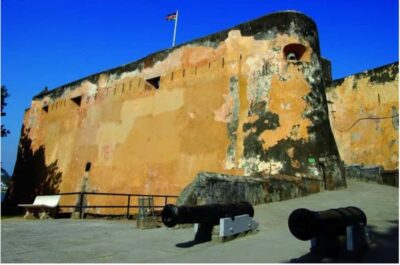
Fort Jesus is the heart of the tour. The Portuguese built this fortress in the 15th century to guard the Indian Ocean trade and protect Mombasa’s old port. Its thick defensive design reflects the importance of this harbor and the competition surrounding it.
You have about 50 minutes here, and that is enough for a focused visit rather than a long museum session. Admission is not included, so you should budget for the entrance ticket separately. The tour price covers the guide and tuk-tuk, not entry to the fort.
Inside, the focus is on the history and culture of Swahili civilization, along with the outside influences that arrived through trade and conquest. This is where Ghalib’s explanations matter most. Without context, a fortress can become a collection of walls, rooms, and old stones. With a guide, you can connect the building to Mombasa’s port, trade routes, and changing rulers.
The fort also helps explain why Mombasa became so important. Its position on the coast made it a natural point for commerce across the Indian Ocean. Merchants and sailors brought goods, beliefs, languages, and customs from far beyond Kenya.
You should expect some walking and standing at this stop. The tour requires moderate physical fitness, and the fortress visit is not designed as a seated lecture. Wear sensible shoes and be ready for a fairly active hour.
Old Town: Arab, Portuguese, British, and Indian influences
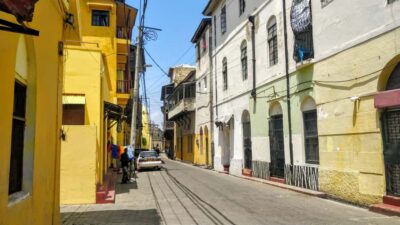
The next part of the tour takes you into an old section of Mombasa that has existed since at least the 9th century. Its story reaches back well before Portuguese control and continues through Arab, British, and Indian influence.
This is one of the most useful parts of the outing because it places Mombasa’s history into everyday surroundings. Instead of learning only about a fort built by outsiders, you see the setting where local life, commerce, and foreign contact developed over many centuries.
The district includes Arab settlements that flourished from the 13th century. That detail matters because it shows how long the coast had been tied to the wider Indian Ocean world before European colonial rule. Mombasa was not waiting to be discovered. It was already part of an active network.
You may notice how many different layers appear in a single area. Swahili culture grew from African coastal roots while also absorbing influences from Arab and Indian Ocean connections. Portuguese and British control added further changes. The tour’s value comes from having those layers explained instead of simply passing through them.
The exact amount of time in Old Town is not specified, so the pace may depend on the guide, traffic, and the group. That is worth keeping in mind if you prefer a long, slow walking tour focused on architecture. This outing is broader. It uses several stops to tell one connected story.
Queen’s Tusks and the gateway to Mombasa
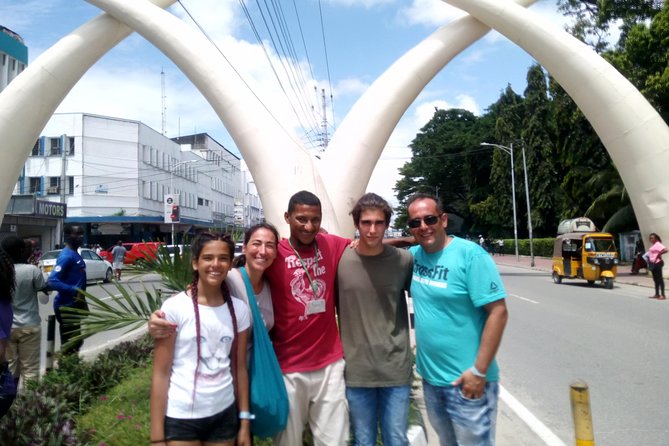
The steel elephant tusks are one of Mombasa’s best-known city markers. They commemorate Queen Elizabeth’s final steps in Kenya in 1952, when she was also proclaimed Queen of England. The monument later became a symbolic gateway into Mombasa.
The tusks are not an ancient Swahili site, and that contrast is useful. After Fort Jesus and Old Town, this stop brings you into the city’s more recent colonial and public history. It shows how Mombasa also remembers British rule and the royal visit.
The stop gives you a chance to pause near a public garden opposite the tusks. Local people use the garden to relax, making it a small but worthwhile glimpse of ordinary city life. I like this kind of stop because it gives the tour a human rhythm. You are not only moving from monument to monument.
You should not expect a long formal visit here. The tusks are primarily a photo and orientation stop, with the garden providing a brief break. Their location also helps you understand the relationship between Mombasa’s historic center and its wider streets.
More city tours in Mombasa:
- Mombasa: Tusks, Fort Jesus, Old Town, Beach and City Tour
★ 4.7 · 137 reviews - Mombasa: Private City Tour with Fort Jesus & Haller Park
★ 4.6 · 24 reviews - Mombasa Half-Day City Tour with Fort Jesus and Haller Park
★ 5.0 · 23 reviews - Mombasa Half Day City Tour
★ 4.5 · 23 reviews
Shree Cutch Satsang Swaminarayan Temple
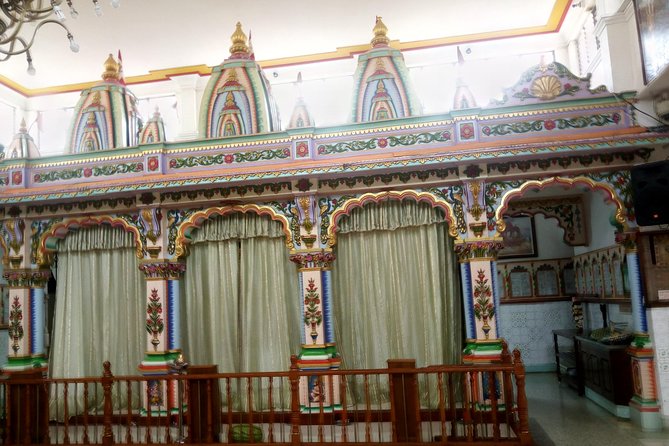
The Hindu temple adds another important chapter. Built by the Indian community in the 18th century, it reflects the role of Indian merchants and workers in coastal Kenya.
Indian communities came to Mombasa for trade and later contributed to the construction of the railway connecting Mombasa with Uganda. The temple gives you a place to learn about those communities and about Hinduism in Kenya.
The visit lasts about 15 minutes, and admission is free. That short time makes this a compact stop rather than an in-depth religious tour. Still, it broadens the story in a useful way. Mombasa’s culture was shaped not only by African, Arab, and European connections, but also by Indian migration and commerce.
You should approach the temple respectfully and follow any instructions from the guide or temple staff. The supplied details do not specify an interior tour or ceremony, so it is best to view this as an introduction to the Indian presence in Mombasa rather than a full religious study.
Ghalib’s guiding style and what you learn
Ghalib is the central reason to consider this tour. He is praised for explaining Mombasa and Kenyan history clearly, while also paying close attention to the people in his group. That combination matters on a short tour.
A guide can rush through names and dates, or help you understand why the city looks and feels the way it does. Ghalib’s focus is on Swahili history and culture, Mijikenda communities, the Indian Ocean trade, and the contributions of outside groups. That is a strong range for four hours.
You should also expect a personal and attentive approach rather than a large coach tour. The maximum group size is 11, which allows more room for questions than a crowded sightseeing bus. It does not guarantee a private tour, but it should keep the experience relatively manageable.
The information supplied about Ghalib emphasizes his strong command of local history and his care toward the people he guides. I would make use of that by asking questions. This is not simply a ride between monuments. The more you ask about Swahili customs, trade, the Mijikenda subtribes, or Indian communities, the more useful the tour becomes.
The tuk-tuk ride and practical pace
A tuk-tuk is included in the price, along with the tour guide. This makes the tour easier than arranging separate taxis around Mombasa Island. It also keeps the group moving between the main areas without turning the day into a long road transfer.
The vehicle is best understood as practical transport. You may still walk at Fort Jesus, through parts of Old Town, and around the city stops. The moderate fitness requirement suggests that the tour is not suitable for someone who needs a fully seated sightseeing experience.
The start point is Fort Jesus Museum on Nkurumah Road. The tour ends on Nkurumah Road in front of Fort Jesus Museum, so you return to the same general area. This is convenient if you want to continue exploring nearby or arrange your next activity from a familiar point.
The duration is approximately four hours. Since the exact timing of every stop is not provided, allow some flexibility around the end time. Traffic, questions, and time spent at Fort Jesus can affect the schedule.
Is $77.70 good value?
At $77.70 per person, the tour is not the cheapest way to look at Mombasa’s sights. You also pay the Fort Jesus entrance fee and lunch separately. If you only want quick photographs of the tusks and a short look at Old Town, the price may feel high.
The value improves if you want a guide who can explain the connections between the stops. You are paying for a four-hour service, tuk-tuk transport, and Ghalib’s local interpretation. The group limit of 11 also helps keep the experience from feeling like a mass outing.
Fort Jesus alone cannot explain Mombasa’s full story. The temple alone cannot explain the city’s Indian Ocean trade. The price makes more sense when you see the tour as a linked introduction to several cultural communities and historical periods.
Lunch is not included, so plan for that separately. Since the tour ends near Fort Jesus, you can arrange food after the activity, though no specific restaurant is provided.
Who should book this Mombasa city tour?
I would recommend it to you if you have only half a day in Mombasa and want structure. It suits visitors who care about history, cultural exchange, religion, and the stories behind major landmarks.
It is also a good choice if you want to avoid piecing together tuk-tuk rides and explanations on your own. The small maximum group size should appeal to you if you prefer a more personal outing, while the mobile ticket makes access to the booking details simple.
You may want another option if you dislike walking, want a full-day excursion, or expect every admission fee and meal to be included. The tour is also not ideal if you want a long, detailed visit at just one site. Its strength is the connection between several places.
Free cancellation is available if you cancel at least 24 hours before the local start time. Changes made less than 24 hours before the start are not accepted, and late cancellations are not refunded. The activity also depends on good weather. If poor weather causes cancellation, you are offered another date or a full refund.
Final verdict: a strong introduction to Mombasa
Book City Tour with Ghalib if you want Mombasa explained through its African, Arab, Indian, Portuguese, and British connections. The tour’s best feature is not any one monument. It is the way Fort Jesus, Old Town, Queen’s Tusks, and the Swaminarayan Temple form one readable story.
The main drawback is the added cost of Fort Jesus and lunch. Still, if Ghalib delivers the attentive and clear guiding described here, $77.70 can be fair value for a four-hour introduction, especially when you have limited time on Mombasa Island.
FAQ
How long is City Tour with Ghalib?
The tour lasts approximately four hours.
Where does the tour start?
It starts at Fort Jesus Museum on Nkurumah Road in Mombasa, Kenya.
Where does the tour end?
It ends on Nkurumah Road in front of Fort Jesus Museum.
Is transportation included?
Yes. A tuk-tuk ride is included in the tour price.
Is Fort Jesus admission included?
No. The entrance fee to Fort Jesus is paid separately.
Is lunch included?
No. Lunch is not included.
How large is the group?
The activity accepts a maximum of 11 people.
Just added in Mombasa
- 4-Day Tsavo East West and Amboseli National Park from Mombasa★ 4.0 · 5 reviews
- 1-Day Tsavo East Safari From Mombasa★ 5.0 · 3 reviews
- Tsavo East National Park 2 days Voi Safari Lodge from Mombasa.★ 5.0 · 2 reviews
- 4×4 Safari in Tsavo East National Park★ 5.0 · 4 reviews
- 4 Days Mount Kenya Trekking★ 5.0 · 6 reviews
- Private Transfer from Mombasa★ 5.0 · 6 reviews
- Swahili Street Food Tour★ 5.0 · 7 reviews
- Fort Jesus Sound and Light show Mombasa★ 4.0 · 17 reviews
City Tours, compared.

Tusks, Fort Jesus, Old Town, Beach and City Tour
Read our review →
Nairobi City Walking Tour with Traditional Kenyan Lunch
Read our review →
Nairobi Cultural and Historical City Tour with a Local
Read our review →

Private City Tour with Fort Jesus & Haller Park
Read our review →Browse the lists this tour appears in