
Reviewed · WILDLIFE TOURS IN NAIROBI
3 Days Best of MasaiMara Wildlife Private Safari, Mid-Range offer
The Mara can change your idea of wild. This three-day private safari takes you from Nairobi to Kenya’s famous Maasai Mara National Reserve, where lions, elephants, giraffes, zebras, hippos, cheetahs, and many other animals live across open grassland. I like the private format, which keeps the trip limited to your own group, and I like the chance to spend a full day on game drives rather than making a quick park visit.
The main trade-off is the long road journey from Nairobi and the simple camp standard. Food earns strong praise, but some visitors found the camp’s sanitary facilities below expectations. At $1,100 per person, this is not a budget outing, so you should be clear about whether you are paying for comfort or for a focused wildlife trip with private transport and a dedicated guide.
In This Review
- Key points to know before booking
- Why three days works for a first Maasai Mara safari
- Day 1: Nairobi to the Mara by way of the Rift Valley
- Day 2: Seven hours searching the Mara
- Wildlife beyond the Big Five
- Camp life, meals, and comfort
- Is $1,100 per person fair?
- Day 3: A late departure and the road back
- What the guide can add to the trip
- Who should book this safari?
- Booking details worth confirming
- Should you book it?
- FAQ
- Where does the safari start?
- What time does the safari begin?
- How long is the drive from Nairobi to Maasai Mara?
- Is transportation included?
- Is this a private tour?
- How much time is spent on game drives?
- What meals are included?
- Is the Maasai village visit included?
- When can I see the wildebeest migration?
- What is the cancellation policy?
Key points to know before booking
- Full-day wildlife viewing on Day 2: The longest game-drive day gives you the best chance to search for lions, elephants, buffalo, cheetahs, leopards, hippos, and other Mara animals.
- Private trip for your group: You do not share the activity with unrelated participants, which can make the pace and wildlife stops more flexible.
- A five-hour drive each way: The road transfer is a major part of this short safari, with a stop at the Rift Valley viewpoint and another in Narok.
- Guides receive the strongest praise: Wycliff, Samuel, Kennedy, Andrew, Geoffrey, Victor, Steve, and Sam are all named positively for safety, animal spotting, and local knowledge.
- Simple camp, well-liked food: Accommodation is described as comfortable by some, while others flag sanitation as a weak point.
- Optional Maasai village visit: This costs an additional $30 per person and takes place on the return day.
Why three days works for a first Maasai Mara safari
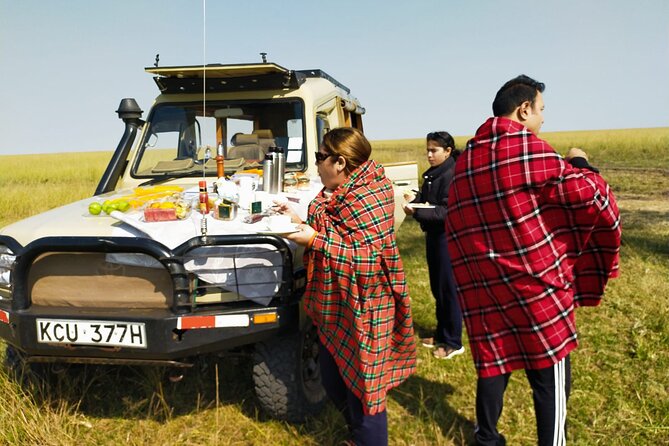
Three days is short, but it gives you a useful balance of road time and time inside the reserve. You get an afternoon game drive on arrival, a full day in the Mara, and a final morning before returning to Nairobi.
I would not choose this schedule if you want slow mornings, long camp stays, or several full days in the reserve. The route from Nairobi takes about five hours in each direction, so the trip has a clear rhythm: travel, wildlife viewing, sleep, then more wildlife viewing.
Still, the schedule puts the most valuable wildlife time on Day 2. That matters. A short safari can feel rushed when every day is partly spent on the road. Here, the middle day is set aside for extended game viewing, giving your guide time to search different areas rather than simply ticking off a few animals.
The private setup also helps. Your group can focus on the animals you most want to see. If lions are the priority, you can tell your guide. If you care more about birds, giraffes, or the Mara’s smaller creatures, you have a better chance of shaping the day around those interests than you would on a fixed group outing.
More Wildlife Tours in Nairobi
- Nairobi Park Wildlife Safari
★ 5.0 · 31 reviews - 6 Days Kenya Adventure Wildlife Safari
★ 5.0 · 26 reviews - Half day wildlife tour to Nairobi National Park Game Drive with Pickup/Drop off
★ 5.0 · 26 reviews
Day 1: Nairobi to the Mara by way of the Rift Valley
Pickup is offered from a Nairobi hotel or airport. The listed schedule gives an early departure, around 7 a.m., while the meeting information gives an 8 a.m. start at City Market on Muindi Mbingu Street. Confirm the exact pickup time and location before you go, especially if you are arriving at the airport or staying outside central Nairobi.
The drive to the Maasai Mara takes about five hours. That is a substantial transfer, but the route includes a stop at the Rift Valley viewpoint and a break in Narok. The viewpoint provides a welcome pause and a chance to look across one of Kenya’s major geographic features. Narok breaks up the road journey before the final stretch toward the reserve.
You should expect the first day to feel like a travel day with wildlife added at the end. Arrival is planned for the afternoon, followed by camp check-in and lunch. The first game drive begins at about 4 p.m. and lasts around four hours according to the schedule.
That late-afternoon outing is a good introduction to the Mara. Light often changes as the day cools, and the drive gives your guide a first chance to understand what is active nearby. You might see giraffes, zebras, elephants, impala, wildebeest, or lions, but no wildlife sighting can be promised. Safari is a search, not a zoo visit with guaranteed opening hours.
You return to camp late in the evening for dinner. A bonfire and Maasai stories are included in the evening plan, giving the first night a social touch after the long drive. The exact quality of this part may depend on camp conditions and the schedule of the day, so treat it as a pleasant possibility rather than the main reason to book.
Day 2: Seven hours searching the Mara
Day 2 is the heart of the safari. The plan calls for breakfast, lunch, dinner, overnight accommodation, and about seven hours of game viewing inside the reserve.
This is when you have the best chance to build a broad wildlife list. The Maasai Mara is associated with the Big Five, meaning lion, elephant, buffalo, leopard, and rhinoceros. The supplied information specifically highlights lions, elephants, buffaloes, leopards, and cheetahs, but it does not promise that every group will see all five. Leopards and cheetahs can be harder to locate than lions, though they are described as reasonably common.
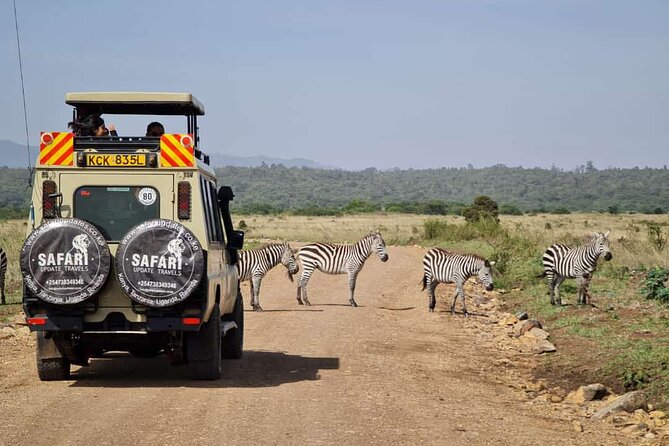
Lions may be resting after a meal or watching the plains for their next opportunity. Elephants and buffaloes can appear in larger numbers, while zebras, wildebeest, impala, topi, hartebeest, and giraffes add movement and variety to the drive.
The Mara is not only about large animals. Baboons, warthogs, bat-eared foxes, grey jackals, spotted hyenas, and hippos are also part of the animal list. One particularly strong sighting account describes seeing as many as 14 lions over the three-day visit, along with cheetahs, a leopard, hyenas, ostriches, hippos, crocodiles, elephants, gazelles, antelopes, topi, zebras, and giraffes. That is an excellent result, but it should be treated as a fortunate example, not a promise.
A good guide makes a real difference here. The most consistent praise goes to the drivers and guides, who are described as safe, patient, friendly, and skilled at finding animals. Kennedy is singled out for helping locate lions, while Samuel, Sam, Wycliff, Andrew, Geoffrey, Victor, and Steve are also praised for their driving and animal-spotting ability.
The driver is more than the person behind the wheel. On a safari, your guide interprets animal behavior, watches the movements of other vehicles, and decides when to remain in one place or continue searching. The accounts of this trip repeatedly point to guides getting groups to wildlife quickly and finding good viewing positions. That is one of the strongest reasons to consider this tour.
Wildlife beyond the Big Five
The Maasai Mara has more than 400 bird species, including birds of prey. If you enjoy birds, tell the guide early rather than treating them as background scenery. The Mara’s birdlife comes in many colors and sizes, and a full-day drive gives you far more time to notice it.
The reserve is also famous for the annual wildebeest migration, generally from July through October. Millions of animals move from the Serengeti toward the Mara in search of water and fresh grass. Seeing that mass movement can be one of Africa’s great wildlife spectacles.
Timing matters, but migration dates are not a switch that turns on at midnight. The most useful advice is to view July through October as the main migration season, not as a guarantee that a river crossing or a huge herd will be beside your vehicle. Outside those months, the Mara still offers year-round game drives and a strong range of resident wildlife.
If you are booking mainly for migration, ask for current conditions before paying. If you are visiting at another time, you can still expect an excellent chance of seeing many species, but the particular mix will vary.
A completely different kind of day:
- Nairobi National Park Half-Day Tour; Free Wi-Fi connection
★ 5.0 · 878 reviews - Nairobi: National Park & Optional Elephants & Giraffe Center
★ 4.8 · 874 reviews - NAI NAMI: Nairobi Storytelling Tour with Street Children
★ 5.0 · 792 reviews - Nairobi National Park Half-Day Game Drive
★ 4.5 · 738 reviews
Camp life, meals, and comfort
The package includes two breakfasts, two lunches, and two dinners, along with two nights of camp accommodation. Meals receive several positive comments, including praise for good food and excellent meals during the safari.
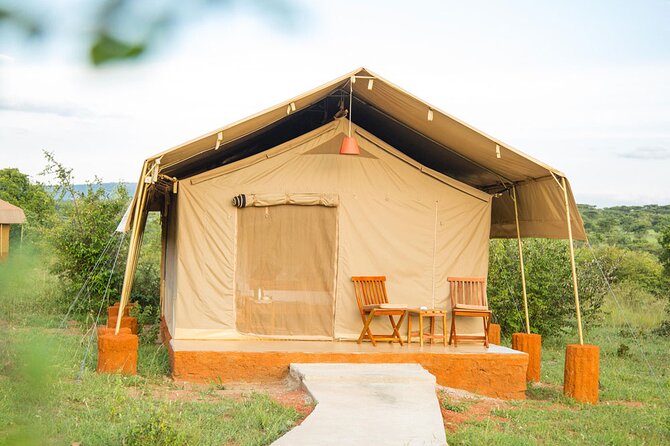
The accommodation picture is more mixed. Some accounts describe the lodge or camp as comfortable, with attractive views and the amenities needed after a long game drive. Another describes a glass-house style room with few mosquitoes and comfortable temperatures. At the same time, poor sanitary facilities are mentioned as the main complaint.
That contrast is important. This is marketed as a mid-range safari, but mid-range in the Mara does not always mean the same thing as a polished city hotel. Ask for the exact camp name and room type before booking. Find out what kind of bathroom is provided and whether the accommodation is a lodge, tented camp, or glass-house unit.
I would also ask what happens if the assigned camp changes. The information names no fixed property, while some accounts refer to different accommodation options, including Enkorok. That does not automatically signal a problem, but it means you should get the current accommodation details in writing.
The evening bonfire and Maasai storytelling can add atmosphere, but your main comfort concerns are more basic: sleeping arrangements, bathroom standards, meals, and hot water. If you are happy with simple African camp life, the setup may suit you well. If you expect resort-level fittings, you may find the value less convincing.
Is $1,100 per person fair?
The $1,100 price needs to be judged against what is included. You receive private transportation, pickup, accommodation, six listed meals, park game drives, and a private activity for your own group. A private guide and vehicle arrangement can be worth paying for, especially when wildlife viewing is your main aim.
The price is harder to assess without the group size and exact camp. Two people paying $1,100 each are making a very different value calculation from six people sharing the same private vehicle cost. Before booking, ask how the private pricing works and whether park fees, drinks, tips, and any other charges are included. The supplied details confirm admission tickets are included in the itinerary, but they do not spell out every possible extra.
The optional Maasai village visit costs $30 per person. This is not included, so decide in advance if cultural visits interest you. The visit is scheduled for Day 3, when you leave camp at about 10 a.m. and begin the return to Nairobi.
I see the best value here for someone who prioritizes a private guide and serious game-drive time over luxury accommodation. If you want a high-end camp, a slower schedule, or a longer stay, compare this with a more expensive package before committing.
Day 3: A late departure and the road back
The final day begins with departure from the camp at about 10 a.m. That is later than the first morning, giving you time for breakfast and a more relaxed start. The optional Maasai village visit can be added before or during the return journey, at the stated cost of $30 per person.
The return to Nairobi is expected to take about five hours, with arrival around 4 p.m. The trip ends back at the meeting point. Since the end point is given as the same meeting point, confirm whether airport drop-off or hotel drop-off is available if you need it.
This final day is not a full game-drive day. If seeing one last animal is essential, ask ahead whether a short morning drive is possible and whether it changes the return time or costs extra. Do not assume it is included, since the published plan begins the departure at 10 a.m.
The timing may work well if you have an evening flight or another Nairobi plan, but build in flexibility. Road travel can take longer than the estimate, and you should avoid booking a tight onward connection.
What the guide can add to the trip
The guide is the part of this safari I would weigh most heavily. Several named guides receive praise for safe driving, good communication, patience, and the ability to locate animals.
Wycliff is described as a gentleman who made the group feel safe and protected. Samuel is praised for getting close to the action and finding good views. Kennedy is credited with strong local experience and a special effort to find lions. Andrew is praised for creating the feeling of watching a nature film in the wild.
Other positive accounts name Geoffrey, Victor, Steve, and Sam. Silas and Linsel receive praise for arranging trips, answering questions, and adjusting plans during the booking process. That suggests a useful split in responsibilities: a booking contact helps shape the trip, while the guide controls the daily safari experience.
Guide assignments can change, so ask who will lead your group and whether the guide is also the driver. The key questions are simple: How long have they worked in the Mara? What vehicle will be used? How is the daily game-drive timing handled? Can the guide focus on birds or particular animals if you request it?
Who should book this safari?
I would recommend this trip to a first-time Kenya visitor who wants the famous Maasai Mara without arranging transport, meals, accommodation, and game drives separately. It also suits couples, families, and small groups that value having a private activity.
It is a good match for you if you can handle long road transfers, accept simple camp conditions, and care more about wildlife sightings than polished facilities. The strong guide reports make it especially appealing to anyone who wants help finding animals rather than simply driving around and hoping.
I would be more cautious if you have limited mobility, dislike rough or lengthy road journeys, or need guaranteed high-end sanitation. The information says most people can participate, but it does not provide detailed accessibility information. Ask direct questions if you have mobility, medical, or dietary needs.
The safari is also a good fit for bird lovers and migration watchers, provided you choose your dates carefully. July through October is the key period for wildebeest movement, but animal sightings remain unpredictable.
Booking details worth confirming
Pickup is offered, and the meeting point is listed as City Market on Muindi Mbingu Street in Starehe, Kenya. The schedule mentions both 7 a.m. and 8 a.m., so confirm which time applies to your booking.
Confirmation is provided at booking. The activity is private, and only your group participates. Free cancellation is available if you cancel at least 24 hours before the local start time. Within 24 hours, the payment is not refunded, and late changes are not accepted.
Before paying, confirm the exact camp, the guide, the vehicle arrangement, the pickup point, what park fees cover, and the expected return destination. Those questions take a few minutes and can prevent most avoidable surprises.
Should you book it?
Book this Maasai Mara safari if your main goal is a private, wildlife-focused trip with a full game-drive day and a guide who can help you find the action. The strongest reasons are the private format, the broad range of possible sightings, the positive reports about guides, and the included meals and transport.
Think twice if you expect luxury, dislike long drives, or need a fixed hotel and highly polished bathroom facilities. At $1,100 per person, the value is best when you judge it as a private access-to-the-Mara package, not as a luxury resort holiday.
FAQ
Where does the safari start?
The listed meeting point is City Market on Muindi Mbingu Street in Starehe, Kenya. Pickup is also offered from a Nairobi hotel or airport.
What time does the safari begin?
The itinerary says departure from Nairobi is at about 7 a.m., while the meeting information lists an 8 a.m. start. Confirm the exact time with Safari Update Travels before the trip.
How long is the drive from Nairobi to Maasai Mara?
The drive is expected to take about five hours each way.
Is transportation included?
Yes. Private transportation is included.
Is this a private tour?
Yes. Only your own group participates in the private activity.
How much time is spent on game drives?
Day 1 includes an afternoon game drive of about four hours. Day 2 includes about seven hours of game viewing.
What meals are included?
The package includes two breakfasts, two lunches, and two dinners.
Is the Maasai village visit included?
No. The optional Maasai village visit costs $30 per person.
When can I see the wildebeest migration?
The migration is associated with July through October, when millions of wildebeest move from the Serengeti toward the Maasai Mara.
What is the cancellation policy?
You receive a full refund if you cancel at least 24 hours before the experience begins. Cancellations or changes made within 24 hours are not accepted for a refund.
Just added in Nairobi
- Wildlife Capital: Half-Day Safari at Nairobi National Park★ 5.0 · 2 reviews
- 3 days maasai mara migration safari★ 4.5 · 7 reviews
- 4 Days Tour Landcruiser in Masai Mara and Lake Nakuru★ 5.0 · 10 reviews
- 4 Days Safari to Lake Nakuru N/P and Maasai Mara N/R★ 5.0 · 18 reviews
- Day Tour to Nairobi national park, Elephants, and Giraffe Center★ 3.5 · 8 reviews
- 6 Days Kenya Budget Group Safari★ 5.0 · 2 reviews
- Maasai Mara Day Trip★ 5.0 · 15 reviews
- 3 Days Masai Mara Wildebeest migration Budget safari★ 5.0 · 2 reviews
Wildlife Tours in Nairobi, compared.
Half day wildlife tour to Nairobi National Park Game Drive with Pickup/Drop off
Read our review →
6 Days Kenya Masai Mara,Lake Nakuru & Amboseli Wildlife Safari
Read our review →
David Sheldrick Wildlife Trust & Giraffe Center with Lunch
Read our review →
ATV/Quad Bike Wildlife Safari with Transfers & meal
Read our review →
13-Day Private Wildlife Safari Tour of Kenya and Tanzania
Read our review →
Browse the lists this tour appears in