
Reviewed · MUSEUMS
Nairobi City Tour: Nairobi Museum, KICC Rooftop & Railway Museum
Nairobi reveals itself in layers. This six-hour outing links the Kenya Railway Museum, KICC rooftop views, and the Nairobi National Museum, with lunch and a ride in a local matatu along the way. I like the mix of major sights and everyday city life, especially the shift from old railway carriages to a crowded city van.
I also like the small group size, capped at five people, since that should make it easier to ask questions and keep the day moving. The main drawback is cost planning: the $55 price does not include the three entrance fees, which add another $23 per person.
In This Review
- Key points at a glance
- Three Nairobi sights, one compact day
- Kenya Railway Museum and the story of the Lunatic Express
- KICC helipad for a high view of central Nairobi
- Lunch and a ride in a Nairobi matatu
- Nairobi National Museum and the Human Evolution Gallery
- Is $55 a fair price for this Nairobi city tour?
- Who will enjoy this six-hour outing?
- Practical advice before you book
- Should you book the Nairobi city tour?
- FAQ
- How long does the Nairobi city tour last?
- Where does the tour start and end?
- Are entrance fees included in the tour price?
- Is lunch included?
- Is local transport included?
- How many people can join the tour?
Key points at a glance
- Historic railway exhibits: Spend about 90 minutes with locomotives, carriages, and displays tied to the old Mombasa to Kisumu railway.
- KICC rooftop views: See Nairobi from the helipad, where the city center and surrounding area open out below you.
- Matatu ride included: Travel between stops using one of Kenya’s familiar public minivans rather than staying in a private vehicle all day.
- Lunch is covered: An African cuisine meal is included, helping the $55 price feel more useful.
- Small group format: With no more than five people, the outing should feel more personal than a large bus tour.
- Flexible city focus: The route combines history, culture, food, transport, and skyline views in one morning-to-afternoon outing.
Three Nairobi sights, one compact day
Nairobi can feel spread out when you are trying to fit its main cultural sights into a short stay. This tour puts three well-known stops into one roughly six-hour plan, beginning at 9:00 a.m. at Agip House on Haile Selassie Avenue and ending at the National Museum of Kenya on Kipande Road.
That start and finish matter. You do not return to the original meeting point, so the tour works well if you want to continue exploring near the museum afterward. It is less convenient if you need to collect luggage or return to a hotel in another part of the city immediately after the final stop.
The schedule gives you about 90 minutes at the Railway Museum, two hours around the KICC stop and lunch, and two hours at the National Museum. Those time blocks are long enough for a proper look, but not so long that the day becomes a museum marathon.
The group limit of five is one of the strongest features. A small group can make city transport easier and gives you a better chance to ask about Nairobi’s past, food, and daily routines. You should still expect a fairly active day, since the tour uses public transport and includes several hours on your feet.
More Museum Tours in Nairobi:
- Day tour to Giraffe Center and Karen Blixen Museum
★ 4.5 · 168 reviews - Nairobi National Park,Giraffe Centre, Karen Blixen Museum.
★ 5.0 · 127 reviews - Giraffe Center and Karen Blixen Museum Tour from Nairobi
★ 4.6 · 43 reviews
Kenya Railway Museum and the story of the Lunatic Express
The first stop introduces a major part of Kenya’s colonial-era development: the railway line linking Mombasa with Kisumu. The line is often associated with the name Lunatic Express, a phrase tied to the difficult and controversial railway project built under British colonial rule.
You will see vintage locomotives and railway carriages preserved by the Kenya Railway Museum. The collection gives you something physical to look at while learning about a period that can feel abstract when presented only through dates and political events. Old engines and carriages also make strong photo subjects, so you may want to keep your phone ready.
The museum is allotted about an hour and a half. That is a sensible amount of time for a focused visit. You can examine the main rail displays, take photographs, and listen to the guide without rushing through every object. If you are deeply interested in railway engineering, you may want more time than the schedule allows, but most people should find the visit manageable.
The entrance fee is not included. You should budget $6 per person for this stop. Since the tour already includes a guide, lunch, and local transport, the extra payment is easy to understand, but you need to add it to the advertised price before deciding what the day costs.
The Railway Museum also gives the tour a useful starting point. You begin with Nairobi’s connection to transport, trade, colonial rule, and urban growth before moving to modern city views and national culture. That progression gives the day more shape than a simple checklist of attractions.
KICC helipad for a high view of central Nairobi
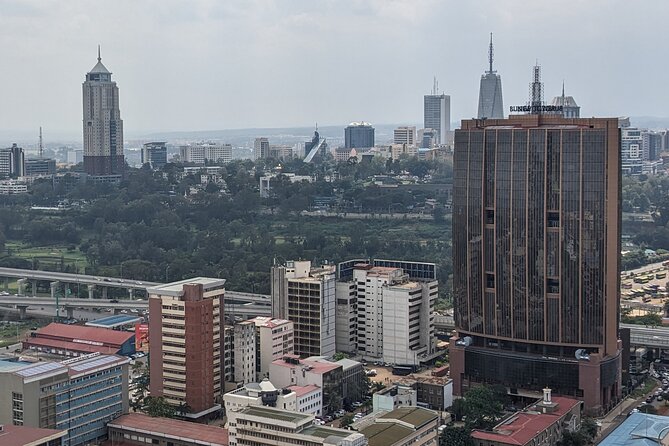
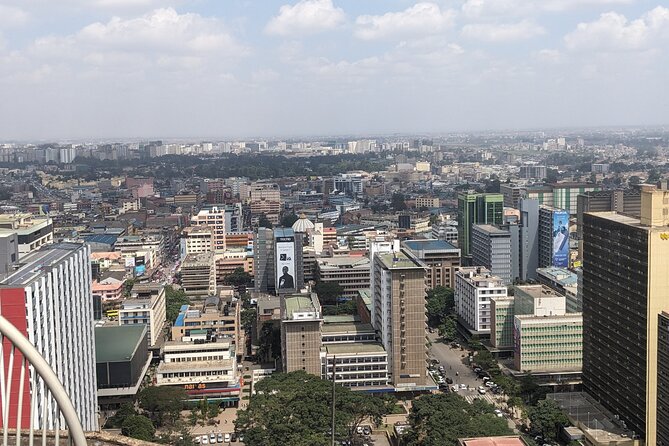
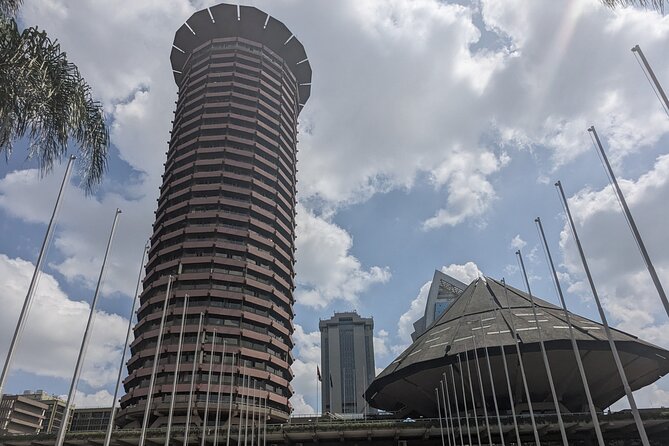
The KICC stop changes the pace. Instead of looking at objects indoors, you get a broad view across Nairobi from the helipad at the Kenyatta International Convention Centre.
From this rooftop position, you can see the city skyline, prominent buildings, and the surrounding area. The appeal is simple: it gives you a quick visual sense of Nairobi’s size and layout. If you enjoy taking photographs, this is likely to be the most immediately rewarding stop.
A previous account of the experience praised the rooftop for its views, friendly entrance staff, reasonable fee, and the chance to see both local people and international visitors enjoying the space. That is useful context. The helipad is not only a lookout for quick pictures. It is also a shared city meeting point where you may see people chatting, taking photographs, and enjoying the view.
The helipad entrance costs $5 and is not included. You should bring enough money for this fee along with the other admissions. The tour description does not specify how long you remain at the rooftop itself, because the two-hour block also includes lunch and the transition to the final stop.
That combined timing means you should not expect an entire morning at KICC. The value is in seeing the city from above, taking in the skyline, and then moving on to food and local transport. If rooftop views are your main goal, you may wish the stop were longer. If you prefer variety, the shorter visit helps keep the whole day balanced.
Lunch and a ride in a Nairobi matatu
After the KICC visit, you will stop for lunch at an African cuisine restaurant. Lunch is included in the $55 tour price, which is important when comparing this outing with a tour that charges only for guiding and transport.
The available information does not name the restaurant or list the dishes. You should therefore treat lunch as a convenient included meal rather than booking the tour for a particular menu. The phrase African cuisine covers a wide range of cooking, so ask the guide about the meal if you have dietary concerns.
The route then continues by matatu, a local public minivan. This is one of the most distinctive parts of the day. Rather than moving between attractions in a sealed private vehicle, you get a short look at how many people move around Nairobi.
A matatu ride can be more revealing than another drive past city streets. It connects the planned sightseeing with ordinary urban life. You will need a moderate level of physical fitness, and you should be ready for the practical nature of public transport. The schedule does not promise a private vehicle, reserved seats, or a quiet ride.
That is exactly why this part will appeal to some people and not others. I like the idea of adding local transport to a city tour because it gives the day a more grounded feel. If you prefer maximum comfort and strict timing, the matatu may feel less controlled than a private transfer.
The tour includes the local transport cost, so you do not need to pay an additional fare for the planned ride. That inclusion also makes the $55 price easier to assess: you are paying for access to several sights, a guide, a meal, and transport rather than only for admission to museums.
More train journeys in Nairobi:
Nairobi National Museum and the Human Evolution Gallery
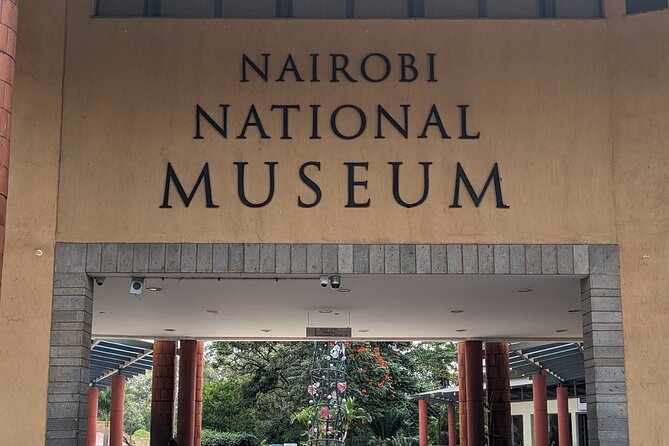
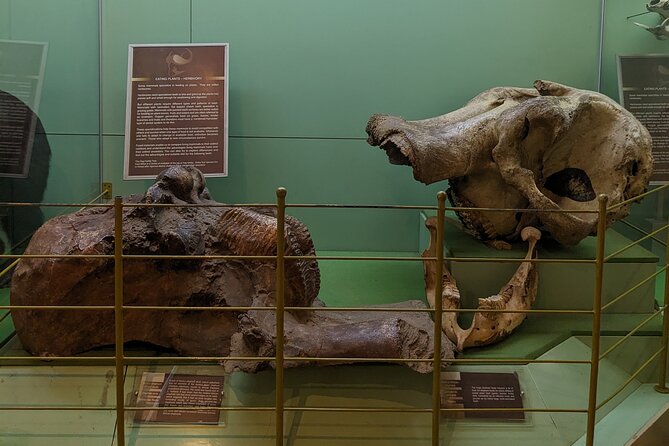
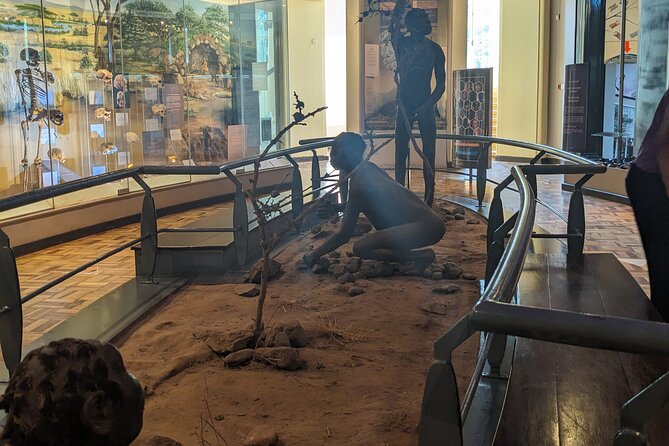
The final stop is the Nairobi National Museum, where the focus turns to Kenya’s cultural heritage, archaeology, paleontology, and human origins. You have about two hours here, enough for a meaningful visit if you concentrate on the principal galleries.
The Human Evolution Gallery and Paleontology Section are key reasons to come. Displays include fossils, artifacts, and information about ancient life, including the famous Turkana Boy fossil. This gives the museum a strong scientific focus alongside its cultural material.
The museum is especially useful if you want context for Kenya beyond present-day Nairobi. The exhibits connect the country to ancient human development and to the discoveries that have shaped modern understanding of early people. You can expect a more educational stop here than at the rooftop, so allow time to read and look closely.
The museum entrance costs $12, the highest of the three admission charges. It is not included in the tour price. Add $6 for the Railway Museum and $5 for KICC, and the admission total comes to $23. With the tour price, your basic cost becomes $78 per person before any personal purchases.
For an extra look at local wildlife, the tour also offers access to the Snake Park for those who are comfortable around snakes. The description does not say if the Snake Park requires a separate fee, so you should ask the guide or entrance staff before assuming it is covered by the museum ticket.
Two hours can pass quickly at the National Museum. If human evolution and fossils are your main interests, stay focused on those sections first. The tour ends here, so you may have the option to continue at your own pace only if your plans and museum access allow it. The supplied details do not promise extra free time after the scheduled visit.
Is $55 a fair price for this Nairobi city tour?
The advertised price is $55 per person, but the realistic basic total is $78 after the three stated admission charges. Lunch, the guide fee, and local transport are included, so the price is not simply a payment for entry tickets.
I consider the value reasonable for someone who wants several types of sightseeing in one day. You receive a guided route through three attractions, a meal, and the unusual addition of a matatu ride. Booking each element separately could take more planning, especially if you are unfamiliar with Nairobi’s public transport or want to coordinate the timing.
The value is weaker if you plan to visit only one museum or if you already have easy access to local transport. The tour also does not include the admission fees, so you need to be comfortable spending the extra $23. Bring that amount in addition to money for personal needs.
The small group limit helps justify the price. A maximum of five people should make it easier to keep the schedule practical and ask questions. No guide name is provided, so you should not book this tour expecting a particular guide. The provider is Christine Mukiri.
Who will enjoy this six-hour outing?
This tour suits you if you want a broad introduction to Nairobi rather than a single subject. It covers railway history, city views, food, public transport, fossils, and cultural displays in one day.
I would especially recommend it for:
- First-time visitors with only one free day in the city
- People who prefer a guided plan rather than arranging several stops alone
- Anyone interested in public transport and ordinary city routines
- Museum fans who want both railway displays and human evolution exhibits
- Photographers looking for locomotives, carriages, and a rooftop skyline
- Small groups who value a five-person maximum
It may be less suitable if you want a slow, quiet museum day. The route changes settings several times, and the matatu ride adds a practical edge. You also need moderate physical fitness, so expect walking, standing, and the normal effort involved in moving through a city.
The tour is also not ideal for someone who wants a private luxury experience. The public minivan is part of the appeal, but it means comfort and timing may be less predictable than with a private car.
Practical advice before you book
Start at Agip House, Haile Selassie Avenue, at 9:00 a.m. The tour finishes at the National Museum of Kenya on Kipande Road, not back at Agip House. Plan your next activity from the museum area rather than assuming you will return to your starting point.
Keep the admission budget separate from the tour price. The stated fees are $6 for the Railway Museum, $5 for the KICC helipad, and $12 for the National Museum. That makes $78 the expected combined cost before personal spending.
Wear comfortable clothes and shoes. The activity requires a moderate physical fitness level, and you will be moving through museums, a rooftop stop, a restaurant, and public transport. You should also keep your phone or camera ready for the railway exhibits and KICC views, since both stops are suited to photography.
Free cancellation is available if you cancel at least 24 hours before the start time. Cancellations made less than 24 hours before the 9:00 a.m. start are not refunded, and late changes are not accepted.
Should you book the Nairobi city tour?
Book it if you want a compact, varied introduction to Nairobi and like the idea of using a matatu between formal attractions. The strongest points are the five-person group limit, included lunch, rooftop views, and the contrast between railway history and the National Museum’s fossil displays.
Skip it if you want a private car, a slow museum visit, or a fully inclusive price with admissions already covered. For everyone else, the $55 base price, plus $23 in stated entrance fees, buys a useful six-hour overview with enough local flavor to feel more than a standard sightseeing loop.
FAQ
How long does the Nairobi city tour last?
The tour lasts approximately six hours and starts at 9:00 a.m.
Where does the tour start and end?
It starts at Agip House on Haile Selassie Avenue in Nairobi and ends at the National Museum of Kenya on Kipande Road.
Are entrance fees included in the tour price?
No. The Railway Museum entrance fee is $6, the KICC helipad fee is $5, and the Nairobi National Museum fee is $12 per person.
Is lunch included?
Yes. Lunch at an African cuisine restaurant is included.
Is local transport included?
Yes. The local transport cost is included, and the route includes travel by matatu, a local public minivan.
How many people can join the tour?
The tour has a maximum of five people.
Just added in Nairobi
- Wildlife Capital: Half-Day Safari at Nairobi National Park★ 5.0 · 2 reviews
- 3 days maasai mara migration safari★ 4.5 · 7 reviews
- 4 Days Tour Landcruiser in Masai Mara and Lake Nakuru★ 5.0 · 10 reviews
- 4 Days Safari to Lake Nakuru N/P and Maasai Mara N/R★ 5.0 · 18 reviews
- Day Tour to Nairobi national park, Elephants, and Giraffe Center★ 3.5 · 8 reviews
- 6 Days Kenya Budget Group Safari★ 5.0 · 2 reviews
- Maasai Mara Day Trip★ 5.0 · 15 reviews
- 3 Days Masai Mara Wildebeest migration Budget safari★ 5.0 · 2 reviews
Museums, compared.

Day tour to Giraffe Center and Karen Blixen Museum
Read our review →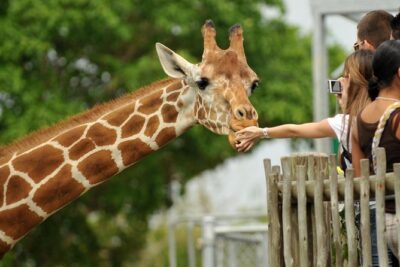
Nairobi National Park,Giraffe Centre, Karen Blixen Museum.
Read our review →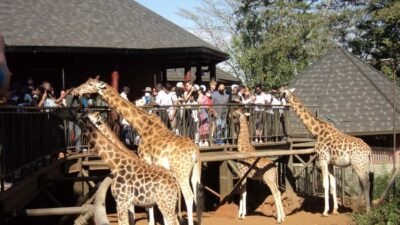
Giraffe Center and Karen Blixen Museum Tour from Nairobi
Read our review →
Nairobi National Park, Giraffe Center & Karen Blixen Museum
Read our review →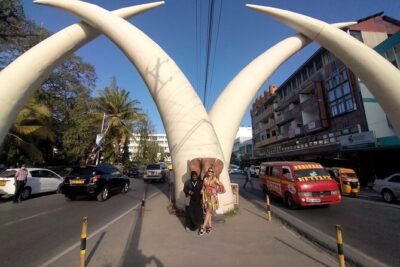
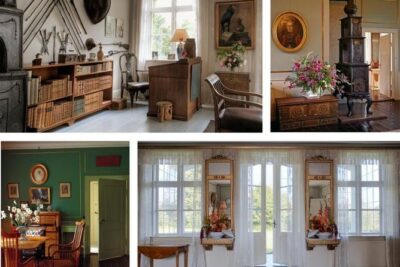
Karen Blixen Museum & Giraffe Centre Half day tour
Read our review →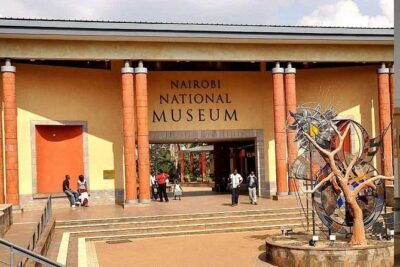
Mombasa City Tour: Fort Jesus Museum, Old Town & Haller Park
Read our review →Browse the lists this tour appears in