
Reviewed · GIRAFFE CENTRE TOURS
giraffe feeding
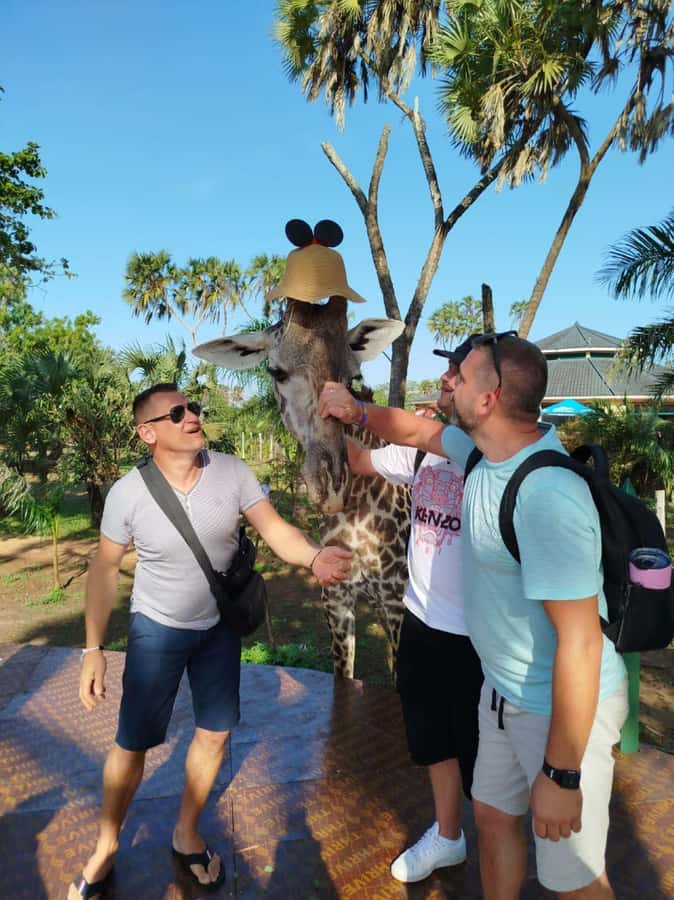
A giraffe leans down for lunch. That simple moment is the heart of this three-hour outing from Diani Beach to Bora Bora Wildlife Sanctuary, a 31-acre animal park about 20 minutes away. I like the easy hotel pickup and the chance to walk among several species rather than sit in a vehicle all morning. I also like the multilingual guiding, with English, French, German, Polish, Spanish, and Italian available.
The best part is the close contact: you can feed giraffes and zebras, and in some parts of the walk you may feed warthogs, monitor lizards, wild boars, and a hinge-backed tortoise. The main concern is value for money. At $115 per person, the price is high for a short visit, especially when some departures have returned to Diani well before the advertised 1 p.m. finish.
The animal encounters are friendly and memorable, particularly the giraffe feeding and zebra interaction. But this is a small sanctuary, not a traditional open savanna safari. You should book it for close-up access and convenience, not for long drives, wild sightings, or a full-day Kenyan safari.
In This Review
- Key points to know before booking
- From Diani Beach to a 31-acre sanctuary
- Walking among giraffes, zebras, and warthogs
- Ostriches, peacocks, buffaloes, and crocodiles
- What the two-hour walk is really like
- Feeding animals in a conservation setting
- Is $115 per person a fair price?
- Who will enjoy this outing most?
- Practical advice for a smoother visit
- Should you book the giraffe feeding experience?
- FAQ
- Where is the giraffe feeding experience located?
- How long does the experience last?
- What time is pickup from Diani Beach?
- What animals can I see?
- Which animals can I feed?
- Is the giraffe feeding included in the price?
- What languages can the guide speak?
- What does the $115 price include?
- Are food and drinks included?
- Can I cancel the booking?
Key points to know before booking
- The giraffe feeding is the main event: You can feed, stroke, and photograph the Maasai giraffes at close range.
- Bora Bora is a small 31-acre sanctuary: The walk covers many animals, but the setting is more managed than wild.
- Pickup is from Diani Beach at 10 a.m.: The drive takes about 20 minutes each way, though some hotel transfers have been shorter.
- The guided walk lasts about two hours on paper: Actual time at the sanctuary may be less, so confirm the schedule when booking.
- Several languages are offered: Guides may speak English, French, German, Polish, Spanish, or Italian.
- The $115 price includes the main logistics: Transfers, park entry, government taxes, and guiding are included, but food and drinks are not.
From Diani Beach to a 31-acre sanctuary
Your morning begins with pickup from your Diani Beach hotel or booked accommodation at 10 a.m. The ride to Bora Bora Wildlife Sanctuary is listed as about 20 minutes, although the exact time depends on your hotel. One pickup from the Neptune Paradise Beach Resort was reported at about 15 minutes.
That short transfer is useful if you want a simple half-day outing. You do not need to arrange a tuk-tuk, negotiate a driver, or find the sanctuary on your own. A driver takes you there and brings you back, with park fees already covered.
Transport quality may vary. One vehicle was described as low, hot, and difficult for taller passengers, with poor visibility through the windows and fans or air conditioning that did not work. That may not be every vehicle, but it is worth asking about the transfer before you pay, especially if you are tall or sensitive to heat.
On arrival, you check in and receive a short introduction to the sanctuary. The opening talk covers its background and gives you a basic idea of what you are about to see. The guide then leads you around the grounds on foot.
More Diani Beach trips:
- PILLI PIPA DHOW, the genuine product, snorkeling tour to Kisite Marine Park
★ 4.5 · 217 reviews - Full-Day Special Wasini Island Tour with Snorkeling and Lunch
★ 4.5 · 184 reviews - From Mombasa/Mtwapa/Diani/Tiwi: Tsavo East Full-Day Safari
★ 4.3 · 130 reviews
Walking among giraffes, zebras, and warthogs
The guided walk is the reason to choose this experience. Instead of viewing animals only from a car, you move through the sanctuary at walking pace. That gives you time to stop, ask questions, and take photographs without the rush of a roadside sighting.
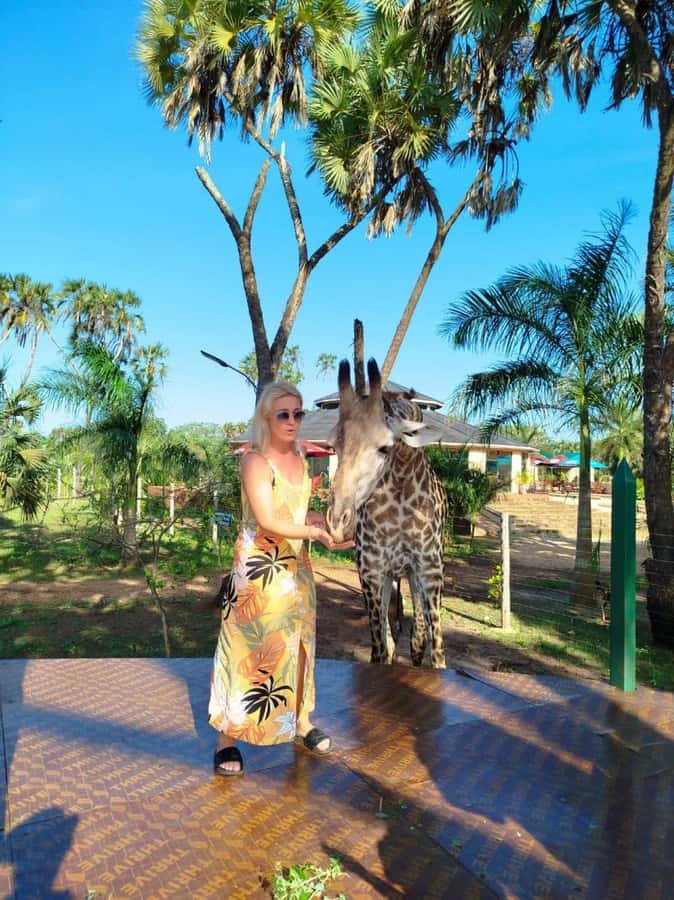
The Maasai giraffes are the star. You can feed them, stroke them, and take close-up pictures as they lower their long necks toward you. For many people, this is the moment they came for, and it is easy to understand why. A giraffe calmly accepting food from your hand makes an immediate memory, even if the wider visit is short.
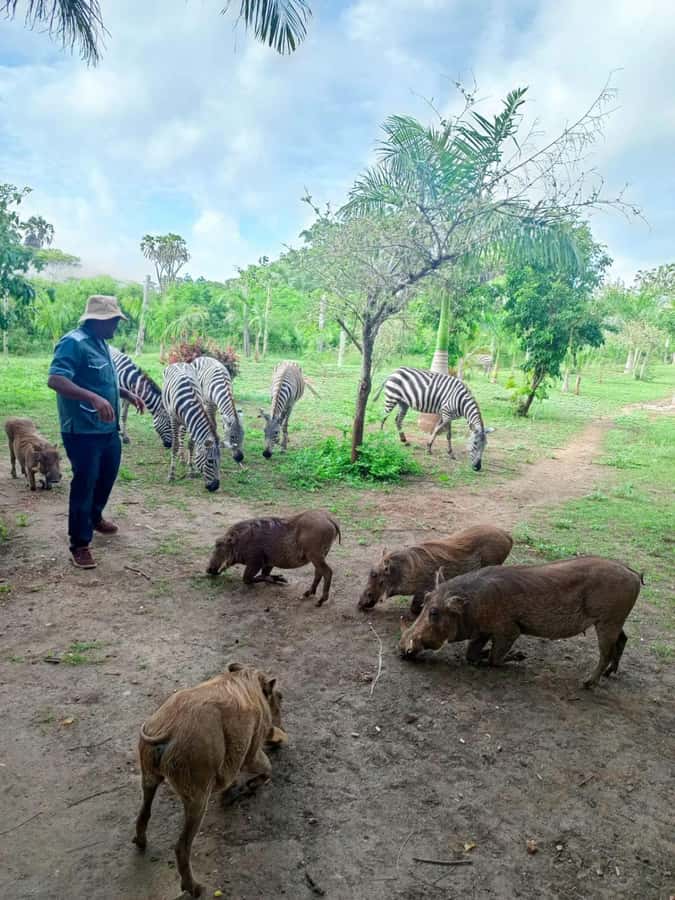
Zebras are another popular stop. You may feed them and, according to the activity details, have a chance to touch them. The zebra encounter can be especially appealing to families because it feels more active than simply watching an animal from a distance.
The sanctuary also includes African warthogs, monitor lizards, wild boars, and hinge-backed tortoises. The feeding opportunities are not necessarily identical for every animal on every visit. Some people have fed only the giraffes and ostriches, while the full activity description lists a wider set of animals. Think of the larger list as possible encounters, not a promise that you will hand-feed every species.
This distinction matters. If your only goal is to feed a giraffe, the visit is well focused. If you expect a hands-on session with every animal listed, you may find the experience less complete than expected.
Ostriches, peacocks, buffaloes, and crocodiles
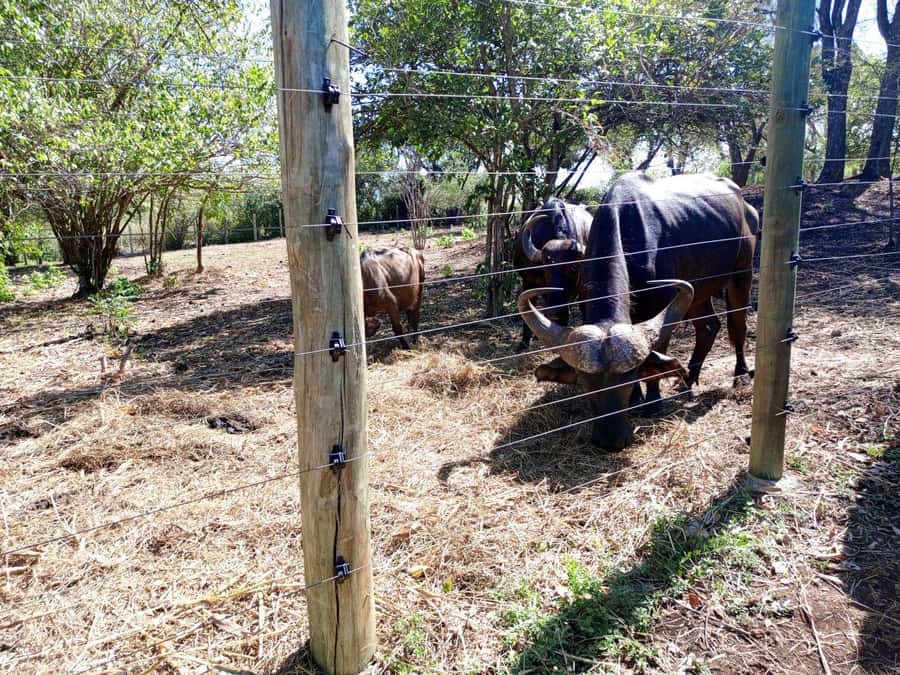
The walk is not only about feeding. The sanctuary also gives you a chance to see Maasai ostriches and peacocks, along with Cape buffaloes and Nile crocodiles. The details available do not promise feeding or close contact with each of these animals, so you should treat them as viewing stops.
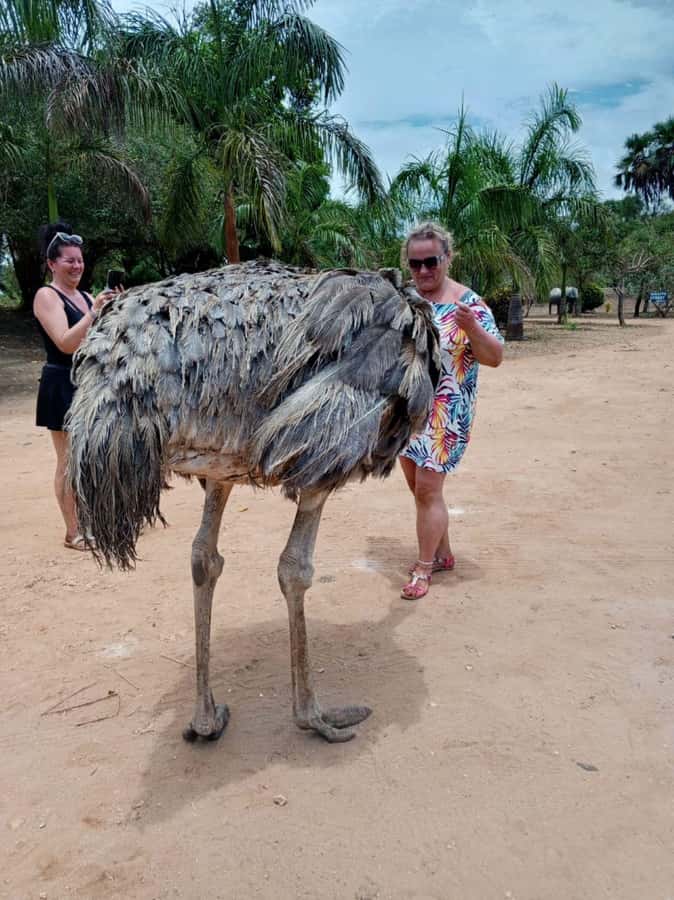
The Maasai ostriches add variety to the visit. They are large, striking birds, and seeing them after the giraffe encounter changes the pace. Peacocks provide another easy photo subject, while the tortoises and monitor lizards make the walk feel more like a broad animal encounter than a single-species attraction.
Cape buffaloes and Nile crocodiles bring a different tone. These are animals you should observe with care, under the guide’s direction. Their presence adds a reminder that the sanctuary is also concerned with conservation and education, not just photo opportunities.
The guide explains why protected animal spaces matter and helps you understand the role of the sanctuary. Still, you should keep your expectations realistic. This is a managed 31-acre facility. It is not an open reserve where you search for animals in their natural range, and it cannot offer the uncertainty or scale of a national park safari.
What the two-hour walk is really like
The advertised schedule runs from 10 a.m. until about 1 p.m. That includes the transfer from Diani, check-in, the introduction, the walk, and the ride back. The actual visit at the sanctuary is described as roughly two hours.
In practice, the full outing may be shorter. Some people have returned to their hotel around 11:50 a.m. or 12:30 p.m., rather than at 1 p.m. The difference may come from hotel location, traffic, the pace of the walk, or the way the local schedule is handled.
That is not automatically a problem. A shorter visit may suit you if you want to fit an animal encounter between beach time and lunch. But it does affect the price calculation. At $115 per person, every lost hour matters.
I would ask two direct questions before booking:
- How long will I remain inside the sanctuary?
- What time should I expect to return to my hotel?
If you want a tightly planned afternoon, get the answer in writing. If you have no fixed plans afterward, the timing may matter less.
The walk itself is guided, and the guide can answer questions and translate explanations. A German speaking guide was praised for helping with translation, while Adam and Kelvin were specifically appreciated as friendly pickup guides on one departure. Guide quality appears to be one of the stronger parts of the experience, particularly for people who do not want to manage the visit alone.
More Giraffe Centre visits:
- Nairobi: National Park & Optional Elephants & Giraffe Center
★ 4.8 · 874 reviews - Elephant Orphanage and Giraffe Center Tour with Options
★ 4.5 · 457 reviews - Nairobi National Park, Elephant Orphanage and Giraffe Centre
★ 4.6 · 365 reviews - Tour: Giraffe Center and Nairobi National Park
★ 5.0 · 299 reviews
Feeding animals in a conservation setting
Close animal contact brings a practical question: how comfortable are you with feeding animals in a managed sanctuary? The giraffe and zebra encounters are designed for direct interaction, which is the appeal. They are also different from observing animals at a distance in a national park.
The sanctuary presents the visit as a way to appreciate conservation. The guide gives a short history of the 31-acre site and explains the importance of protecting animals. That educational element gives the feeding activity some context.
You should still decide what kind of wildlife experience you want. If you prefer animals living with little human contact, a conventional safari may suit you better. If you want a controlled setting where you can get close to a giraffe, this visit offers something a game drive usually cannot.
I would follow the guide’s instructions carefully. Let the staff control how food is offered and how close you stand. Do not assume that because one animal can be touched, every animal can be approached. The giraffes and zebras are the clear interaction points, while buffaloes, crocodiles, and other animals should be treated as viewing encounters.
One practical caution is that the experience may include opportunities to buy items or make purchases during the visit. A German couple felt pressured after declining several times. You can enjoy the walk without buying anything, so decide your budget before you arrive and say no clearly if you are not interested.
Is $115 per person a fair price?
The listed cost is $115 per person. It includes the transfer within the Diani Beach area, the return ride, park entry, government taxes, and the guide and guiding fee inside the sanctuary. Food and drinks are not included.
The convenience has real value. You get door-to-door transport, a reserved activity, and help from a multilingual guide. For a first visit to Diani, that can be easier than arranging each part yourself.
The price becomes harder to defend if you are comfortable arranging local transport. A self-organized visit may cost less, with one local comparison estimating entry at about 2,000 Kenyan shillings per adult, a tuk-tuk around 3,000 Kenyan shillings if the driver waits, and a separate guide fee. Exact prices can change, and a self-arranged visit may not offer the same language support or booking protection.
The gap is still significant. Several people felt that roughly $100 per person was too much for a short visit to a captive-animal facility, particularly when their total time was closer to two hours than three.
My value judgment is simple:
- Good value for convenience: You want hotel pickup, a multilingual guide, and no transport planning.
- Weak value for budget travelers: You are happy to arrange a tuk-tuk and visit independently.
- Fair value for a special photo: Feeding a giraffe is a priority and the cost fits your holiday budget.
- Poor value for a safari substitute: You want a large wild reserve or a full day of animal viewing.
The experience currently carries a 3.7 out of 5 rating from 23 ratings. That fits the overall picture: strong animal moments and kind staff, but uneven value and some concerns about timing and transport.
Who will enjoy this outing most?
Families may like the direct contact and the short duration. A three-hour plan is easier for children than a long safari drive, and the animals are visible without spending half a day in a vehicle.
It can also suit first-time visitors who want one simple wildlife activity while staying at the coast. You can spend the morning with animals and still have much of the day left for Diani Beach.
Photographers will appreciate the close giraffe access. The chance to feed and stroke a giraffe creates better portrait opportunities than a distant sighting, although the setting is managed rather than wild.
This is less suitable if you are seeking a classic Kenyan safari. You will not spend hours searching a large reserve, and the animals are kept within a sanctuary. It may also disappoint you if you expect every listed species to be available for feeding.
People who dislike sales pressure should set boundaries early. The staff and guides can be friendly and helpful, but one account described the visit as partly focused on purchases after repeated refusals.
Practical advice for a smoother visit
Wear comfortable shoes for the walking portion. The activity is guided on foot, and the visit can take about two hours inside the sanctuary.
Bring water because food and drinks are not included. Diani can be hot, and one return vehicle was described as uncomfortable in the midday heat.
Confirm your pickup time and vehicle details. Ask if the vehicle has working ventilation and enough headroom. This is especially useful if you are tall or if you are traveling with children.
Keep your schedule flexible after the tour. The planned return is around 1 p.m., but some departures have finished earlier. That is helpful if you want free time, but less helpful if you have a firm lunch booking or another paid activity.
Use the guide for questions. English, French, German, Polish, Spanish, and Italian are listed, so request your preferred language when booking. A guide who can explain animal behavior and translate clearly adds real value to a small sanctuary visit.
The activity offers free cancellation up to 24 hours before departure and allows you to reserve now and pay later. Those terms are useful if your beach plans may change, but they do not solve the main question, which is still whether the price matches the time and setting.
Should you book the giraffe feeding experience?
Book it if you want a convenient, close-up giraffe encounter from Diani Beach. The feeding and touching are the strongest features, and the friendly guides can make the short visit easy for families and international visitors. Adam and Kelvin were noted as warm and helpful on one pickup, while multilingual support can remove a lot of friction.
Skip it, or arrange it independently, if price matters more than convenience. The sanctuary is small, the schedule may finish early, and the visit is not a substitute for a wild Kenyan safari. You may save a considerable amount by arranging a tuk-tuk and paying at the park, though you will need to handle the details yourself.
My call: book this as a focused animal encounter, not as a full safari. If feeding a giraffe is on your Diani wish list and $115 fits your budget, the central moment should deliver. If you want the best wildlife value, ask about a self-arranged visit first.
FAQ
Where is the giraffe feeding experience located?
It takes place at Bora Bora Wildlife Sanctuary in Kenya’s Coast Province, about 20 minutes by car from Diani Beach.
How long does the experience last?
The advertised duration is three hours, with pickup at 10 a.m. and return planned for about 1 p.m. The guided walk around the sanctuary is described as taking about two hours, but some departures have returned earlier.
What time is pickup from Diani Beach?
Pickup is scheduled for 10 a.m. from your Diani Beach hotel or booked accommodation.
What animals can I see?
You can see Maasai giraffes, African warthogs, zebras, monitor lizards, wild boars, hinge-backed tortoises, Maasai ostriches, peacocks, Cape buffaloes, and Nile crocodiles.
Which animals can I feed?
The activity includes feeding opportunities with giraffes, zebras, warthogs, monitor lizards, wild boars, and a hinge-backed tortoise. The exact animals available for feeding may vary during the visit.
Is the giraffe feeding included in the price?
Yes. Feeding the Maasai giraffes is part of the guided sanctuary visit.
What languages can the guide speak?
Live guiding is available in English, French, German, Polish, Spanish, and Italian.
What does the $115 price include?
The price includes return transfers within the Diani Beach area, park fees, government taxes, and the guide and guiding fee inside the park.
Are food and drinks included?
No. You need to arrange your own food and drinks.
Can I cancel the booking?
You can cancel up to 24 hours in advance for a full refund. The activity also offers a reserve now and pay later option.
Just added in Diani Beach
- Private Sea Safari: Snorkelling & Dolphins from a Dhow★ 5.0 · 1 review
- 10-Days Kenya Wildlife Private Safari and Mombasa Diani Beach Holidays★ 5.0 · 5 reviews
- 4 Days Diani Beach Holiday Package with SGR Train ( minimum 2 persons)★ 5.0 · 1 review
- 3 Day Tour to Amboseli Tsavo West & East to Mombasa/Diani/Nairobi★ 5.0 · 1 review
- 2 Days Private Safari in Tsavo from Diani Beach with Pick Up★ 4.5 · 4 reviews
- Mombasa & Diani: Group Day Trips to Tsavo Park★ 5.0 · 2 reviews
- From Mombasa Airport: Diani transfer in a minivan (5 pax)★ 4.5 · 13 reviews
- Day Tour to Tsavo East National Park from Mombasa or Diani★ 5.0 · 5 reviews
Giraffe Centre Tours, compared.
National Park & Optional Elephants & Giraffe Center
Read our review →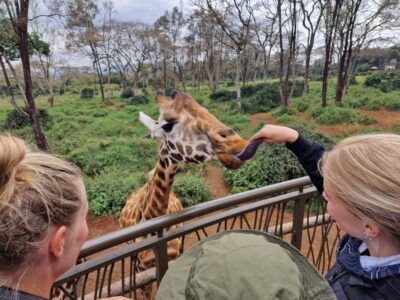
Elephant Orphanage and Giraffe Center Tour with Options
Read our review →
Nairobi National Park, Elephant Orphanage and Giraffe Centre
Read our review →
Tour: Giraffe Center and Nairobi National Park
Read our review →
Day tour to Giraffe Center and Karen Blixen Museum
Read our review →Browse the lists this tour appears in