
Reviewed · BOMAS OF KENYA TOURS
Afternoon Cultural Tour to Bomas of Kenya in Nairobi
Kenya’s cultures meet in one afternoon. This tour makes the Bomas of Kenya an easy Nairobi outing, with hotel pickup at 1pm, an English-speaking driver guide, traditional homes, music, folklore, and a lively dance program. I like the mix of stage performance and open-air village displays, which gives you both spectacle and context.
I also like that the tour includes entrance fees, transport, and a small-group format for $70 per person. The main consideration is timing: lunch is not included, and the afternoon schedule leaves limited room for a slow visit if you want to study every homestead.
In This Review
- Key points at a glance
- Why Bomas of Kenya makes sense for a short Nairobi outing
- A 1pm pickup keeps the morning free
- First impressions of the traditional homesteads
- The dance arena brings the afternoon to life
- Why families may enjoy the grounds
- What the $70 price includes
- The best way to use your afternoon
- Small drawbacks to keep in mind
- Who should book this cultural tour?
- FAQ
- Where is Bomas of Kenya located?
- What time does hotel pickup begin?
- Is hotel pickup included?
- How much does the tour cost?
- Is the Bomas of Kenya entrance fee included?
- Is this a small-group tour?
- Is a guide included?
- What can you see at Bomas of Kenya?
- Is lunch included?
- Can I cancel the tour for a full refund?
- My booking verdict
Key points at a glance
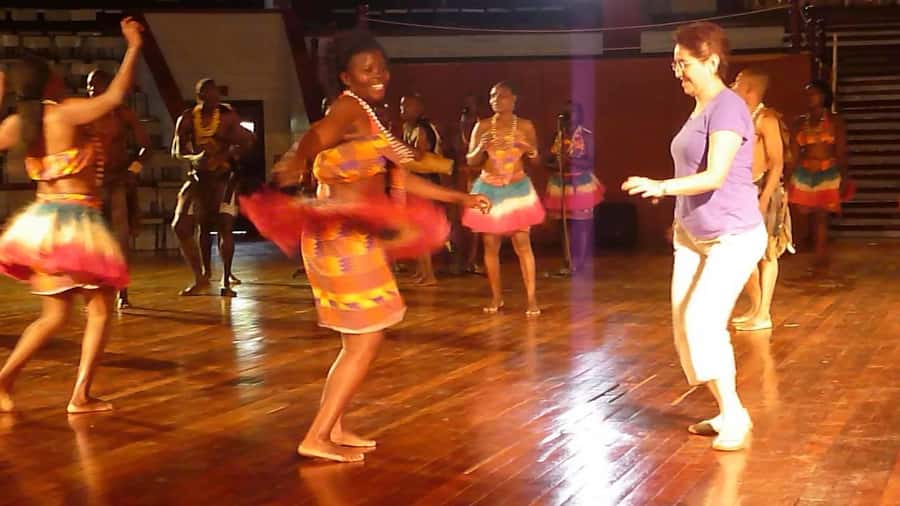
- See 42 cultural traditions in one place: The site represents elements of Kenya’s many ethnic groups through homes, music, dances, songs, and folklore.
- The dance program is the star attraction: A dedicated arena hosts traditional performances and acrobatic shows.
- Explore real-looking homestead layouts: Houses are arranged in regional clusters, with separate huts for wives, granaries, livestock areas, and other household spaces.
- A good choice for families: Children can move through the huts, climb ladders, run around the grounds, and use the wooden play area.
- Easy Nairobi logistics: Pickup and drop-off from your hotel or accommodation, entrance fees, and a professional driver guide are included.
- Plan for your own lunch: Food is available to purchase, but it is not part of the $70 price.
Why Bomas of Kenya makes sense for a short Nairobi outing
Nairobi offers many ways to spend an afternoon, but Bomas of Kenya is useful when you want cultural background without arranging several separate visits. The grounds bring together examples from Kenya’s 42 ethnic groups, presenting them through architecture, performance, music, song, and storytelling.
That does not mean you will see every community in equal depth. A single afternoon cannot replace visiting the regions themselves. Still, Bomas gives you a broad first look, and it can help you understand how varied Kenya is beyond the wildlife parks and city center.
The setting is also more active than a standard museum. You walk among traditional homes, look at how compounds were arranged, and then watch performers in the arena. You are not only reading labels or looking at objects behind glass. The format makes the visit especially useful for families and first-time visitors who want something visual and easy to follow.
The tour is arranged by Gracepatt Ecotours Kenya and uses a small-group setup. That matters in practical terms. You should have a more personal ride than on a large coach excursion, and the driver guide can help keep the afternoon organized. The available tour language is English.
More Bomas of Kenya visits:
- Giraffe Centre, Elephant Orphanage, and Bomas of Kenya Day Tour from Nairobi
★ 4.5 · 96 reviews - Half-Day Cultural Tour to Bomas of Kenya in Nairobi
★ 4.5 · 23 reviews - Nairobi city sights, Giraffe Encounters and Bomas Kenya Tour
★ 5.0 · 19 reviews
A 1pm pickup keeps the morning free
Pickup begins at 1pm from your Nairobi hotel or accommodation. That schedule works well if you have spent the morning visiting another attraction, arriving in Nairobi, or simply getting settled.
You should be ready before the stated pickup time. Since the tour includes both transport and admission, you do not need to arrange a separate taxi to the site or buy your entrance ticket on arrival. Exact driving time is not provided, so leave some flexibility around the afternoon rather than planning another fixed activity immediately afterward.
The vehicle transfer is more than a convenience. Nairobi traffic can make independent sightseeing tiring, especially when you are unfamiliar with the city. Having hotel pickup and drop-off means you can focus on the visit instead of negotiating transport at both ends.
The small-group format is another plus. It does not guarantee a private tour, but it usually makes the outing feel less rigid than a large scheduled bus. You will still want to confirm the exact pickup details with the operator before the day of travel, especially if your accommodation is outside the usual Nairobi hotel area.
First impressions of the traditional homesteads
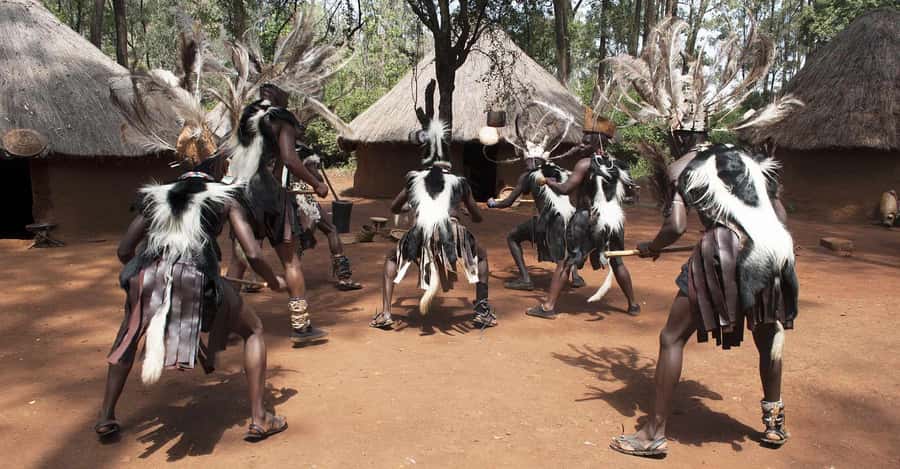
The open-air homesteads are one of the most useful parts of the visit. The houses are arranged in clusters according to region, allowing you to compare building styles and household layouts rather than seeing one generic example labeled as Kenyan.
You can see details such as a first wife’s hut, a second wife’s hut, a granary, and areas where livestock are kept. These arrangements show that a home is not just one building. It is a working compound with spaces for cooking, storing grain, housing family members, and caring for animals.
The variety between the huts is the point. Shapes, materials, entrances, and compound plans differ from one group to another. You begin to see how local customs and daily needs affect the way people build and organize a home.
I would give yourself time here instead of rushing straight to the performance arena. The houses offer the quieter part of the visit, and the contrasts are easier to notice when you are not moving with a crowd.
The displays are constructed representations rather than ordinary homes still occupied by families. That is an important distinction. Bomas is designed to present cultural traditions, so you should treat the homesteads as educational exhibits, not as a substitute for visiting rural communities.
The dance arena brings the afternoon to life
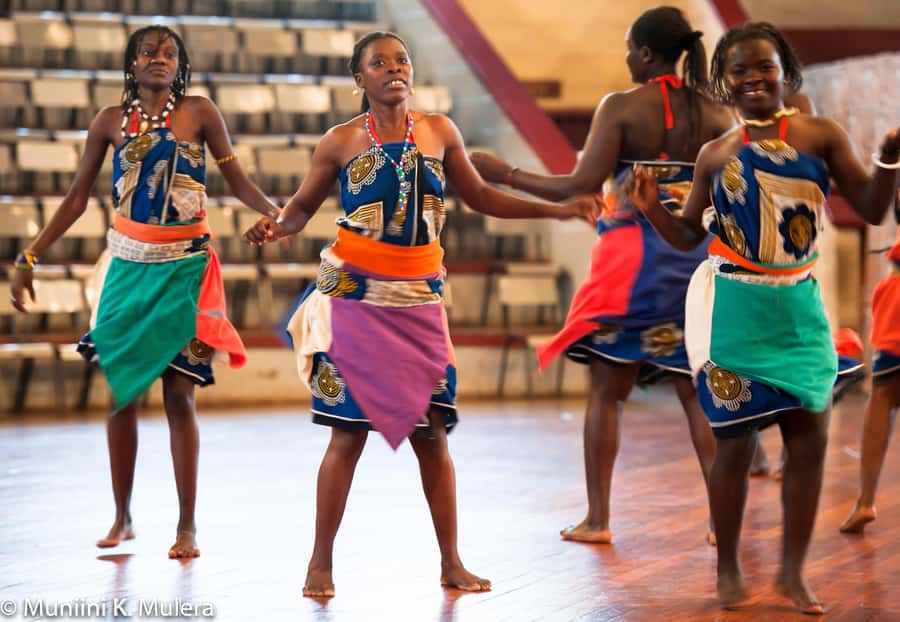
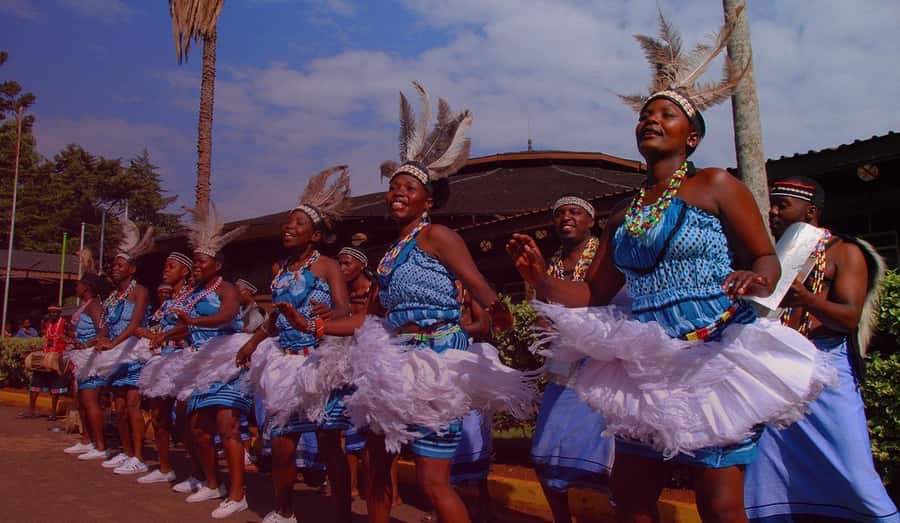
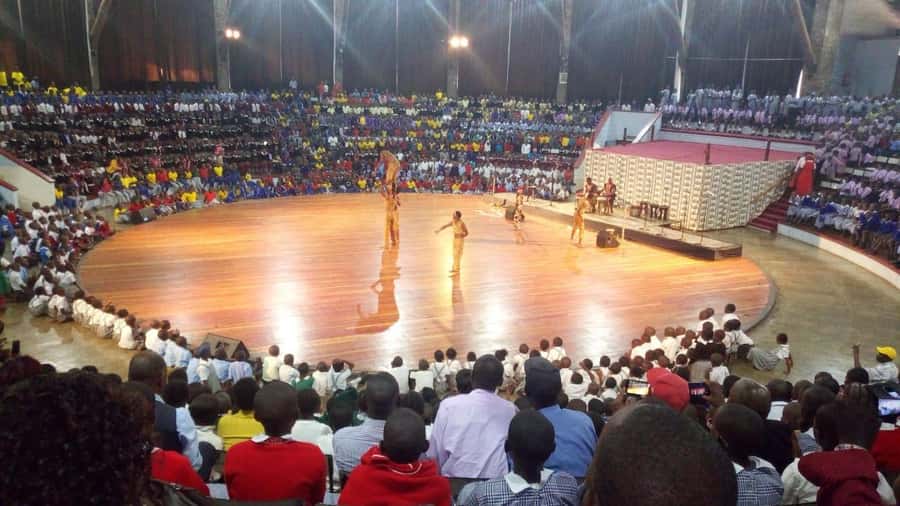
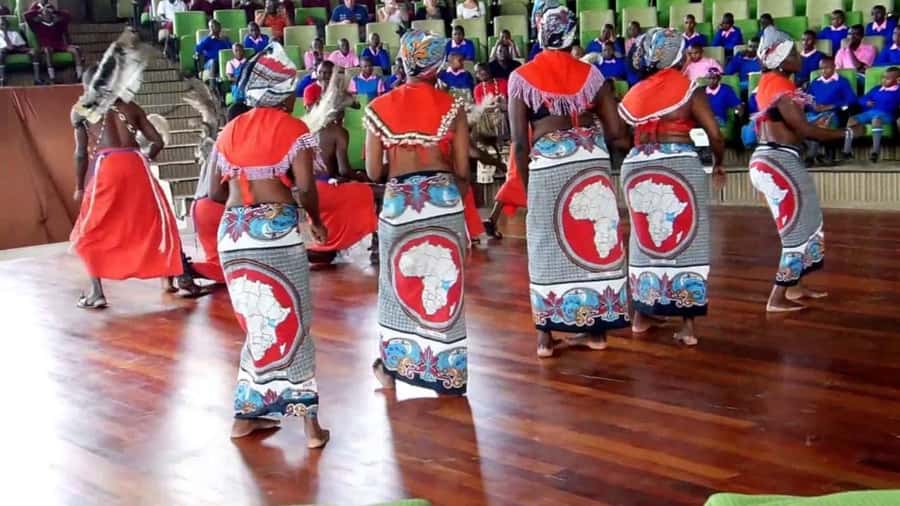
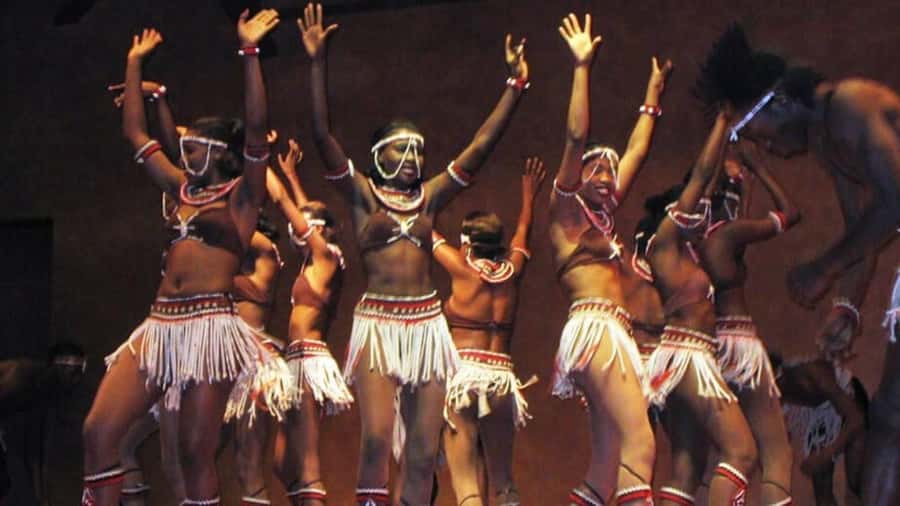
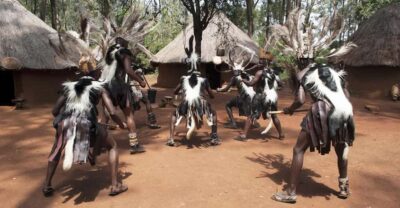
The cultural dance program is the most theatrical element at Bomas of Kenya. Traditional dancers perform with music and song, while the arena also hosts acrobatic shows.
This is likely to be the part that holds your attention most easily. Movement, rhythm, and coordinated performance can communicate ideas that are harder to grasp from an architectural display. Even if you know little about Kenya’s communities before arriving, the program gives the afternoon a clear focal point.
The performance also helps explain why Bomas was created. The center began in 1971, after Kenya’s independence in 1964, and is run by the Kenyan Government to promote the country’s cultural heritage. The goal is not only entertainment. It is also to keep traditional forms of music, dance, song, and folklore visible to a broad audience.
The balance is worth keeping in mind. Stage performances are carefully prepared presentations, so they are not the same as seeing a spontaneous community celebration. But they can still be a useful introduction, especially when combined with the homesteads and the driver guide’s explanations.
If you prefer quiet museums and long periods of independent study, the arena may feel more programmed than personal. If you enjoy live music and movement, it will probably be the strongest part of your afternoon.
More History Tours in Nairobi:
- Nairobi: Historic and Modern Highlights Walking Tour
★ 4.8 · 703 reviews - Nairobi Historical Walking City Tour
★ 5.0 · 258 reviews - Full Day Nairobi Cultural and Historical Tour
★ 5.0 · 153 reviews - Nairobi Cultural and Historical City Tour with a Local
★ 5.0 · 67 reviews
Why families may enjoy the grounds
Bomas of Kenya is a practical choice for families with energetic children. The traditional houses are open enough for children to move in and out, climb ladders, and explore the compounds. There is also a large wooden play area for younger visitors.
That freedom changes the pace of the visit. Parents can look more closely at the homes while children have something active to do. You will still need to supervise them around ladders, huts, and livestock areas, but the site is not built around standing quietly in one gallery.
The craft shops add another small activity. They form a low-key village within the grounds, giving you a chance to browse local crafts and other items. The information provided does not specify what is sold or whether purchases are included, so think of the shops as optional browsing rather than a central part of the price.
For children, the strongest appeal is the combination of movement and color. They can see houses, watch dancers, use the play area, and walk through a place that feels different from a conventional museum. For adults, the challenge is making sure the visit remains more than a playground stop. The regional grouping of the homes gives you plenty to point out and discuss together.
What the $70 price includes
At $70 per person, the tour bundles several costs that you might otherwise pay separately. Your hotel pickup and drop-off are included, along with the Bomas of Kenya entrance fee, a professional driver guide, and the small-group arrangement.
That makes the price easier to judge than a simple admission ticket. You are paying for transport from Nairobi, a planned visit, and someone to help manage the route. If you value convenience and have only one afternoon available, the package can be sensible.
Lunch is not included. Food is available for purchase, but you should budget separately and avoid assuming that a meal is part of the tour. Since pickup is at 1pm, eat before leaving or plan to buy food during the outing, depending on the schedule provided by the operator.
The value depends on how you would otherwise get there. If you already have a car and prefer to spend a long time at the site, an independent visit could offer more control. If you want transport, admission, and a guide handled together, the $70 fee is more appealing.
The rating shown for this experience is 5 out of 5, based on one review. That is a positive signal, but it is a very small sample. I would place more weight on the clear inclusions, the convenient pickup, and your interest in performances and cultural displays than on the rating alone.
The best way to use your afternoon
Treat this as a focused cultural introduction, not as a full survey of Kenya. You are seeing selected examples from many communities in one location, so the experience works best when you look for contrasts rather than trying to memorize every group.
A sensible rhythm is to begin with the homesteads, notice the different compound arrangements, and then give the dance and acrobatic program your full attention. Afterward, you might browse the craft shops or let children spend time in the play area before returning to your vehicle.
Your guide can help connect the displays to everyday life. Ask about the purpose of the granaries, the different huts, the regional groupings, and the meaning behind the dances. The tour is conducted in English, so you can ask questions and request explanations during the visit.
Do not judge the site by expecting untouched village life. Bomas was established as a cultural center and is run by the Kenyan Government. Its purpose is to present and promote traditions in a planned setting. That makes it accessible, but also more formal than a visit to a living rural community.
Small drawbacks to keep in mind
The main limitation is breadth. Representing 42 ethnic groups in one afternoon is impressive, but it can also make each section feel like an introduction. If you want long, detailed study of one community, this is not the right format.
The visit may also feel structured. The dance program and transport schedule shape your afternoon, and you may not have unlimited time at each cluster of homes. Ask your guide how much free time you will have so you can decide where to linger.
Lunch is another practical point. Because it is not included, the $70 price does not cover every expense. You should also remember that craft purchases are separate unless the operator tells you otherwise.
Finally, the tour’s appeal depends on your interest in cultural presentation. If your Nairobi plans focus only on wildlife, shopping, or food, Bomas may feel less urgent. If you want a clear introduction to Kenyan traditions and enjoy live performance, it fills a useful gap.
Who should book this cultural tour?

I would recommend it to first-time visitors who want cultural context before or after a safari. It also suits families, since the grounds offer more movement than a standard museum and include a wooden play area.
The tour is a good fit if you prefer an organized afternoon with hotel transport and an English-speaking guide. It is less suitable if you want an entirely independent visit, a long meal, or detailed fieldwork focused on one ethnic community.
You can reserve now and pay later, which helps if your Nairobi plans are still shifting. Cancellation is allowed up to 24 hours in advance for a full refund, giving you some flexibility. Those terms are useful, but the real booking decision comes down to whether the performances and homestead displays match your interests.
FAQ
Where is Bomas of Kenya located?
Bomas of Kenya is located in Kenya, and this tour visits the site from Nairobi.
What time does hotel pickup begin?
Pickup from your Nairobi hotel or accommodation begins at 1pm.
Is hotel pickup included?
Yes. Pickup and drop-off from your hotel or accommodation are included in the tour price.
How much does the tour cost?
The listed price is $70 per person.
Is the Bomas of Kenya entrance fee included?
Yes. The entrance fee is included.
Is this a small-group tour?
Yes. The tour is described as a small-group experience.
Is a guide included?
Yes. A professional driver guide is included, and the available tour language is English.
What can you see at Bomas of Kenya?
You can see traditional homesteads, huts, granaries, livestock areas, cultural dances, music, songs, folklore, and acrobatic performances representing Kenya’s 42 ethnic groups.
Is lunch included?
No. Lunch is at your own expense, although it is available for purchase.
Can I cancel the tour for a full refund?
Yes. You can cancel up to 24 hours in advance for a full refund. You can also reserve and pay later, with no payment required today.
My booking verdict
Book this tour if you want an easy, family-friendly introduction to Kenya’s cultural traditions, especially if live dance and open-air displays appeal to you. The included transport, admission, and small-group guide make $70 reasonable for a planned Nairobi afternoon.
Skip it if you prefer independent sightseeing or want a deep study of one community. For most visitors with limited time, though, Bomas of Kenya offers a useful change of pace from wildlife viewing and city attractions, with enough activity to keep both adults and children interested.
Just added in Nairobi
- Wildlife Capital: Half-Day Safari at Nairobi National Park★ 5.0 · 2 reviews
- 3 days maasai mara migration safari★ 4.5 · 7 reviews
- 4 Days Tour Landcruiser in Masai Mara and Lake Nakuru★ 5.0 · 10 reviews
- 4 Days Safari to Lake Nakuru N/P and Maasai Mara N/R★ 5.0 · 18 reviews
- Day Tour to Nairobi national park, Elephants, and Giraffe Center★ 3.5 · 8 reviews
- 6 Days Kenya Budget Group Safari★ 5.0 · 2 reviews
- Maasai Mara Day Trip★ 5.0 · 15 reviews
- Wildebeest Migration in Masai Mara and Sightseeing 4 Days Tour★ 4.5 · 6 reviews
Bomas of Kenya Tours, compared.

Giraffe Centre, Elephant Orphanage, and Bomas of Kenya Day Tour from Nairobi
Read our review →
Giraffe Center, Elephant Orphanage, Beads Center & Bomas of Kenya Tour Nairobi
Read our review →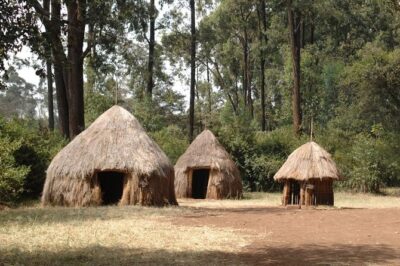
Half-Day Cultural Tour to Bomas of Kenya in Nairobi
Read our review →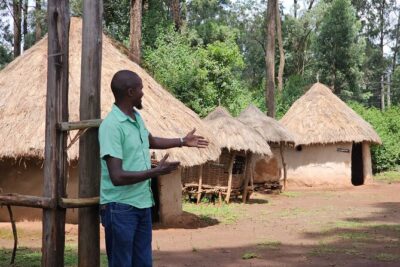

Nairobi city sights, Giraffe Encounters and Bomas Kenya Tour
Read our review →
Nairobi National Park, Elephants, Giraffes & Bomas Day Trip
Read our review →
Browse the lists this tour appears in