
Reviewed · MAASAI MARA TOURS
6 Days Safari to Samburu N/R, Aberdare N/P, Nakuru N/P and Maasai Mara N/R.
Rare wildlife rewards patient eyes. This six-day Kenya safari links Samburu, Aberdare, Lake Nakuru, and Maasai Mara, giving you a wide look at the country’s animals and changing scenery in one private trip. I especially like the chance to seek the Somali ostrich, reticulated giraffe, and giraffe antelope in Samburu. I also like the personal feel of traveling with your own guide, with Simon and George praised for keeping their groups calm and informed around close wildlife encounters. The main drawback is the pace: four major reserves in six days means long road journeys and several early starts.
The trip begins and ends in Nairobi, with pickup offered and a mobile ticket. At $4,000 per person, it is a serious spend, so the value depends on what is included in your booking beyond the park visits, accommodation, meals, vehicle, and guide. You get a private safari rather than a shared departure, but you should confirm the full inclusions before paying.
In This Review
- Key points to know before you book
- Nairobi to Samburu, crossing the equator and Mount Kenya
- Why Samburu deserves more than a quick stop
- Aberdare’s forest, waterhole, and high-country wildlife
- Lake Nakuru for rhinos, giraffes, and flamingos
- Entering the Maasai Mara after a long transfer
- A full day in the Mara, from lions to crocodiles
- The final sunrise before Nairobi
- Is $4,000 per person good value?
- Who should book this six-day route?
- Should you book Pongezi Africa Safaris?
- FAQ
- Where does the safari begin and end?
- How long is the safari?
- Which parks and reserves are included?
- Is this a private safari?
- Is pickup available?
- What animals might I see?
- Can I cancel for a full refund?
Key points to know before you book
- Somali ostrich in Samburu: The northern reserve offers a chance to see this elegant, distinctive ostrich species alongside reticulated giraffes and giraffe antelope.
- Four very different wildlife areas: Samburu is dry and dramatic, Aberdare is forested, Nakuru centers on a lake and rhino sightings, and Maasai Mara brings classic open-country safari.
- Private guiding: Only your group takes part, giving you more control over photo stops, questions, and the pace of game drives.
- Strong wildlife targets: The route is built around elephants, lions, cheetahs, leopards, rhinos, giraffes, zebras, hippos, crocodiles, flamingos, and more.
- A demanding schedule: Several days combine an early game drive with a long transfer, so this suits you best if you can handle early mornings and extended road time.
- Free cancellation deadline: You can cancel for a full refund up to 24 hours before the start time, based on local time.
Nairobi to Samburu, crossing the equator and Mount Kenya
Your first day points north after breakfast. The drive passes through productive farming country, with mangoes, pineapples, avocados, coffee, roses, wheat, and tea. This is useful context for the safari because Kenya is not only about wildlife. You watch the countryside change as farming areas give way to higher ground and then to the drier north.
The road crosses the Equator before climbing Mount Kenya to about 3,000 meters. After that high section, the route drops to Samburu at roughly 800 meters. That rise and fall in altitude helps explain why the reserve feels so different from central Kenya. The vegetation becomes dry, open, and more rugged.
Lunch is planned at Samburu Ashnil Camp, followed by an afternoon game drive at about 3:30 p.m. This is a good first safari outing because the reserve’s main appeal is not simply the number of animals. It is the northern species you may not see in the same combination farther south.
Your guide will search for African elephants and waterbucks, with the Ewaso Nyiro River providing an important focal point. An elephant crossing can be a remarkable sight, particularly when the animals move through the river together. One group had this lucky encounter, watching elephants cross what was described as the only brown river flowing north in Kenya.
The day ends around 6:30 p.m., with sunset views toward Brown Hill. The long drive makes this a tiring opening day, so keep your camera and water close, but do not expect to arrive at Samburu ready for a full evening of relaxation. You are already covering a great deal of ground.
More Maasai Mara safaris:
- 3 Days Masai Mara Group Joining
★ 5.0 · 486 reviews - 5 Days Masai Mara, Lake Nakuru & Naivasha Budget Joining Safari
★ 5.0 · 229 reviews - 3 Days Gamedrive Safari In Masai Mara From Nairobi
★ 5.0 · 207 reviews
Why Samburu deserves more than a quick stop
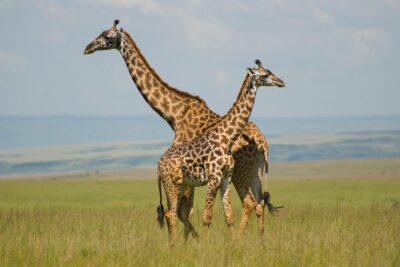
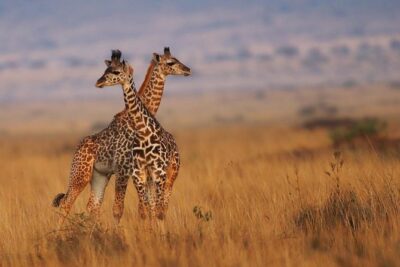
Samburu is the most distinctive reserve on this route. Its dry vegetation gives the place a completely different character from the greener Maasai Mara. You may see reticulated giraffes, whose crisp patterned coats are easy to distinguish, and the giraffe antelope, also known as the gerenuk, with its unusually long neck and slender build.
The Somali ostrich is the headline sight. The tour specifically focuses on finding this northern species, which is prized for its elegant appearance. Wildlife sightings are never guaranteed, but the target gives your guide a clear purpose and gives you something special to look for beyond the usual big five checklist.
I would pay close attention to the river crossings and the edges of the dry vegetation. Elephants and waterbucks are listed as key targets, while the individual experience of seeing elephants cross the Ewaso Nyiro shows how much luck and timing matter. A good safari is partly about the animals and partly about being ready when an unexpected scene unfolds.
The private format helps here. If you want to stop for a photograph or ask why a particular animal behaves in a certain way, you are not working around a large mixed group. Simon guided one particularly successful outing, and George helped another group stay calm when animals came close to the vehicle. That detail matters. Close wildlife can feel thrilling, but you want a guide who gives clear instructions rather than encouraging careless behavior.
Aberdare’s forest, waterhole, and high-country wildlife
Day two starts with an early game drive in Samburu, when lions, cheetahs, and leopards may be active. You then leave for Aberdare National Park, stopping for breakfast and continuing toward Outspan Hotel for lunch before the drive to Treetop Lodge.
This is another long transition day, but Aberdare changes the mood of the safari. Instead of Samburu’s dry northern vegetation, you enter a forested park with ebony, mahogany, bamboo, ficus, and olive trees. The views and animal behavior here can feel quieter and less predictable than in open grassland.
The water point outside the lodge is the main viewing focus. Animals come to drink, creating the possibility of watching several species in one place without driving constantly through the park. The information supplied for this stay includes elephants and buffaloes facing one another, with spotted hyenas showing interest in buffalo calves. That kind of scene may be tense and dramatic, but it also reminds you that animal behavior does not follow a neat timetable.
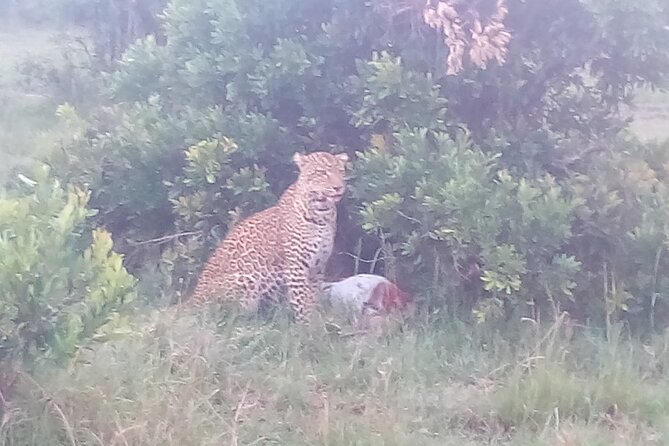
Aberdare can produce a different set of sightings from Samburu and the Mara. You might find forest syke monkeys, black-and-white colobus monkeys, leopards, black rhinos, Defassa waterbucks, and the rare bongo. The bongo is especially notable because it is not a routine safari sight.
The trade-off is that forest viewing can be less open. Trees may hide animals, and you may not get the long-distance views common in the Maasai Mara. The lodge water point improves your chances of a concentrated sighting, but you should still approach the evening with patience.
Lake Nakuru for rhinos, giraffes, and flamingos
After breakfast on day three, the route continues to Lake Nakuru National Park, with a stop at Thompson’s Waterfall. Along the road, you pass farms growing maize, potatoes, and vegetables. You may also see Kenyan marathon champions training near the road, an unusual human detail in the middle of a wildlife itinerary.
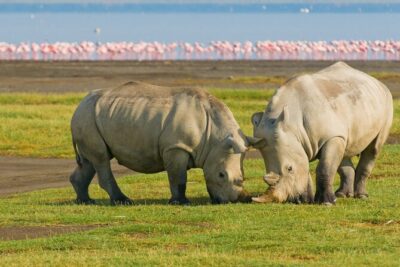
Lunch is planned at Lake Nakuru Lodge, followed by an afternoon game drive. The park is especially valuable for its rhino possibilities. The target list includes both white and black rhinos, endangered giraffes, gazelles, and flamingos.
Lake Nakuru is a useful midpoint in the trip because it provides a compact contrast to both Samburu and Aberdare. The lake gives you a strong setting for photographs, while the open areas can make large animals easier to spot than in the forest. A sunset along the lake is scheduled before returning for dinner and overnight accommodation.
Flamingos are included in the route’s sunrise and lake descriptions, but their exact numbers and location can vary. You should treat them as a possibility rather than a promise. The same applies to black rhinos and leopards. The tour is well designed around good targets, yet wildlife remains wild.
The transfer day is shorter than the opening drive, but you still have an early start behind you and another major reserve ahead. If you want time to rest, Lake Nakuru provides the best opportunity in the middle of the itinerary. Use it. The Mara days will also begin early.
More Lake Nakuru trips:
- 4 Days Safari Lake Nakuru NP Naivasha and Masai Mara
★ 5.0 · 132 reviews - 5 Days Lake Naivasha, Lake Nakuru, & Masai Mara
★ 5.0 · 101 reviews - Full Day Lake Nakuru Park and optional boat ride on Lake Naivasha
★ 4.5 · 95 reviews - 4 Days Safari Adventure Masai Mara and Nakuru Park Group
★ 5.0 · 87 reviews
Entering the Maasai Mara after a long transfer
Day four begins with an early game drive at Lake Nakuru, when lions and leopards may be active. The schedule also describes sunrise views with pinkish flamingos on the alkaline lake, followed by breakfast at about 8 a.m.
You then drive toward the Maasai Mara with a picnic lunch. The route passes through wheat and barley country before you reach the reserve. Some times in the supplied schedule are inconsistent, including a reference to arriving at 6:00 p.m. after a 7:00 mention, so confirm the exact transfer and check-in timing with Pongezi Africa Safaris before departure.
Once inside the Mara, the first game drive seeks African elephants, common zebras, lions, and topi. Sekenani Camp is named for the overnight stay. Because this day combines a morning drive, a substantial road journey, lunch on the move, and a first Mara outing, you should expect a full day rather than a gentle arrival.
The Maasai Mara covers about 1,500 square kilometers and is part of the greater Serengeti ecosystem. The name is explained as Maasai for speakers of the Maa language and Mara for spotted, a reference to the dotted appearance created by trees and shadows across the open country.
The annual migration is often called one of the world’s great natural spectacles, but timing is crucial. This six-day safari does not state that your dates coincide with the migration, so do not book solely on the expectation of a crossing. The Mara remains worthwhile outside migration season because lions, cheetahs, leopards, elephants, zebras, giraffes, crocodiles, and topi live here year-round.
A full day in the Mara, from lions to crocodiles
Day five is the trip’s most generous wildlife day. You take a full-day game drive with a picnic lunch and return to camp around 6 p.m. That gives your guide more time to search instead of rushing back for a midday meal.
The Mara is the place where the itinerary’s animal list comes together. You may look for lions, cheetahs, zebras, leopards, crocodiles, and giraffes, as well as elephants and topi from the previous day. The open setting can make it easier to follow movement, but sightings still depend on the guide’s judgment, current animal activity, and simple luck.
A picnic lunch keeps you in the reserve during the most useful part of the day. It also means you should be ready for a basic, outdoors-focused routine rather than a leisurely meal at camp. The reward is more time among the animals and fewer interruptions.
The private vehicle is particularly useful on this day. Your group can discuss how long to stay with a lion sighting or how much time to give a cheetah search. You should still expect the guide to balance your wishes with park rules and responsible viewing.
The positive accounts of George and Simon point to the human side of the experience. A guide is not simply a driver. You rely on that person to interpret animal behavior, position the vehicle, and tell you how to respond if an animal comes close. That calm direction can make the difference between a frightening moment and a wonderful photograph.
The final sunrise before Nairobi
The last morning begins with another early game drive in the Maasai Mara. Lions and cheetahs may be active, and sunrise can place animals in silhouette against the horizon. This is a strong final outing because the early light can make even a familiar species look new.
You return for breakfast, leave at about 10 a.m., and travel toward Nairobi with lunch on the route. The tour ends at your residence or with a transfer to Jomo Kenyatta International Airport.
Be careful with flight planning. The schedule gives an approximate arrival plan, not a guaranteed airport time, and the route from the Mara to Nairobi can be lengthy. If you are flying the same day, confirm the expected drop-off time and leave a generous buffer. The private format may help with coordination, but it cannot remove road delays.
The final day is not a sightseeing day in Nairobi. It is a return transfer with one last game drive, so think of the safari as ending at the Mara after breakfast rather than expecting time for city activities.
Is $4,000 per person good value?
At $4,000 per person, this safari is priced as a substantial private Kenya experience. The value comes from the range of parks, the private group arrangement, a dedicated guide, multiple game drives, and the chance to see very different habitats in six days.
You are not paying only for a list of stops. You are paying for the route design, the private attention, the long-distance transport, and the chance to search for northern species in Samburu before continuing to the Mara. For a family or small private group, avoiding a shared vehicle can be worth a great deal.
Still, the supplied details do not specify every inclusion. Before booking, ask exactly what the price covers, including accommodation category, park fees, meals, transport type, airport transfer arrangements, and guide services. I would also ask about the precise departure and arrival times on the transfer days.
The itinerary is ambitious. If you prefer a slow safari with two or three nights in each reserve, this route may feel rushed. If you have only six days and want a broad introduction to Kenya, its range is a major advantage.
You should also expect moderate physical fitness. The experience is vehicle based, but early starts, long drives, changing altitudes, and repeated full days can be tiring. Comfortable clothing, patience, and realistic expectations will help more than expensive safari gear.
Who should book this six-day route?
I would recommend it to you if you want variety in a short window. Samburu gives you rare northern species, Aberdare brings forest and waterhole viewing, Nakuru offers rhino and lake scenery, and the Mara supplies the classic big-animal safari experience.
It also suits families and private groups that value a guide’s full attention. The positive experiences with Simon and George show why the guide relationship matters, particularly when elephants or other animals approach closely.
I would hesitate if you dislike long road transfers or need a relaxed holiday rhythm. Four protected areas in six days is a lot. The trip gives you breadth, but not much spare time.
Booking questions are simple but important: confirm the exact lodging, all price inclusions, the vehicle arrangement, airport timing, and the day four schedule. Confirmation is provided at booking, and free cancellation is available until 24 hours before the start time. Changes or cancellations inside that window are not accepted for a refund.
Should you book Pongezi Africa Safaris?
Book this safari if your priority is seeing a wide range of Kenyan wildlife, with Samburu’s Somali ostrich and reticulated giraffe as special goals. The private setup, strong guide reports involving Simon and George, and full Mara day give the trip real value for an active six-day schedule.
Skip it if you want slow mornings, short transfers, or a single reserve explored in depth. At $4,000 per person, you should confirm the inclusions carefully, but the route offers an unusually broad safari experience and several genuine wildlife highlights.
FAQ
Where does the safari begin and end?
The safari begins in Nairobi and ends with drop-off at your residence or a transfer to Jomo Kenyatta International Airport.
How long is the safari?
The experience lasts approximately six days.
Which parks and reserves are included?
The route includes Samburu National Reserve, Aberdare National Park, Lake Nakuru National Park, and Maasai Mara National Reserve.
Is this a private safari?
Yes. Only your group participates in the private tour or activity.
Is pickup available?
Yes. Pickup is offered as part of the experience.
What animals might I see?
The stated wildlife targets include Somali ostriches, elephants, waterbucks, lions, cheetahs, leopards, rhinos, giraffes, gazelles, flamingos, zebras, topi, crocodiles, buffaloes, spotted hyenas, colobus monkeys, Syke monkeys, and the rare bongo.
Can I cancel for a full refund?
Yes. You can cancel at least 24 hours before the experience start time for a full refund. Cancellations or changes made less than 24 hours before the start time are not accepted, and cut-off times use local time.
More Aberdare Trips
- 5 Days Safari to Aberdare N/P, Nakuru N/P and Maasai Mara N/R.
★ 5.0 · 5 reviews - 9 Days Amboseli-Ol Pejeta-Aberdare-Nakuru-Naivasha-Masai Mara
★ 5.0 · 4 reviews - 7 Days Safari to Aberdare NP, Nakuru NP, Maasai Mara NR Amboseli NP- Mid range
★ 5.0 · 2 reviews - 7 Days Safari to Aberdare N/P, lake Nakuru N/P, Maasai Mara N/R, Amboseli N/P
★ 5.0 · 2 reviews
More Samburu Safaris
- Samburu/ Aberdare/ Lake Nakuru/ Masai Mara 7 Days Safari
★ 5.0 · 37 reviews - 7-Days Kenya Safari Samburu, Aberdare, Lake Nakuru, & Maasai Mara
★ 5.0 · 29 reviews - 5 Days Maasai mara, Lake Nakuru, samburu private lodge safari
★ 5.0 · 15 reviews - 6-Day Samburu, Lake Nakuru, and Masai Mara Safari
★ 4.0 · 6 reviews
Just added in Nairobi
- Wildlife Capital: Half-Day Safari at Nairobi National Park★ 5.0 · 2 reviews
- 3 days maasai mara migration safari★ 4.5 · 7 reviews
- 4 Days Tour Landcruiser in Masai Mara and Lake Nakuru★ 5.0 · 10 reviews
- 4 Days Safari to Lake Nakuru N/P and Maasai Mara N/R★ 5.0 · 18 reviews
- 6 Days Kenya Budget Group Safari★ 5.0 · 2 reviews
- Maasai Mara Day Trip★ 5.0 · 15 reviews
- Day Tour to Nairobi national park, Elephants, and Giraffe Center★ 3.5 · 8 reviews
- 3 Days Masai Mara Wildebeest migration Budget safari★ 5.0 · 2 reviews
Maasai Mara Tours, compared.
5 Days Masai Mara, Lake Nakuru & Naivasha Budget Joining Safari
Read our review →
3 Days Gamedrive Safari In Masai Mara From Nairobi
Read our review →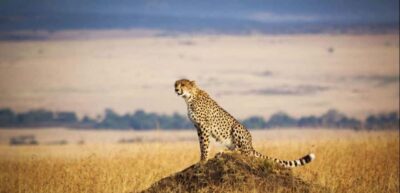
3 days group joining safari to Maasai Mara with a Land Cruiser Jeep
Read our review →Browse the lists this tour appears in